1. Introduction to Textual Poachers
This manual serves as a guide to Henry Jenkins' influential work, Textual Poachers: Television Fans and Participatory Culture. First published in 1992, this book challenges conventional views of media consumers, particularly fans, by presenting them as active producers and interpreters of cultural texts. It explores the complex subcultures formed around popular media, demonstrating how fans engage in 'textual poaching' to create their own meanings and communities from existing narratives.
The book provides an ethnographic account of media fan communities, detailing their interpretive strategies, social institutions, and cultural practices. It examines the often-troubled relationship between these fan cultures and the mass media industry, offering insights into popular consumption, genre, gender, sexuality, and interpretation within the context of fan activities.
2. Core Concepts and Theoretical Framework
Jenkins introduces several key concepts central to understanding participatory culture and fan studies:
- Textual Poaching: Drawing on Michel de Certeau, this concept describes how fans appropriate elements from commercial media to create their own stories, songs, videos, and social interactions. It highlights the active, creative, and often resistant ways in which audiences engage with texts.
- Participatory Culture: This refers to a culture in which private persons (the public) do not act as consumers only, but also as contributors or producers of content. The book illustrates how fan communities exemplify this, moving beyond passive consumption to active creation and community building.
- Fan Communities: Jenkins details the social structures, shared practices, and collective identities that define fan groups. These communities often develop their own norms, hierarchies, and forms of cultural production.
The theoretical framework emphasizes the agency of the audience, contrasting with earlier models that viewed media consumers as passive recipients of messages. Jenkins argues that fan activities represent a significant popular response to mass media and a challenge to producers' attempts to control textual meanings.
3. Analyzing Fan Culture: Case Studies
The book provides numerous examples from various media fandoms to illustrate its arguments. These case studies demonstrate the diversity and complexity of fan practices:
- Star Trek Fandom: Explored as a foundational example of a highly organized and productive fan community, generating vast amounts of fan fiction, art, and social events.
- Blake's 7, The Professionals, Beauty and the Beast, Starsky and Hutch, Alien Nation, Twin Peaks: These and other programs are used to showcase how fans exploit cultural materials for their own creative and social purposes.
Through these examples, Jenkins highlights how fans transform commercial narratives into resources for personal expression and community formation, often focusing on aspects like character relationships, alternative plotlines, or social commentary.

Image 1: Front cover of Textual Poachers: Television Fans and Participatory Culture. The cover features the title in a blue banner at the top, with the author's name, Henry Jenkins, below it. The main image depicts a medieval-style illustration with figures on horseback, framed by an ornate border, all set against a red background.
4. Applying the Book's Insights
Textual Poachers is a valuable resource for students, academics, and anyone interested in media studies, cultural studies, sociology, and communication. Its insights can be applied to:
- Academic Research: Provides a foundational text for understanding fan studies, participatory culture, and audience reception theory.
- Media Production and Marketing: Offers perspectives on how audiences engage with and reinterpret media, which can inform strategies for content creation and community engagement.
- Understanding Digital Cultures: Although published before the widespread internet, its concepts remain highly relevant for analyzing online fan communities, social media interactions, and user-generated content.
- Critical Media Literacy: Encourages readers to critically examine their own media consumption habits and the ways in which they participate in cultural production.
When engaging with the text, consider the historical context of its publication (1992) and how the concepts might have evolved with the advent of digital technologies, while recognizing the enduring relevance of its core arguments.
5. Publication Details and Specifications
| Title | Textual Poachers: Television Fans and Participatory Culture |
| Author | Henry Jenkins |
| Publisher | Routledge |
| Publication Date | July 23, 1992 |
| Edition | 1st |
| Language | English |
| Print Length | 352 pages |
| ISBN-10 | 0415905729 |
| ISBN-13 | 978-0415905725 |
| Item Weight | 1.25 pounds |
| Dimensions | 6 x 1 x 9 inches |
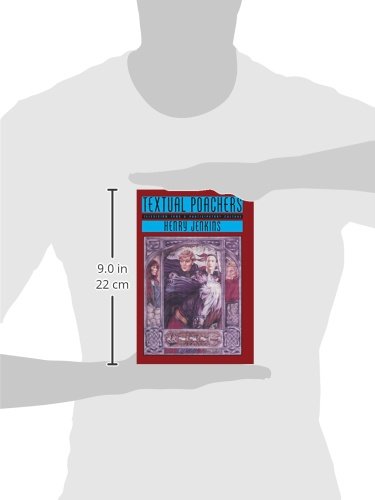
Image 2: A visual representation of the book's dimensions, showing a hand holding the book with a ruler indicating a height of 9.0 inches (22 cm).
6. Author Information and Further Study
Henry Jenkins is a prominent scholar in media studies, known for his work on participatory culture, transmedia storytelling, and fan studies. At the time of the book's publication, he was an Assistant Professor of Literature at Massachusetts Institute of Technology (MIT). His subsequent work has continued to shape the fields of communication and cultural studies.
For those interested in further exploring the themes presented in Textual Poachers, consider researching:
- The evolution of fan studies and participatory culture in the digital age.
- Michel de Certeau's theories on everyday practice and consumption.
- Other works by Henry Jenkins, such as Convergence Culture: Where Old and New Media Collide.
- Contemporary research on online communities, social media, and user-generated content.


