Introduction to the Study
This manual provides guidance for engaging with Gabrielle Hecht's book, "Being Nuclear: Africans and the Global Uranium Trade." The book explores the historical and contemporary relationship between Africa and the global nuclear industry, focusing on the production of uranium and its implications. It delves into the concept of "nuclearity" to understand how states, objects, industries, and workplaces are defined as nuclear.
Hecht's work highlights the often-overlooked role of African nations in the nuclear age and examines the social, political, and environmental consequences, particularly concerning occupational hazards like radiation exposure in mining communities. The book challenges conventional understandings of nuclear history by centering Africa's experiences.
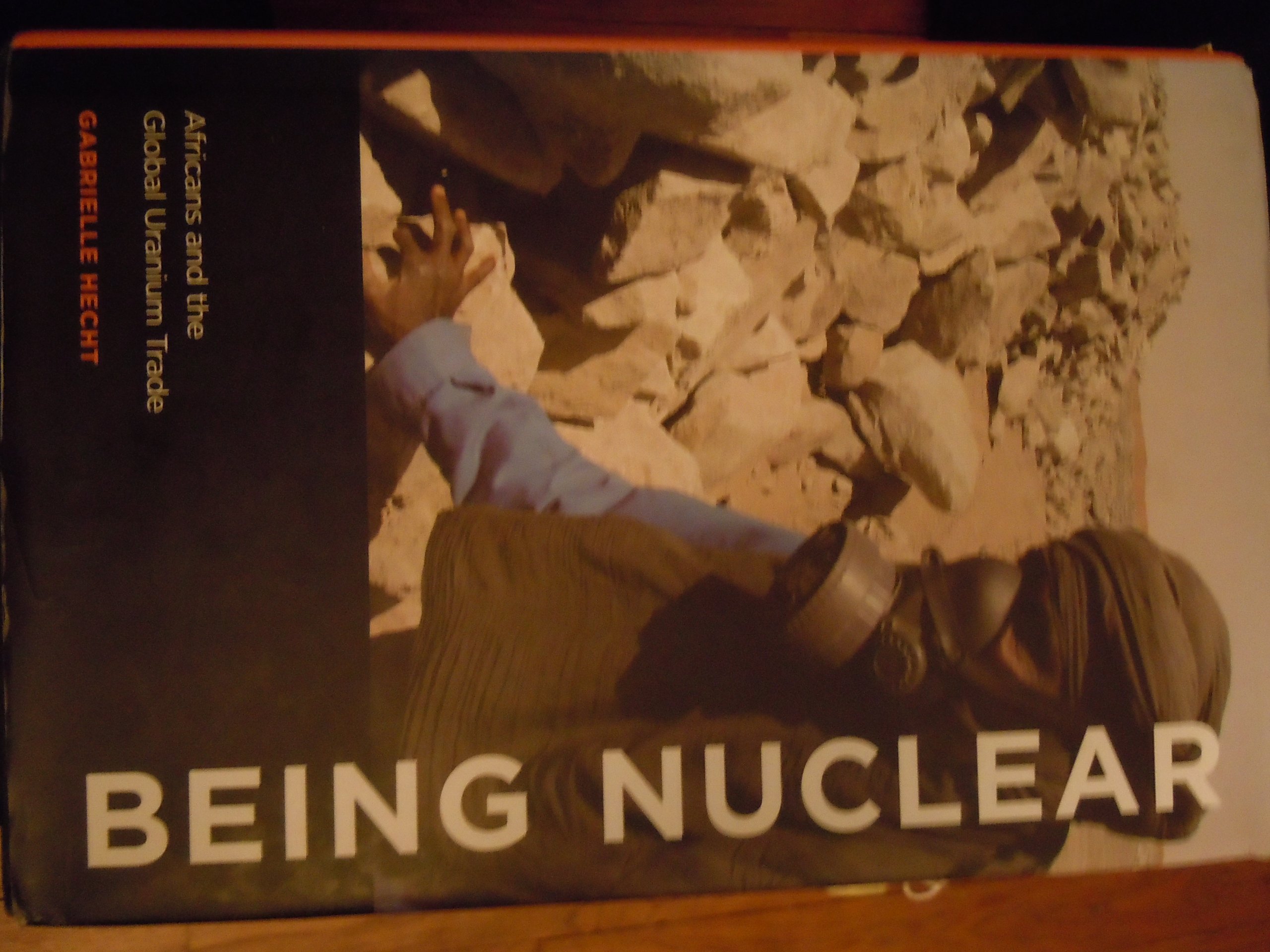
Image: The cover of "Being Nuclear: Africans and the Global Uranium Trade" by Gabrielle Hecht. The image depicts the book's title and author, providing a visual representation of the publication.
Understanding the Book's Foundation
To fully appreciate the book, it is essential to grasp its core arguments. Hecht introduces the concept of "nuclearity" as a historically contingent framework for understanding what is considered nuclear. This framework is crucial for analyzing the power dynamics between "developing nations" and "nuclear powers" in the context of uranium trade.
- Central Thesis: The book argues that Africa's involvement in the global uranium trade has been central to the nuclear age, yet often rendered invisible or marginalized in historical narratives.
- Concept of Nuclearity: Consider how the definition of "nuclear" shifts based on political, economic, and social contexts, particularly concerning resource extraction and labor.
- Focus on Labor: Pay attention to the experiences of miners and the occupational hazards of radiation exposure, which are key to understanding the human cost of uranium production.
The author's methodology involves historical analysis, archival research, and critical theory to construct a nuanced understanding of these complex relationships.
Navigating the Narrative
The book is structured to guide readers through various facets of Africa's nuclear history. Each chapter builds upon previous arguments, offering detailed case studies and theoretical insights.
- Initial Chapters: These typically establish the historical context of uranium discovery and early trade, setting the stage for the concept of nuclearity.
- Mid-Book Sections: These often delve into specific African countries (e.g., Gabon, Congo, Niger, South Africa) and their unique experiences with uranium mining and its global implications.
- Later Chapters: These may focus on the social and health impacts, particularly radiation exposure, and the broader geopolitical consequences of the uranium trade.
- Conclusion: The concluding sections synthesize the arguments and reflect on the implications for understanding global power structures and environmental justice.
Readers are encouraged to follow the author's progression of arguments, noting how historical events and theoretical concepts interweave to form a comprehensive picture.
Deepening Your Engagement
To maximize understanding and critical engagement with "Being Nuclear," consider the following approaches:
- Critical Reading: Question the assumptions and perspectives presented. How might the narrative differ if told from another viewpoint?
- Interdisciplinary Connections: Relate the book's themes to other fields such as postcolonial studies, environmental history, public health, and international relations.
- Discussion: Engage in discussions with peers or academic groups to explore different interpretations and insights.
- Further Research: Use the book's bibliography and footnotes to identify additional scholarly works that expand on specific topics or regions.
Reflecting on the ethical dimensions of resource extraction and global inequalities, as presented in the book, can also enhance comprehension.
Addressing Complex Concepts
The book introduces sophisticated concepts that may require careful consideration. Here are some points to aid understanding:
- "Nuclearity" vs. "Nuclear": Distinguish between the material presence of nuclear elements (like uranium) and the social, political, and economic processes that define something as "nuclear."
- Invisibility of Risk: Hecht discusses how radiation risks were often rendered invisible or unmeasured in African mining contexts. Consider the implications of this invisibility for policy and justice.
- Postcolonial Framework: The book operates within a postcolonial framework, analyzing how colonial legacies continue to shape global power dynamics and resource exploitation.
If a concept remains unclear, re-reading relevant sections or consulting academic resources on the specific theoretical framework may be beneficial.
Specifications
| Publisher | Mit Pr |
| Publication Date | January 1, 2012 |
| Language | English |
| Print Length | 451 pages |
| ISBN-10 | 0262017261 |
| ISBN-13 | 978-0262017268 |
| Item Weight | 1.7 pounds |
| Dimensions | 6.5 x 1.25 x 9.5 inches |
Support and Further Information
For inquiries regarding the publication or academic resources related to this work, please contact the publisher or consult academic institutions specializing in African studies, history of science, or postcolonial studies.
Publisher: MIT Press
For general academic support or research assistance, refer to your university library or relevant scholarly databases.