Introduction to the Mc68000
This guide provides comprehensive instructions for utilizing "The Motorola Mc68000: An Introduction to Processor, Memory, and Interfacing" by Jean Bacon. This book serves as a foundational text for students and professionals seeking to understand the architecture, programming, and interfacing techniques of the Motorola Mc68000 microprocessor.
The content is structured to facilitate a clear understanding of complex topics, moving from basic concepts to more advanced applications. It is designed to be a primary resource for self-study or as a companion to academic courses.
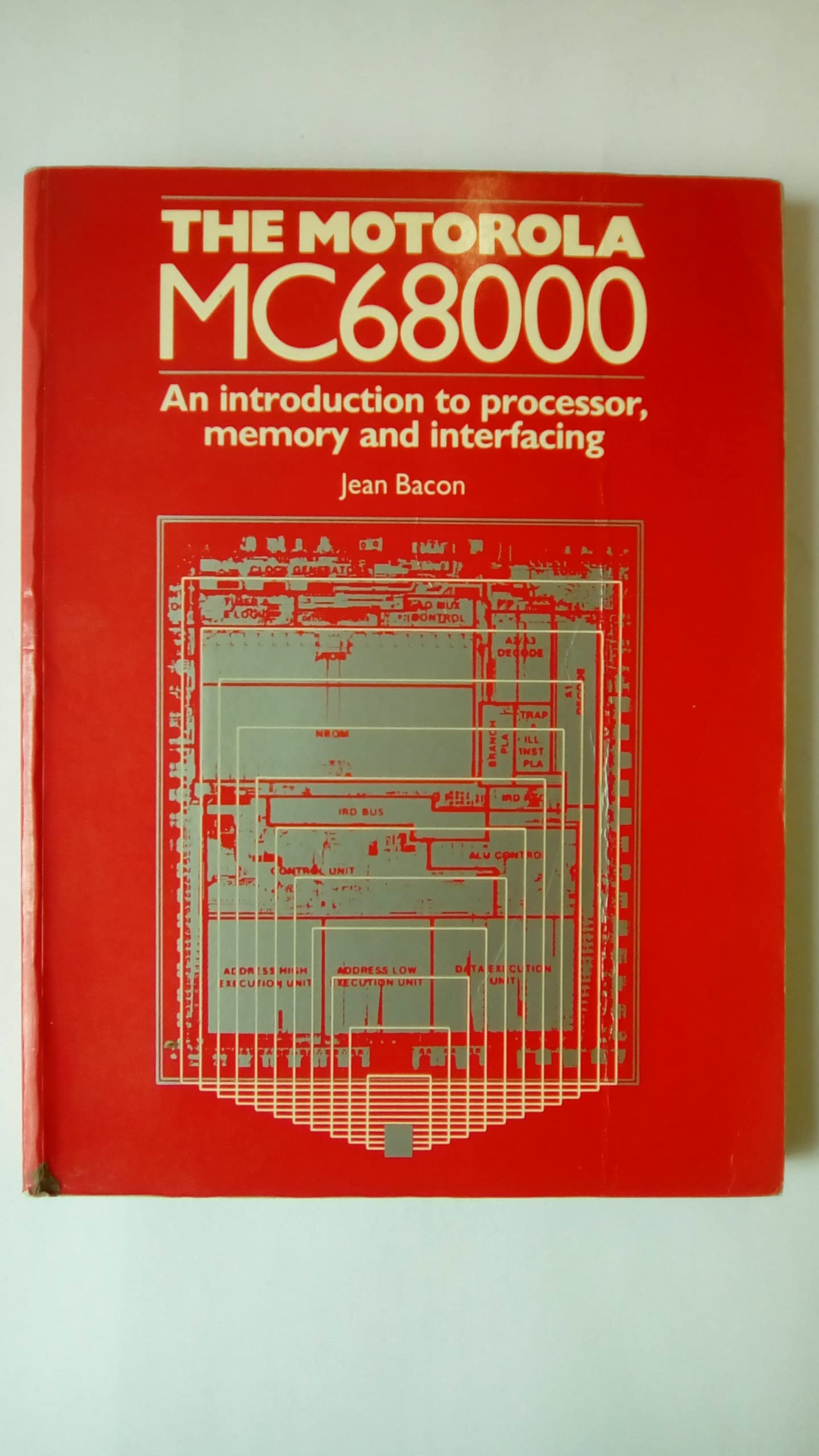
Image: Front cover of "The Motorola Mc68000: An Introduction to Processor, Memory, and Interfacing" book.
Getting Started: Approaching the Material
To maximize your learning experience with this book, consider the following recommendations:
- Prerequisites: A basic understanding of digital logic and computer organization is beneficial, though not strictly required as fundamental concepts are introduced.
- Sequential Reading: It is recommended to read the chapters in the order presented, as concepts build upon previous ones.
- Active Learning: Engage with the material by working through examples and attempting exercises provided within the text.
- Supplementary Resources: While comprehensive, consider having access to a Mc68000 reference manual or simulator for practical application.
Understanding the Mc68000 Architecture
This section outlines how to effectively navigate the book's content to grasp the core principles of the Mc68000.
- Processor Fundamentals: Chapters 1-3 introduce the basic architecture, registers, and addressing modes. Focus on understanding the data flow and instruction set.
- Memory Organization: Chapters 4-6 delve into memory management, addressing schemes, and data structures. Pay attention to how the processor interacts with memory.
- Interfacing Techniques: Chapters 7-9 cover I/O operations, peripheral devices, and interrupt handling. Practical examples illustrate how to connect the Mc68000 to external components.
- Assembly Language Programming: Throughout the book, assembly language examples are used to demonstrate concepts. Practice writing and debugging simple programs.
Each chapter includes detailed explanations, diagrams, and code snippets to aid comprehension. Review the chapter summaries and self-assessment questions to reinforce learning.
Maintaining Knowledge and Reference
To ensure long-term retention and effective use of the information presented in this book:
- Regular Review: Periodically revisit key concepts, especially those related to instruction sets and addressing modes.
- Practical Application: Apply the learned principles by working on small projects or simulations involving the Mc68000.
- Note-Taking: Highlight important sections and make personal notes for quick reference.
- Cross-Referencing: Utilize the index and glossary to quickly locate specific topics when using the book as a reference.
Clarification and Further Study
If you encounter difficulties understanding specific topics or concepts:
- Re-read Sections: Sometimes, a second reading can clarify complex ideas.
- Consult Examples: Work through the provided examples step-by-step to see the concepts in action.
- Seek External Resources: Explore online forums, academic papers, or other textbooks on the Mc68000 for alternative explanations.
- Discuss with Peers: Engaging in discussions with fellow students or professionals can provide new perspectives.
Book Specifications
| Title: | The Motorola Mc68000: An Introduction to Processor, Memory, and Interfacing |
| Author: | Jean Bacon |
| Publisher: | Prentice Hall |
| Publication Date: | January 1, 1986 |
| Language: | English |
| Print Length: | 320 pages |
| ISBN-10: | 0136041094 |
| ISBN-13: | 978-0136041092 |
| Item Weight: | 12.6 ounces |
| Dimensions: | 6.85 x 0.63 x 9.25 inches |
Publisher Information
This book is published by Prentice Hall. For inquiries regarding publication, content accuracy, or permissions, please contact the publisher directly. Information regarding errata or updates may be available on the publisher's official website.
As a printed educational resource, this book does not come with a traditional product warranty. However, the publisher strives for accuracy and quality in its publications.
Additional Resources and Support
For further support and learning, consider the following:
- Publisher Website: Visit the Prentice Hall (Pearson) website for related titles and educational resources.
- Academic Institutions: Consult with professors or teaching assistants if you are using this book as part of a course.
- Online Communities: Engage with online forums dedicated to microprocessor architecture or the Mc68000 for community support and discussions.


