1. Introduction
This manual provides guidance for the use and care of the Engineering Economy, 17th Edition textbook. This text is designed for undergraduate introductory engineering economics courses. It offers a comprehensive understanding of the principles, fundamental concepts, and methodologies within engineering economy. The content assists users in developing skills for making informed decisions in various situations.
The 17th edition incorporates revisions and updates to reflect current trends, including over 160 problems related to environmental sustainability and updates concerning the 2017 Federal Tax code revisions.
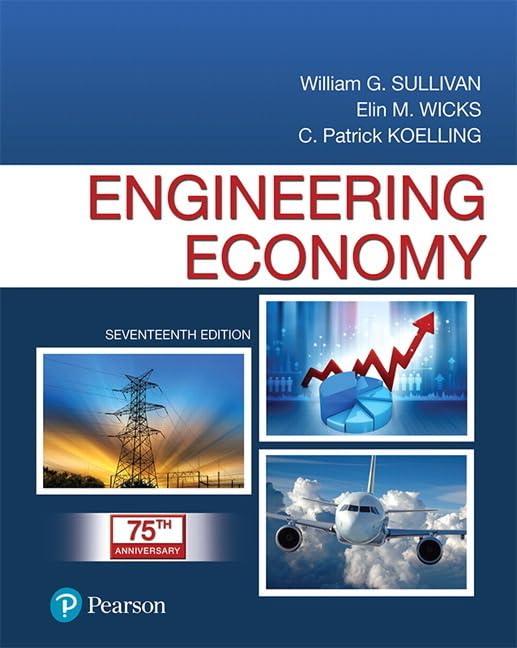
Image: Front cover of the Engineering Economy 17th Edition textbook, featuring the title and authors.
2. Setup
To begin using your Engineering Economy textbook:
- Unpack: Carefully remove the book from its packaging.
- Inspect: Check the book for any shipping damage, such as bent corners, torn pages, or loose binding. If damage is found, refer to the Troubleshooting section.
- Familiarize: Briefly review the table of contents and preface to understand the book's structure and scope.
3. Operating Instructions
This section outlines how to effectively utilize the textbook for study and reference.
3.1. Navigating Content
- Chapters: The book is organized into chapters, each covering specific topics in engineering economy.
- Examples: Numerous examples are provided throughout the text to illustrate concepts and problem-solving methods.
- End-of-Chapter Problems: Each chapter concludes with a set of problems and group exercises designed to reinforce learning.
3.2. Key Features
- Methodology: The text details the methodology for making rational economic decisions.
- Sustainability Problems: Over 160 problems focus on environmental sustainability, providing practical application in modern contexts.
- Tax Code Updates: Content includes updates related to the 2017 Federal Tax code revisions.
4. Maintenance
Proper care will extend the life and usability of your textbook.
- Storage: Store the book in a dry, cool place away from direct sunlight to prevent page yellowing and binding degradation.
- Handling: Avoid bending the covers excessively or forcing the book flat, which can damage the spine.
- Cleaning: Use a soft, dry cloth to gently wipe dust from the cover. Do not use liquid cleaners.
- Protection: Consider using a book cover to protect against spills and wear.
5. Troubleshooting
This section addresses common issues you might encounter with your textbook.
| Problem | Possible Cause | Solution |
|---|---|---|
| Damaged or missing pages upon receipt. | Manufacturing defect or shipping damage. | Contact the retailer or publisher for a replacement. Refer to the publisher's contact information. |
| Loose or broken binding. | Excessive force during use or manufacturing defect. | For minor issues, use book repair tape. For significant damage, contact the retailer or publisher if within return/warranty period. |
| Difficulty understanding concepts. | Requires further study or external resources. | Review previous sections, consult with an instructor, or seek supplementary materials. |
6. Specifications
Detailed information regarding the Engineering Economy 17th Edition textbook.
- Title: Engineering Economy
- Edition: 17th Edition
- Authors: William Sullivan, Elin Wicks, C Koelling
- Publisher: Pearson
- Publication Date: February 5, 2018
- Language: English
- Print Length: 752 pages
- ISBN-10: 0134870069
- ISBN-13: 978-0134870069
- Item Weight: 2.54 pounds
- Dimensions: 7.63 x 1.25 x 9.4 inches
7. Support and Warranty
For inquiries regarding manufacturing defects, missing components, or general support related to the content, please contact the publisher directly.
- Publisher: Pearson
- Website: www.pearson.com
Specific warranty information for textbooks typically covers manufacturing defects. Please retain your proof of purchase for any claims.


