
1. Introduction
This product is a low-power battery pack protector designed for primary protection of two lithium-ion or polymer rechargeable batteries connected in series. It features a balancing function, but the balancing current is only slightly over 20 mA, which is sufficient only to eliminate the cumulative voltage difference caused by simultaneous cycling. Passive balancing cannot compensate for significant capacity discrepancies; such cases require professional active balancing.

Figure 1: Product Introduction, describing the board's function and balancing capabilities.
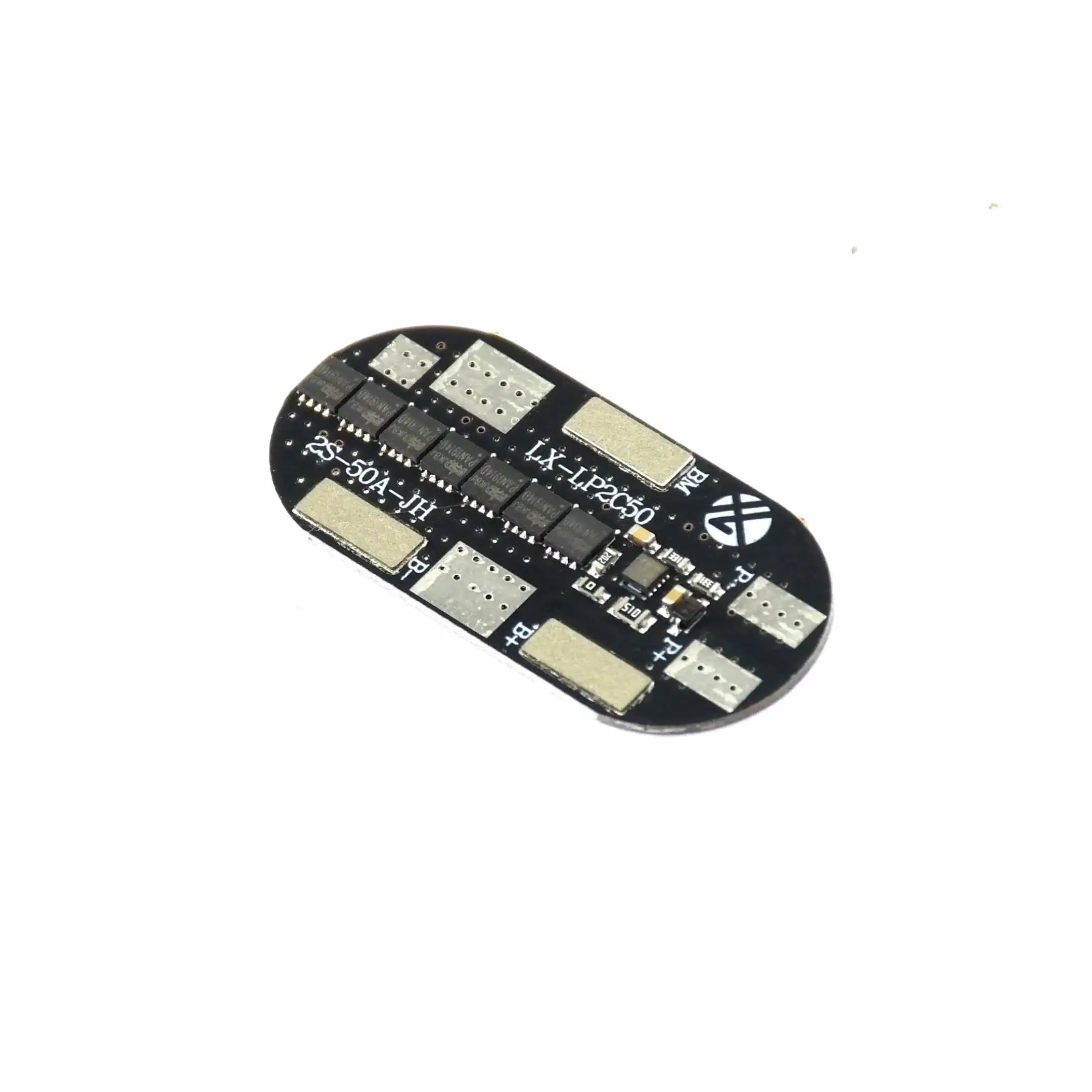
Video 1: Product overview of the BMS 2S 50A protection board.
2. Specifications

Figure 2: Product Specifications diagram, listing key electrical parameters.
| Feature | Value |
|---|---|
| DIY Supplies Category | Electrical |
| Brand Name | Aideepen |
| Origin | Mainland China |
| High-concerned chemical | None |
| Electronic | No |
| Input Reverse Polarity Protection | Yes |
| Passive Balancing Function | Yes |
| Suitable Battery Type | 2S 3.7V Lithium-ion/Polymer batteries |
| Output Capability | 50A (High-current) |
| Overvoltage Release (single cell) | 4.15V |
| Quiescent Current | 1.8µA |
| Sleep Current | 0.2µA |
| Dimensions (L x W) | 39mm x 19mm (1.53in x 0.75in) |

Figure 3: Dimensions of the protection board (39mm x 19mm).
3. Setup and Wiring
Careful attention to wiring is crucial for the correct and safe operation of the protection board. Incorrect connections can damage the module and connected batteries.
3.1 Wiring Diagram

Figure 4: Detailed wiring diagram for charging and discharging connections on the protection board.
3.2 Important Precautions
- Before installing the protection board, carefully verify that the battery’s positive and negative terminals correspond to the corresponding terminals on the protection board. Incorrect polarity connection will damage the module!
- This lithium battery protection board is not compatible with lithium iron phosphate (LiFePO4) batteries, xenon lights, high-power cordless drill battery packs, electric fishing machine battery packs, electric bicycle battery packs, or children’s vehicle batteries. It is also generally incompatible with motors or motor-driven products. Customers purchasing for the aforementioned applications should take note!
- The battery must be charged using a charger specifically designed for lithium-ion batteries. Never use a lead-acid battery charger, as charging with lead-acid voltage may cause high-voltage breakdown of the protection board’s MOSFETs, resulting in the protection board failing to prevent overcharging. The charging voltage for a polymer battery is equal to the number of battery cells in series multiplied by 4.2V.

Figure 5: Visual representation of precautions for using the battery protection board.
4. Operating Instructions
Once correctly wired, the BMS 2S 50A protection board will automatically manage the charging and discharging of your 2S lithium-ion or polymer battery pack. It provides sustained output of 50A high current, suitable for high-power devices. The built-in passive balancing function helps to extend the battery pack lifespan by minimizing voltage differences between cells during cycling.

Figure 6: Overview of the Lithium battery protection board, highlighting 50A high current capability.

Figure 7: The 2S 50A High Current board with details on passive charging balancing.
5. Maintenance
The Aideepen BMS 2S 50A protection board is constructed with high-quality materials and utilizes reliable components, ensuring stable operation and low temperature rise. To ensure longevity and optimal performance:
- Keep the board clean and free from dust and moisture.
- Avoid exposing the board to extreme temperatures or direct sunlight.
- Ensure proper ventilation when in use, especially in high-current applications.
- Regularly inspect connections for any signs of wear or corrosion.

Figure 8: Lithium battery protection board, emphasizing high-quality materials for durability.
6. Troubleshooting
If you encounter issues with your BMS 2S 50A protection board, consider the following common problems and solutions:
- No Power Output / Board Not Functioning:
- Check all wiring connections carefully for correct polarity. Incorrect polarity will damage the module.
- Verify that the voltage of each cell in the battery pack is normal. A faulty battery cell will prevent the protection board from functioning correctly. (Note: Soldered products are not eligible for returns or exchanges if the battery is faulty).
- Ensure the battery type is compatible. This board is not compatible with LiFePO4 batteries, xenon lights, high-power cordless drill battery packs, electric fishing machine battery packs, electric bicycle battery packs, children’s vehicle batteries, or motor-driven products.
- Overcharging Issues:
- Ensure you are using a charger specifically designed for lithium batteries. Using a lead-acid battery charger can cause high-voltage breakdown of the protection board’s MOSFETs, leading to overcharging failure.
- Verify the charging voltage for polymer batteries is correctly calculated as the number of battery cells in series multiplied by 4.2V.

Figure 9: Customization and specification details, including a wiring diagram and important notes for troubleshooting.
7. User Tips
No specific user tips were available from customer reviews or Q&A for this product at this time. Always refer to the precautions and specifications for safe and effective use.
8. Warranty and Support
For any technical assistance or inquiries regarding the Aideepen BMS 2S 50A Lithium Battery Charger Protection Board, please contact your retailer or the manufacturer directly. Please refer to the official user manual PDF for additional details and support information:
Official User Manual (PDF): Download PDF