1. Bubuka
The waveshare ESP32-S3 4.3inch Capacitive Touch LCD Development Board Type B with Case is a microcontroller development board featuring 2.4GHz WiFi and BLE 5 support. It integrates high-capacity Flash and PSRAM, and an onboard 4.3-inch capacitive touch screen capable of running GUI programs like LVGL. This board is designed for rapid development of Human-Machine Interface (HMI) applications and other ESP32-S3 based projects.
fitur konci ngawengku:
- Xtensa 32-bit LX7 dual-core processor, operating up to 240MHz.
- Integrated 2.4GHz Wi-Fi (802.11 b/g/n) and Bluetooth 5 (LE) with an onboard antenna.
- SRAM 512KB sareng ROM 384KB internal, kalayan Flash 16MB sareng PSRAM 8MB.
- Layar toél kapasitif 4.3 inci kalayan résolusi 800×480 sareng 65K warna.
- 5-point capacitive touch control via I2C interface, with interrupt support.
- Dina kapal voltage regulator supporting 7-36V wide range power supply.
- RTC chip and rechargeable battery for time data retention during power loss.
- CAN, RS485, I2C interfaces, TF card slot, GH1.25 2P battery header, and digital isolated IO interfaces.
- Supports passive and active digital input with bi-directional optocoupler isolation.
- Digital output with optocoupler isolation, providing up to 450mA sinking current.
- LED indicators for power and battery charging status.
- Flexible clock and module power supply settings for low power consumption.
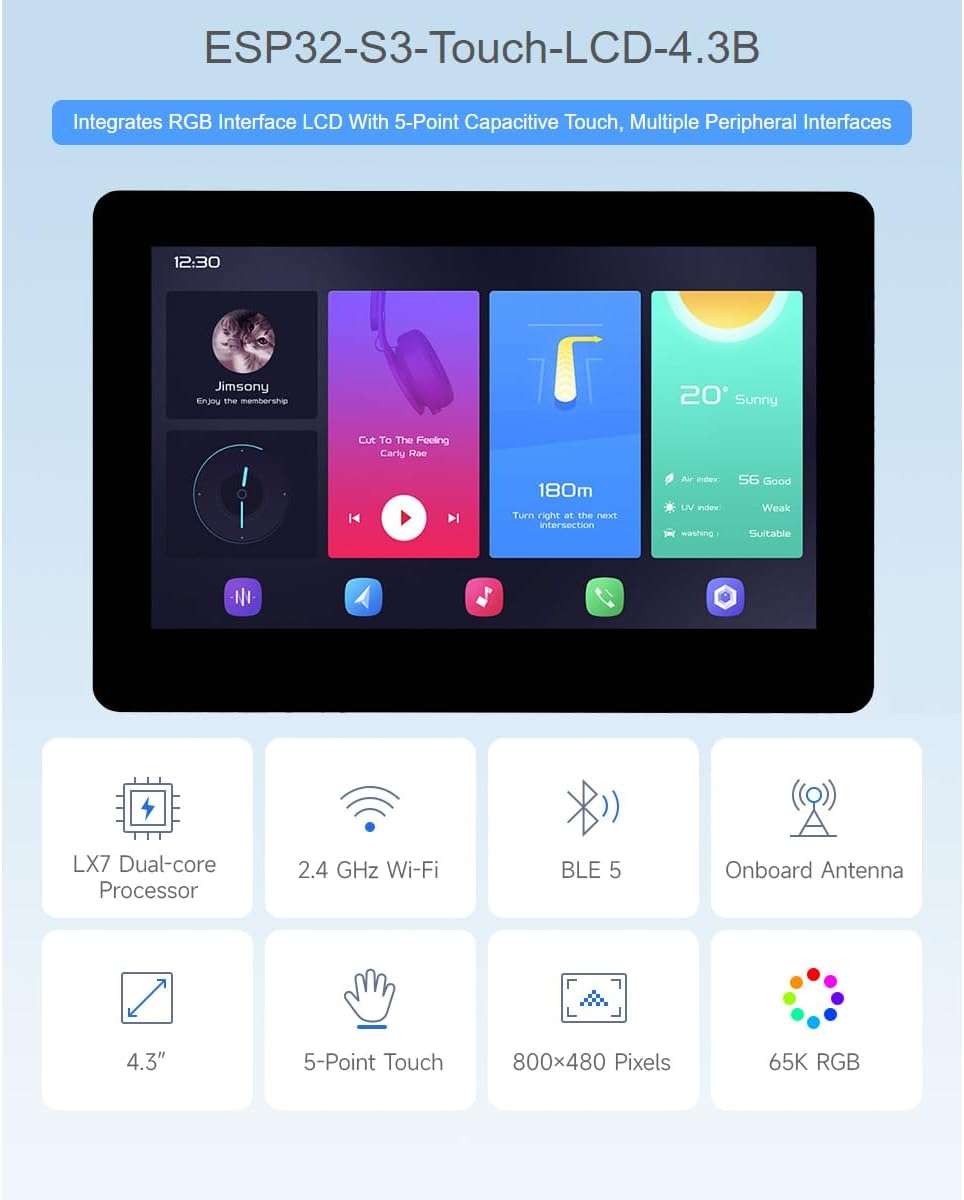
Gambar 1: Leuwihview of the ESP32-S3 4.3inch Touch LCD Development Board's main features, including LX7 Dual-core Processor, 2.4 GHz Wi-Fi, BLE 5, Onboard Antenna, 4.3-inch display, 5-Point Touch, 800x480 Pixels, and 65K RGB color depth.
2. Eusi Paket
Paket standar kalebet barang-barang ieu:
- ESP32-S3-Touch-LCD-4.3B-BOX x1

Figure 2: The ESP32-S3 4.3inch Touch LCD Development Board Type B, enclosed in its protective case.
3. Pakakas Ngalangkunganview
This section details the various components and interfaces available on the ESP32-S3 4.3inch Touch LCD Development Board.
3.1 Onboard Components
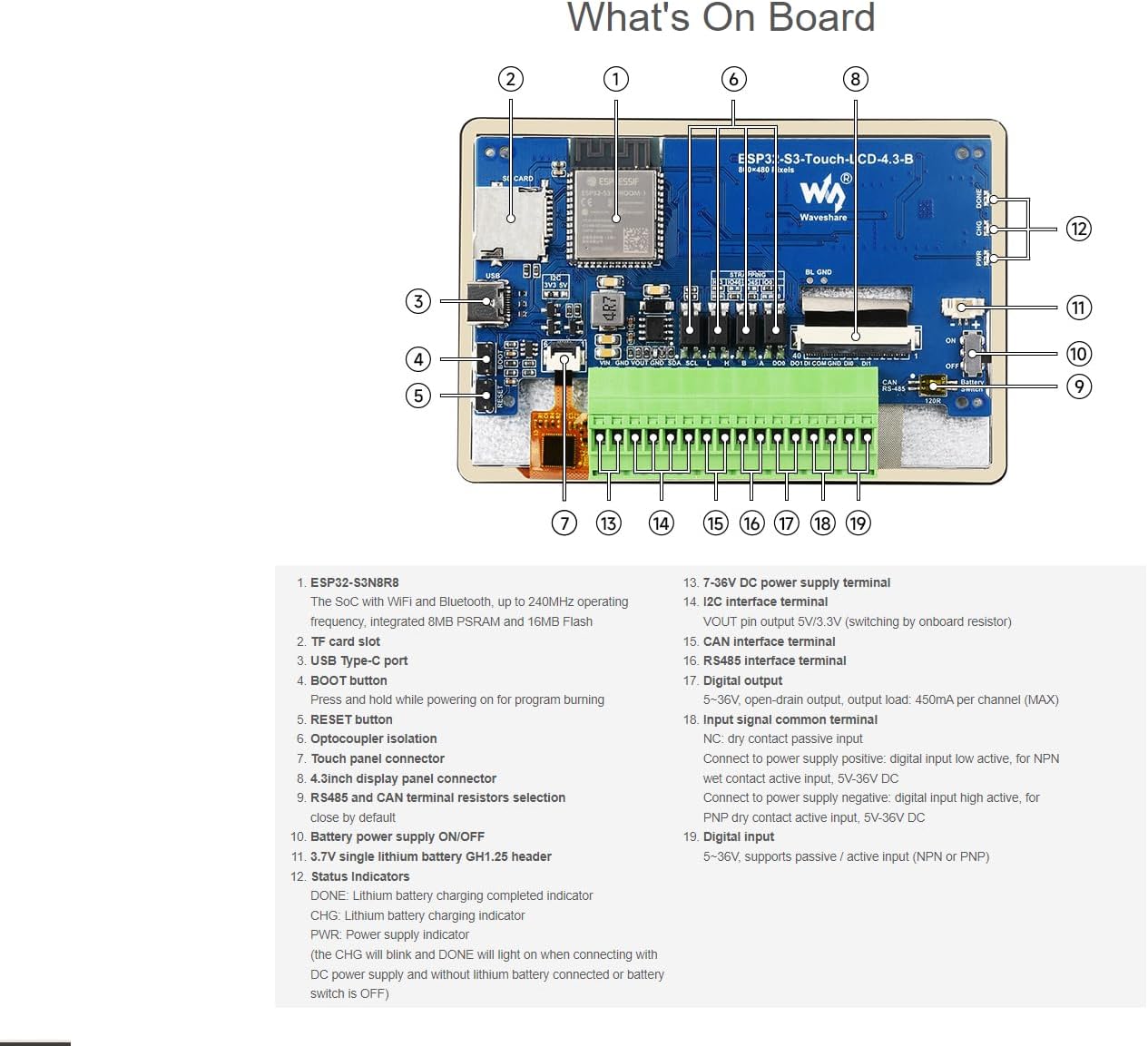
Figure 3: Labeled diagram of the ESP32-S3 4.3inch Touch LCD Development Board's components.
- ESP32-S3N8R8: The System-on-Chip (SoC) with Wi-Fi and Bluetooth, operating up to 240MHz, integrated 8MB PSRAM and 16MB Flash.
- slot kartu TF: Pikeun panyimpenan éksternal.
- Port USB Tipe-C: For power supply and data communication.
- Tombol BOOT: Press and hold while powering on for program burning.
- Tombol RESET: Ngareset dewan.
- Isolasi Optocoupler: Provides electrical isolation for certain I/O.
- Touch panel connector: Connects to the capacitive touch screen.
- 4.3inch display panel connector: Connects to the LCD display.
- RS485 and CAN terminal resistors selection: Jumpers to enable/disable terminal resistors (close by default).
- Battery power supply ON/OFF: Switch for controlling battery power.
- 3.7V single lithium battery GH1.25 header: Connector for a rechargeable lithium battery.
- Indikator Status:
- DONE: Lithium battery charging completed indicator.
- CHG: Lithium battery charging indicator.
- PWR: Power supply indicator.
- Note: The CHG will blink and DONE will light when connecting with DC power supply and without lithium battery connected or battery switch is OFF.
- 7-36V DC power supply terminal: Input kakuatan utama.
- I2C interface terminal: VOUT pin output 5V/3.3V (switchable on board resistor).
- CAN interface terminal: For CAN bus communication.
- RS485 interface terminal: For RS485 communication.
- Kaluaran digital: 5-36V, open-drain output, output load: 450mA per channel (MAX).
- Input signal common terminal:
- NC: Dry contact/passive input.
- Connect to power supply positive: digital input low active, for NPN wet contact active input, 5V-36V DC.
- Connect to power supply negative: digital input high active, for PNP dry contact active input, 5V-36V DC.
- Input digital: 5-36V, supports passive / active input (NPN or PNP).
3.2 Peripheral Interfaces
The board supports expansion with various peripherals through dedicated interfaces.
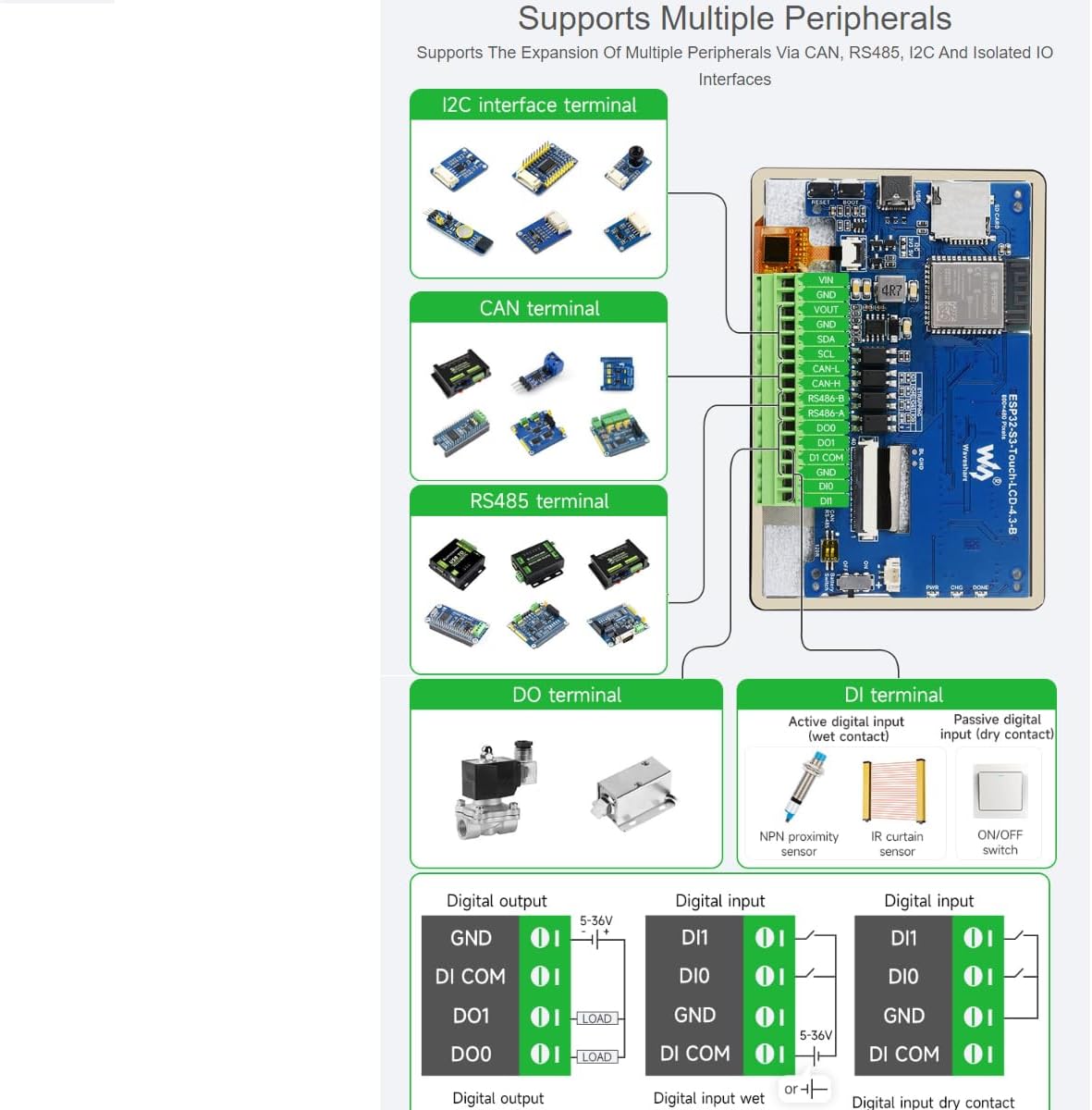
Figure 4: Illustration of the board's peripheral expansion capabilities, including I2C, CAN, RS485, Digital Output (DO), and Digital Input (DI) terminals.
- Antarmuka I2C: For connecting I2C compatible sensors and modules.
- CAN Terminal: Enables communication over a CAN bus network.
- Terminal RS485: Facilitates long-distance serial communication.
- DO Terminal (Digital Output): Optocoupler isolated outputs for controlling external devices with higher driving capability.
- DI Terminal (Digital Input): Optocoupler isolated inputs supporting both active (wet contact) and passive (dry contact) signals.
4. Parentah Setup
Follow these steps to set up your ESP32-S3 development board.
4.1 suplai kakuatan
- Connect a 7-36V DC power supply to the designated terminal (13 in Figure 3).
- Alternatively, power the board via the USB Type-C port (3 in Figure 3).
- For portable applications, connect a 3.7V single lithium battery to the GH1.25 header (11 in Figure 3) and ensure the battery power switch (10 in Figure 3) is ON.
4.2 Métode Kabel
The board supports two primary wiring methods for integration into various systems.
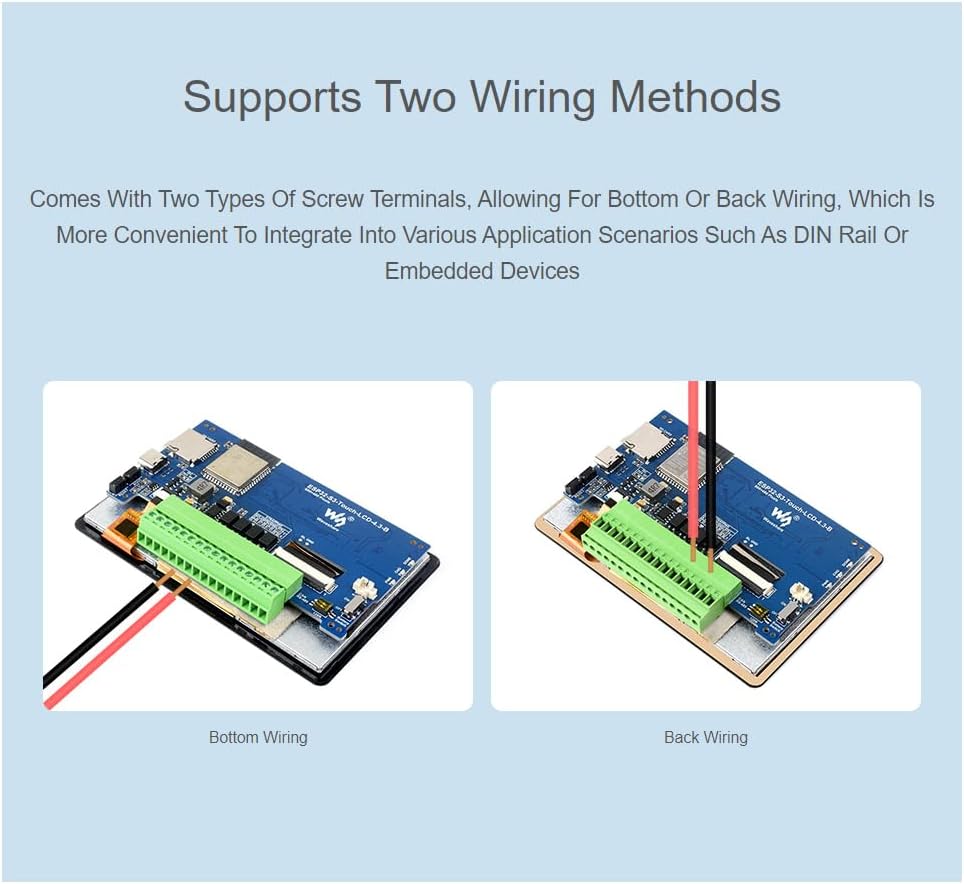
Figure 5: Comparison of bottom wiring and back wiring methods for connecting to the board's terminals.
- Bottom Wiring: Wires are connected from the bottom of the terminal blocks, suitable for flush mounting or integration where space above the terminals is limited.
- Back Wiring: Wires are connected from the back of the terminal blocks, often preferred for DIN rail mounting or embedded devices where access from the rear is convenient.
4.3 Pemrograman Awal
To upload firmware to the ESP32-S3, connect the board to your computer via the USB Type-C port. Press and hold the BOOT button (4 in Figure 3) while powering on or resetting the board to enter programming mode. Release the BOOT button after the board starts up. Use development environments such as the Arduino IDE or ESP-IDF to compile and upload your code.
5. Parentah Operasi
Once programmed, the ESP32-S3 board operates according to the uploaded firmware. The integrated display and touch functionality are key aspects of its operation.
5.1 Capacitive Touch Display
The 4.3-inch capacitive touch screen supports 5-point multi-touch input, enabling intuitive user interaction for HMI applications.

Figure 6: A hand interacting with the capacitive touch screen, illustrating its multi-point touch capability.
- The touch functionality is managed via an I2C interface, allowing for precise and responsive input.
- Develop graphical user interfaces using libraries like LVGL to leverage the full potential of the display.
5.2 Konéktipitas Wireless
The ESP32-S3 features integrated 2.4GHz Wi-Fi and Bluetooth 5 (LE) for wireless communication.
- Wifi: Connect to local networks for internet access, data transfer, or IoT applications.
- Bluetooth 5 (LE): Establish low-energy connections with other Bluetooth-enabled devices for data exchange or control.
6. Skenario Aplikasi
The versatility of the ESP32-S3 4.3inch Touch LCD Development Board makes it suitable for a wide range of applications.

Gambar 7: Kelamples of how the ESP32-S3 board can be utilized in Human-machine Interface and LVGL GUI development.
- Antarmuka Manusa-Mesin (HMI): Develop intuitive control panels and interactive displays for industrial automation, smart home devices, or custom gadgets. The capacitive touch screen and powerful processor are ideal for creating responsive user interfaces.
- LVGL GUI Development: Utilize the LVGL (Light and Versatile Graphics Library) to create rich and visually appealing graphical user interfaces with low memory requirements. This is particularly useful for embedded systems where resources are constrained.
- Alat-alat IoT: Leverage Wi-Fi and Bluetooth connectivity to build connected devices for smart homes, environmental monitoring, or remote control applications.
- Kontrol Industri: With CAN and RS485 interfaces, the board can be integrated into industrial control systems for data acquisition, process monitoring, and equipment control.
7. Spésifikasi
| Fitur | Spésifikasi |
|---|---|
| Prosesor | Xtensa 32-bit LX7 dual-core, nepi ka 240MHz |
| Konéktipitas Wireless | Wi-Fi 2.4GHz (802.11 b/g/n), Bluetooth 5 (LE) |
| Mémori | SRAM 512KB, ROM 384KB, Flash 16MB, PSRAM 8MB |
| tampilan | 4.3-inch IPS Capacitive Touch LCD, 800×480 resolution, 65K colors |
| Toél Control | 5-point capacitive touch via I2C interface |
| Sasayogian tanaga | 7-36V DC via terminal, 5V via USB Type-C, 3.7V Li-ion battery |
| Antarbeungeut | CAN, RS485, I2C, TF card slot, GH1.25 2P battery header, Digital Isolated IO |
| Kaluaran Digital | Optocoupler isolated, 5-36V, 450mA max sinking current |
| Masukan Digital | Optocoupler isolated, 5-36V, passive/active (NPN/PNP) |
| Diménsi | 6.18 x 4.21 x 1.3 inci (Pakét) |
| Item Beurat | 5.3 ons |

Figure 8: Outline dimensions of the ESP32-S3 4.3inch Touch LCD Development Board in millimeters.
8. Cara ngungkulan
Bagian ieu nyayogikeun solusi pikeun masalah umum anu anjeun tiasa patepang.
- Papan henteu hurung:
- Ensure the power supply (DC terminal or USB-C) is connected correctly and providing adequate voltage (7-36V for DC, 5V for USB).
- If using a battery, check if it is charged and the battery power switch is ON.
- Verify the PWR indicator LED is lit.
- Firmware upload failure:
- Confirm the board is in programming mode (hold BOOT button while powering on/resetting).
- Check USB cable connection and ensure correct COM port is selected in your IDE.
- Install necessary drivers for the USB-to-serial converter if prompted.
- Tampilan teu némbongkeun nanaon:
- Ensure the display panel connector is securely attached.
- Verify that your firmware initializes the display correctly.
- Check power supply to the display if it's a separate issue from the main board.
- Layar rampa teu ngaréspon:
- Ensure the touch panel connector is securely attached.
- Verify that your firmware correctly initializes and reads from the I2C touch controller.
- Masalah konektivitas Wi-Fi atanapi Bluetooth:
- Pariksa kode anjeun pikeun inisialisasi sareng kredensial Wi-Fi/Bluetooth anu leres.
- Ensure the antenna is not obstructed.
- Uji dina lingkungan anu gangguan nirkabelna minimal.
9. Garansi jeung Rojongan
For technical assistance or inquiries regarding your waveshare ESP32-S3 4.3inch Capacitive Touch LCD Development Board, please contact waveshare customer support. Technical support is provided to assist with any problems you may encounter.
Please refer to the official waveshare websitus wéb atanapi dokuméntasi pameseran anjeun kanggo syarat garansi khusus sareng inpormasi kontak.


