
KAWADA NBH-011
KAWADA NanoBlock NBH-011 Kinkakuji Temple Micro Block Puzzle Instruction Manual
Model: NBH-011
Nhanganyaya
This manual provides essential information for the assembly, care, and maintenance of your KAWADA NanoBlock NBH-011 Kinkakuji Temple Micro Block Puzzle. NanoBlock sets feature micro-sized building blocks, offering a detailed and intricate building experience. Please read these instructions carefully before beginning assembly.
Safety Information
WARNING: CHOKING HAZARD — Small parts. Not for children under 3 years.
Keep all small parts away from young children and pets. Ensure a clean and organized workspace to prevent loss of pieces.
Package Zviri mukati
- Micro-sized building blocks (approximately 370 pieces)
- Gungano remirayiridzo kabhuku
Gungano Mirayiridzo
The KAWADA NanoBlock NBH-011 Kinkakuji Temple model requires careful assembly due to its micro-sized components. Follow the detailed step-by-step instructions provided in the included assembly booklet.
- Kugadzirira: Unpack all components and verify that all pieces are present by comparing them with the parts list in the instruction booklet. Organize pieces by color and size to facilitate assembly.
- Tevera Bhuku: Refer to the dedicated assembly instructions booklet for precise, visual, and sequential steps. Each step illustrates which blocks to use and where to place them.
- Precision: Due to the small size of the blocks, use tweezers if necessary for precise placement. Apply gentle, even pressure to connect blocks securely.
- Patience: Building intricate NanoBlock models requires patience. Do not rush the assembly process.
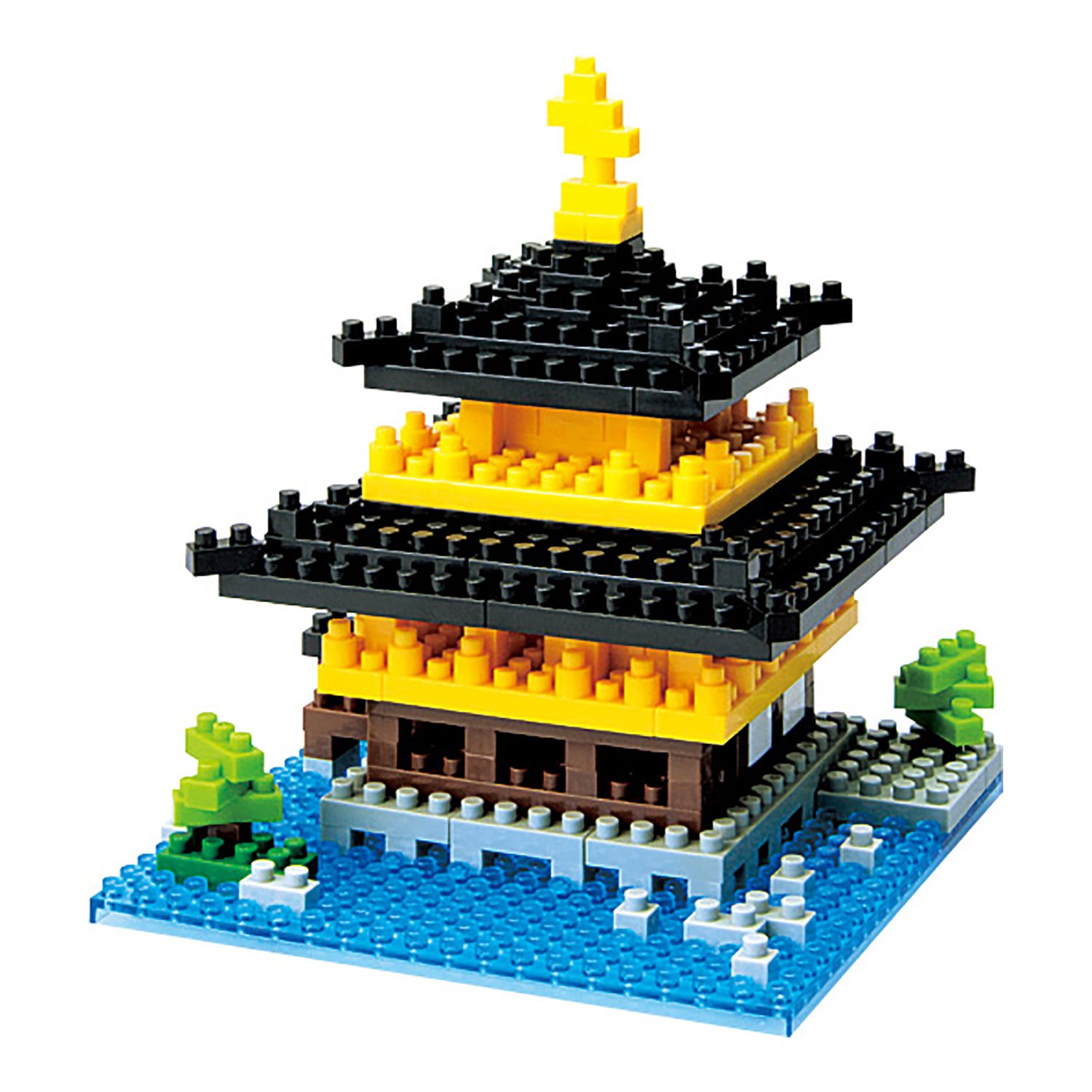
Image: The product box for the KAWADA NanoBlock NBH-011 Kinkakuji Temple model. It displays the completed Golden Pavilion structure, highlighting the micro-sized blocks and the overall design. The box also indicates the model number NBH-011 and the brand NanoBlock by Kawada.
If you encounter any difficulties, re-examine the previous steps in the instruction booklet to ensure correct placement.
Kuchengeta uye Kuchengeta
- Kuchenesa: To clean your assembled NanoBlock model, gently wipe it with a dry, soft cloth. For stubborn dust, a slightly damp jira rinogona kushandiswa, asi dzivisa hunyoro hwakanyanyisa. Usashandise makemikari ane hasha kana abrasive cleaners.
- Kuchengeta: Store the assembled model in a stable location away from direct sunlight, extreme temperatures, and high humidity to prevent discoloration or material degradation.
- Kubata: Handle the model with care to avoid accidental disassembly, especially with delicate sections.
Kugadzirisa matambudziko
Zvimedu Zvisipo
If you believe you are missing pieces, first carefully re-check your workspace and the packaging. Due to their small size, pieces can be easily overlooked. If pieces are genuinely missing, contact KAWADA customer support for assistance.
Difficulty Connecting Blocks
Ensure that the blocks are correctly oriented and aligned before applying pressure. Some blocks may require a firm, but gentle, push to snap into place. Avoid forcing blocks, as this can damage them.
Muenzaniso Kusagadzikana
Review the assembly steps to confirm all connections are secure and blocks are placed according to the instructions. Loose connections can lead to instability.
Zvinotsanangurwa
| Brand | KAWADA |
| Model Name | Kinkakuji Temple of The Golden Pavilion |
| Model Number | NBH-011 |
| Nhamba yeZvimedu | 370 |
| Material Type | Plastiki |
| Item Dimensions | 5.5 x 2 x 5.5 inches |
| Item Weight | 3.52 ounces |
| Mugadziri Minimum Age | Mwedzi 156 (makore matatu) |
Warranty Information
This product is sold without a manufacturer's warranty. Please refer to the retailer's return policy for any issues upon purchase.
Mutengi Support
For further assistance or inquiries regarding your KAWADA NanoBlock NBH-011, please refer to the contact information provided on the product packaging or the official KAWADA website. Ensure you have your model number (NBH-011) ready when contacting support.
Ask a question about this manual
Ask about setup, troubleshooting, compatibility, parts, safety, or missing instructions. Manuals+ will review the question and use this page’s manual context to help answer it.