
Target TT-IK-DST 1130
Instrukcja obsługi głośnika wieżowego Target TT-IK-DST 1130
Model: TT-IK-DST 1130
1. Wprowadzenie
This manual provides essential instructions for the safe and efficient operation of your Target TT-IK-DST 1130 Tower Speaker. Please read this manual thoroughly before using the product and retain it for future reference. The Target TT-IK-DST 1130 is a versatile audio system featuring 130W RMS output, an 8-inch subwoofer, Bluetooth connectivity, FM radio, USB playback, and karaoke functionality with a wireless microphone.
2. Ważne informacje dotyczące bezpieczeństwa
Aby zapobiec porażeniu prądem elektrycznym, pożarowi lub uszkodzeniu urządzenia, należy przestrzegać następujących środków ostrożności:
- Nie wystawiaj urządzenia na deszcz lub wilgoć.
- Nie blokuj żadnych otworów wentylacyjnych.
- Należy zapewnić prawidłowe uziemienie źródła zasilania.
- Nie otwieraj obudowy głośnika. Wszelkie prace serwisowe powierzaj wykwalifikowanemu personelowi.
- Unikać umieszczania urządzenia w pobliżu źródeł ciepła lub w bezpośrednim świetle słonecznym.
- Czyścić wyłącznie suchą szmatką.
3. Zawartość opakowania
Sprawdź, czy w przesyłce znajdują się wszystkie elementy wymienione poniżej:
- Target TT-IK-DST 1130 Tower Speaker
- Mikrofon bezprzewodowy
- Zdalne sterowanie
- Przewód zasilający
- Instrukcja obsługi (ten dokument)
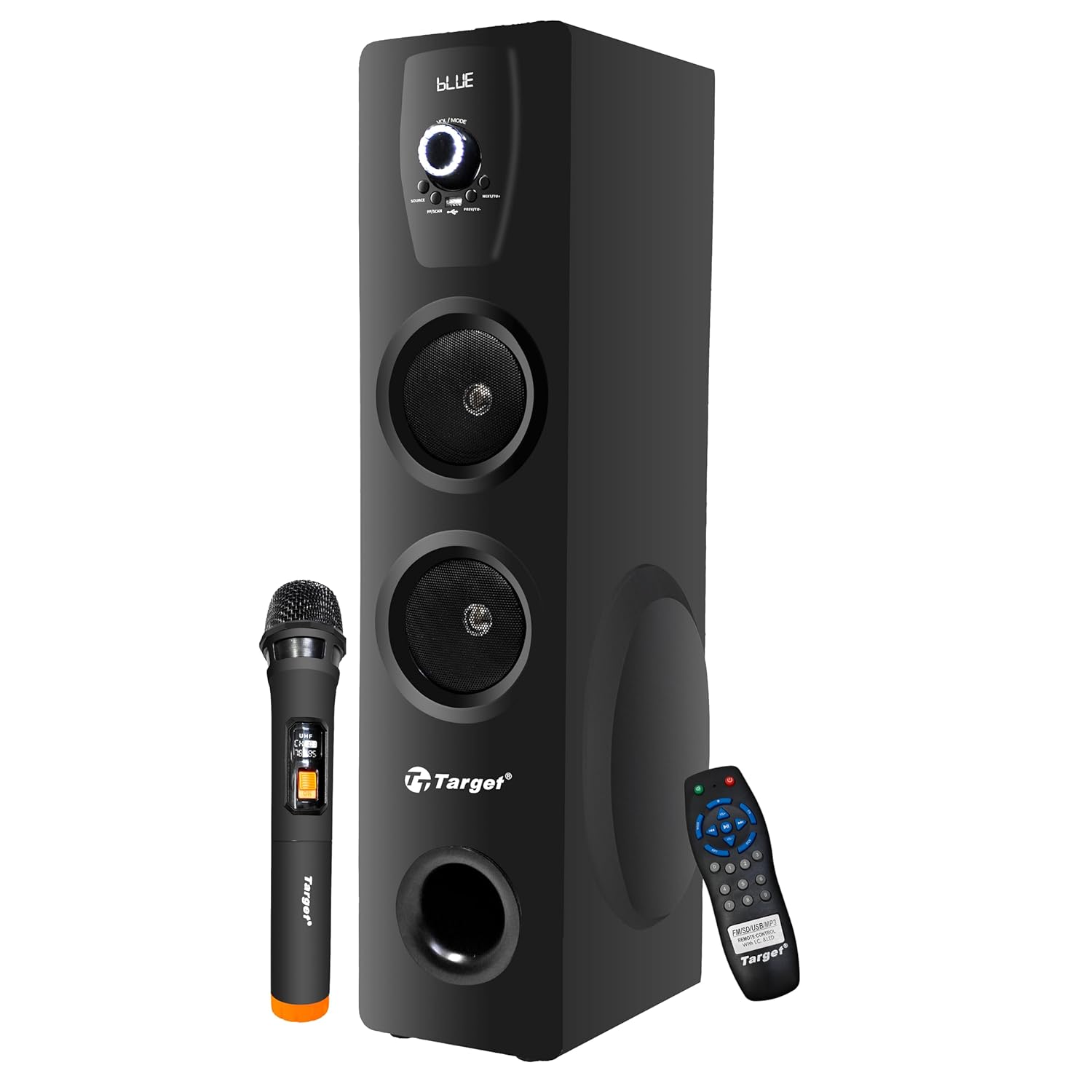
Figure 3.1: Target TT-IK-DST 1130 Tower Speaker with included wireless microphone and remote control.
4. Koniec produktuview
The Target TT-IK-DST 1130 Tower Speaker is designed for a comprehensive audio experience. It features multiple input options and a user-friendly interface.
4.1 Główne cechy
- Mocne wyjście audio: 130 Watts RMS with dual drivers and an 8-inch subwoofer for deep bass.
- Wiele połączeń: Bluetooth for wireless streaming, USB port for media playback, and FM radio.
- Funkcjonalność karaoke: Includes a wireless microphone for vocal performances.
- Intuicyjny interfejs: LED display for status indication and a full-function remote control.
- Kompatybilność z komputerem: Plug-and-play setup for direct connection to PCs.

Figure 4.1: Visual representation of the speaker's main features.
4.2 Panel sterowania
The main controls are located on the front panel of the speaker. These include the master volume knob, input selection buttons, and playback controls.

Rysunek 4.2: Szczegółowy view panelu sterowania głośnika.
4.3 Pilot zdalnego sterowania
The included remote control allows for convenient operation of all speaker functions from a distance.

Figure 4.3: Remote control and key feature icons.
5. Instrukcje konfiguracji
5.1 Umieszczenie
Place the tower speaker on a stable, flat surface. Ensure there is adequate space around the speaker for proper ventilation and optimal sound dispersion. Avoid placing it in enclosed spaces or directly against walls if possible.
5.2 Połączenie zasilania
- Connect the power cord to the power input port on the rear of the speaker.
- Podłącz drugi koniec przewodu zasilającego do standardowego gniazdka sieciowego.
- Press the power button on the speaker or remote control to turn on the unit. The LED display will illuminate.
5.3 Podłączanie źródeł dźwięku
Głośnik obsługuje różne metody wprowadzania sygnału audio:
- Bluetooth: Do bezprzewodowego łączenia się ze smartfonami, tabletami i innymi urządzeniami obsługującymi technologię Bluetooth.
- USB: Do odtwarzania dźwięku filebezpośrednio z dysku flash USB.
- AUX/Line-In: For wired connection to devices using a 3.5mm audio cable.
- Radio FM: Built-in tuner for receiving FM broadcasts.
- HDMI: For digital audio connection from compatible devices.
6. Instrukcja obsługi
6.1 Włączanie/wyłączanie zasilania
Naciśnij MOC button on the control panel or remote control to turn the speaker on or off.
6.2 Wybór trybu
Naciśnij TRYB button on the control panel or remote control to cycle through available input modes: Bluetooth, USB, FM Radio, AUX, HDMI.
6.3 Obsługa Bluetooth
- Turn on the speaker and select Bluetooth mode. The LED display will show "BLUE" or a similar indicator.
- Włącz Bluetooth w swoim urządzeniu mobilnym i wyszukaj dostępne urządzenia.
- Wybierać "TT-IK-DST 1130" (or similar name) from the list to pair.
- Po sparowaniu możesz odtwarzać dźwięk z urządzenia przez głośnik.
6.4 Odtwarzanie USB
- Włóż dysk flash USB zawierający dźwięk filedo portu USB w głośniku.
- Wybierać USB mode. The speaker will automatically detect and begin playing audio files.
- Use the playback controls (Play/Pause, Next, Previous) on the speaker or remote control.
6.5 Radio FM
- Wybierać FM tryb.
- Naciśnij SKANDOWAĆ button (if available) on the remote or speaker to automatically search and save available radio stations.
- Użyj POPRZEDNI/NASTĘPNY przyciski do poruszania się po zapisanych stacjach.
6.6 Funkcja karaoke
- Ensure the wireless microphone is powered on and within range of the speaker.
- Play your desired background music through any input mode (Bluetooth, USB, AUX, HDMI).
- Adjust the microphone volume using the dedicated control (if available) or the main volume.

Figure 6.1: Using the wireless microphone for karaoke.
7. Konserwacja i pielęgnacja
- Czyszczenie: Do czyszczenia zewnętrznej części głośnika używaj miękkiej, suchej ściereczki. Nie używaj płynnych środków czyszczących ani środków ściernych.
- Składowanie: Jeśli głośnik nie będzie używany przez dłuższy czas, należy przechowywać go w chłodnym i suchym miejscu, z dala od bezpośredniego światła słonecznego i ekstremalnych temperatur.
- Wentylacja: Aby zapobiec przegrzaniu, upewnij się, że otwory wentylacyjne nie są zablokowane.
8. Rozwiązywanie Problemów
Jeśli masz problemy z głośnikiem, zapoznaj się z poniższymi typowymi problemami i ich rozwiązaniami:
| Problem | Możliwa przyczyna | Rozwiązanie |
|---|---|---|
| Brak zasilania | Przewód zasilający nie jest podłączony; gniazdko elektryczne nie jest aktywne. | Sprawdź podłączenie przewodu zasilającego; spróbuj użyć innego gniazdka. |
| Brak dźwięku | Volume too low; Incorrect input mode selected; Audio cable loose. | Increase volume; Select correct input mode; Reconnect audio cables. |
| Bluetooth nie łączy się | Głośnik nie jest w trybie parowania; Bluetooth urządzenia jest wyłączony; Urządzenie znajduje się za daleko. | Ensure speaker is in Bluetooth mode; Turn on device Bluetooth; Move device closer. |
| Mikrofon karaoke nie działa | Microphone not powered on; Batteries low; Microphone out of range. | Check microphone power; Replace batteries; Move microphone closer to speaker. |
9. Specyfikacje techniczne
| Funkcja | Szczegół |
|---|---|
| Model | TT-IK-DST 1130 |
| Marka | Cel |
| Wyjście audio | 130 W RMS |
| Rozmiar subwoofera | 8 cali |
| Łączność | Bluetooth, USB, FM Radio, AUX, HDMI |
| Odpowiedź częstotliwościowa | 20 Hz (Lower limit only provided) |
| Impedancja | 8 omy |
| Liczba kanałów | 2 |
| Tworzywo | Drewno inżynieryjne |
| Wymiary produktu (dł. x szer. x wys.) | Wymiary 22 x 25 x 90 cm |
| Waga przedmiotu | 1.5 kilogramów |
| Źródło zasilania | Elektryczny przewodowy |
Uwaga: Dane techniczne mogą ulec zmianie bez wcześniejszego powiadomienia.
10. Gwarancja i obsługa klienta
For warranty information, service, or technical support, please contact your retailer or the manufacturer directly. Keep your purchase receipt as proof of purchase for warranty claims.
Manufacturer: Target
Ask a question about this manual
Ask about setup, troubleshooting, compatibility, parts, safety, or missing instructions. Manuals+ will review the question and use this page’s manual context to help answer it.