
1. Kupu Whakataki
This manual provides essential information for the safe and efficient operation of your Anern 4200W Hybrid Solar Inverter. Please read this manual thoroughly before installation and use. Keep it for future reference.
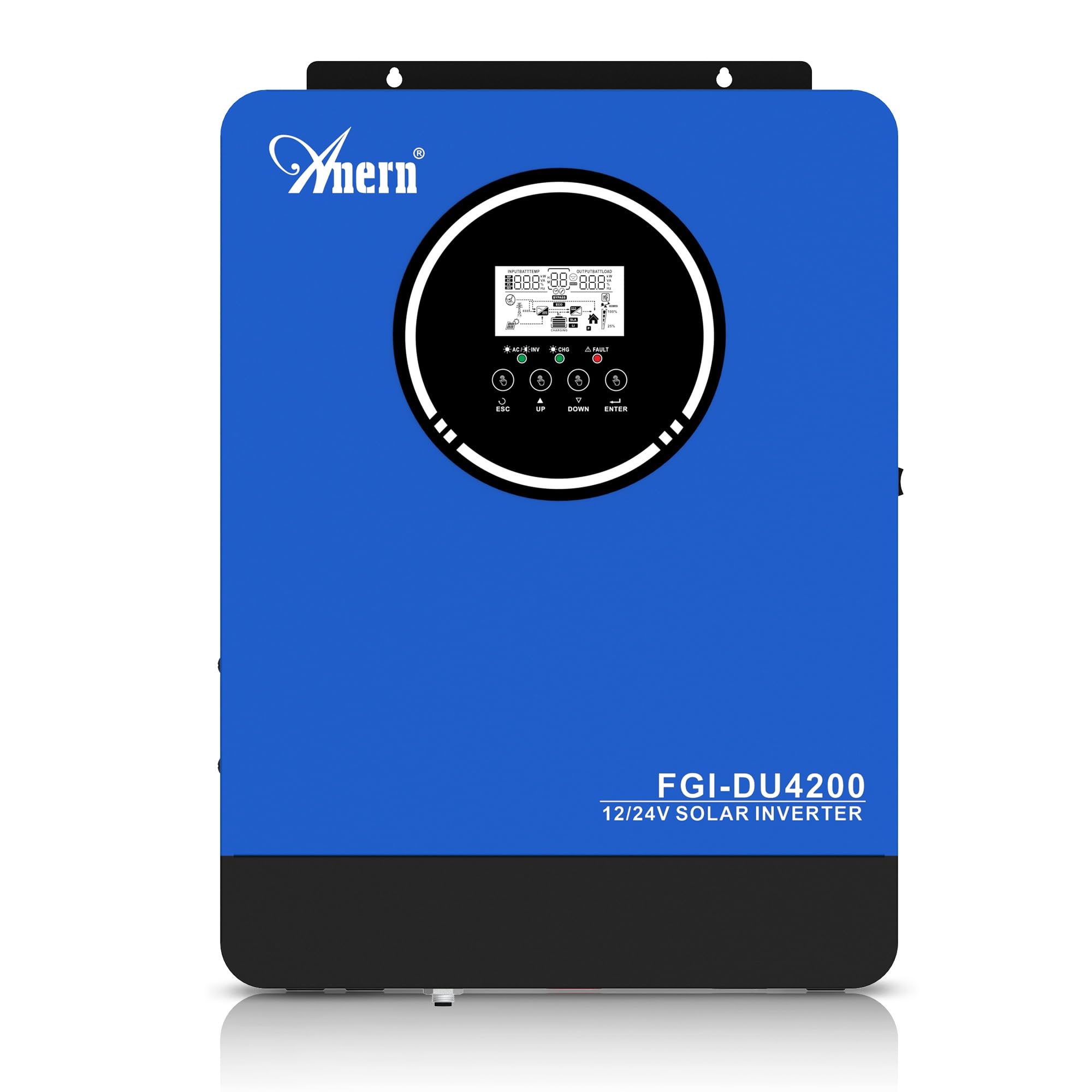
Figure 1: Anern 4200W Hybrid Solar Inverter. This image displays the main unit of the inverter, highlighting its key specifications such as 100A AC charging current, 4200W rated output power, and 500 VDC maximum PV array voltage.
2. Nga Tohutohu Haumaru
Me whai tonu i ngā mahi ārai haumaru e whai ake nei hei whakaiti i te tūponotanga o te ru hiko, te ahi, te whara rānei:
- Ko te whakaurunga me mahi e nga kaimahi mohio.
- Ensure all wiring is correctly connected and equipped with appropriate protective switches.
- Kaua e wetewete te inverter. Kaore he waahanga e taea ana e te kaiwhakamahi ki roto.
- A ape i te tuku i te kaitahuri ki te ua, te hukarere, te rehu, te wai ranei.
- Me whakarite kia tika te hau huri noa i te kaitahuri kia kore ai e wera rawa.
- Momotuhia nga puna hiko katoa (PV, pākahiko, taputapu) i mua i te mahi tiaki, waea waea ranei.
3. Hua Neke Atuview
The Anern 4200W Hybrid Solar Inverter is designed to convert DC power from solar panels and batteries into AC power for household use. It features an integrated 100A MPPT solar charge controller and supports both 12V and 24V battery systems with automatic detection.
Āhuatanga matua:
- 4200W Putanga Ngaru Wai Parakore: Provides stable and clean power for sensitive electronics.
- 100A MPPT Mana Whakahaere Tiaki Solar: Maximizes power harvest from solar panels.
- 12V/24V Battery Auto-Detection: Automatically adjusts output based on connected battery voltage.
- BMS Interface: Supports communication with lithium batteries for enhanced monitoring and protection.
- Real-time LED Display: Shows system status, operating data, and error codes.
- Configurable Charging & Output Modes: Offers flexibility for various application needs.
- Optional WiFi/GPRS Monitoring: Remote monitoring capability (module sold separately).

Figure 2: Inverter Display and Controls. This image illustrates the inverter's LCD display, function buttons for configuration, and the optional WiFi module for remote monitoring.
4. Tatūnga me te Tāuta
4.1 Wiring Hoahoa
Refer to the electrical schematic for proper system wiring. Ensure all connections are secure and correctly polarized.

Figure 3: Electrical Schematic. This diagram shows the complete wiring for a solar inverter system, including solar panels, combiner box, DC/AC breakers, inverter, utility grid connection, and loads.
4.2 Hononga Pūhiko
The inverter supports 12V and 24V battery configurations. It automatically detects the battery voltage and adjusts its output accordingly (2300W for 12V, 4200W for 24V). For 24V systems, connect two 12V batteries in series. For 12V systems, connect batteries in parallel if increasing capacity.

Figure 4: Battery Connection Options. This image illustrates how to connect batteries for 12V (parallel connection for 2300W output) and 24V (series connection for 4200W output) systems.
The inverter also supports lithium batteries and includes a BMS (Battery Management System) interface for monitoring and protection. Ensure the BMS is properly connected if using lithium batteries.

Figure 5: Communication Interfaces. This image highlights the dual communication interfaces for BMS (Battery Management System) and optional WiFi module, enabling remote monitoring and battery communication.
4.3 Startup and Shutdown Sequence
Raupapa Whakaoho:
- Honoa te pākahiko.
- Whakakāhia te kaihurihuri.
- Activate the protective switches for PV, Utility, and Loads.
Raupapa Whakaweto:
- Deactivate the protective switches for Loads, Utility, and PV.
- Whakawetohia te kaihurihuri.
- Momotuhia te pākahiko.
Important Note: Inductive loads (e.g., motors, refrigerators) may require up to 3 times their rated power for startup. Ensure the inverter's capacity is sufficient to handle these surge loads. Exceeding the inverter's surge capacity can cause damage.
5. Mahi
5.1 Whakaaturanga LCD me nga Tautuhinga
The inverter features an LED display that provides real-time system data and operating status. Use the function buttons below the display to navigate menus and configure settings. Settings include battery charging current, AC/solar charging priority, and charging current priority.
5.2 Tikanga Aratau
The inverter offers four configurable charging modes:
- Mana Matua: Ko te hiko o te rā te mea nui mō te utu.
- Solar Anake: Only solar power is used for charging.
- Mahi Matua: Utility grid power is prioritized for charging.
- Solar + Utility Hybrid: Combines solar and utility power for charging.
5.3 Aratau Putanga
Three output modes are available to adapt to various application needs:
- Te Matua o te Rā (SUB): Solar power is prioritized for loads.
- Kaupapa Matua o te Whaipainga (USB): Utility grid power is prioritized for loads.
- SBU: Solar, Battery, Utility priority.

Figure 6: Charging and Output Modes. This diagram visually explains the four available charging modes (Solar Charge, Utility Priority, Solar Priority, Hybrid Charge) and three load output modes (PV Priority, Utility Priority, SBU Priority).
5.4 Arotake Mamao
The inverter supports remote monitoring via an optional WiFi/GPRS module (sold separately). This allows users to monitor system performance and status from a distance.
6. Tiaki
Ko te tiaki i nga wa katoa ka whakarite i te mahi tino pai me te roa o to kaihurihuri:
- Kia noho ma te inverter kia kore e pehu. Whakamahia he kakahu maroke mo te horoi.
- Me whakarite kia kaua e araia nga whakatuwheratanga.
- Ia wa, tirohia nga hononga waea katoa mo te piri me nga tohu o te waikura.
- Monitor the battery status, especially if using lithium batteries with the BMS interface, to prevent overcharge or deep discharge.
- Inspect solar panels for dirt or damage that could reduce efficiency.
7. Te Raru
The LED display will show error codes if issues arise. Refer to the inverter's display for specific error codes to diagnose and resolve problems. Common issues and their potential solutions include:
- Kore Putanga Hiko: Check battery connections, DC/AC breakers, and inverter power switch.
- Pūhiko Iti Voltage: Ensure batteries are adequately charged. Check charging sources (solar, utility).
- Whakatupato Nui atu: Reduce the connected load. Inductive loads may cause temporary overloads during startup.
- Te wera nui: Ensure proper ventilation. Clean any dust from the inverter's vents.
- Hapa Whakauru PV: Tirohia ngā hononga o te papa rā me te hikotage. Ensure PV array voltagkei roto i te awhe kua tohua (55-500V DC).
For persistent issues or error codes not listed, contact customer support.
8. Whakatakotoranga Hangarau
| Āhuahira | Whakatakotoranga |
|---|---|
| Waitohu | Anern |
| Tau tauira | AN-FGI-DU 4200 |
| Hiko Hiko | 4200 Watts |
| Te Mana Putanga | 4500 Watts |
| Max. Output Power (Watts) | 4200 |
| Puka Ngaru Huaputa | Wore Hine Pure |
| Puna Mana | Maamaa te Ra, Ma te Pahiko |
| Nga Whakamahinga Hua Kua Manakohia | Kainga |
| Nga Waahanga kei roto | Pukapuka Tohutohu |
| Tautukunga | CE |
| Hunga Hua | 30 x 10 x 40 cm; 8.86 kg |
9. Pūtāhui me te Tautoko
For warranty information and technical support, please refer to the documentation provided with your purchase or contact Anern customer service. Keep your purchase receipt as proof of purchase.