
1. Kupu Whakataki
This manual provides detailed instructions for the LinYuvo KS10 Wireless Controller. It covers setup, operation, and maintenance to ensure optimal performance and an enhanced gaming experience across various platforms, including Nintendo Switch, Windows, SteamOS, and iOS devices.
2. Hua Neke Atuview
The LinYuvo KS10 is a versatile wireless controller designed for a comfortable and responsive gaming experience. It features a transparent design showcasing internal components, enhanced joysticks, and customizable functions.

Whakaahua 2.1: Mua view of the LinYuvo KS10 Wireless Controller, showing its transparent casing and button layout.
Āhuatanga matua:
- Metal Mushroom Head & Honeycomb Design Joysticks: Provides improved operational feedback and anti-slip functionality for precise control.
- Three-Speed Continuous Firing (Turbo): Offers flexible operation for rapid input in games.
- Integrated Six-Axis Gyroscope: Enables immersive motion sensing for compatible games.
- Adjustable Vibration Level: Dual motors provide haptic feedback that can be customized.
- Painga Rama Tae: Features RGB lighting with various patterns to enhance the gaming atmosphere.
- Back-Key Macro Programming: Allows for personalized macro programming and multi-step combined key output.
- Hoahoa Ergonomic: Shaped for comfortable grip during extended gaming sessions.
- Wake-up Function: Ability to wake up the connected console.

Figure 2.2: Close-up of the metal rocker and honeycomb joystick design, highlighting enhanced detection and anti-slip features.
3. Tatūnga
3.1. Te Whakataki i te Kaiwhakahaere
Before initial use, fully charge the controller using the provided USB-C cable. Connect the cable to the controller's charging port and a compatible USB power source (e.g., a computer USB port or a USB wall adapter). The charging indicator will show the charging status and turn off when fully charged.
3.2. Te hono atu ki te Nintendo Switch
- On your Nintendo Switch console, go to the HOME Menu.
- Tīpakohia "Ngā Kaiwhakahaere", katahi "Hurihia te Pupuri/Te Tono".
- Patohia me te pupuri i te Patene Whakahoa on the top of the LinYuvo KS10 controller for a few seconds until the indicator lights start flashing rapidly.
- Once paired, the controller will appear on the Switch screen, and the indicator light(s) on the controller will remain solid.
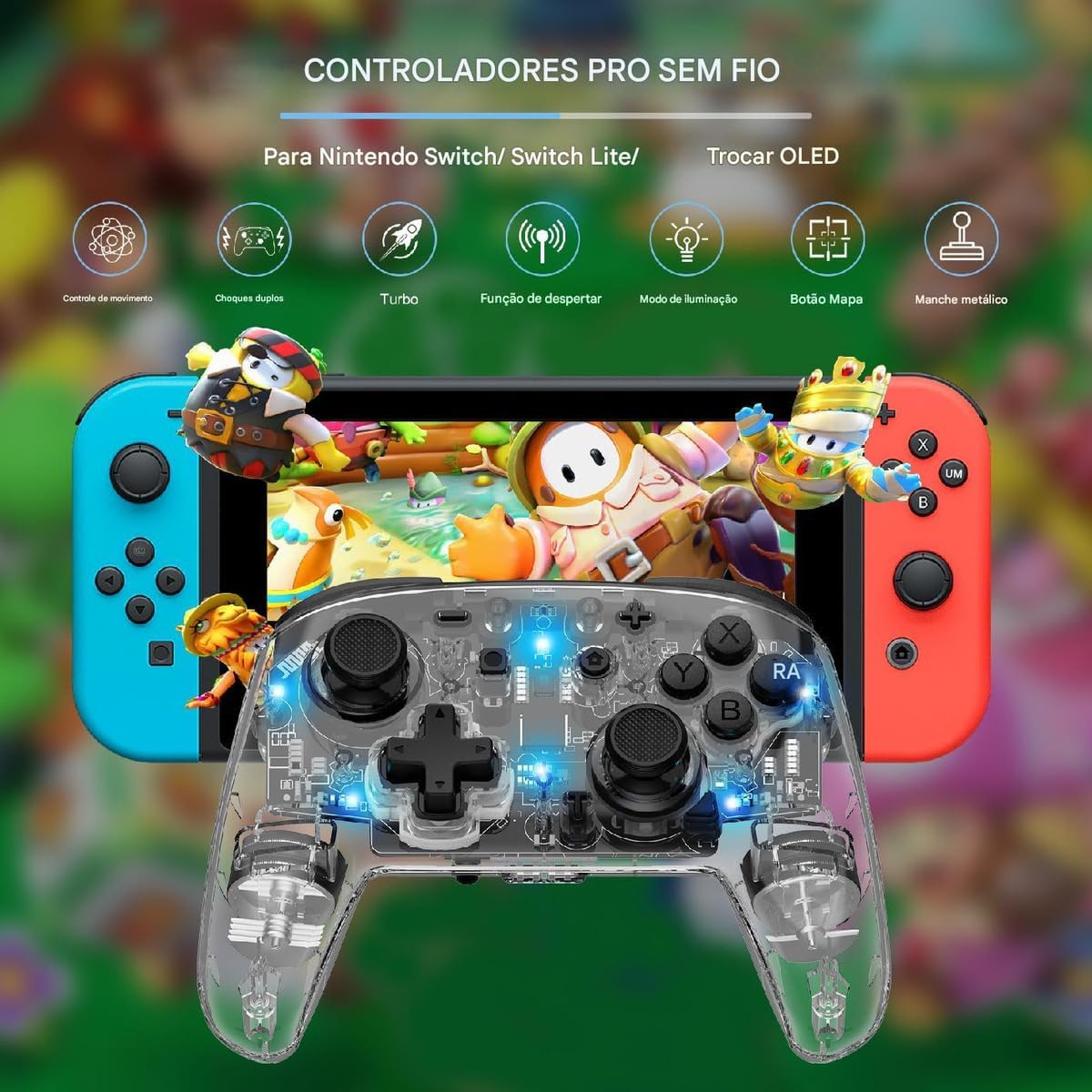
Figure 3.1: The LinYuvo KS10 controller shown alongside a Nintendo Switch console, illustrating its compatibility.
3.3. Pairing with Windows/SteamOS
- Ensure your Windows PC or SteamOS device has Bluetooth enabled.
- Haere ki nga tautuhinga Nihokikorangi i runga i to taputapu ka kowhiri "Tāpirihia te Nihokikorangi, tētahi atu taputapu rānei".
- Patohia me te pupuri i te Patene Whakahoa on the LinYuvo KS10 controller until the indicator lights flash rapidly.
- Select the controller from the list of available devices to complete pairing.
3.4. Pairing with iOS Devices
- I tō pūrere iOS, haere ki Tautuhinga > Nihokikorangi me te whakarite kia ka te Nihokikorangi.
- Patohia me te pupuri i te Patene Whakahoa on the LinYuvo KS10 controller until the indicator lights flash rapidly.
- Look for the controller in the "Other Devices" list and tap to connect.
3.5. Wake-up Function
To activate a connected Switch console from sleep mode, simply press and hold the "HOME" button on the controller for approximately 3 seconds.

Figure 3.2: The controller's ergonomic design and the instruction to hold the HOME button for 3 seconds to wake up the Switch console.
4. Nga Tohutohu Whakahaere
4.1. Mana Taketake
The LinYuvo KS10 controller features standard button layouts including A, B, X, Y buttons, D-pad, Left/Right joysticks, L/R and ZL/ZR shoulder buttons, HOME, SELECT, START, and screenshot buttons. Refer to in-game instructions for specific button functions.
4.2. Mahi Turbo
The Turbo function allows for rapid, continuous input of a selected button. It has three adjustable speeds: 5 shots/second, 12 shots/second, and 20 shots/second.
- Hei whakahohe i te Turbo: Patohia me te pupuri i te Pātene Turbo (T), then press the desired action button (e.g., A, B, X, Y, L, R, ZL, ZR). The button will now continuously fire when held down.
- Hei whakatika i te tere Turbo: I te wa e mau ana te Pātene Turbo (T), pehia te Tango (-) button to decrease speed or the Tāpiri (+) button to increase speed. The corresponding light will flash slowly, medium, or fast to indicate the speed level.
- Hei whakakore i te Turbo: Patohia me te pupuri i te Pātene Turbo (T), then press the action button again.

Figure 4.1: Visual representation of the adjustable Turbo function with three speed settings (5/s, 12/s, 20/s) and instructions for adjustment.
4.3. Gyroscope Motion Control
The integrated six-axis gyroscope provides motion control capabilities for games that support it. This allows for immersive gameplay where tilting and moving the controller translates into in-game actions.

Figure 4.2: A user demonstrating gyroscope motion control with the LinYuvo KS10 controller in a racing game scenario.
4.4. Adjustable Vibration Feedback
The controller features dual motors for haptic feedback. The vibration intensity can be adjusted to suit personal preference.
- To adjust vibration: Patohia me te pupuri i te Vibration button (UM), ka whakamahi i te Runga/Raro directional buttons on the D-pad to increase or decrease intensity.
- Available levels typically include 0%, 30%, 50%, 75%, and 100%.

Figure 4.3: Illustration of the adjustable vibration feedback levels (0%, 30%, 50%, 75%, 100%) provided by the integrated dual motors.
4.5. Colorful Lighting Effects
The controller includes customizable RGB lighting to enhance the gaming ambiance. There are various lighting modes and colors.
- To change lighting mode/color: Pehia te Lighting button (often represented by a lightbulb icon or a specific combination) to cycle through different colors (Blue, Red, Yellow, Green, Orange, Purple, Pink) or breathing patterns (e.g., rainbow breathing).
- Hei whakatika i te kanapa: Patohia me te pupuri i te Pātene rama me te whakamahi i te Pātene Y ki te whakatika i nga taumata kanapa.
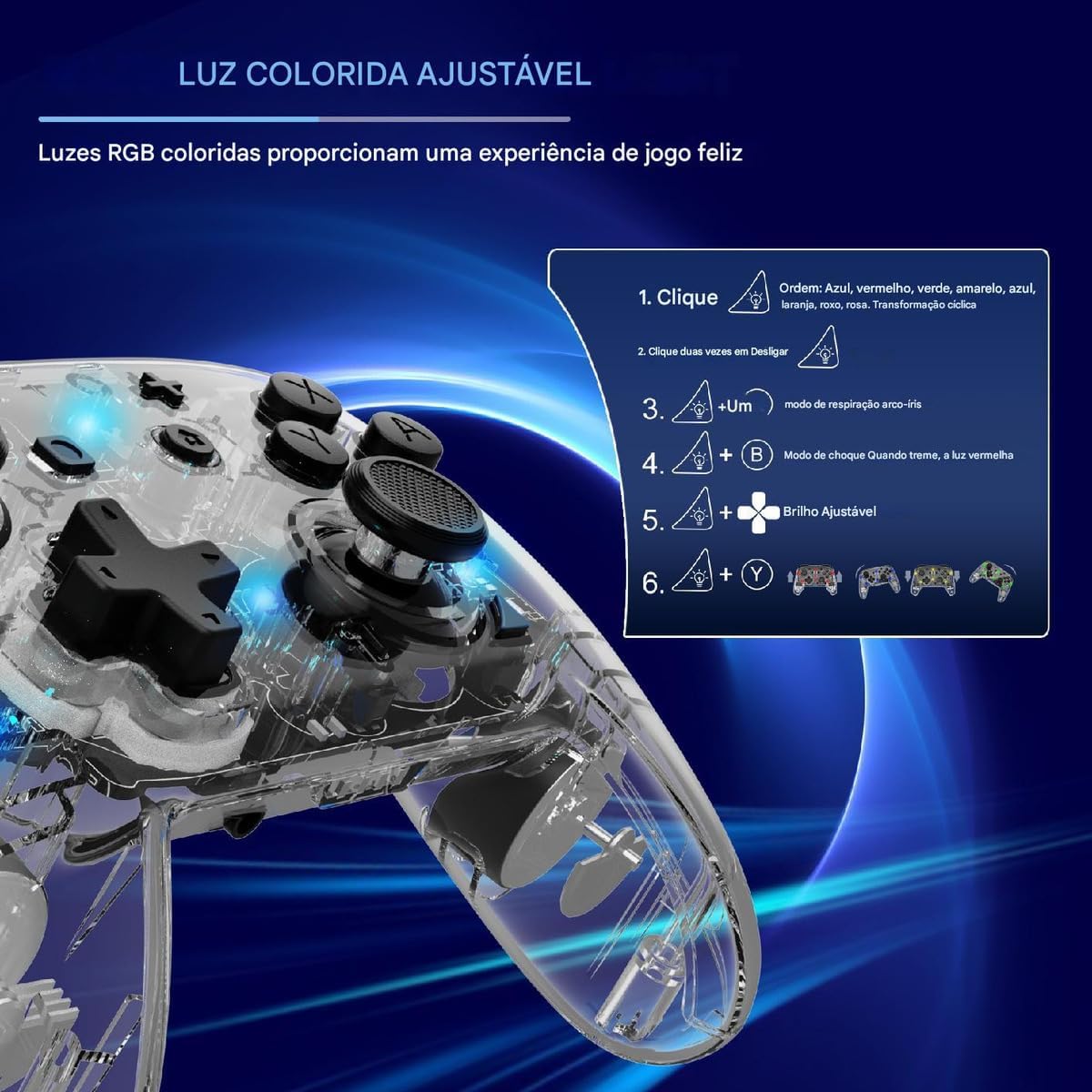
Figure 4.4: Diagram illustrating how to adjust the colorful RGB lighting, including color order and brightness settings.
4.6. Macro Programming (Back-Keys)
The back-keys on the controller can be programmed with custom macros, allowing for complex button sequences to be executed with a single press.
- To enter Macro Programming Mode: Refer to the specific instructions provided with your controller for the exact button combination (e.g., a dedicated Macro button + the back-key you wish to program).
- To record a Macro: While in programming mode, press the sequence of buttons you want to record.
- To save the Macro: Press the Macro button again to save the sequence to the selected back-key.
- To use a Macro: Press the programmed back-key to execute the recorded sequence.
Note: Detailed macro programming steps may vary. Consult the included quick start guide or manufacturer's website for precise instructions.
5. Tiaki
- Te horoi: Whakamahia he kakahu ngohengohe, maroke hei horoi i te pūmana. Kaua e whakamahi i ngā matū kino, i ngā rauemi whakakoi rānei.
- Rokiroki: Whakaorangia te pūmana ki te wahi matao, maroke atu i te ra tika me te wera nui.
- Tiaki Pūhiko: Avoid fully discharging the battery frequently. Charge the controller regularly, even if not in use for extended periods, to maintain battery health.
- Aukati i nga Whakataka: Āraia te kaiwhakahaere mai i ngā maturuturunga me ngā pānga, ka kino pea ngā wāhanga o roto.
6. Te Raru
| Raruraru | Take pea | Rongoā |
|---|---|---|
| Karekau te Kaiwhakahaere e ka ana. | He iti te pākahiko. | Charge the controller for at least 30 minutes. |
| Unable to pair with device. | Bluetooth not enabled; controller not in pairing mode; interference. | Ensure Bluetooth is on. Put controller in pairing mode (flashing lights). Move closer to the device. Restart both devices. |
| He takamuri te whakauru, he momotu ranei. | Low battery; too far from device; wireless interference. | Charge controller. Move closer to device. Reduce other wireless activity. |
| Kāore e aro mai ngā pātene, ngā rakau rānei. | He hapa pūmanawa; he kino ā-tinana. | Restart the controller and the connected device. If problem persists, contact support. |
| Kare e mahi te wiri. | Vibration level set to 0%; game does not support vibration. | Adjust vibration intensity (Section 4.4). Check game settings. |
7. Whakatakotoranga
- Tauira: KS10
- Hononga: Ahokore (Nihokikorangi)
- Hototahi: Nintendo Switch, Windows, SteamOS, iOS
- Nga waahanga motuhake: Six-axis gyroscope, adjustable vibration, customizable RGB lighting, Turbo function, macro programming back-keys, metal joysticks.
- Puna Hiko: Pūhiko ā-roto ka taea te utu
- Tauranga Whakatau: USB-C
- Whenua Taketake: Haina
- ASIN: B0F18PLLLF
8. Pūtāhui me te Tautoko
For warranty information and technical support, please refer to the documentation included with your purchase or contact the retailer. Keep your proof of purchase for any warranty claims.
This product is not an official Nintendo product but is compatible with the Nintendo Switch console.