
1. Kupu Whakataki
This manual provides essential instructions for the safe and effective use of your SanHima Alpine Soft Shell Rooftop Tent. Please read this manual thoroughly before installation and operation to ensure proper setup and to maximize your camping experience. This tent is designed for vehicle-mounted camping, offering a comfortable and elevated sleeping area.
The SanHima Alpine Rooftop Tent features a lightweight design, 360-degree skyview windows, and durable construction suitable for various weather conditions. It is engineered for quick setup and provides ample space for 2-3 people.
2. Nga korero haumaru
Always prioritize safety when installing and using your rooftop tent. Failure to follow these guidelines may result in injury or damage to the product or vehicle.
- Hototahi Waka: Ensure your vehicle's roof rack system has a static weight capacity that exceeds the combined weight of the tent, occupants, and any gear inside the tent. Consult your vehicle and roof rack manufacturer's specifications.
- Tāutatanga: Always secure the tent firmly to your roof rack according to the installation instructions. Regularly check all mounting hardware for tightness, especially before and after travel.
- Whakamahi arawhata: Use the telescopic ladder on stable, level ground. Ensure it is fully extended and locked before climbing. Do not exceed the ladder's weight capacity of 330 lbs (150 kg).
- Nga Tikanga Huarere: In severe weather conditions (strong winds, heavy snow, extreme thunderstorms), it is recommended to seek alternative shelter. Do not use the tent as a primary shelter in extreme conditions.
- Tohanga Taumaha: Distribute weight evenly inside the tent. Avoid placing heavy items near the edges.
- Whakahau: Ensure adequate ventilation to prevent condensation and maintain air quality, especially when using heating devices (not recommended inside the tent).
- Haumaru ahi: Keep all open flames, heaters, and cooking equipment away from the tent fabric. The tent material is not fireproof.
- Tamariki: Supervise children at all times when they are near or inside the tent, especially when using the ladder.
3. Tohutohu Tatūnga
Follow these steps for quick and efficient setup of your SanHima Alpine Rooftop Tent.
- Waka Tūnga: Park your vehicle on a level surface. Engage the parking brake.
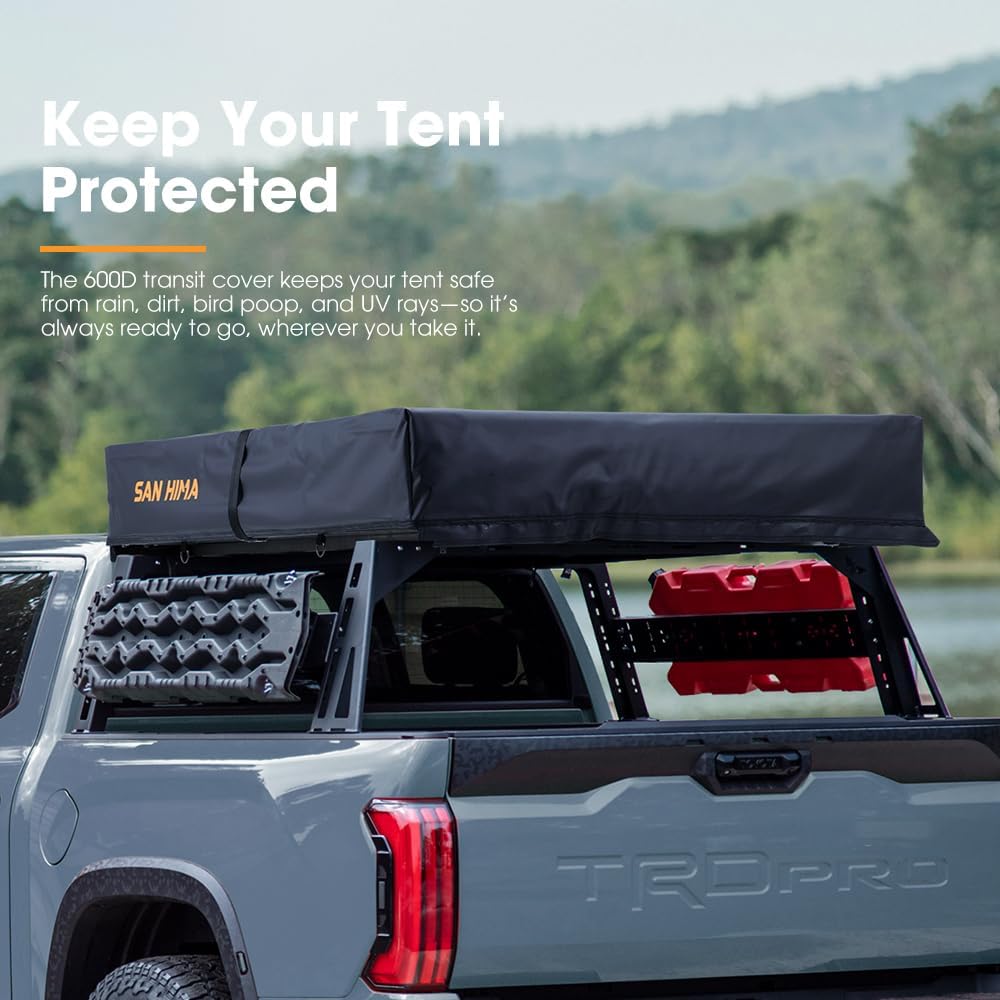
- Remove Transit Cover: Unzip and remove the 600D PVC transit cover that protects the tent during travel. Fold it neatly and store it.
- Unfold Tent: Release the latches securing the tent. Gently push up the top section of the tent, allowing it to unfold. The tent is designed to open easily.
- Whakaroahia te Arawhata: Position the telescopic ladder firmly on stable ground. Extend the ladder to the desired height, ensuring each rung locks into place. The ladder provides support for the tent's overhang.
- Secure Tent Poles: Insert the included window rods to prop open the skyview windows and any other desired openings for ventilation and views.
- Rainfly (Optional): If rain is expected or additional shade is desired, deploy the 210D polyester full-coverage canopy. Secure it using the provided ropes and stakes.


4. Te Whakahaere i te Tēneti
The SanHima Alpine Rooftop Tent is designed for comfort and convenience during your outdoor adventures.
4.1 Rangiview Windows and Ventilation
The tent features 360-degree skyview windows, allowing for panoramic views and excellent airflow. The windows are equipped with bug-proof mesh to keep insects out while allowing fresh air in. Use the internal loops to roll up and secure the window flaps as desired.

4.2 Sleeping Comfort
The tent includes a cloud foam mattress for maximum comfort. The mattress is secured with Velcro straps to prevent movement during sleep.

4.3 Nga ahuatanga o roto
The tent is equipped with internal pockets for storing small essentials and a shoe bag to keep footwear separate from the sleeping area. Loops are also provided for hanging LED light strips or other accessories.

5. Tiaki
Proper maintenance will extend the life of your SanHima Alpine Rooftop Tent.
- Te horoi: The tent fabric (300D PU-coated polyester) should be hand washed only. Use mild soap and water. Do not use harsh chemicals or machine wash. Allow the tent to air dry completely before packing away to prevent mildew.
- Rokiroki: Always use the 600D PVC transit cover when the tent is packed and not in use. This cover protects the tent from rain, dirt, and UV rays during travel and storage.
- Pūmārō: Periodically check all zippers, buckles, and mounting hardware for wear and tear. Lubricate zippers if they become stiff.
- arawhata: Keep the telescopic ladder clean and free of debris. Ensure all locking mechanisms function smoothly.
6. Te Raru
Ko tenei waahanga e aro ana ki nga take noa ka pa ki a koe.
- Whakahau: Ensure proper ventilation by opening windows or vents. Condensation is natural in enclosed spaces, especially with temperature differences.
- Difficulty Zipping: If zippers are stiff, apply a silicone-based lubricant. Ensure fabric is not caught in the zipper path.
- Tent Not Opening/Closing Smoothly: Check for any obstructions or fabric caught in the folding mechanism. Ensure all latches are released or secured properly.
- Paheke wai: While the tent is waterproof to 3,000mm, ensure all zippers are fully closed and the rainfly is properly deployed and secured. Check for any damage to the fabric.
7. Whakatakotoranga
Detailed specifications for the SanHima Alpine Rooftop Tent.
| Āhuahira | Taipitopito |
|---|---|
| Waitohu | SAN HIMA |
| Ingoa Tauira | Alpine |
| Product Dimensions (Packed) | 55"L x 42"W x 10"H (140cm L x 107cm W x 26cm H) |
| Taumaha Tūemi | 81.4 Pauna (36.9 kg) |
| Te noho | 3 Tangata |
| Nga tau | 4 Te tau |
| Hangarau Atete Wai | 3,000mm |
| Tiaki UV | UV 50+ |
| Main Tent Material | 300D PU-coated Polyester |
| Rauemi Pouaka | 210D Polyester |
| Transit Cover Material | 600D PVC |
| Rauemi Papa | Honeycomb Aluminum |
| Ladder Material | Konumohe |
| Te kaha o te arawhata | 330 lbs (150 kg) |
| Nga Waahanga kei roto | 1 x San Hima Alpine Rooftop Tent, 1 x Telescopic Ladder, 1 x Transit Cover, 1 x User Manual, 8 x Window Rods |


8. Pūtāhui me te Tautoko
8.1 Nga Korero Whakaputanga
The SanHima Alpine Rooftop Tent comes with a 1-Tau Pūtāhui from the date of purchase. This warranty covers manufacturing defects in materials and workmanship. It does not cover damage caused by misuse, improper installation, accidents, normal wear and tear, or unauthorized modifications.
8.2 Tautoko Kiritaki
For any questions, technical assistance, or warranty claims, please contact SanHima customer support. Refer to your purchase documentation or the official SanHima webpae mo nga korero whakapā o naianei.