
1. Kupu Whakataki
The Daitsu Aral ADD-12XB Dehumidifier is designed to efficiently remove excess moisture from indoor environments, helping to prevent mold, mildew, and musty odors. This manual provides essential information for the safe and effective operation, maintenance, and troubleshooting of your dehumidifier. Please read it thoroughly before first use and retain it for future reference.
2. Nga Tohutohu Haumaru
Hei whakarite i te mahi haumaru, kia mau tonu ki nga tikanga e whai ake nei:
- Me whakarite kia rite te toha hiko ki te voltage kua tohua ki te tapanga whakatauranga o te waeine.
- Kaua e whakahaeretia te whakamahana me te taura hiko kua pakaru, te mono ranei.
- Keep the unit upright during transport and operation.
- Maintain at least 20 cm (8 inches) of clearance around the unit for proper airflow.
- Kaua e whakauruhia nga mea ki roto i te urunga hau, te putanga ranei.
- Wewetehia te waeine i mua i te horoi, te mahi tiaki ranei.
- Kaua e whakamahia te whakamaroke hau ki ngā wāhi e rongoatia ana ngā hau, ngā wai rānei e mura ana.
- Ko tenei taputapu ehara i te mea mo te whakamahi ma te hunga (tae atu ki nga tamariki) he iti te kaha o te tinana, te tairongo, te hinengaro, te kore wheako me te mohiotanga, mena ka tukuna atu ki a raatau te tirotiro, te tohutohu ranei mo te whakamahi i te taputapu e te tangata whai mana mo to raatau haumaru.
3. Hua Neke Atuview
Familiarize yourself with the main components of your Daitsu Aral ADD-12XB Dehumidifier.
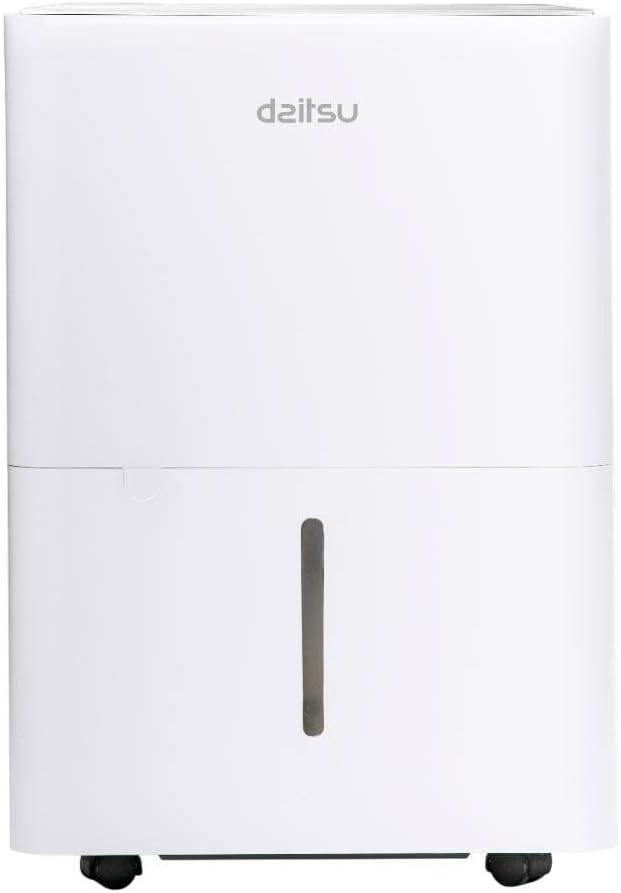
Whakaahua 1: Mua view of the Daitsu Aral ADD-12XB Dehumidifier. This image displays the front of the Daitsu Aral ADD-12XB Dehumidifier, featuring its clean white design and the visible water level indicator on the collection tank.

Whakaahua 2: Whakamuri view of the Daitsu Aral ADD-12XB Dehumidifier. The rear view of the dehumidifier shows the removable air filter cover for maintenance and the continuous drainage outlet, typically used for connecting a hose for extended operation.

Whakaahua 3: Control panel of the Daitsu Aral ADD-12XB Dehumidifier. This close-up image shows the top control panel of the dehumidifier, featuring intuitive buttons for power, mode selection (Continuous, Dry, Turbo, Comfort), and timer settings, along with indicator lights.
4. Tatūnga
4.1 Te Wetewete
- Āta tango i te whakamahu wai mai i tōna tākai.
- Tangohia nga rawa whakakakahu katoa, tae atu ki tetahi riipene, kiriata whakamarumaru ranei.
- Tirotirohia te waahanga mo nga tohu o te pakaru. Mena kua pakaru, kaua e mahi me te whakapiri atu ki te tautoko a nga kaihoko.
4.2 Whakanoho
- Place the dehumidifier on a firm, level surface to minimize vibration and noise.
- Ensure there is at least 20 cm (8 inches) of clear space around the air inlet and outlet to allow for efficient airflow.
- A ape i te whakanoho i te waeine ki te taha o nga puna wera, ki te ra tika ranei.
- Mo te mahi tino pai, waiho te waeine ki waenganui o te ruma e tino hiahiatia ana te whakamakuku.
4.3 Hononga Hiko
Monohia te taura hiko ki roto i te putanga hiko. Me whakarite kia tutuki te putanga ki nga whakaritenga hiko kua tohua ki te tapanga whakatauranga o te waeine.
5. Nga Tohutohu Whakahaere
5.1 Nga Mahi Paewhiri Mana
Tirohia te Whakaahua 3 mo te whakatakotoranga o te paewhiri mana.
- Pātene Hiko: Pēhia ki te whakakā i te waeine ki te ON, ki te OFF ranei.
- Patene Aratau: Press to cycle through available operating modes:
- Cont. (Continuous): The unit operates continuously regardless of the ambient humidity level.
- maroke: Designed for drying clothes or in very humid conditions.
- Turbo: Operates at maximum fan speed for rapid dehumidification.
- Whakamarie: Maintains a comfortable humidity level automatically.
- Pātene Matawā: Press to set the auto-on or auto-off timer (e.g., 24-hour timer).
- Tohu Katoa Tank: Illuminates when the water tank is full and needs to be emptied. The unit will automatically stop operating.
5.2 Te Putea i te Taake Wai
When the 'Tank Full' indicator lights up, the unit will stop operating. To empty the tank:
- Tōia mārire te tāke wai mai i te taha mua o te waeine.
- Āta kawe te tāke ki te totohu, ki te waikeri rānei.
- Ringihia te wai kua kohia.
- Pania te tāke kau ki roto i te waeine kia pāorooro rā anō ki tōna tūranga. Ka tīmata anō te waeine ki te mahi.
5.3 Te Wai Whakaheke Tonu (Whiringa)
For extended operation without needing to empty the water tank, you can set up continuous drainage:
- Locate the continuous drainage outlet at the back of the unit (refer to Figure 2).
- Remove the rubber stopper from the outlet.
- Connect a suitable drain hose (not included) to the outlet. Ensure the connection is secure to prevent leaks.
- Direct the other end of the hose to a floor drain or a large container, ensuring the hose is sloped downwards for gravity drainage.
- The unit will now drain water continuously, bypassing the internal water tank.
6. Tiaki
Ko te tiaki i nga wa katoa ka tino pai te mahi me te whakaroa i te roanga o to whakamaarama.
6.1 Te horoi i te Tātari Hau
Me horoi te tātari hau ia rua wiki, nui ake ranei i runga i te whakamahinga me te kounga o te hau.
- Whakawetohia te whakamahana ka wetewete mai i te putanga hiko.
- Locate the air filter cover on the back of the unit (refer to Figure 2).
- Tangohia te taupoki tātari ka hutia marietia te tātari hau.
- Clean the filter using a vacuum cleaner to remove dust and debris. For heavy dirt, wash the filter with lukewarm water and a mild detergent.
- Rinse the filter thoroughly and allow it to air dry completely before reinserting.
- Place the dry filter back into the unit and close the cover.
6.2 Te Whakapai i te Taaka Wai
Clean the water tank regularly to prevent mold and bacteria growth.
- Tangohia me te para i te taika wai.
- Horoia te tank ki te wai mahana me te horoi ngawari.
- Horoia rawatia ka whakamaroke i mua i te whakahoki ano ki roto i te waahanga.
6.3 Te horoi o waho
Horoia te taha o waho o te waeine ki te ngohengohe, damp kakahu. Kaua e whakamahi i nga matū kino, abrasives, whakarewa ranei, ka taea e enei te kino te mata.
6.4 Rokiroki
Mena kaore e whakamahia te waahanga mo te wa roa:
- Empty and clean the water tank and air filter.
- Wewetehia te waeine ka kowiri i te taura hiko.
- Cover the unit with a plastic bag or cloth to protect it from dust.
- Store the dehumidifier in an upright position in a cool, dry place.
7. Te Raru
I mua i te whakapā atu ki te tautoko a nga kaihoko, tirohia nga take me nga otinga e whai ake nei:
| Raruraru | Take pea | Rongoā |
|---|---|---|
| Karekau te waeine e ka ana | Karekau he hiko Ko te taura hiko kaore i te hono tika Ki tonu te taika wai | Tirohia te putanga hiko Me whakarite kia mau te waea hiko Putua te puna wai |
| Kaore he wai i kohia | He iti rawa te makuku o te ruma Ko te tātari hau kua purua He iti rawa te pāmahana Unit in continuous drainage mode | Dehumidification may not be needed Horoia te tātari hau Unit may not operate efficiently below 5°C (41°F) Check if continuous drainage hose is connected and draining |
| He haruru te waeine | Kāore te waeine i runga i te mata papatahi Ko te tātari hau kua purua | Whakanohoia te waeine ki runga i te mata papatahi Horoia te tātari hau |
| He iti te whakamakuku | Ka tuwhera nga tatau/matapihi Ko te tātari hau kua purua He nui rawa te rahi o te rūma | Katia nga tatau me nga matapihi katoa Horoia te tātari hau Ensure unit capacity matches room size |
8. Whakatakotoranga
Technical specifications for the Daitsu Aral ADD-12XB Dehumidifier:
| Āhuahira | Whakatakotoranga |
|---|---|
| Ingoa Tauira | ADD-12XB |
| Waitohu | Daitsu |
| Raukaha Whakakorea | 12 Liters/day (at specified conditions) |
| Rōrahi Tāke Wai | 1.5 rita |
| Ahu (H x W x D) | 38.6 x 28 x 19.5 cm (tata ki te 15.2 x 11 x 7.7 inihi) |
| Taumaha Hua | 23.5 kg (āwhiwhi. 51.8 lbs) |
| Voltage | 230 Volts |
| Mana | 2.5 kW (This value seems unusually high for a dehumidifier, typically it would be in Watts, e.g., 250W. Please verify with product label if possible.) |
| Taumata Haruru | 54 Decibels |
| Nga waahanga motuhake | Automatic Shut-off, Continuous Drainage, Timer |
| Tae | Mā |
Note: Specifications are subject to change without notice. Please refer to the product label for the most accurate information.
9. Pūtāhui me te Tautoko
9.1 Nga Korero Whakaputanga
This Daitsu product is covered by a manufacturer's warranty. The warranty period and terms may vary by region. Please retain your proof of purchase for warranty claims. For specific warranty details, refer to the warranty card included with your product or contact Daitsu customer service.
9.2 Tautoko Kiritaki
If you encounter any issues not covered in the troubleshooting section or require further assistance, please contact Daitsu customer support. Contact information can typically be found on the official Daitsu webte waahi kei runga ranei i te kohinga hua.