

1. Hua Neke Atuview
The OWON HDS241 is a versatile 3-in-1 handheld device integrating a single-channel oscilloscope, a 24000-count digital multimeter, and a 100kHz signal generator. Designed for both outdoor and indoor use, it offers a compact form factor with powerful measurement capabilities for various electrical and electronic applications.

Image 1.1: The OWON HDS241 device, highlighting its oscilloscope, multimeter, and signal generator functions.
2. Nga korero haumaru
Before using the OWON HDS241, please read and understand all safety instructions to prevent electric shock, injury, or damage to the device. Keep this manual for future reference.
- Haumaru Whānui: Always use the device within its specified voltage and current limits. Do not operate the device in wet or damp tikanga.
- Haumaru Probe: Ensure probes are correctly connected and rated for the measurement being performed. Avoid touching exposed wiring or components when the device is powered on.
- Haumaru Pūhiko: Use only the specified battery type. Do not disassemble, crush, or expose the battery to extreme temperatures.
- Tiaki: Refer all servicing to qualified personnel. Do not attempt to repair the device yourself.
3. Nga waahanga matua
- Imita Mamati: 4 1/2 digit True RMS digital multimeter for measuring AC/DC voltage/current, resistance, diode, capacitance, and continuity. Maximum input voltage is AC 750V, DC 1000V.
- Signal Waveform Generator: 1-channel 100 kHz generator supporting sine, square, ramp, and pulse wave outputs. Maximum output amplitude is 2.5 Vpp.
- Oscilloscope: Waveform refresh rate up to 10,000 wfms/s, 40MHz bandwidth, and real-time sampling rate up to 250MSa/s. Features auto-setup, multiple measurement functions, 8K record length, cursor measurement, and slow scan mode for long-term signal monitoring.
- Hoahoa Kiato: Portable form factor with a 3.5-inch high-definition color LCD screen, suitable for various environments.
- Roa te Ora o te Pūhiko: Low-power design with a 2000 mAh high-capacity lithium battery and standard Type-C port for charging and power bank compatibility.
4. Ihirangi mokete
The standard package for the OWON HDS241 includes:
- OWON HDS241 Handheld Oscilloscope Unit
- Test Leads for Multimeter
- Oscilloscope Probe
- USB Taura-C taura
- Pukapuka Kaiwhakamahi (tenei tuhinga)
Note: Additional accessories such as a BNC-to-alligator clip cable or carrying case may need to be purchased separately.
5. Tahora Pūrere me nga Mana
Familiarize yourself with the physical components and controls of the HDS241.

Whakaahua 5.1: Mua me te taha view of the OWON HDS241 with key controls and ports labeled. Labels include: signal input connector, display area, multifunction keys, channel key, mode switching key, system settings, save settings, power button, relative value/activation menu key, multimeter input port, horizontal time base setting/signal adjustment, return key, range switch/measurement menu key, arrow keys, auto range/auto setting key, hold value/Stop/Run key, probe compensation output (2.5V/1kHz square wave or signal generator output), USB charging/communication interface, approximate weight (0.6 kg host, excluding battery), gross weight (1.2 kg).
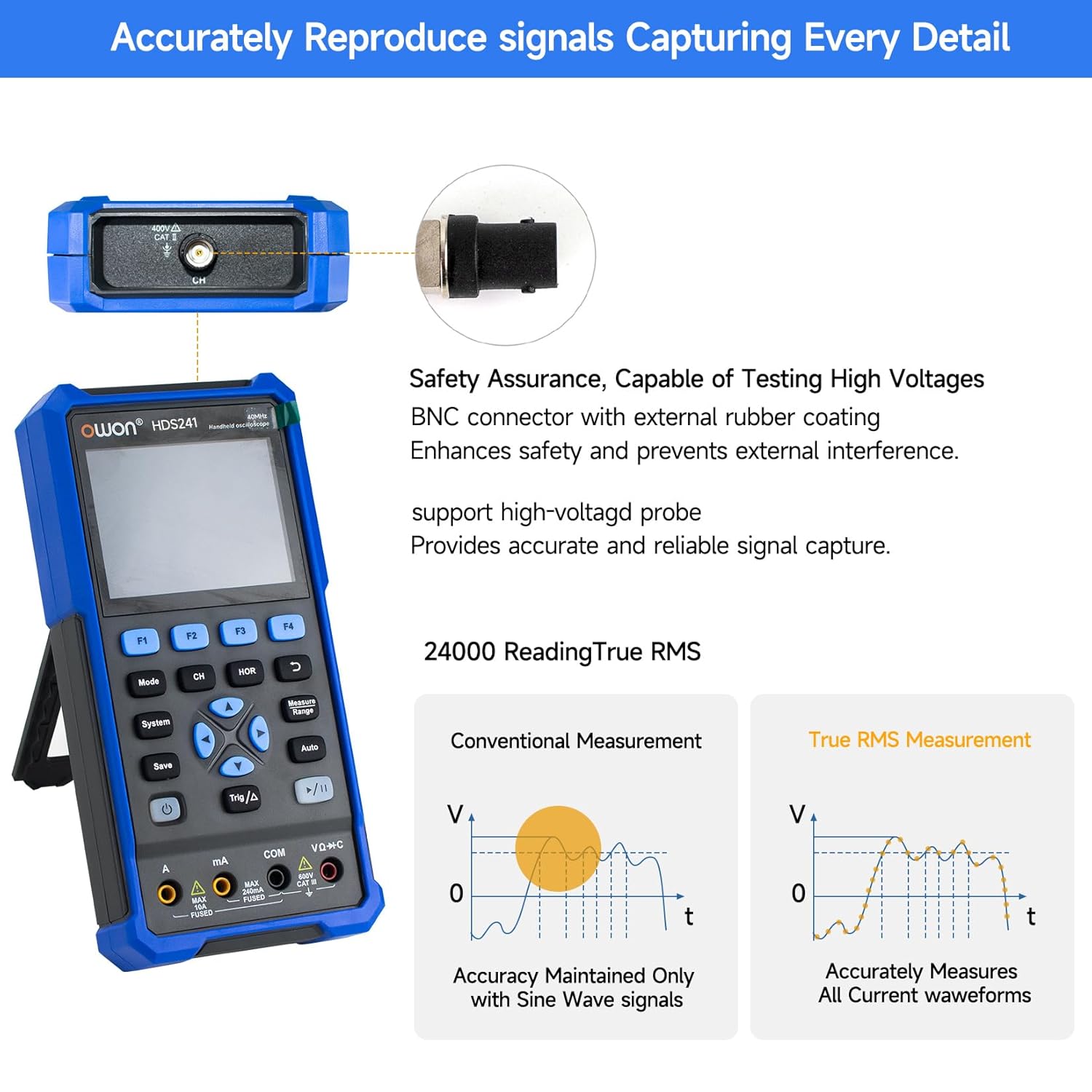
Image 5.2: Detail of the BNC connector, designed for safety and signal integrity, with external rubber coating.
6. Tatūnga Tuatahi
6.1 Te Whakataki i te Pūrere
The HDS241 is equipped with a built-in 2000 mAh lithium battery. Before first use, fully charge the device using the provided USB Type-C cable and a compatible power adapter (not included) or a computer USB port.
- Connect the USB Type-C cable to the device's Type-C port.
- Honoa te pito o te taura ki te puna hiko USB.
- Ko te tohu utu ka whakaatu i te mana utu.

Image 6.1: The USB Type-C charging port and internal battery compartment, emphasizing long-lasting performance.
6.2 Kei te Hiko / Weto
Patohia me te pupuri i te Mana pātene hei whakakā, whakaweto rānei i te taputapu.
7. Aratau Mahi
The HDS241 features three primary operating modes: Oscilloscope, Multimeter, and Signal Generator. Press the Aratau button to switch between these functions.
7.1 Aratau Oscilloscope
In Oscilloscope mode, the device displays real-time waveforms, allowing for detailed analysis of electrical signals. Connect the oscilloscope probe to the BNC connector on the top of the device.
- Tatūnga Aunoa: Pehia te Aunoa button for automatic scaling and positioning of the waveform.
- Inenga: Whakamahia te Ine menu (accessed via F1) to select automatic measurements like Frequency, Period, Amplitude, Max, Min, Peak-to-Peak, and RMS.
- Inenga Pehu: Activate cursor measurements (accessed via F2) to manually measure voltage (ΔV) and time (ΔT) differences between points on the waveform.
- Tautuhinga Keu: Adjust trigger type, level, and mode using the Trig/Δ pātene.
- Horizontal/Vertical Controls: Use the navigation arrows to adjust time base (horizontal) and voltage scale (vertical).

Whakaahua 7.1.1: Examples of oscilloscope display features including dual sampling mode, high refresh rate, 8 types of auto-measurements, and cursor measurements.

Whakaahua 7.1.2: Examples of actual measured waveforms, demonstrating the oscilloscope's signal capture capabilities for different signal types.
7.2 Aratau Inemita
In Multimeter mode, the HDS241 functions as a digital multimeter. Connect the test leads to the appropriate input ports (VΩ+C, COM, A, mA) at the bottom of the device.
- Kōwhiringa Taumahi: Whakamahia te Aratau button to cycle through measurement types (Voltage, Current, Resistance, Capacitance, Diode, Continuity).
- Awhe-aunoa: The device supports auto-ranging for convenient measurement.
- Pupuri Raraunga: Whakamahia te Tiaki button or a dedicated hold function (if available) to freeze the current reading.
7.3 Aratau Kaihanga Waitohu
The Signal Generator mode allows the device to output various waveforms. Connect the output to the circuit under test using the appropriate cable (e.g., BNC to alligator clips, not included).
- Tīpakonga Ngaru: Use the F-keys to select sine, square, ramp, or pulse waveforms.
- Whakaritenga Tawhā: Adjust frequency and amplitude using the navigation arrows. The maximum output amplitude is 2.5 Vpp.
8. Whakahaere Raraunga
The HDS241 supports data transfer to a computer via its USB Type-C port for further analysis and record-keeping.
- Te hono ki te PC: Use the provided USB Type-C cable to connect the device to your computer.
- Pūmanawa: Refer to the OWON website for any necessary drivers or software to facilitate data transfer and analysis.
- Tiaki Raraunga: Whakamahia te Tiaki button to store waveform images, settings, or measurement data directly on the device.
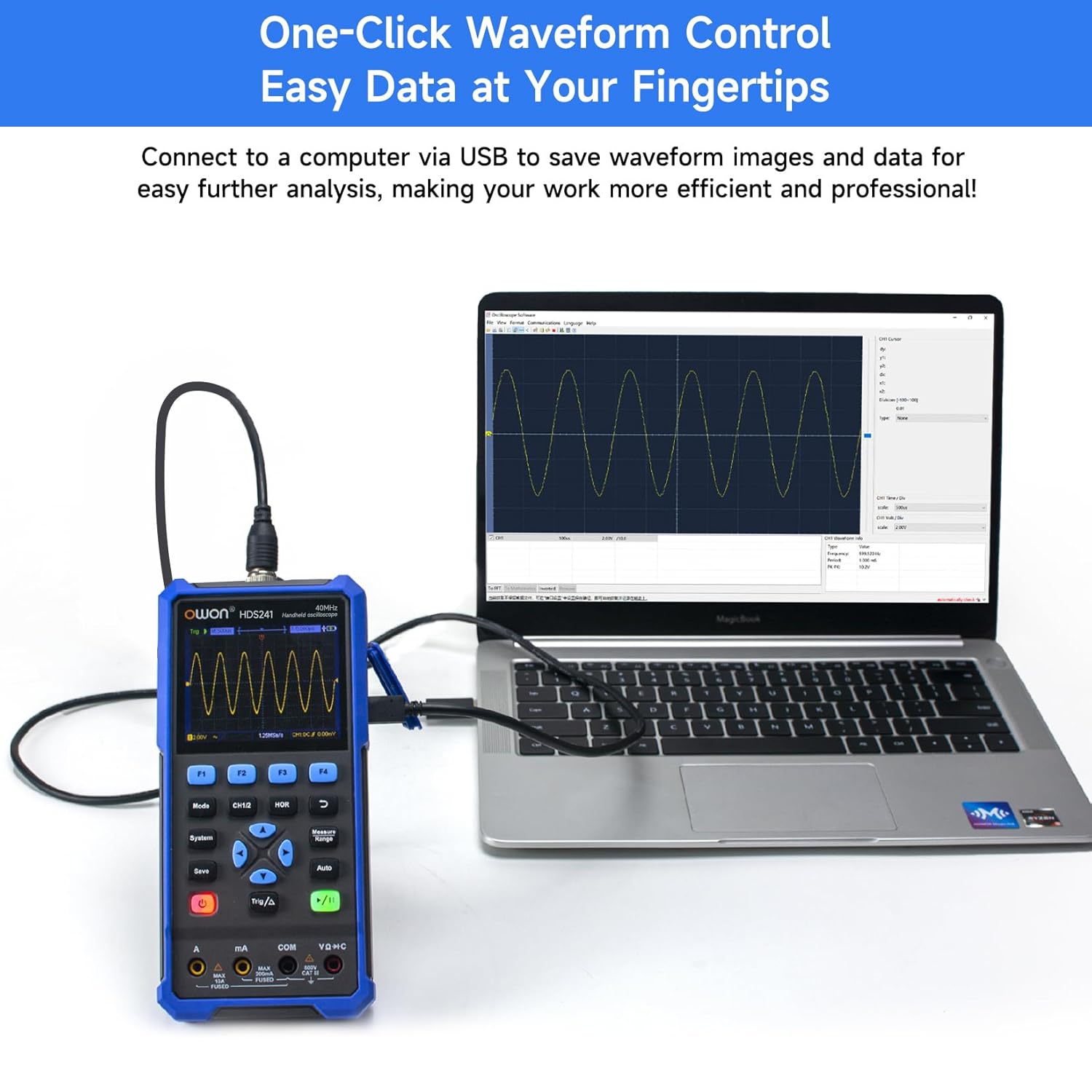
Image 8.1: The OWON HDS241 connected to a computer for data transfer and analysis, enabling easy waveform control.
9. Tiaki
- Te horoi: Horoia te taputapu ki te kakahu ngohengohe, maroke. Kaua e whakamahi i nga kai horoi me nga whakarewa.
- Rokiroki: Whakaorangia te taputapu ki te waahi makariri, maroke atu i te ra tika me te wera nui.
- Tiaki Pūhiko: For long-term storage, ensure the battery is partially charged (around 50%) and recharge it every few months to maintain battery health.
- Te Whakatairanga Tohu: Periodically calibrate the oscilloscope probe using the dedicated probe compensation output to ensure accurate measurements.
10. Te Raru
| Raruraru | Take pea | Rongoā |
|---|---|---|
| Kaore te taputapu i te hiko. | He iti, he pau ranei te pākahiko. | Connect the device to a power source using the USB Type-C cable and allow it to charge. |
| No waveform displayed in oscilloscope mode. | Probe not connected correctly; signal too small or too large; incorrect time base or voltage tauine. | Ensure probe is securely connected. Press Aunoa for automatic setup. Adjust vertical and horizontal scales manually. Check trigger settings. |
| Multimeter readings are inaccurate. | Test leads not properly connected; incorrect measurement function selected; external interference. | Verify test lead connections. Ensure the correct measurement mode (voltage, current, resistance) is selected. Minimize external electrical noise. |
| Kāore te putanga o te kaiwhakaputa tohu e rite ana ki te mea e tumanakohia ana. | Incorrect waveform type, frequency, or amplitude set. | Tirohia te āhua ngaru kua tīpakohia, te auau, me amplitude settings in the signal generator menu. |
11. Whakatakotoranga Hangarau
Oscilloscope Specifications:
| Tawhā | Uara |
|---|---|
| Aratuku | 40MHz |
| Hongere | 1 |
| Sampreiti reiti | 250MSa / s |
| Aratau Hoko | Sample, Peak Detect |
| Te roa o te tuhi | Max. 8K |
| Whakaatu | 3.5 inihi LCD |
| Tere Whakahou Puka Ngaru | 10,000 wfms/s |
| Whakauru Whakauru | DC, AC, Ground |
| Impedance Tāuru | 1 MΩ±2%, in parallel with 16 pF±10 pF |
| Te whakatewhatewha | 1X, 10X, 100X, 1000X |
| Max Whakauru Voltage | 400V (DC + AC, PK-PK) |
| Sensitivity Resolution | 10mV/div-10V/div |
| Whakatau Poutū | 8 moka |
| Tauine Whakapae | 5ns/div-1000s/div, step 1-2-5 |
| Momo Keu | Tapa |
| Aratau Keu | Aunoa, Pūnoa, Takitahi |
| Ine Aunoa | Period, Frequency, Mean, PK-PK, Max, Min, Amplitude, RMS |
| Inenga Pehu | ΔV, ΔT |

Image 11.1: Detailed oscilloscope specifications.
Digital Multimeter Specifications:
| Tawhā | Uara |
|---|---|
| Whakaatu Tau | 4½ digits (max 24000 counts) |
| Aratau Whakamatau | Voltage, Current, Resistance, Capacitance, Diode, Continuity |
| Max Whakauru Voltage | AC 750V, DC 1000V |
| Max Tāuru o nāianei | AC 10A, DC 10A |
| Awhe Aunoa | Ae |
| RMS pono | Ae |

Image 11.2: Detailed digital multimeter specifications.
Signal Waveform Generator Specifications:
| Tawhā | Uara |
|---|---|
| Ngarurangi | Sine, Tapawhā, Ramp, Puhi |
| Auautanga Putanga | 10Hz-100KHz |
| Ampahuru | 2Vpp-2.5Vpp |

Image 11.3: Detailed signal waveform generator specifications.
Whakatakotoranga Whānui:
- Ahu: 9.6 x 3.8 x 19.8 cm
- Taumaha Tūemi: 1.2 Kirokaramu
- Puna Hiko: Pūhiko Whakakahangia (Pūhiko Rithium 2000 mAh)
- Tae: Kahurangi
- Tiwhikete: CE, True RMS
12. Pūtāhui me te Tautoko
He mea hanga ngā hua OWON mō te pono me te mahi. Mō ngā mōhiohio pūtāhui, tautoko hangarau, pātai ratonga rānei, tirohia te paetukutuku mana o OWON. webte paetukutuku, whakapā atu ranei ki to kaitoha o to rohe.
- Wā Pūtāhui: Standard manufacturer's warranty applies. Please check your purchase documentation for specific terms and duration.
- Tautoko Hangarau: Visit the OWON official website for FAQs, software downloads, and contact information for technical assistance.
- Whakahoki: Refer to the retailer's return policy for details on product returns and exchanges.