
1. Kupu Whakataki
This manual provides essential information for the safe and effective use of your PICO 4 Ultra Enterprise A9210 All-in-One 6DoF VR Headset. Please read this manual thoroughly before using the device and retain it for future reference.
2. Nga korero haumaru
- Clear Your Space: Ensure you have a clear, unobstructed area for use to prevent injury or damage to property.
- Whakatata: Prolonged use may cause eye strain, fatigue, or motion sickness. Take regular breaks.
- Tirohanga: Not recommended for children without adult supervision.
- Whakaaro Hauora: If you experience discomfort, dizziness, or nausea, discontinue use immediately. Consult a doctor if symptoms persist.
- Nga Tikanga Taiao: Kaua e tukuna te taputapu ki te wera nui, te makuku, te ra tika ranei.
3. Ihirangi mokete
Manatokona kei roto katoa nga mea kei roto i to kete:
- PICO 4 Ultra Enterprise A9210 VR Headset
- 6DoF Controllers (x2)
- Mohiti Spacer
- USB Momo-C Cable (mo te utu me te whakawhiti raraunga)
- Pūurutau Hiko
4. Hua Neke Atuview
4.1 Ngā Wāhanga o te Paneoro

Atahanga: Mua view of the PICO 4 Ultra Enterprise A9210 VR Headset, showing the integrated cameras and sensors.
- Front Cameras & Sensors: Used for inside-out tracking and environmental mapping.
- Arotahi: High-resolution displays with pancake lenses for a wide field of view.
- Here mahunga: Adjustable strap for secure and comfortable fit.
- IPD Adjustment Wheel: Located on the bottom of the headset for seamless interpupillary distance adjustment.
- Tauranga Momo-C USB: Mo te utu me te whakawhiti raraunga.
- Pātene Hiko: To turn the headset on or off.
- Pātene Rōrahi: Hei whakarite i te putanga oro.
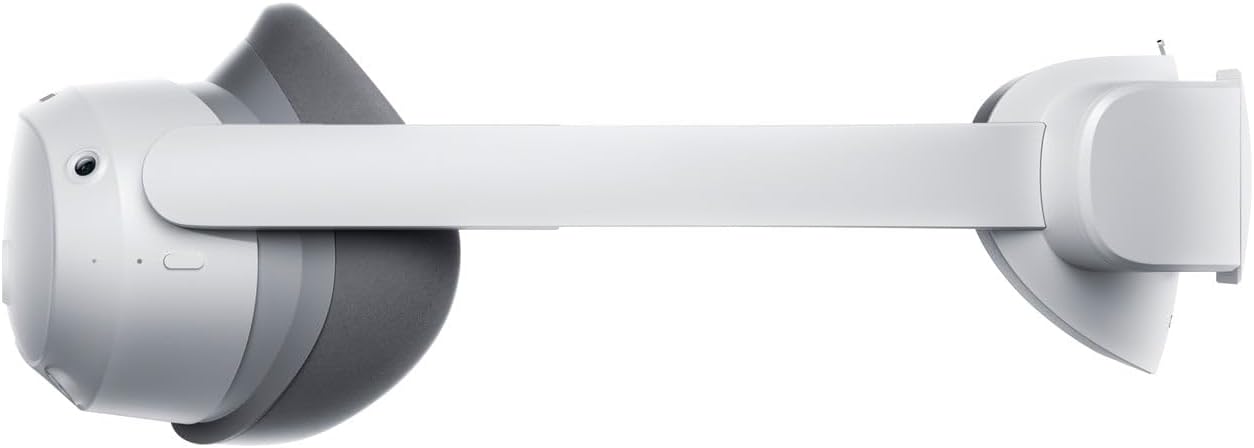
Atahanga: Te taha view of the PICO 4 Ultra Enterprise A9210 VR Headset, illustrating the head strap and overall profile.
4.2 Nga Waahanga Kaiwhakahaere
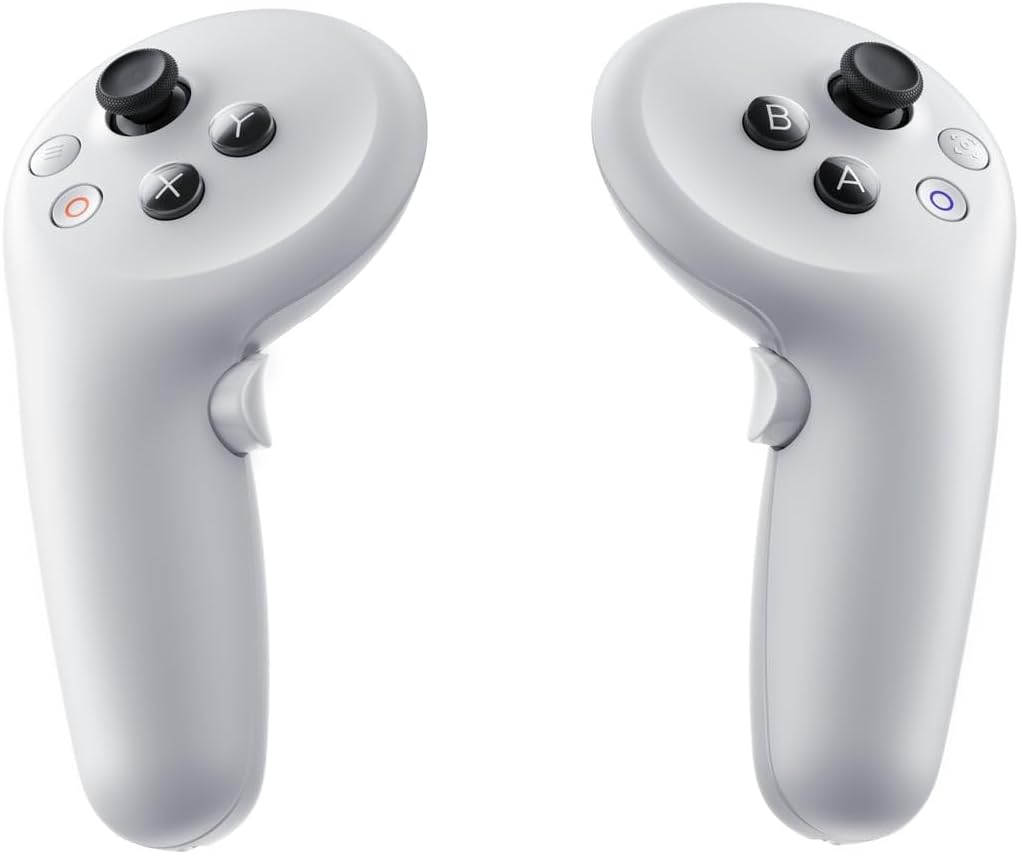
Atahanga: Two PICO 4 Ultra Enterprise A9210 VR controllers, showing buttons and joysticks.
- Rakau Analog: For movement and navigation.
- Ngā Pātene Mahi (A/B/X/Y): For in-app interactions.
- Pātene Keu: For selection and interaction.
- Grip Button: For grabbing or holding objects in VR.
- Pātene Pūnaha: For accessing system menus.
5. Tatūnga
5.1 Charging the Headset and Controllers
- Connect the USB Type-C cable to the headset's charging port and the other end to the power adapter.
- Plug the power adapter into a wall outlet. The indicator light on the headset will show charging status.
- The controllers typically use AA batteries. Open the battery compartment and insert fresh batteries if needed.
5.2 Te mau i te Paneoro

Atahanga: Runga view of the PICO 4 Ultra Enterprise A9210 VR Headset, showing the adjustable head strap.
- Loosen the head strap to its widest setting.
- Place the headset on your head, ensuring the display is centered over your eyes.
- Tighten the head strap until the headset feels secure and comfortable, without being too tight.
- Adjust the IPD (Interpupillary Distance) using the wheel on the bottom of the headset until the image appears clear and comfortable. The optimal range is 58-72mm.
- If you wear glasses, insert the included glasses spacer before wearing the headset to ensure proper fit and prevent lens scratching.
5.3 Te Tatūnga Pūmanawa Tuatahi
- Whakakāhia te pane whakarongo mā te pēhi me te pupuri i te pātene Mana.
- Follow the on-screen instructions to select your language, connect to a Wi-Fi network (supports Wi-Fi 7), and set up your user account.
- The controllers should automatically pair. If not, follow the on-screen prompts for manual pairing.
- Define your play space as instructed by the headset. This involves drawing a boundary in your physical environment.
6. Nga Tohutohu Whakahaere
6.1 Kei te Hiko / Weto
- Whakahiko: Press and hold the Power button on the headset until the PICO logo appears.
- Weto Whakakore: Pēhia te pātene Mana me te pupuri kia puta rā anō he tahua whakaweto, kātahi ka tīpako i te 'Whakaweto'.
- Aratau Moe: Briefly press the Power button to put the headset into sleep mode. Press again to wake it up.
6.2 Navigation and Interaction
- Whakamahia te Rakau Analog on the controller to move around in virtual environments.
- Point the controller at menu items or objects and use the Pātene Keu ki te whiriwhiri i a raatau.
- Ko te Action Buttons (A/B/X/Y) perform various functions depending on the application.
- Pehia te Pātene Pūnaha to access the main menu or return to the home screen.
6.3 Hononga Wi-Fi
To connect to a Wi-Fi network or change networks:
- From the home screen, access the Quick Settings menu (usually by pressing the System button or a specific gesture).
- Tīpakohia te ata Wi-Fi.
- Kōwhiria te whatunga e hiahiatia ana e koe mai i te rārangi, ā, tomohia te kupuhipa mēnā ka akiakihia.
7. Tiaki
7.1 Te horoi i nga Arotahi
- Use a dry microfiber cloth specifically designed for optical lenses.
- Gently wipe the lenses in a circular motion from the center outwards.
- Do not use liquid cleaners, alcohol, or abrasive materials, as these can damage the lenses.
7.2 Cleaning the Headset and Controllers
- Use a soft, dry cloth to wipe the exterior surfaces of the headset and controllers.
- Mo te paru maro, paku dampen the cloth with water. Avoid getting moisture into any openings.
- Kaua e whakamahi i nga matū pakeke, whakarewa ranei.
7.3 Rokiroki
- Penapenahia te pane whakarongo ki te wāhi hauhautanga, maroke, kia matara atu i te rā tika.
- Protect the lenses from scratches by keeping the headset in its original packaging or a protective case when not in use.
- Remove batteries from controllers if storing for extended periods.
8. Te Raru
8.1 Headset Not Powering On
- Ensure the headset is fully charged. Connect it to the power adapter and wait for a few minutes before attempting to power on again.
- Whakamātauria he taura USB Momo-C rereke me te urutau hiko.
- Perform a hard reset by holding the Power button for 10-15 seconds.
8.2 Controllers Not Responding
- Check the batteries in the controllers and replace them if necessary.
- Ensure the controllers are within the headset's tracking range.
- Try re-pairing the controllers through the headset's settings menu.
8.3 Whakaahua Pōuriuri
- Adjust the IPD (Interpupillary Distance) using the wheel on the bottom of the headset.
- Ensure the headset is properly positioned on your head and the straps are adjusted correctly.
- Horoia nga arotahi ki te kakahu microfiber.
- If you wear glasses, ensure the glasses spacer is correctly installed.
8.4 Nga Take Hononga Wi-Fi
- Verify that your Wi-Fi router is working correctly and other devices can connect.
- Me whakarite kua whakaurua e koe te kupuhipa Wi-Fi tika.
- Restart your Wi-Fi router and the PICO headset.
- Neke atu ki tō pouara Wi-Fi hei whakapai ake i te kaha o te tohu.
9. Whakatakotoranga
| Tukatuka | Qualcomm Snapdragon XR2 Gen 2 |
| Maharahara | 12GB LPDDR5 |
| Rokiroki Roto | 256GB UFS 3.1 |
| Whakatau | 4320 x 2160 (1200ppi) |
| Marae o View (FOV) | 105 nga nekehanga |
| Rere tāmata | 90Hz |
| Tikanga Aroturuki | Inside-out (6DoF), Environmental tracking cameras x4, iToF depth sensor camera x1 |
| Whakatikatika IPD | 58-72mm (Seamless) |
| Ororongo | Stereo speakers, Spatial audio compatible microphones x4 |
| Kaiwhakahaere | 6DoF Controllers (x2) |
| Hononga o waho | Wi-Fi 7, Nihokikorangi 5.3 |
| Tauranga Hononga | USB Momo-C |
| Headset Dimensions (W x H x D) | 165 x 84 x 62 mm |
| Tau tauira | A9210 |
| Waehere JAN | 6970214574083 |
| Nga Waahanga kei roto | Glasses spacer |
10. Pūtāhui me te Tautoko
For warranty information and technical support, please refer to the official PICO website or contact your regional PICO customer service. Keep your proof of purchase for warranty claims.
This device includes a commercial use license and business support via PICO Business Suite for enterprise applications.