
PĒPIRO BL11833
Pukapuka Whakaako mō te Kawe Pēpi Babylo 3-i roto i te-1
Tauira: BL11833 | Waitohu: PĒPĒ
1. Hua Neke Atuview
The Babylo 3-in-1 Baby Carrier is designed for comfort and versatility, allowing you to keep your baby close while maintaining hands-free convenience. It features an adjustable ergonomic seat and padded shoulder straps for both parent and baby comfort. This carrier supports three carrying positions, adapting as your child grows.
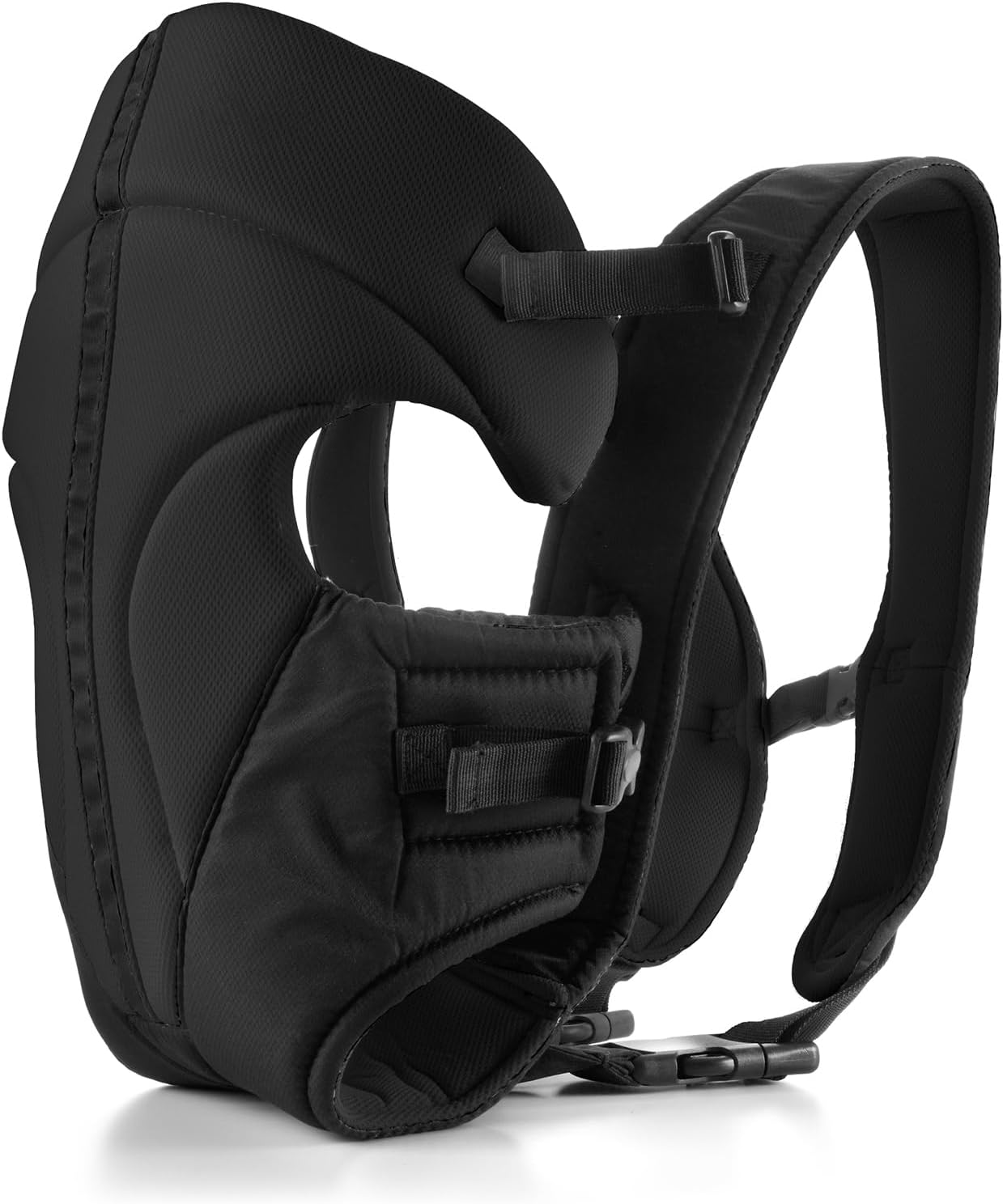
Image 1.1: The Babylo 3-in-1 Baby Carrier in its compact form, highlighting its padded structure and adjustable straps.
Āhuatanga matua:
- Versatile Carrying: Offers three distinct carrying positions: inward-facing, outward-facing, and backpack.
- Age and Weight Suitability: Suitable from birth with a minimum weight of 3.6 kg (8 lbs) up to a maximum weight of 9 kg (20 lbs).
- Hoahoa Ergonomic: Features an ergonomic seat for baby's comfort and proper hip development.
- Whakamarie Whakaritea: Equipped with adjustable padded shoulder straps for the parent and an adjustable padded head support for the baby.
- Haatau-a-ringa: Allows parents to perform daily tasks while keeping their baby secure and close.
2. Whakatūpato Haumaru Nui
FAILURE TO FOLLOW THESE WARNINGS CAN RESULT IN SERIOUS INJURY OR DEATH.
- Hinga Hinga: Infants can fall through a wide leg opening or out of the carrier. Adjust leg openings to fit baby's legs snugly. Before each use, make sure all buckles, snaps, ties, and adjustments are secure.
- Pūmate whakangote: Infants can suffocate in this product if their face is pressed tight against your body. Always ensure baby's face is clear of obstructions and visible. Regularly check on your baby.
- Ngā Herenga Tau me te Taumaha: Do not use for infants under 3.6 kg (8 lbs) or over 9 kg (20 lbs).
- Balance and Mobility: Be aware that your balance may be adversely affected by your movement and your child's movement. Take extra care when bending or leaning.
- Tirohanga: Never leave your child unattended in the carrier.
- Tirotiro: Before each use, inspect the carrier for any signs of wear, tear, or damage. Discontinue use if any damage is found.
- wera: Be mindful of your baby's temperature. Overheating can be dangerous.
3. Carrier Components
Familiarize yourself with the main parts of your Babylo 3-in-1 Baby Carrier:
- Here Pakihiwi Papakia: Adjustable straps that go over the parent's shoulders.
- Whitiki hope: Secures the carrier around the parent's waist for weight distribution.
- Buckles and Fasteners: Secure points for attaching and adjusting the carrier.
- Ergonomic Seat: The main pouch where the baby sits.
- Adjustable Head Support: Provides support for the baby's head and neck, especially for newborns.
- Leg Openings: Where the baby's legs extend from the carrier.
4. Tatūnga me te Whakatikatika
Before placing your baby in the carrier, ensure it is properly adjusted to your body for comfort and safety.
- Adjust Waist Belt: Fasten the waist belt securely around your natural waist or hips. It should be snug but comfortable.
- Wetekina ngā whitiki pakihiwi: Fully loosen the shoulder straps before putting the carrier on.
- Position Baby: Carefully place your baby into the carrier, ensuring their legs are through the leg openings and their bottom is deep in the ergonomic seat.
- Whakakīkīhia ngā whitiki pakihiwi: While supporting your baby, pull the shoulder straps to tighten them until the baby is snug against your body and at a "kissable" height.
- Adjust Head Support: For newborns or sleeping babies, ensure the adjustable head support is raised to provide adequate neck and head stability.
- Check Leg Openings: Ensure the fabric around the baby's legs is snug but not too tight, preventing falls.

Image 4.1: A parent demonstrating the correct fit of the carrier with a baby in the inward-facing position, showing proper strap adjustment and baby's posture.
5. Carrying Positions
The Babylo 3-in-1 Baby Carrier offers three versatile carrying positions to accommodate your baby's growth and developmental stages.
5.1. Inward-Facing Position
This position is ideal for newborns and younger infants, promoting bonding and providing excellent head and neck support.
- Reanga Manakohia: 0-3 months (or until baby has strong head and neck control).
- Awhe Taumaha: 3.6 kg - 9 kg.
- Tohutohu: Ensure baby's face is visible and clear of obstructions. The adjustable head support should be up.
5.2. Outward-Facing Position
Once your baby has developed strong head and neck control and shows curiosity about their surroundings, they can be carried facing outwards.
- Reanga Manakohia: 4 months and older.
- Awhe Taumaha: Up to 9 kg.
- Tohutohu: Ensure baby's chin is not resting on their chest. Monitor for overstimulation.

Image 5.1: A parent carrying a baby in the outward-facing position, allowing the baby to observe their environment.
5.3. Backpack Position
For older infants and toddlers who can sit unassisted and have excellent trunk control, the backpack position offers a comfortable way to carry them on your back.
- Reanga Manakohia: 6 months and older.
- Awhe Taumaha: Up to 9 kg.
- Tohutohu: This position requires practice. Ensure the baby is securely seated and centered on your back. Seek assistance if needed for initial attempts.

Image 5.2: A parent demonstrating the backpack carrying position, suitable for older infants who can support themselves.
6. Tiaki me te Tiaki
Proper care will extend the life of your Babylo 3-in-1 Baby Carrier and ensure its continued safety and hygiene.
- Te horoi: Hand wash only. Use mild soap and cold water. Do not bleach.
- whakamaroke: Air dry flat. Do not tumble dry. Do not iron.
- Rokiroki: Penapena ki te wāhi ma, maroke, kia matara atu i te rā tika me te pāmahana tino kino.
- Tirotiro: Regularly inspect all buckles, straps, and seams for signs of wear, fraying, or damage. If any damage is found, discontinue use immediately.
7. Whakatakotoranga Hua
| Tau tauira | BL11833 |
| Taumaha iti rawa e taunakitia ana | 3.6 Kirokaramu (8 lbs) |
| Taumaha Tautoko Morahi | 9 Kirokaramu (20 lbs) |
| Rauemi | polyester |
| Tohutohu Tiaki | Horoi ringa anake |
| Ahu (L x W x H) | 9 x 41 x 41 cm |
| Taumaha Hua | 630 karamu |
| Tae | Pango |
| Momo Katinga | Porou |
| Momo here | Here taea te whakarite |
8. Te Raru
If you encounter any issues with your Babylo 3-in-1 Baby Carrier, refer to the common problems and solutions below:
- Problem: Baby feels too low or too loose in the carrier.
- Rongoā: Ensure the waist belt is positioned high and snug on your body. Tighten the shoulder straps until the baby is high enough to kiss and feels secure against your chest. Adjust the leg openings to be snug around the baby's thighs.
- Problem: Discomfort in parent's shoulders or back.
- Rongoā: The waist belt should bear most of the baby's weight. Ensure it is tight and positioned correctly. Adjust shoulder straps to distribute weight evenly. If discomfort persists, re-read the setup instructions and ensure the carrier is correctly fitted.
- Problem: Baby's head is not adequately supported.
- Rongoā: For newborns or sleeping babies, ensure the adjustable head support is fully extended and secured. If the baby is too young for the outward-facing position, switch to inward-facing. Always ensure baby's airway is clear.
- Problem: Buckles are difficult to fasten or unfasten.
- Rongoā: Ensure there is no fabric obstruction. Press firmly when fastening and squeeze the release tabs completely when unfastening. If a buckle is damaged, discontinue use and contact customer support.
9. Pūtāhui me te Tautoko Kiritaki
For warranty information, product support, or to inquire about replacement parts, please contact Babylo customer service.
Tena koa pupurihia to tohu mo te hoko mo etahi kereme whakamana.
Mōhiohio Whakapā:
- Refer to the product packaging or the official Babylo webpae mo nga taipitopito whakapā o naianei.
- Tautoko Aipurangi: www.babylo.ie/contact-us (Exoampte hononga, tera pea ka rerekē te hononga tuturu)
Ask a question about this manual
Ask about setup, troubleshooting, compatibility, parts, safety, or missing instructions. Manuals+ will review the question and use this page’s manual context to help answer it.