
1. Kupu Whakataki
Thank you for choosing the Geevon TX16-3 Remote Outdoor Sensor. This sensor is designed to transmit temperature and humidity data wirelessly to a compatible Geevon weather station (models 208665, 86113, etc.). Please read this manual carefully before setup and operation to ensure proper functionality and longevity of your device.
2. Nga korero haumaru
- Do not expose the sensor to extreme temperatures outside its operating range.
- Avoid direct exposure to water or heavy rain. While designed for outdoor use, excessive moisture can damage internal components.
- Do not attempt to disassemble or repair the unit. This will void the warranty.
- Puritia ngā pākahiko kia kore e taea e ngā tamariki te toro atu. Me maka atu ngā pākahiko kua whakamahia kia rite ki ngā ture ā-rohe.
- Ensure proper battery polarity when installing.
3. Ihirangi mokete
- 1 x Geevon TX16-3 Remote Outdoor Sensor
- 1 x Manual Kaiwhakamahi (tenei tuhinga)
4. Hua Neke Atuview
The Geevon TX16-3 is a compact, battery-powered remote sensor featuring an LCD display for local temperature and humidity readings. It transmits data wirelessly to a compatible main weather station unit.
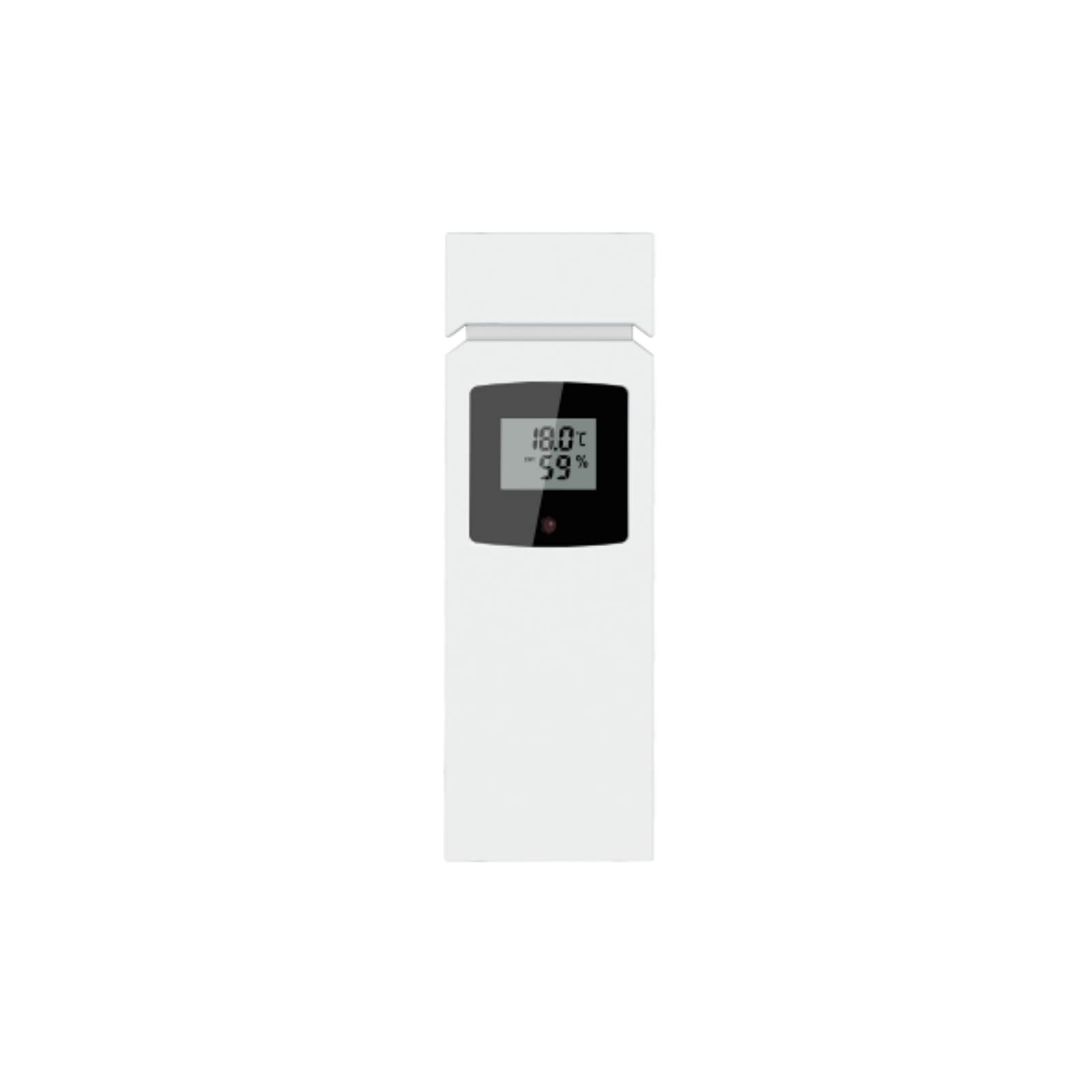
Ko tenei whakaahua e whakaatu ana i te mua view of the Geevon TX16-3 remote outdoor sensor. It is a rectangular, white device with a small LCD screen at the top, displaying temperature and humidity readings. Below the screen, there is a brand logo. The sensor features a clean, modern design suitable for outdoor placement.
Āhuatanga matua:
- LCD display for current temperature and humidity.
- 433 MHz wireless transmission.
- Up to 200 ft (60 m) transmission range in open air.
- Data updates every 30 seconds.
5. Tatūnga
5.1 Tāuta Pūhiko
- Kimihia te taupoki o te wāhanga pākahiko i te tuara o te pūoko.
- Peia te uhi ki waho.
- Insert two (2) AAA batteries (not included) according to the polarity markings (+ and -) inside the compartment.
- Replace the battery compartment cover, ensuring it is securely closed to protect against moisture.
5.2 Whakapiki i te Pūoko
For optimal performance and accurate readings, consider the following when mounting the sensor:
- Tauwāhi: Choose a shaded area, away from direct sunlight, as direct sun exposure can cause inaccurate temperature readings.
- Teitei: Whakanuia te pūoko tata ki te 5-6 putu (1.5-1.8 mita) ki runga ake i te whenua.
- Parenga: While designed for outdoor use, placing it under an overhang or in a sheltered spot can extend its lifespan.
- Ārai: Ensure there are minimal obstructions (e.g., thick walls, large metal objects) between the sensor and the main weather station unit to maximize wireless range.
- Use a screw or nail (not included) through the designated mounting hole on the back of the sensor to secure it to a wall or post.
5.3 Te hono atu ki te Wāhanga Matua
After battery installation, the sensor will automatically begin transmitting data. To pair it with your Geevon weather station (e.g., models 208665, 86113):
- Ensure your main weather station unit is powered on and within range of the sensor.
- Refer to your main weather station's instruction manual for specific pairing instructions. Typically, there is a 'SEARCH' or 'CHANNEL' button to initiate a search for outdoor sensors.
- The sensor's data (temperature and humidity) should appear on the main unit's display within a few minutes.
6. Mahi
6.1 Whakaaturanga LCD
The sensor's integrated LCD display shows the current outdoor temperature and humidity readings directly. This allows for quick local checks without needing to consult the main weather station.
6.2 Whakawhiti Raraunga
The TX16-3 sensor transmits data every 30 seconds using a 433 MHz wireless signal. The effective transmission range is up to 200 feet (60 meters) in an open area. Environmental factors such as walls, electronic interference, and large metal objects can reduce this range.
7. Tiaki
7.1 Whakakapinga Pūhiko
When the battery icon appears on the sensor's LCD display or the main weather station unit, it indicates that the batteries are low and need replacement. Follow the battery installation steps in Section 5.1 to replace the two AAA batteries.
7.2 Te horoi
Horoia te taha waho o te pūoko ki te wai ngohengohe,amp cloth. Do not use abrasive cleaners, solvents, or immerse the unit in water. Ensure the LCD screen remains clean for clear visibility.
8. Te Raru
- Kāore he whakaaturanga i runga i te pūoko:
Check battery installation. Ensure batteries are inserted with correct polarity and are not depleted. Replace batteries if necessary. - No outdoor data on main weather station:
- Ensure the sensor is within the 200 ft (60 m) transmission range of the main unit.
- Check for obstructions between the sensor and the main unit.
- Re-initiate the sensor search function on your main weather station (refer to its manual).
- Whakakapihia nga pākahiko i te pukoro o waho.
- Ensure there is no strong electromagnetic interference nearby.
- Ngā pānui pāmahana/haumākū hē:
- Ensure the sensor is mounted in a shaded area, away from direct sunlight or heat sources.
- Verify that the sensor is not exposed to excessive moisture.
- Compare readings with another reliable thermometer/hygrometer. If discrepancies persist, contact customer support.
9. Whakatakotoranga
| Tau tauira | TX16-3 |
| Puna Mana | 2 x AAA Battery (kaore i uru) |
| Auautanga Whakawhiti | 433 MHz |
| Awhe Tuku | Tae atu ki te 200 putu (60 m) i te rangi tuwhera |
| Wā Whakahou Raraunga | Ia 30 hēkona |
| Momo Whakaatu | LCD |
| Rauemi | ABS, Metal, Plastic |
| Ahu (L x W x H) | 4.72 x 1.18 x 0.79 inihi (12 x 3 x 2 cm) |
| Taumaha | 2.11 hekere (0.06 kg) |
10. Pūtāhui me te Tautoko
Geevon products are designed for reliability and performance. For warranty information, please refer to the documentation included with your main weather station unit or visit the official Geevon website. If you encounter any issues not covered in this manual, or require further assistance, please contact Geevon customer support through their official channels.