
1. Kupu Whakataki
This manual provides detailed instructions for the installation, operation, and maintenance of the Supermicro X13SEI-F Server Motherboard. This motherboard is designed for high-performance server applications, supporting Intel Xeon processors with an LGA4677 socket and DDR5 memory.
Please read this manual thoroughly before attempting to install or operate the motherboard to ensure proper setup and to prevent damage to the components.
2. Nga korero haumaru
Kia mau ki ngā mahi ārai haumaru e whai ake nei hei ārai i ngā whara me ngā pakaru o ngā taputapu:
- Always disconnect the power cord from the power supply before installing or removing any components.
- Wear an anti-static wrist strap when handling the motherboard and other components to prevent electrostatic discharge (ESD).
- Ensure the installation environment is dry and free from static electricity.
- Kaua e tukuna te papahoahoa ki te makuku, ki te wera nui ranei.
- Kia mau ki te papahoa papa ki ona tapa kia kore e pa ki nga waahanga tairongo.
- Refer to the power supply unit's manual for specific safety guidelines related to power connections.
3. Ihirangi mokete
Verify that all items are present and in good condition. If any items are damaged or missing, contact your vendor.
- Supermicro X13SEI-F Server Motherboard
- I / O Te Shield
- SATA Cables (quantity may vary)
- Quick Reference Guide / User Manual (this document)
- Driver CD/DVD or USB drive (or download instructions)
4. Hua Neke Atuview
The Supermicro X13SEI-F is a high-performance server motherboard featuring the LGA4677 socket, designed to support Intel Xeon Scalable processors. It offers robust memory capabilities with 8 DDR5 DIMM slots, supporting up to 4800MHz memory speed. The board also includes multiple PCIe slots for expansion.
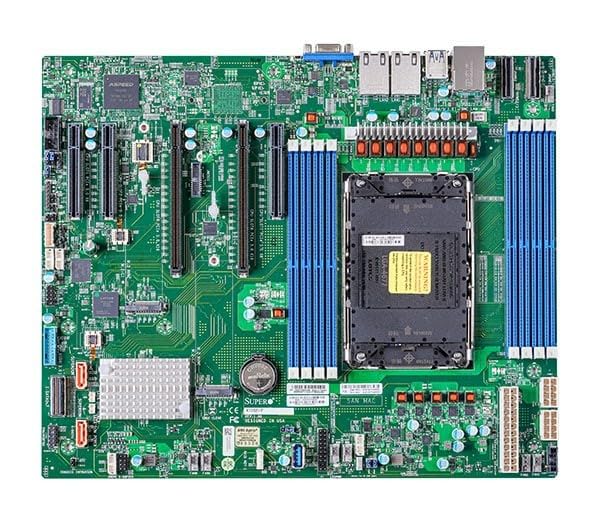
Figure 1: Supermicro X13SEI-F Server Motherboard. This image displays the overall layout of the motherboard, including the CPU socket, DIMM slots, and various connectors.
4.1 Nga waahanga matua
- Kopae CPU: LGA4677 for Intel Xeon Scalable Processors
- Tipu maramara: Intel C621
- Pūmahara: 8x DDR5 DIMM slots, up to 4800MHz
- Roha i'ai: Multiple PCIe slots (specific configuration depends on model variant)
- Rokiroki: Support for various storage interfaces (SATA, NVMe - specific details in specifications)
- Whatunga: Integrated LAN controllers
5. Tatūnga me te Tāuta
Before beginning installation, ensure your system case is compatible with the motherboard's form factor and that you have all necessary components.
5.1 Tāutanga PTM (LGA4677)
- Kimihia te hononga LGA4677 i runga i te papahoahoa.
- Carefully open the CPU socket retention mechanism according to the instructions provided with your CPU or motherboard.
- Align the CPU with the socket, ensuring the triangular mark on the CPU matches the mark on the socket. Do not force the CPU into the socket.
- Āta tukua te CPU ki roto i te putanga.
- Close the CPU socket retention mechanism until it locks securely.
- Tāutahia te whakamatao CPU kia rite ki nga tohutohu a te kaihanga.
5.2 RAM Tāutatanga (DDR5)
- Locate the 8 DDR5 DIMM slots on the motherboard.
- Whakatuwheratia nga topenga pupuri i nga pito e rua o te mokamoka DIMM.
- Tiarohia te kakari ki te kōwae mahara DDR5 me te kī i roto i te mokamoka DIMM.
- Insert the memory module firmly into the slot until the retention clips snap into place. Ensure both clips are closed.
- For optimal performance, refer to the motherboard's manual for recommended memory population order.
5.3 Tāutanga Kāri PCIe
- Identify the appropriate PCIe slot for your expansion card (e.g., GPU, RAID card).
- Remove the corresponding expansion slot cover from your chassis.
- Align the PCIe card with the slot and press down firmly until it is fully seated.
- Secure the card with a screw or retention clip to the chassis.
5.4 Tāuta Pūrere Rokiroki
- Ngā Puku SATA: Connect SATA data cables from the motherboard's SATA ports to your SATA hard drives or SSDs. Connect power cables from the PSU to the drives.
- NVMe M.2 Drives: Locate the M.2 slots. Insert the M.2 drive at an angle, then push it down and secure it with the provided screw or retention mechanism.
5.5 Hononga Mana
- Tūhonoa te hononga hiko ATX 24-pin mai i tō pūtake hiko ki te putanga hiko matua i runga i te papahoahoa.
- Connect the 8-pin (or 4+4 pin) EPS 12V CPU power connector(s) to the corresponding sockets near the CPU.
- Me whakarite kia mau nga hononga hiko katoa.
5.6 Hononga Paewhiri Mua
Connect the front panel cables (Power LED, HDD LED, Power Switch, Reset Switch, USB, Audio) from your chassis to the corresponding headers on the motherboard. Refer to the motherboard's silkscreen labels or the detailed manual for exact pin configurations.
6. Nga Tohutohu Whakahaere
6.1 Whakaara Tuatahi
- After completing all hardware installations, connect the monitor, keyboard, and mouse.
- Connect the power cord to the power supply and turn on the power switch on the PSU.
- Press the power button on your chassis.
- The system should power on, and you should see the BIOS/UEFI POST screen.
6.2 Tatūnga BIOS/UEFI
Hei tomo ki te taputapu tatūnga BIOS/UEFI, pēhi i te pātene DEL or F2 key repeatedly during the POST process. Within the BIOS/UEFI, you can configure:
- Te raupapa whakaoho
- Te wa me te ra o te punaha
- CPU and memory settings
- Storage configurations (RAID, AHCI)
- Mana tere Fan
- Tautuhinga haumaru
Save changes before exiting the BIOS/UEFI.
6.3 Tāuta Pūnaha Whakahaere
Insert your operating system installation media (USB drive or DVD) and set it as the primary boot device in the BIOS/UEFI. Follow the on-screen instructions to install your preferred operating system. After installation, install all necessary drivers from the Supermicro webpae, te pāpāho taraiwa rānei kua whakaratohia.
7. Tiaki
7.1 Te horoi
- Regularly clean dust from the motherboard and system components using compressed air.
- Me whakarite kua whakawetohia te pūnaha, ā, kua momotu hoki i te hiko i mua i te horoinga.
- Āta karohia te whakamahi i ngā wai horoi tika ki ngā wāhanga.
7.2 Whakahoutanga Firmware
Periodically check the Supermicro website for updated BIOS/UEFI firmware. Firmware updates can improve system stability, performance, and compatibility. Follow the specific instructions provided by Supermicro for updating the firmware to avoid system damage.
8. Te Raru
Ko tenei waahanga e whakarato ana i nga otinga mo nga take noa ka pa ki a koe.
8.1 Kāore he Hiko / Kāore he POST (Whakamātautau Whaiaro Whakakā-Hiko)
- Tirohia nga Hononga Hiko: Ensure the 24-pin ATX and 8-pin EPS 12V power connectors are securely seated.
- Verify PSU: Test the power supply unit (PSU) with another system or a PSU tester.
- Whakanohoia ano nga Wae: Reseat the CPU, RAM modules, and any expansion cards.
- Ūkui CMOS: Refer to the motherboard manual for instructions on how to clear the CMOS (Complementary Metal-Oxide-Semiconductor) settings, which can resolve boot issues.
- Whirihoranga iti: Try booting with only the CPU, one RAM stick, and the necessary power connections.
8.2 Kaore he Putanga Whakaatu
- Hononga Aroturuki: Ensure the monitor is properly connected to the graphics output (either integrated or discrete GPU) and is powered on.
- Kāri Whakairoiro: If using a discrete graphics card, ensure it is fully seated in its PCIe slot and has all necessary power connectors from the PSU.
- Whakairoiro Whakauru: If your CPU supports integrated graphics, try connecting the monitor to the motherboard's video output to rule out a discrete GPU issue.
8.3 Operating System Not Booting
- Raupapa Whakaara: Check the BIOS/UEFI settings to ensure the correct boot device (e.g., SSD, HDD) is selected as the primary boot option.
- Drive Connections: Verify that your storage drives are properly connected (data and power).
- OS Tāutatanga: If the OS is newly installed, ensure the installation process completed successfully and all drivers are installed.
9. Whakatakotoranga
| Āhuahira | Taipitopito |
|---|---|
| Waitohu | Supermicro |
| Ingoa Tauira | MBD-X13SEI-F-B |
| Putunga PTM | LGA 4677 |
| Tukatuka Hototahi | Intel Xeon Scalable |
| Momo Chipset | Intel C621 |
| Hangarau Mahara RAM | DDR5 |
| Tere Mahara | 4800 MHz |
| Ngā Mokamoka RAM | 8x DDR5 DIMM slots |
| Rahi Hua (LxWxH) | 16 x 12 x 5 inihi |
| Taumaha Tūemi | 3.19 pauna |
| Te Ra Wātea Tuatahi | Hanuere 20, 2023 |
Note: Specifications are subject to change without notice. For the most current information, please refer to the official Supermicro product page.
10. Whakaputanga me te Tautoko Hangarau
10.1 Nga Korero Whakaputanga
Supermicro products are covered by a limited warranty. For detailed warranty terms and conditions, including duration and coverage, please visit the official Supermicro website or consult the warranty card included with your product. Keep your proof of purchase for warranty claims.
10.2 Tautoko Hangarau
For technical assistance, driver downloads, BIOS updates, and further product information, please visit the official Supermicro support webpae:
https://www.supermicro.com/support
Before contacting support, please have your motherboard model number (MBD-X13SEI-F-B) and serial number ready.