
1. Kupu Whakataki
This manual provides instructions for the safe and effective operation of the SMART SENSOR AS8906 Handheld NO2 Gas Leak Detector. This device is designed for detecting Nitrogen Dioxide (NO2) gas concentrations in various environments. Please read this manual thoroughly before using the product.
1.1 Nga Korero Haumaru
- Always operate the device in accordance with the instructions provided.
- Do not attempt to modify or repair the device yourself. Refer to qualified personnel for service.
- Ensure the device is charged using the provided charging adapter and USB cable.
- Avoid exposing the device to extreme temperatures or humidity outside the specified operating conditions.
- This device is intended for professional use and should be handled with care.
2. Hua Neke Atuview
2.1 Ihirangi mokete
Kei roto i te kete paerewa ngā tūemi e whai ake nei:
- 1 x Nitrogen Dioxide Gas Monitor (AS8906)
- 1 x Pukapuka Kaiwhakamahi
- 1 x Pūurutau Whakatau
- 1 x Tauira USB
- 1 x Pute Kawe Ringa
- 1 x Tiwhikete Whakatau
- 1 x Tiwhikete CNEX
- 1 x Gift Paper Box

Figure 2.1: Standard package contents.
2.2 Waenga Pūrere
Familiarize yourself with the main components of the AS8906 detector:

Whakaahua 2.2: Mua view and labeled components of the AS8906 detector.
- High Sensitive Sensor: Detects NO2 gas concentration.
- Sampling Pump Connecting Port: For attaching the optional sampling papu.
- Mata LCD: Displays gas concentration, battery status, and other information.
- Pātene Raro: Used for navigation and decreasinngā uara g.
- Pihi Whakatika: Used for navigation and increasinngā uara g.
- Oro oro: Emits an audible alert when gas concentration exceeds set limits.
- Tauranga Whakatau: Mo te hono i te taura utu USB.
- Pūoho Maama: Visual alert (LED) when gas concentration exceeds set limits.
- Paatene Hiko / Weto: Whakahaere i te mana o te pūrere.
- Pātene Tāuru: Ka whakaū i nga whiringa me nga tautuhinga.
2.3 Ahu
The AS8906 detector features a compact design for portability.
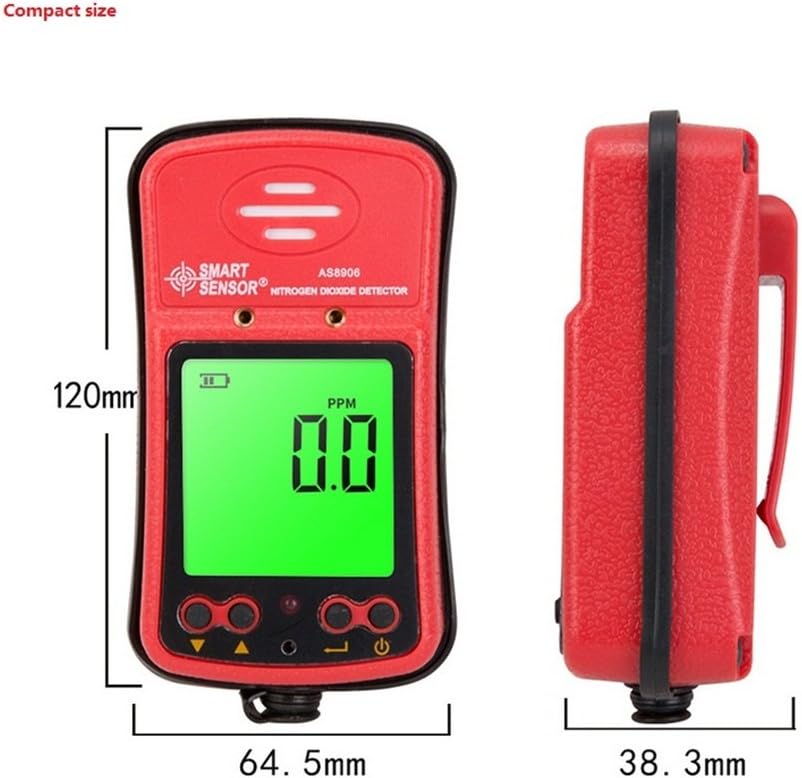
Figure 2.3: Device dimensions.
Dimensions: 120.2mm (Height) x 64.5mm (Width) x 38.3mm (Depth).

Figure 2.4: The compact size allows for easy portability.
3. Tatūnga
3.1 Te Whakataki i te Pūrere
The AS8906 detector is powered by a built-in 3.7V Li-battery. Before first use, ensure the device is fully charged.
- Locate the charging port at the bottom of the device.
- Honoa te taura USB kua whakaratohia ki te tauranga utu.
- Connect the other end of the USB cable to the charging adapter.
- Plug the charging adapter into a standard power outlet.
- The battery indicator on the LCD screen will show charging status. A full charge typically provides up to 12 hours of continuous operation.
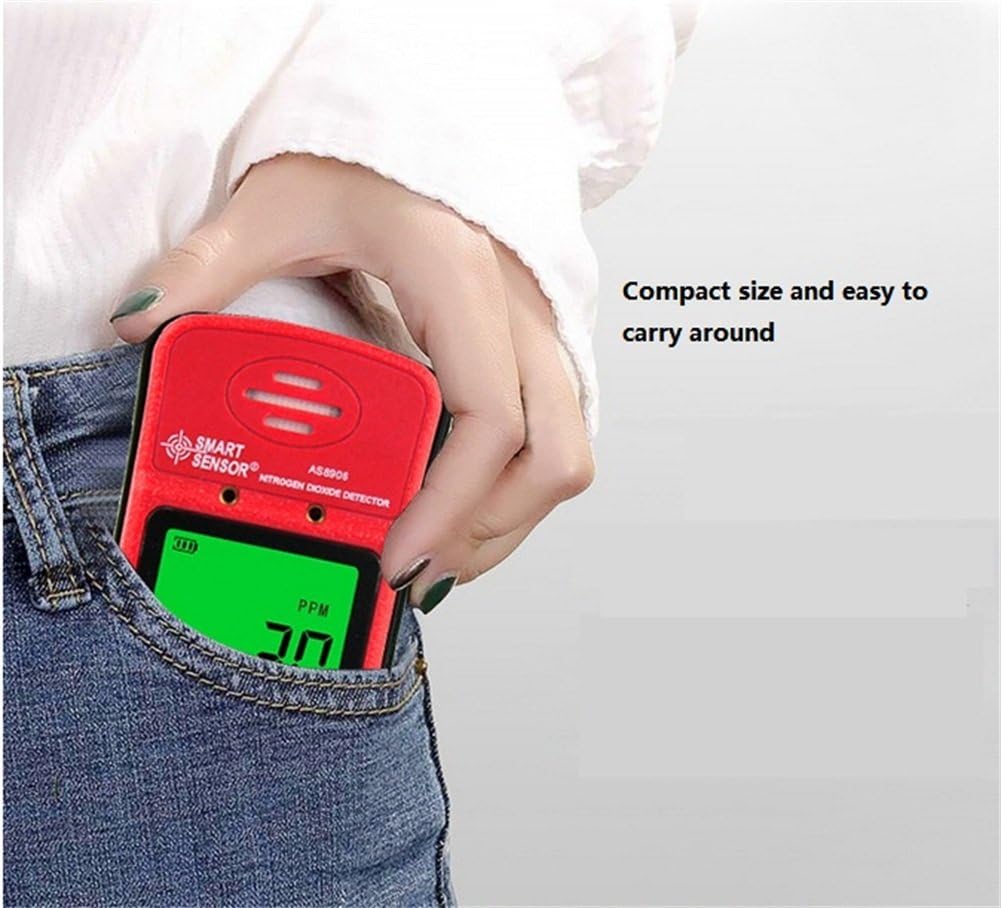
Figure 3.1: Charging port location.

Figure 3.2: Gas detector with recharge adapter.
3.2 Te hono i te Sampling Pump (Optional)
The optional sampling pump (AS8930) is designed to assist the gas detector in environments with limited access or poor air circulation. It does not operate independently and requires power from the gas detector.
- Tiarohia te sampling pump with the gas detector's sampling pump connecting port.
- Securely attach the sampling pump to the gas detector using the two closed-type screws. Ensure a tight connection to avoid poor contact.
- Connect the soft rubber tube (500mm long) to the nozzle of the sampling papu.
- Hiranga: Do not connect any other voltage power supply to the sampling pump to prevent damage.
Whakaahua 3.3: Sampling pump and accessories.
4. Mahi
4.1 Kei te Hiko / Weto
- Hei Whakahiko: Patohia me te pupuri i te Pātene Hia/Weto until the LCD screen illuminates. The device will perform a self-test.
- Hei Whakaweto: Patohia me te pupuri i te Pātene Hia/Weto kia weto te mata.
4.2 Te Maramatanga ki te Whakaaturanga
The high-density digital LCD screen displays real-time gas concentration values, battery status, and other operational indicators. The backlight function allows for use in dark areas.
- PPM: Indicates parts per million, the unit for gas concentration.
- Ata Pūhiko: Whakaatu ai i te taumata utu pākahiko onāianei.
- Tohu Whakaoho: Visual cues for alarm status.
4.3 Nga Mahi Whakaoho
The device features high and low alarm functions with three alert methods: sound, light, and vibration. Alarm values are adjustable.
- When the gas concentration reaches a preset high or low alarm value, the device will activate its sound, light, and vibration alarms.
- The alarm sound can reach up to 80dB.
4.4 Te Whakatikatika i ngā Uara Whakaoho
Refer to the on-screen menu for adjusting high and low alarm thresholds. Use the Up a Ki raro buttons to navigate and change values, and the Tomo pātene hei whakaū.
4.5 Using the Sampling Puma
I te wa o te sampling pump is connected, it will draw air into the detector, allowing for gas concentration measurement in remote or confined spaces. The air flow velocity is approximately 0.5 cubic inches per hour, with a maximum gas sample collecting distance of about 50 feet.
5. Tiaki
5.1 Tiaki Pūhiko
- Recharge the device when the battery indicator shows low power to ensure continuous operation.
- Kaua e tukua kia pau rawa te pākahiko i ngā wā katoa kia roa ai tōna ora.
- If storing the device for an extended period, charge it to approximately 50% and recharge every few months.
5.2 Te horoi
- Horoia te taha o waho o te taputapu ki te ngohengohe, damp kakahu.
- Kaua e whakamahi i nga kai horoi, i nga whakarewa ranei, i te mea ka kino te casing mata ranei.
- Ensure no liquids enter the sensor area or charging port.
5.3 Whakariterite
The device comes with a calibration certificate. For optimal accuracy and compliance, periodic professional calibration is recommended. Refer to the manufacturer or authorized service centers for calibration services.
6. Te Raru
If you encounter issues with your AS8906 detector, refer to the following common problems and solutions:
| Raruraru | Take pea | Rongoā |
|---|---|---|
| Kaore te taputapu i te hiko. | He iti, he pau ranei te pākahiko. | Charge the device using the provided adapter and USB cable. |
| Ko nga panui kore tika. | Sensor contamination or need for calibration. | Ensure the sensor area is clean. Consider professional calibration if readings remain inconsistent. |
| Alarm not sounding/lighting/vibrating. | Alarm settings configured incorrectly or disabled. | Check alarm settings in the device menu. Ensure volume and vibration are enabled. |
| Sampling pump not working. | Poor connection to the detector or pump malfunction. | Me whakarite te sampling pump is securely attached with screws. Verify the detector is powered on. |
If the problem persists after attempting these solutions, contact customer support for further assistance.
7. Whakatakotoranga
7.1 Whakatakotoranga Kaitirotiro
| Āhuahira | Taipitopito |
|---|---|
| Waitohu | POHAKARANGA PAIA |
| Tauira | AS8906 |
| Momo hau | hauota hauhā (NO2) |
| Awhe Ine | 0~20 ppm |
| Whakatau | 0.1 ppm |
| Kaupapa Mahi | Pūoko hikohiko |
| Momo Whakaohooho | Sound, Light, Vibration (adjustable values) |
| Taumata Oro Whakaoho | Tae atu ki te 80dB |
| Te Waahi Mahi | -10~50°C |
| Te haumākū whakahaere | 15~95% RH (standard) |
| Puna Mana | 3.7V Li-battery (Built-in) |
| Mahi Naianei | 16mA |
| Mahi Tonu | Approx. 12 hours (full charge) |
| Rauemi | ABS kirihou |
| Taumaha Kupenga | 200g (7.1 hekere) |
| Ahu | 120.2 x 64.5 x 38.3 mm |
| Tiwhikete | JJG693; JJG695: JJG915 and GB3836 series anti-explosion standard, CNEX |
7.2 Sampling Pump Specifications (Optional Accessory)
| Āhuahira | Taipitopito |
|---|---|
| Mahinga Mahi Voltage Awhe | DC 2.2V-3.2V |
| Mahi Naianei | <280mA |
| Puha Diane | 2.5mm |
| Haruru | <75 dB |
| Ahu | 100.8 x 62.3 x 50 mm |
| Max Sample Distance | Approx. 50 putu |
| Air Flow Velocity | Approx. 0.5 cubic inches per hour |
8. Pūtāhui me te Tautoko
8.1 Nga Korero Whakaputanga
Your SMART SENSOR AS8906 Handheld NO2 Gas Leak Detector comes with a warranty. Please refer to the included Warranty Card in your package for specific terms and conditions, including warranty period and coverage details.
8.2 Tautoko Kiritaki
For technical assistance, troubleshooting beyond this manual, or warranty claims, please contact SMART SENSOR customer support. Contact information can typically be found on the product packaging, the warranty card, or the official SMART SENSOR webpae.