
1. Kupu Whakataki
The RadonAway Air Flow Alarm Model 28421 is designed to monitor the operational status of your radon mitigation system. This battery-powered device detects the presence or absence of air flow within the system's piping, providing an audible and visual alert if a low or no air flow condition is detected. It is important to note that this alarm monitors air flow only and does not measure radon levels.
2. Nga Hua o te Hua
- Pūoho Ataata: Bright, flashing red LED light indicates a no air flow condition.
- Whakaoho Whakaoho: An alternating buzzer provides an audible alert for no air flow.
- Paipa Hototahi: Designed for use on 3-inch or 4-inch system pipes.
- Tāutatanga ngawari: Simple mounting directly onto the system pipe.
- Whakatupato Pūhiko Iti: Alerts you when the battery needs replacement.
3. Ihirangi mokete
- RadonAway Air Flow Alarm Model 28421 Unit
- Pūmārō Tāuta (nga tīwiri, punga)
- Pūhiko (kua oti te whakauru, wehea ranei)
4. Nga korero haumaru
- Hiranga: This device monitors air flow in your radon system. It is not a radon detector and does not measure radon gas levels. Regular radon testing is recommended.
- Ensure proper installation to prevent false alarms or device malfunction.
- Do not expose the device to extreme temperatures or moisture beyond its specified operating range.
- Replace batteries promptly when a low battery warning is indicated to ensure continuous monitoring.
- Kaua e taea e nga tamariki.
5. Tatūnga me te Tāuta
The RadonAway Air Flow Alarm is designed for straightforward installation on your radon mitigation system's PVC piping.
5.1 Te Whakaeke i te Whakaoho
The alarm unit mounts directly onto the exterior of a 3-inch or 4-inch system pipe. Select a location on the pipe that is easily visible and accessible for monitoring and maintenance.
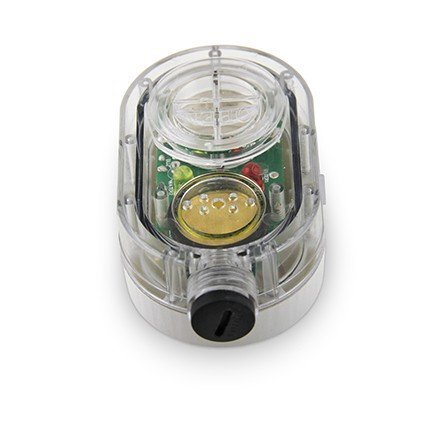
This image displays the RadonAway Air Flow Alarm Model 28421 attached to a radon system pipe. The clear casing reveals the internal components, including the red LED indicator light and the vane extending into the pipe, which detects air movement.
5.2 Vane Installation
A thin, field-trimmable vane is installed inside the pipe. This vane is designed to move with adequate air flow. Ensure the vane is correctly positioned and can move freely within the pipe without obstruction. Refer to the detailed instructions included in the product packaging for precise vane trimming and insertion.
5.3 Tāutanga/Whakahohenga Pūhiko
The unit is battery-powered. If the battery is not pre-installed, open the battery compartment, insert the provided battery, ensuring correct polarity. If pre-installed, remove any battery tab to activate the device.
6. Nga Tohutohu Whakahaere
Once installed and activated, the RadonAway Air Flow Alarm continuously monitors the air flow in your radon mitigation system.
- Mahi Pūnoa: When the radon system is operating correctly and there is sufficient air flow, the alarm will remain silent, and the red LED light will be off. The internal vane will be in a position indicating air movement.
- Tikanga Whakaoho: If the air flow in the pipe drops below a critical level or ceases entirely (e.g., due to fan failure, blockage, or power outage to the fan), the alarm will activate. You will hear an alternating audible buzzer, and a bright, flashing red LED light will be visible.
- Whakatupato Pūhiko Iti: The alarm will provide a distinct indication (e.g., a short beep or specific LED flash pattern) when the battery power is low, signaling that it needs to be replaced soon.
7. Tiaki
- Whakakapinga Pūhiko: When the low battery warning is active, replace the battery immediately with a new one of the same type. Refer to the battery compartment for specific battery type.
- Te horoi: Periodically wipe the exterior of the alarm with a soft, dry cloth to remove dust. Do not use harsh chemicals or abrasive cleaners.
- Vane Check: Occasionally inspect the vane through the clear casing to ensure it is free from debris and can move without obstruction.
8. Te Raru
| Raruraru | Take pea | Rongoā |
|---|---|---|
| Alarm constantly active (audible and visual) | No air flow in the pipe; Radon fan not operating; Pipe blockage; Vane stuck or improperly installed. | Check if the radon fan is powered and running. Inspect the pipe for obstructions. Verify the vane is installed correctly and moves freely. Consult a radon professional if the fan is operational but no air flow is detected. |
| Alarm not activating when air flow stops | Dead battery; Device malfunction; Vane stuck in 'open' position. | Replace the battery. Check the vane for obstructions. If the problem persists, the unit may require replacement. |
| Low battery warning active | He iti te mana o te pākahiko. | Whakakapia tonutia te pākahiko. |
9. Whakatakotoranga
- Tauira: 28421
- Taumata Haruru: 85 Decibels (alarm)
- Momo Whakapuru: Wall Mount (on pipe)
- Hangarau Pūoko: Pressure Sensor (via vane)
- Taumaha Tūemi: Tata ki te 4 hekere
- Awhe Pawera: 32°F ki te 122°F (0°C ki te 50°C)
- Puna Hiko: Battery Powered (Batteries Included: Yes)
- Rahi Paipa Hototahi: 3-inch or 4-inch diameter
10. Pūtāhui me te Tautoko
For warranty information or technical support, please refer to the documentation included with your purchase or contact RadonAway customer service directly. Keep your proof of purchase for warranty claims.
Kaihanga: HomeAire (for RadonAway)