
1. Kupu Whakataki
This manual provides essential instructions for the safe and efficient installation, operation, and maintenance of your COTEK SP-3000-148 High Frequency Pure Sine Wave Inverter. Please read this manual thoroughly before attempting any installation or operation to ensure proper use and to prevent potential hazards. Keep this manual for future reference.
2. Nga Tohutohu Haumaru
Me whai tonu i ngā mahi ārai haumaru e whai ake nei hei whakaiti i te tūponotanga o te ru hiko, te ahi, te whara rānei:
- Pānuihia ngā tohutohu katoa: Before operating the inverter, read all instructions and cautionary markings on the inverter, the batteries, and all appropriate sections of this manual.
- Kaimahi whai tohu: All electrical work should be performed by qualified personnel familiar with battery and inverter systems and their installation.
- Whakahau: Ensure adequate ventilation around the inverter. Do not install in a zero-clearance compartment.
- A ape i te makuku: Do not expose the inverter to rain, snow, spray, or bilge water.
- Whakapapa tika: Me tika te whakapūmau i te taura whenua o te kaitahuri.
- Haumaru pūhiko: Work in a well-ventilated area when working with batteries. Wear eye protection and protective clothing. Avoid touching eyes while working near batteries.
- Momotu mana: Before performing any maintenance or cleaning, disconnect all power to the inverter.

Image: Always use appropriate safety equipment when working with electrical systems.
3. Nga Hua o te Hua
The COTEK SP-3000-148 inverter offers the following key features:
- Pure sine wave output for sensitive electronics.
- Power ON / OFF remote control capability via green terminal.
- Input & output fully isolation for enhanced safety.
- Temperature & load controlled cooling fan for optimal performance and longevity.
- User-friendly interface for ease of operation.
- Type 1 Indoor Aluminum Enclosure for durability and protection.
4. Hua Neke Atuview
The COTEK SP-3000-148 is a high-frequency pure sine wave inverter designed to convert 48VDC battery power into stable 120VAC electricity, suitable for a wide range of applications.

Whakaahua: Te katoa view of the COTEK SP-3000-148 Pure Sine Wave Inverter.
4.1 Paewhiri Whakamuri
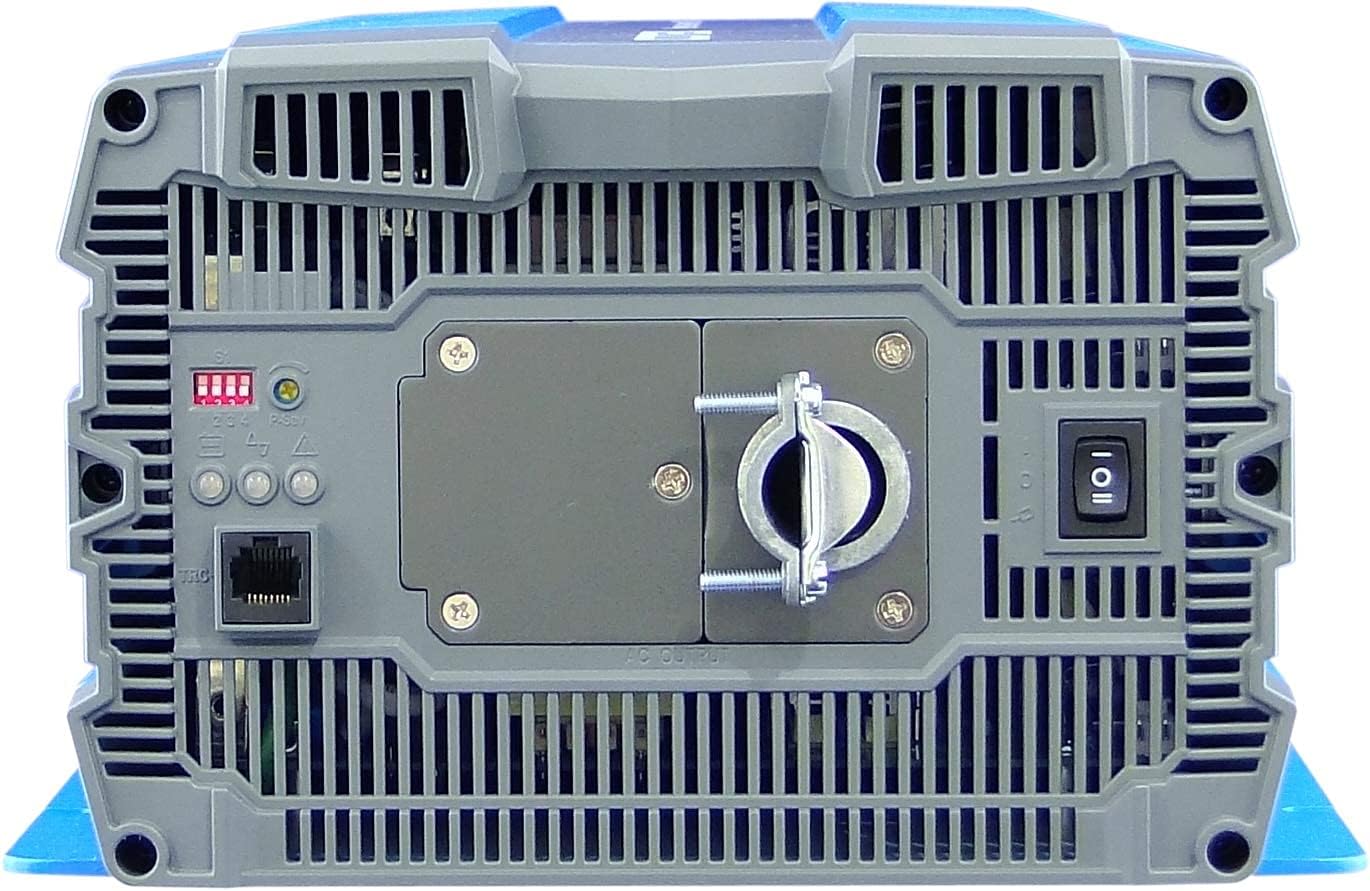
Image: Rear panel of the COTEK SP-3000-148 inverter.
- Kāpeka Huaputa AC: Hardwire connection for 120VAC output.
- Whakawhiti DIP: Used for configuring output voltage me te auau.
- Remote Control Port (Green Terminal): For connecting an optional remote ON/OFF switch.
- Whakawhiti Kaha: Te pana matua ON/OFF mō te inverter.
- Tohu LED: Display operational status and fault conditions.
4.2 Paewhiri Mua
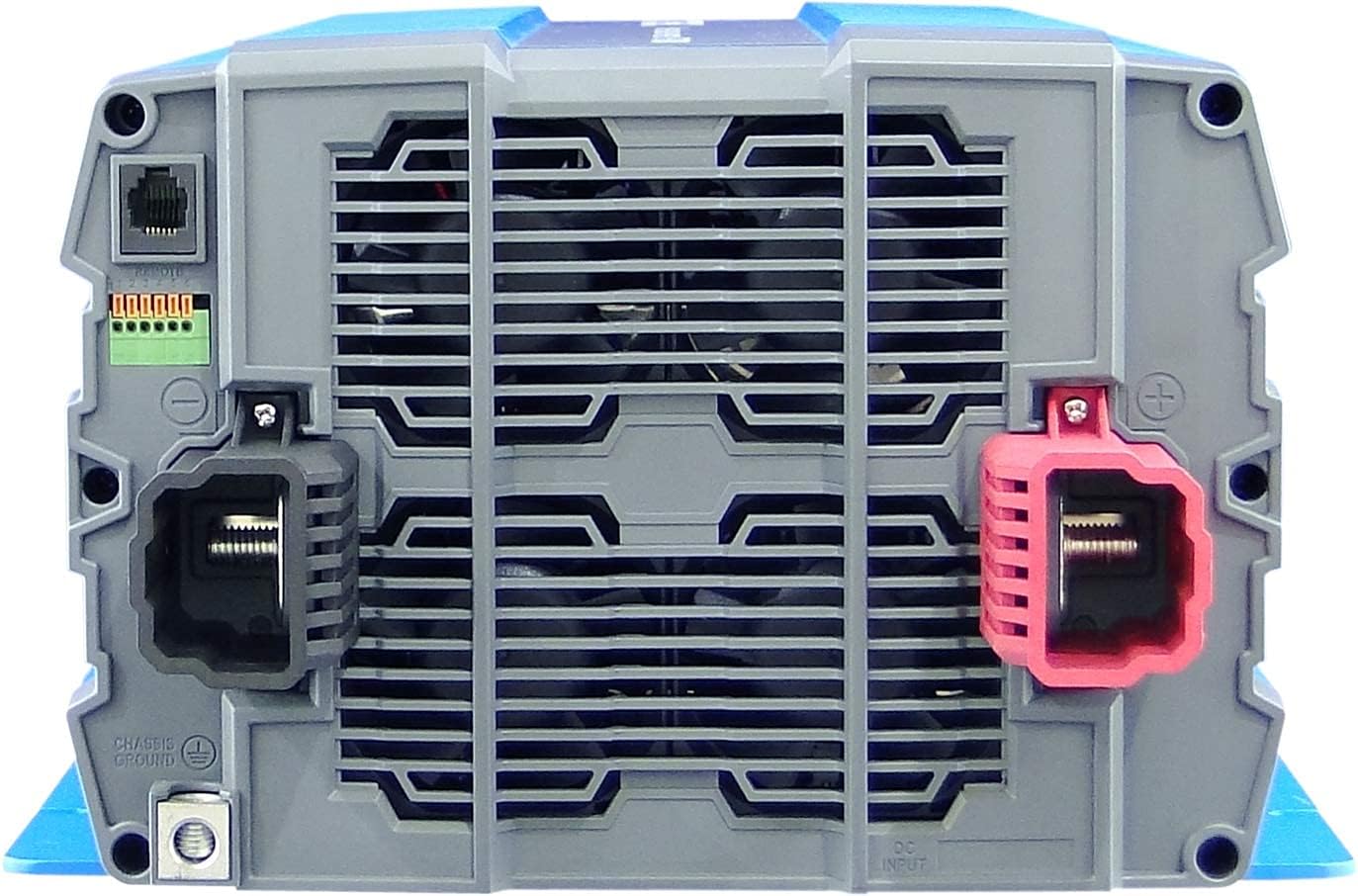
Image: Front panel of the COTEK SP-3000-148 inverter.
- Ngā Kāpeka Tāuru DC: Positive (+) and Negative (-) terminals for 48VDC battery connection.
- Chassis Ground Terminal: For connecting the inverter to earth ground.
5. Tāutanga
He mea nui te whakaurunga tika mo te mahi haumaru me te pai o to kaihurihuri.
5.1 Whakapiki
- Tauwāhi: Choose a dry, well-ventilated area, away from direct sunlight, heat sources, and flammable materials.
- Takotoranga: Mount the inverter horizontally on a flat, stable surface. Ensure adequate clearance around the unit for proper airflow.
- Whakaeke Haumaru: Use appropriate fasteners to securely mount the inverter to prevent movement or vibration.

Image: Mechanical drawings with dimensions for mounting the SP-3000 series inverter.
5.2 Waea Whakahoahoa
Me tutuki ngā waea katoa i ngā ture hiko ā-rohe me ā-motu.
5.2.1 DC Input Connection (48VDC)
- Connect the positive (+) terminal of the inverter to the positive terminal of your 48VDC battery bank.
- Connect the negative (-) terminal of the inverter to the negative terminal of your 48VDC battery bank.
- Use appropriately sized cables and fuses/breakers for the DC input circuit to prevent overcurrent.
5.2.2 AC Output Connection (120VAC Hardwire)
- Connect your AC loads to the hardwire AC output terminal block on the rear panel.
- Ensure proper polarity (Line, Neutral, Ground) for all AC connections.
- Consult a qualified electrician for hardwiring AC circuits.
5.2.3 Whakapapa whenua
- Connect the chassis ground terminal on the inverter's front panel to a reliable earth ground.
- This connection is essential for safety and to minimize electrical noise.
5.2.4 Hononga Mana Mamao
- Connect an optional remote ON/OFF switch to the green terminal block on the rear panel.
- Refer to the remote control's specific instructions for wiring details.
6. Mahi
6.1 Kei te Hiko / Weto
- Hei Whakahiko: Ensure all connections are secure. Flip the main power switch on the rear panel to the 'ON' position. The LED indicators will illuminate to show operational status.
- Hei Whakaweto: Flip the main power switch to the 'OFF' position. If using a remote switch, ensure it is also in the 'OFF' position.
6.2 Tautuhinga Whakawhiti DIP
The DIP switches on the rear panel allow configuration of the inverter's output voltage and frequency. Refer to the diagram below for specific settings. Always power off the inverter before changing DIP switch settings.

Image: COTEK SP-3000 series specifications and DIP switch settings.
6.2.1 Putanga Voltage Whiriwhiringa
The inverter supports various output voltages (100V, 110V, 115V, 120V AC). Adjust DIP switches according to the desired output voltage as indicated in the specifications diagram.
6.2.2 Output Frequency Selection
The inverter can operate at 50Hz or 60Hz. Set the DIP switches to match the required frequency for your region or application.
6.2.3 Aratau Tiaki Hiko
The inverter features a power saving mode (High Efficiency). Refer to the diagram for enabling or disabling this feature via DIP switches.
6.3 Tohu LED
The inverter is equipped with LED indicators to display its operational status and alert you to potential issues. Consult the specifications diagram for a detailed explanation of each LED's meaning.
7. Tiaki
Regular maintenance ensures the longevity and reliable operation of your inverter.
- Te horoi: Periodically clean the exterior of the inverter with a dry cloth. Ensure ventilation openings are free from dust and debris. Do not use liquid cleaners.
- Hononga: Regularly check all DC and AC connections for tightness. Loose connections can cause overheating and poor performance.
- Tirohanga Pūhiko: Inspect your battery bank regularly for corrosion, damage, or signs of leakage.
8. Te Raru
The SP-3000-148 inverter includes several protection features. If the inverter stops operating or indicates a fault, refer to the table below for common issues and solutions.
| Raruraru | Take pea | Rongoā |
|---|---|---|
| No AC Output / Inverter Off | Main switch off, low battery voltage, overload, internal fuse. | Check power switch, charge batteries, reduce load, check DC input fuse. |
| Whakauru Raro-Voltage Whakaoho | Pūhiko voltage iti rawa. | Me utu, whakakapi ranei nga pākahiko. |
| Whakauru Neke Atu-Voltage Whakaoho | Pūhiko voltage teitei rawa. | Check charging system, ensure correct battery voltage. |
| Putanga Putanga Nui | Kua hipa ake te kawenga hono i te kaha o te inverter. | Whakaititia te tapeke kawenga hono ki te inverter. |
| Neke atu i te Pawera | Inverter overheating due to poor ventilation or excessive load. | Ensure adequate ventilation, reduce load, allow inverter to cool. |
| Porowhita Poto | Short circuit detected on AC output. | Identify and clear the short circuit on the AC output wiring or load. |
9. Whakatakotoranga
The following table details the technical specifications for the COTEK SP-3000-148 Pure Sine Wave Inverter:
| Āhuahira | Whakatakotoranga |
|---|---|
| Tauira | SP-3000-148 |
| AC Voltage | 120VAC (Selectable via DIP switch) |
| Ture Whakauru | ±5% |
| Te Mana Whakatau | 3000W |
| Surge Power (1 Sec) | 6000W |
| Te Mana Putanga Morahi (1 Min) | 3450W |
| Puka Ngaru Huaputa | Pure Sine Wave (THD<3% at nominal load) |
| Auautanga | 60Hz (Selectable via DIP switch) |
| DC Voltage | 48VDC |
| Voltage Awhe | 42.0 ~ 66.0VDC |
| Kore Uta o Naianei | <1.0A @48VDC |
| Aratau Tiaki Hiko | <0.4A @48VDC |
| Te kaha (Max.) | 92% |
| Whakauru Raro-Voltage Tiaki | 42.0 ± 0.5VDC |
| Whakauru Raro-Voltage Whakaoho | 44.0 ± 0.5VDC |
| Whakauru Raro-Voltage Whakaora | 50.0 ± 0.5VDC |
| Whakauru Neke Atu-Voltage Tiaki | 66.0 ± 1.0VDC |
| Whakauru Neke Atu-Voltage Whakaora | 64.0 ± 1.0VDC |
| Putanga Putanga Nui | Shutdown output, restart to recover. |
| Putanga Poto | Shutdown output, restart to recover. |
| Neke atu i te Pawera | Shutdown output, auto-recovery after cooling. |
| DC Tāuru Whakamuri Polarity | Ma te ngongo |
| Temp Mahi. | -20°C ~ +40°C |
| Rokiroki Temp. & Haumākū | -30°C ~ +70°C, 10 ~ 95% RH |
| Ahu (W x H x D) | 442 x 239 x 102.5 mm (17.4 x 9.4 x 4.0 inihi) |
| Taumaha | 8.2kg (18.08 lbs) |
| Pūtāhui | 2 Tau Kaihanga |
10. Nga Korero Whakaputanga
The COTEK SP-3000-148 Pure Sine Wave Inverter comes with a 2-Tau Whakaputanga Kaihanga. This warranty covers defects in materials and workmanship under normal use. Please retain your proof of purchase for warranty claims. For detailed warranty terms and conditions, refer to the official COTEK warranty statement or contact customer support.
11. Tautoko Kiritaki
If you encounter any issues not covered in this manual or require technical assistance, please contact COTEK customer support. Have your product model number (SP-3000-148) and purchase information ready when contacting support.