
1. Kupu Whakataki
The Woods 59408WD Outdoor Hard-Wired Post Eye Light Control is designed to automatically turn your outdoor lighting on at dusk and off at dawn. This photocell light sensor provides reliable, energy-efficient control for various outdoor light fixtures, ensuring your property is illuminated when needed without manual intervention. It is suitable for hard-wired installations in appropriate enclosures.
2. Nga korero haumaru
- WHAKATŪPATO: Te mate o te ru hiko. Momotuhia te hiko i te waahi ara iahiko, te pouaka hiko ranei i mua i te whakaurunga, te mahi ratonga ranei.
- This device is intended for installation in accordance with the National Electrical Code and local regulations. If you are unsure about wiring, consult a qualified electrician.
- Ensure the device is installed in a dry location or within a weather-resistant enclosure to prevent water damage and ensure safe operation.
- Do not exceed the specified electrical ratings.
3. Ihirangi mokete
- Woods 59408WD Photocell Light Control
- Hardwire Black (integrated wiring)
4. Whakatakotoranga
| Waitohu | Ngaherehere |
| Tau tauira | 59408WD |
| Voltage | 120 Volts |
| Wattage | 1800 Watts (Mōrahi) |
| Tikanga Mana | Photocell (Dusk-to-Dawn) |
| Momo Whakawhiti | Maamaa |
| Mahinga o roto/waho | Indoor, Outdoor (in dry location/enclosure) |
| Light Source Compatibility | Fluorescent, Halogen, Incandescent, LED |
| Ahu (L x W x H) | 1.8"L x 1.1"W x 2.1"H |
| Taumaha | 0.11 Pauna |
5. Tāutanga
5.1 Nga Utauta e Hiahia ana
- Kaihurihuri
- Taimana waea
- Wire nuts (appropriate size)
- Ripene hiko
- Voltage Kaiwhakamatautau
- Weather-resistant electrical enclosure (if installing outdoors in an exposed location)
5.2 Nga Tohutohu Waea
NUI: Me whakarite kua whakaweto te hiko i te pūwhakaweto ara iahiko i mua i te tīmatanga o te tāutanga.
- Whakapaia nga Waea: Strip approximately 1/2 inch of insulation from the ends of all wires (photocell, incoming power, and light fixture wires).
- Connect Neutral Wires: Honoa te waea ma from the photocell to the incoming waea mā (koretake) from your power source and the waea mā (koretake) of your light fixture. Secure with a wire nut.
- Connect Line (Hot) Wire: Honoa te waea pango from the photocell to the incoming black (hot/line) wire from your power source. Secure with a wire nut.
- Tūhono Waea Uta: Honoa te waea whero from the photocell to the black (hot/load) wire of your light fixture. Secure with a wire nut.
- Hononga Haumaru: Ensure all wire nuts are tight and connections are secure. Wrap each wire nut with electrical tape for added insulation and protection.
- Mount Photocell: Mount the photocell in a location where it will receive natural daylight and is not obstructed by shadows or artificial light sources (e.g., other lights, car headlights) that could interfere with its operation. If installing outdoors, ensure it is within a suitable weather-resistant enclosure.
- Whakaora i te Mana: Once all connections are secure and the photocell is mounted, restore power at the circuit breaker.
Tuhipoka: The photocell may have a built-in delay (typically a few seconds to a few minutes) before activating or deactivating to prevent false triggers from transient light changes.
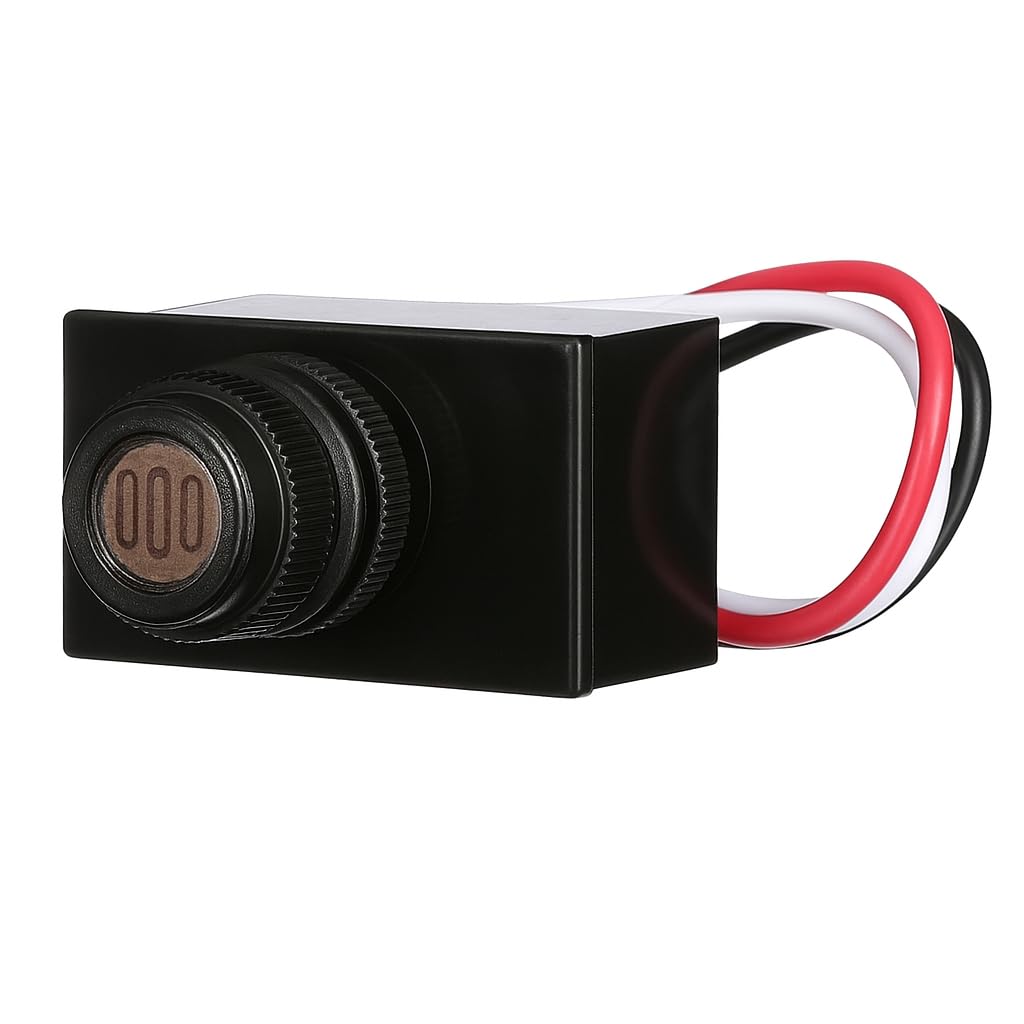
Image: The Woods 59408WD Post Eye Light Control, a compact black unit with a visible light sensor on the front.

Whakaahua: He tata view of the photocell sensor on the Woods 59408WD unit, showing the light-sensitive element.
6. Mahi
The Woods 59408WD Post Eye Light Control operates automatically based on ambient light levels:
- At Dusk: When natural light levels fall below a certain threshold, the photocell will detect darkness and activate the connected light fixture.
- At Dawn: When natural light levels rise above a certain threshold, the photocell will detect sufficient light and deactivate the connected light fixture.
There is an intentional delay in the switching mechanism (typically a few seconds to a few minutes) to prevent the light from cycling on and off due to temporary shadows, car headlights, or lightning flashes.
7. Tiaki
The Woods 59408WD Post Eye Light Control requires minimal maintenance:
- Periodically inspect the photocell sensor for any dirt, dust, or debris that might obstruct its view of ambient light. Gently clean the sensor with a soft, damp kakahu mehemea e tika ana.
- Ensure the area around the sensor remains clear of obstructions (e.g., growing foliage, new decorations) that could block natural light.
- Check wiring connections annually for any signs of wear or corrosion, especially in outdoor installations.
8. Te Raru
| Raruraru | Take pea | Rongoā |
|---|---|---|
| Ka mau tonu te rama. | Sensor is not receiving enough light (e.g., obstructed, installed in a dark area). Wiring error (e.g., load wire connected to line). Defective photocell. | Relocate or clear obstructions from the sensor. Verify wiring connections according to Section 5.2. Consult an electrician if unsure. Replace the photocell if other solutions fail. |
| Light does not turn on at dusk. | Kaore he mana ki te waeine. Sensor is receiving too much light (e.g., from another light source). Hapa waea hiko. Defective photocell or light fixture bulb. | Tirohia te pūwāhi ara iahiko me te pūhiko hiko. Relocate the sensor or shield it from artificial light sources. Verify wiring connections according to Section 5.2. Test the light fixture with a different power source or replace the bulb. Replace photocell if necessary. |
| Light cycles on/off rapidly. | Interference from flickering light sources or transient shadows. Sensor is partially obstructed or dirty. | Ensure the sensor has a clear, consistent view of ambient light. Clean the sensor. Note that a short delay is normal to prevent rapid cycling. |
| Light turns on/off with a delay. | He mahi noa tenei. | The photocell is designed with a built-in time delay to prevent false triggers. This is not a malfunction. |
9. Pūtāhui me te Tautoko
For warranty information or technical support, please refer to the product packaging or contact Woods customer service directly. Keep your purchase receipt as proof of purchase.