
1. Prodotto finitoview
The SONICAKE Twiggy Blues is a compact multi-effect pedal designed for guitarists seeking essential blues and retro rock tones. It integrates four core effects: Compressor, Overdrive, Delay, and Reverb, along with a built-in cabinet simulator for direct connection options. This pedal offers a streamlined solution for various playing environments.
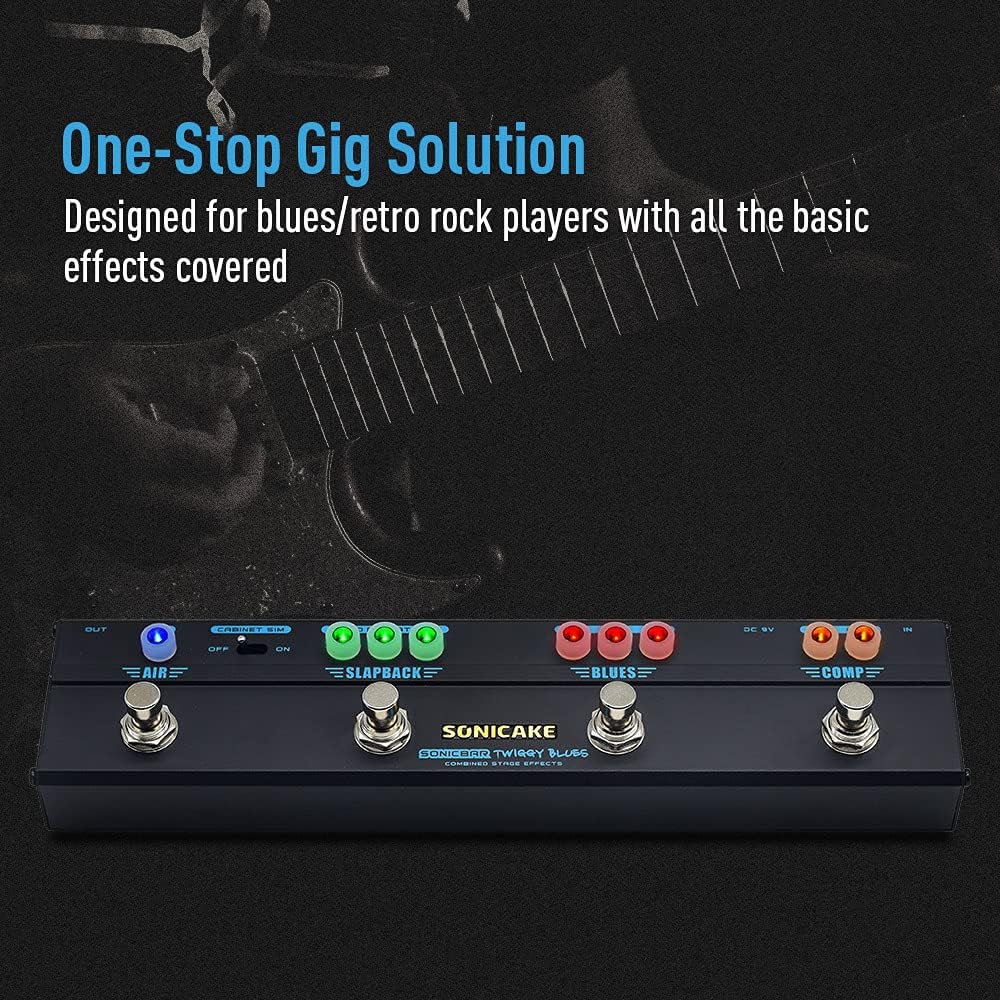
Image 1.1: The SONICAKE Twiggy Blues pedal, showcasing its compact design and integrated effects.
2. Impostazione
Follow these steps to set up your Twiggy Blues pedal:
- Collegamento elettrico: Connect a standard 9V DC power adapter (center negative) to the "DC 9V" input jack on the pedal. Ensure the power source provides stable and clean power to prevent noise.
- Input dello strumento: Collega la chitarra al jack "IN" sul lato destro del pedale utilizzando un cavo standard per strumenti da 1/4 di pollice.
- Connessione di uscita: Collegare il jack "OUT" sul lato sinistro del pedale al tuo amplifier's input or an audio interface/mixer using a standard 1/4-inch instrument cable.
- Simulazione del gabinetto: If connecting directly to a PA system, mixer, or audio interface, ensure the "CABINET SIM" switch is set to "ON". If connecting to a guitar amplifier, set the switch to "OFF" to bypass the cabinet simulation.

Image 2.1: Proper connection of the Twiggy Blues pedal to a guitar and an amppiù vivace.
3. Istruzioni per l'uso
The Twiggy Blues pedal features four footswitches, each activating a specific effect module. Each module has dedicated control knobs with LED indicators to show the active status.

Image 3.1: Labeled components of the Twiggy Blues pedal.
3.1. Identificazione dei componenti
- Ingresso CC 9 V: Collegamento dell'adattatore di alimentazione.
- Nel Jack: Ingresso chitarra.
- Cabinet Simulation Switch: Toggles cabinet simulation ON/OFF.
- FUORI Jack: Uscita in amplifier o sistema audio.
- COMP Footswitch & Knobs: Activates/deactivates Compressor effect. Knobs control Volume and Compression level.
- BLUES Footswitch & Knobs: Activates/deactivates Overdrive effect. Knobs control Volume, Tone, and Gain.
- SLAPBACK Footswitch & Knobs: Activates/deactivates Delay effect. Knobs control Blend, Repeat, and Time.
- AIR Footswitch & Knob: Activates/deactivates Reverb effect. Knob controls Mix level.
3.2. Moduli di effetti
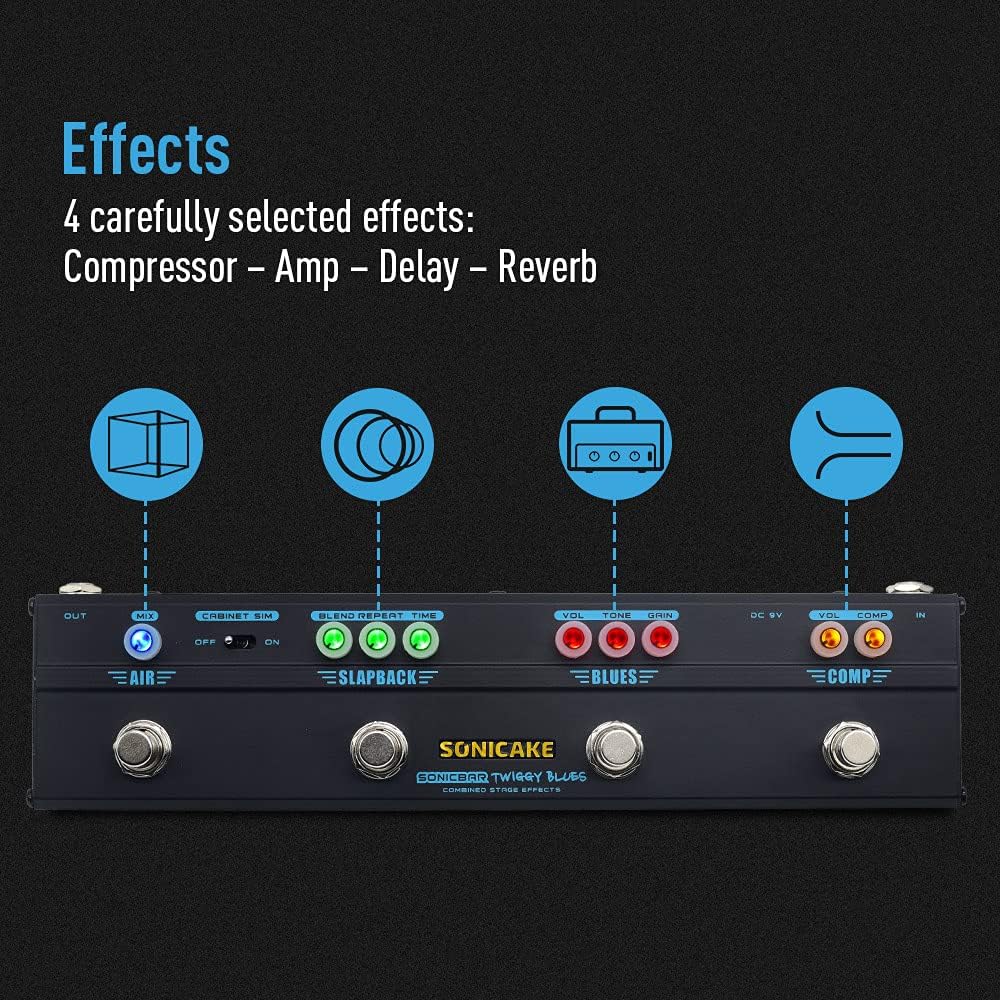
Immagine 3.2: Passoview of the four integrated effects.
3.2.1. Compressor (COMP)
The Compressor module provides a smooth and sustained tone. Use the footswitch to engage or bypass the effect.
- VOLO: Adjusts the overall output volume of the compressor.
- COMPONENTE: Controls the amount of compression applied to the signal. Higher settings result in more sustain and a more even dynamic range.
3.2.2. Overdrive (BLUES)
The BLUES module simulates a vintage Dumble-style tube amplifier, offering a range of overdrive tones suitable for blues and classic rock. Engage with its dedicated footswitch.
- VOLO: Sets the output volume of the overdrive effect.
- TONO: Adjusts the tonal character, from darker to brighter.
- GUADAGNO: Controls the amount of distortion or saturation. Lower settings provide a subtle breakup, while higher settings yield more aggressive overdrive.
3.2.3. Delay (SLAPBACK)
The SLAPBACK module provides an analog-voiced delay effect, ideal for adding depth and rhythmic repeats. Activate using its footswitch.
- MISCELA: Controls the mix between the dry signal and the delayed signal.
- RIPETERE: Regola il numero di ripetizioni del ritardo.
- TEMPO: Sets the delay time, from short slapback echoes to longer repeats (up to 500ms).
3.2.4. Reverb (AIR)
The AIR module offers a high-quality reverb effect to add spaciousness to your sound. Engage with its footswitch.
- MESCOLARE: Controls the amount of reverb mixed with the dry signal.
3.3. Simulazione del mobile
The built-in cabinet simulation allows for direct connection to a PA system, mixer, or audio interface, providing a guitar cabinet-like sound without needing an amplifier. Use the toggle switch to activate or deactivate this feature.

Image 3.3: The Cabinet Simulation switch for direct output.
3.4. Indicatori LED
Each effect module features LED indicators around its control knobs. These LEDs illuminate when the corresponding effect is active, providing clear visual feedback on the pedal's status during use.
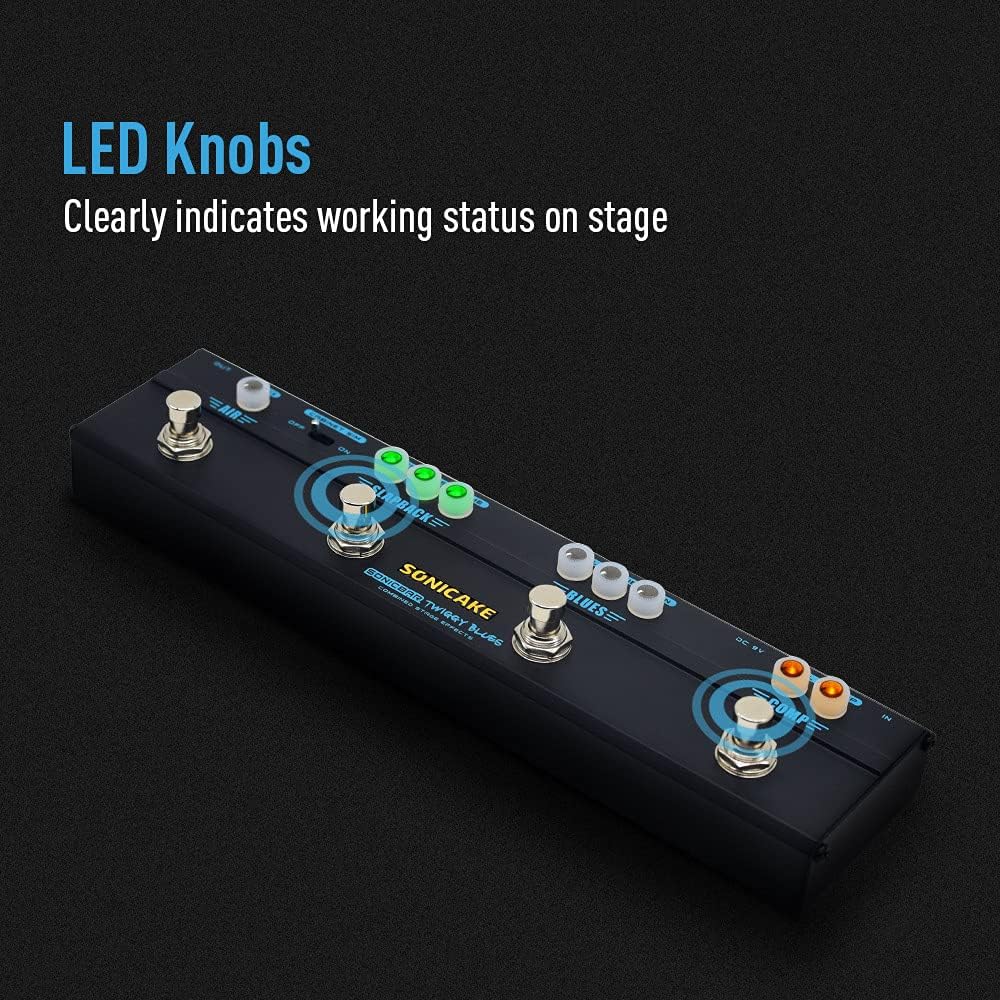
Image 3.4: LED knobs indicating active effects.
4. Manutenzione
Proper maintenance ensures the longevity and optimal performance of your Twiggy Blues pedal.
- Pulizia: Use a soft, dry cloth to clean the pedal's surface. Avoid abrasive cleaners or solvents, which can damage the finish or internal components.
- Magazzinaggio: Store the pedal in a dry environment, away from extreme temperatures, humidity, and direct sunlight. When not in use for extended periods, disconnect the power adapter.
- Connessioni: Controllare periodicamente tutti i collegamenti dei cavi per verificare che non siano usurati. Assicurarsi che i jack siano privi di polvere e detriti.
5. Risoluzione Dei Problemi
If you encounter issues with your Twiggy Blues pedal, refer to the following common troubleshooting steps:
- Nessun suono:
- Assicurarsi che tutti i cavi (ingresso, uscita, alimentazione) siano collegati saldamente.
- Verify the power adapter is functioning correctly and providing 9V DC (center negative).
- Check if your guitar and amplifier lavorano in modo indipendente.
- Ensure the volume knobs on the pedal and your amplifier non sono impostati su zero.
- Rumore/ronzio indesiderato:
- Utilizzare un alimentatore CC da 9 V regolato e di alta qualità, progettato specificamente per i pedali per chitarra.
- Assicurarsi che tutti i cavi siano schermati e in buone condizioni.
- Provare a isolare il pedale da altri dispositivi elettronici che potrebbero causare interferenze.
- Effetto non coinvolgente:
- Press the footswitch firmly to ensure it engages. The LED indicator should light up.
- Check the knob settings for the specific effect; some effects may be subtle at low settings.
If problems persist, contact SONICAKE customer support for further assistance.
6. Specifiche
| Caratteristica | Specificazione |
|---|---|
| Numero di modello | QCE-10-40 |
| Peso dell'articolo | 0.48 chilogrammi (1.06 libbre) |
| Dimensioni del prodotto | 10.31"L x 1.73"W x 2.52"H (26.19 cm x 4.39 cm x 6.40 cm) |
| Materiale del corpo | Metallo |
| Fonte di alimentazione | Elettrico con cavo |
| Voltage | 9 Volt CC |
| Formato del segnale | Analogico |
| Interfaccia Hardware | 3.5mm Audio (likely referring to internal components or specific connections, standard guitar jacks are 1/4 inch) |
| Tipo di connettore | 3.5 mm audio (likely referring to internal components or specific connections, standard guitar jacks are 1/4 inch) |
7. Garanzia e supporto
For warranty information, product registration, or technical support, please visit the official SONICAKE weboppure contatta direttamente il servizio clienti. Conserva la ricevuta d'acquisto come prova d'acquisto.
SONICAKE Official Websito: Visita lo Store SONICAKE su Amazon