
1. Introduction
This manual provides instructions for the i-tec USB C Dual Monitor Docking Station (Model C31DUALDPDOCKPD). This docking station is designed to expand the connectivity of your USB-C or Thunderbolt 3 enabled laptop, tablet, or smartphone, allowing for dual external monitor support, multiple USB peripheral connections, Gigabit Ethernet, and power delivery up to 100W.

Image 1.1: i-tec USB C Dual Monitor Docking Station.
2. Produit terminéview
The i-tec USB C Dual Monitor Docking Station offers a comprehensive set of ports for enhanced productivity and connectivity.
2.1. Aménagement du port

Image 2.1: Front Panel Ports (USB-C 3.1 Gen 2, USB 3.0, Audio/Mic Jack).

Image 2.2: Rear Panel Ports (2x DisplayPort, Gigabit Ethernet, USB-C Power Delivery, Kensington Lock Slot).
2.2. All Connections Diagram

Image 2.3: Comprehensive diagram of all ports and their functions.
3. Instructions de configuration
Follow these steps to set up your i-tec USB C Dual Monitor Docking Station.
- Branchement de l'alimentation (facultatif mais recommandé) : Connect your original USB-C charger (up to 100W) to the USB-C Power Delivery (USB-C PD) port on the docking station. This provides power to the docking station and charges your connected laptop. If not using a power adapter, some USB 3.0 and USB-C data ports may not function optimally with high-power devices.
- Se connecter au périphérique hôte : Use the integrated USB-C cable to connect the docking station to your laptop's USB-C or Thunderbolt 3 port.
- Connecter des moniteurs externes : Connect your monitors to the two DisplayPort outputs on the docking station.
- Windows/Ubuntu: Supports up to two 4K/60Hz external monitors with extended or mirrored display modes.
- macOS: Supports up to one 4K/60Hz external monitor. When connecting two monitors, both will display the same image due to macOS not supporting Multi-Stream Transport (MST) technology.
- Connectez les périphériques : Connect your USB devices (keyboard, mouse, external drives) to the available USB 3.0 and USB 2.0 ports. Connect your Ethernet cable to the Gigabit Ethernet (LAN) port for a wired network connection. Connect headphones or a microphone to the combined audio/mic jack.
Video 3.1: Official i-tec USB C Dual Monitor Docking Station setup and feature overview. This video demonstrates the connection process and various functionalities of the docking station.
4. Mode d'emploi
4.1. Bouton d'alimentation
The docking station features a power button on the top panel. Press and hold the power button for approximately 2 seconds to turn the unit on or off. This delay prevents accidental shutdowns.
4.2. Configuration de l'affichage
After connecting external monitors, configure your display settings through your operating system. Options typically include:
- Étendre: Each monitor displays a separate desktop, expanding your workspace.
- Mirror/Duplicate: Tous les écrans affichent le même contenu.
- Deuxième écran uniquement : Only the external monitor(s) display content, with the laptop screen turned off.
4.3. Charging Functionality
When a compatible USB-C charger is connected to the docking station's USB-C PD port, the docking station will pass through up to 100W of power to charge your connected laptop. Additionally, the USB-C 3.1 Gen 2 port on the front panel supports fast charging for smartphones and tablets.
5. Compatibilité
The docking station is compatible with devices featuring a USB-C or Thunderbolt 3 port that supports video output (DisplayPort Alternate Mode).
5.1. Systèmes d'exploitation pris en charge
- Windows 10 et versions ultérieures
- macOS X and later
- Androïde
- ChromeOS
- Linux
5.2. Display Output Limitations

Image 5.1: Display output capabilities across different operating systems.
Note for macOS Users: macOS does not support Multi-Stream Transport (MST) technology. This means that when two monitors are connected to the docking station on a macOS device, both monitors will display the same image (mirroring), not an extended desktop across two separate displays. For extended desktop functionality on macOS, only one external monitor can be used with the docking station.
5.3. VESA Mounting Support
The docking station features VESA support, allowing for vertical installation behind a VESA compatible monitor. This helps in creating a clean and organized workspace.

Image 5.2: Docking station mounted behind a VESA compatible monitor for a clean desk setup.
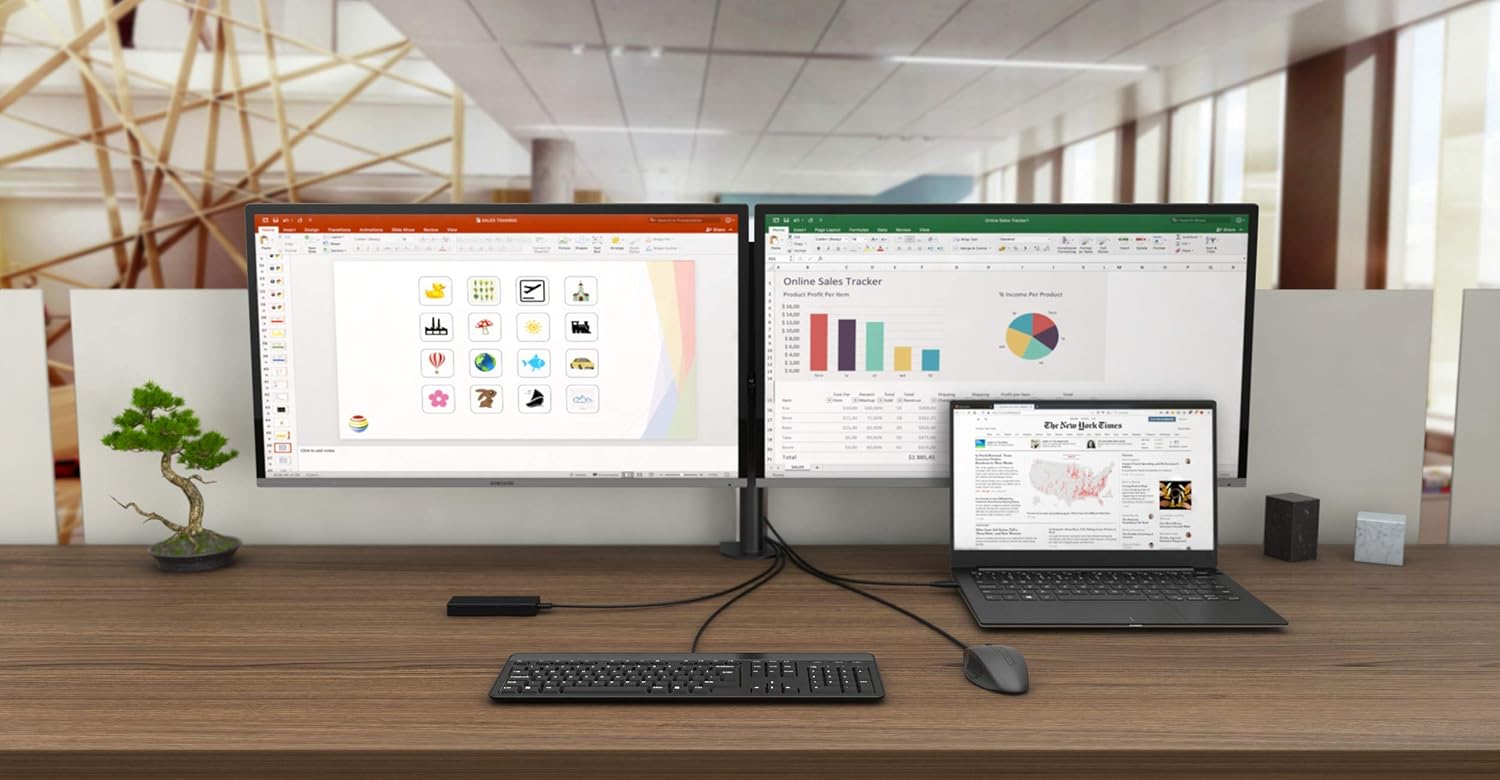
Image 5.3 : Example of a complete workstation setup utilizing the docking station.
6. Entretien
To ensure optimal performance and longevity of your docking station, follow these maintenance guidelines:
- Conservez l'appareil dans un endroit sec, à l'abri de la lumière directe du soleil et des températures extrêmes.
- Évitez d'exposer l'appareil à l'eau ou à d'autres liquides.
- Nettoyez l'appareil avec un chiffon doux et sec. N'utilisez pas de produits chimiques agressifs ni de nettoyants abrasifs.
- Assurez une ventilation adéquate autour de la station d'accueil pour éviter toute surchauffe.
7. Dépannage
Si vous rencontrez des problèmes avec votre station d'accueil, consultez les problèmes et solutions courants suivants :
- Aucune sortie d'affichage :
- Assurez-vous que le port USB-C de votre ordinateur portable prend en charge le mode alternatif DisplayPort.
- Verify that the DisplayPort cables are securely connected to both the docking station and the monitors.
- Check your operating system's display settings to ensure external monitors are detected and configured correctly.
- If using macOS, remember that only one external monitor will extend the desktop; two monitors will mirror.
- Périphériques USB non fonctionnels :
- Ensure the docking station is connected to a power adapter, especially for high-power USB devices like external SSDs. Without a power adapter, USB 3.0 and USB-C data ports may have limited functionality.
- Essayez de connecter le périphérique USB à un autre port de la station d'accueil.
- Ensure device drivers are up to date on your host system.
- Aucune connexion réseau :
- Vérifiez que le câble Ethernet est correctement connecté à la fois à la station d'accueil et à votre routeur/modem.
- Vérifiez les paramètres réseau de votre appareil hôte.
- Ordinateur portable ne chargeant pas :
- Ensure your original USB-C charger is connected to the USB-C PD port on the docking station.
- Vérifiez que le port USB-C de votre ordinateur portable prend en charge la technologie Power Delivery.
8. Spécifications
| Marque | i-tec |
| Modèle | C31DUALDPDOCKPD |
| Interface matérielle | Thunderbolt 3, USB Type C |
| Appareils compatibles | Devices with USB-C or Thunderbolt-3 ports |
| Sortie vidéo | 2x DisplayPort (up to 4K/60Hz each) |
| Ports USB | 3x USB 3.1, 1x USB-C 3.1 (Gen 2), 2x USB 2.0 |
| Ethernet | Gigabit Ethernet RJ-45 (10/100/1000 Mbps) |
| Audio | Combined Audio/Microphone Jack |
| Distribution d'énergie | Up to 100W (via USB-C PD port) |
| Sécurité | Slot pour verrou Kensington |
| Dimensions (L x l x H) | 4.45 po x 1.57 po x 4.45 po (11.3 cm x 4 cm x 11.3 cm) |
| Poids | 245 gramme |
9. Garantie et assistance
i-tec products are covered by a manufacturer's warranty. For detailed warranty information, please refer to the warranty card included with your product or visit the official i-tec website.
9.1. Assistance technique
For technical assistance, product inquiries, or further support, please contact i-tec customer service:
- Website: www.i-tec.pro
- E-mail: support@itecproduct.com
- Téléphone: +420 596 637 125