
Producto terminadoview
The Sakugi Clothes Rack, Model US621, is designed for efficient clothing storage and organization. Constructed from heavy-duty metal, it offers robust support for multiple garments. Key features include anti-slip stoppers, a bottom mesh shelf for additional storage, and 360-degree rotating casters for easy mobility.
Características principales:
- Construcción resistente: Crafted from thick, high-quality metal, supporting up to 82 pounds and accommodating up to 33 garments.
- Almacenamiento multiusos: 59-inch height for various clothing lengths, with anti-slip stoppers and a bottom mesh shelf for shoes, boxes, or bags.
- Movilidad conveniente: Equipped with four 360-degree rotating casters, two of which are lockable for smooth movement or secure placement.
- Fácil montaje: Comes with a detailed manual, video, and necessary tools for quick setup.
- Amplia aplicación: Compact size (28.0"x 16.9"x 59.0") and modern design suitable for bedrooms, closets, laundry rooms, or offices.
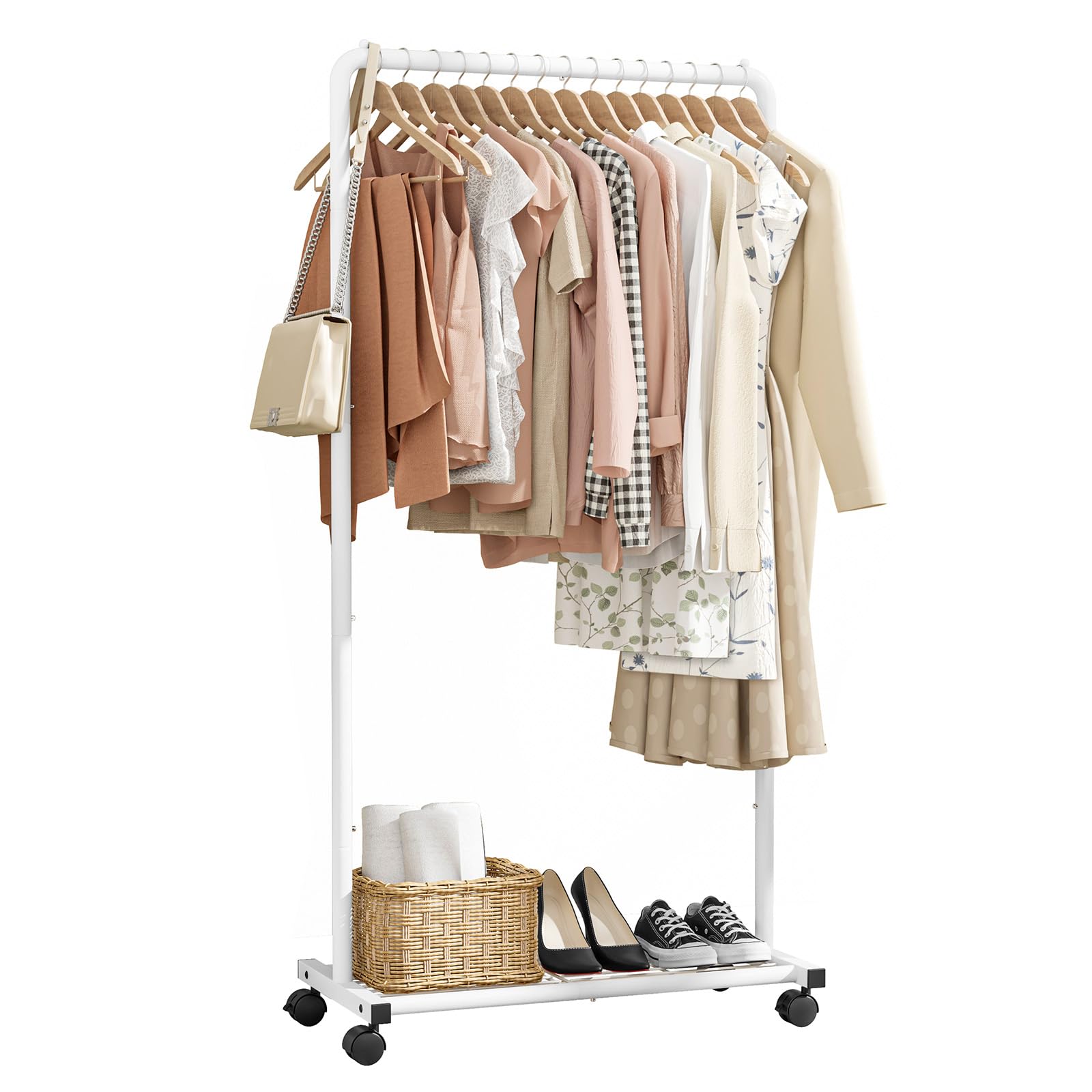
Image: The Sakugi Clothes Rack, white, showcasing its dimensions and capacity for hanging clothes.
Contenido del paquete
Before assembly, ensure all parts listed below are present. Refer to the included user manual for specific part labels (A, B, C, etc.).
- Curved Top Bar (2 pieces)
- Vertical Support Rods (4 pieces)
- Horizontal Base Bars (2 pieces)
- Bottom Mesh Shelf (1 piece)
- Ruedas (4 piezas, 2 con frenos)
- Tornillos de montaje (varios tamaños)
- Llave Allen
- Destornillador pequeño
- Manual de usuario

Image: All components of the Sakugi Clothes Rack laid out for assembly, including bars, casters, and tools.
Instrucciones de montaje
Follow these steps carefully for quick and easy assembly. All necessary tools are included in the package.
- Montar la base: Connect the horizontal base bars (labeled 'C' in some diagrams) to the curved bottom pieces (labeled 'A' or 'B'). Secure with the provided screws using the screwdriver.
- Coloque las ruedas: Screw the four casters into the designated holes at the bottom of the curved base pieces. Ensure the two lockable casters are placed on the same side for easier access.
- Instalar varillas verticales: Insert the vertical support rods into the base. These rods often have spring-loaded buttons that click into place.
- Place Mesh Shelf: Position the mesh shelf onto the designated supports on the vertical rods. Ensure it sits securely.
- Coloque la barra superior: Connect the curved top bar to the upper ends of the vertical support rods. Again, ensure the spring-loaded buttons click into place.
- Apriete todos los tornillos: Once all parts are assembled, use the Allen wrench and screwdriver to securely tighten all screws. Do not overtighten.
Video: Step-by-step tutorial for assembling a similar garment rack. This video demonstrates the general assembly process.
Instrucciones de funcionamiento
The Sakugi Clothes Rack is designed for ease of use and versatility.
- Ropa colgada: Utilize the top bar for hanging clothes, dresses, coats, and other garments. The anti-slip stoppers at each end prevent hangers from sliding off.
- Using the Mesh Shelf: Place shoes, storage boxes, bags, or other accessories on the bottom mesh shelf to maximize storage space.
- Mover el rack: Unlock the two lockable casters to move the rack smoothly across various surfaces. When the desired position is reached, lock the casters to secure the rack in place.
- Capacidad de carga: Adhere to the maximum load capacity of 82 pounds to ensure stability and prevent damage.

Image: The Sakugi Clothes Rack in use, demonstrating hanging clothes and items stored on the bottom mesh shelf.
Mantenimiento
Regular maintenance will ensure the longevity and optimal performance of your clothes rack.
- Limpieza: Limpie el marco de metal y el estante de malla con un paño suave.amp paño. Evite limpiadores abrasivos que puedan dañar el acabado.
- Compruebe los sujetadores: Revise periódicamente todos los tornillos y conexiones para asegurarse de que estén bien apretados. Vuelva a apretarlos si es necesario para mantener la estabilidad.
- Cuidado de las ruedas: Keep the casters free from dust and debris to ensure smooth rolling. Lubricate if needed.
- Evite la sobrecarga: Adhere to the maximum load capacity to prevent bending or structural damage.
Solución de problemas
| Problema | Posible causa | Solución |
|---|---|---|
| El estante está inestable. | Screws are loose or uneven assembly. | Ensure all screws are tightened securely. Check that all parts are correctly aligned during assembly. |
| Las ruedas no giran con suavidad. | Debris caught in casters or casters are locked. | Check and clear any debris from the casters. Ensure the lockable casters are in the unlocked position. |
| Clothes sliding off the ends. | Hangers are not properly placed or anti-slip stoppers are missing/damaged. | Ensure hangers are fully on the bar. Verify that the anti-slip stoppers are present and intact at both ends of the hanging bar. |
Presupuesto
| Atributo | Detalle |
|---|---|
| Marca | Sakugi |
| Número de modelo | US621 |
| Color | Blanco |
| Material | Hierro (Metal) |
| Dimensiones del producto | 16.9" de profundidad x 28" de ancho x 59" de alto |
| Tipo de instalación | Independiente |
| Capacidad de carga | 82 libras |
| Número de estantes | 1 (Mesh Shelf) |
| Requiere ensamblaje | Sí |
| Peso del artículo | 6.21 libras (2.82 kilogramos) |
Garantía y soporte
For warranty information or technical support, please refer to the contact details provided with your purchase documentation or visit the official Sakugi webSitio. Conserve su recibo de compra para cualquier reclamación de garantía.