
Introducción
This manual provides essential information for the safe and efficient operation, maintenance, and troubleshooting of your Sealey SAC5020A 50L Direct Drive Air Compressor. The compressor features an aluminium cylinder head with a cast iron cylinder for enhanced wear resistance, making it suitable for general-purpose workshop applications. Its pump head is directly coupled to a heavy-duty induction motor, ensuring reliable and quiet operation. The precision-welded receiver tank complies with the Pressure Vessel Directive. It is equipped with a fully automatic pressure cut-out switch and twin gauges to display both tank and working pressures. The unit is supplied with a 3-pin plug.
Información de seguridad
Observe siempre las siguientes precauciones de seguridad para evitar lesiones personales o daños al equipo:
- Lea y comprenda todas las instrucciones antes de operar el compresor.
- Ensure the compressor is placed on a level, stable surface in a well-ventilated area.
- Use equipo de protección personal (EPP) adecuado, que incluya protección para los ojos y los oídos.
- No opere el compresor en damp o condiciones húmedas, o en presencia de líquidos o gases inflamables.
- Always disconnect the compressor from the power supply before performing any maintenance or adjustments.
- Nunca dirija aire comprimido hacia personas o animales.
- Regularly inspect the air tank for signs of corrosion or damage. Do not use a damaged tank.
- Asegúrese de que todas las conexiones estén seguras y sin fugas antes de la operación.
- No modifique el compresor ni sus dispositivos de seguridad.
Desembalaje y configuración
Carefully remove the compressor from its packaging. Inspect the unit for any signs of shipping damage. If damage is found, contact your supplier immediately.
Component Identification and Dimensions

Figura 1: Overall dimensions of the Sealey SAC5020A 50L Direct Drive Air Compressor. The image shows the compressor with its tank, motor, handle, wheels, and control panel, indicating a width of 705mm, a height of 600mm, and a depth of 300mm.
Familiarize yourself with the main components of your compressor. Refer to Figure 1 for an overview of the unit's dimensions and general layout.
Asamblea
- Adjuntar ruedas: Securely attach the wheels to the compressor base using the provided hardware.
- Coloque la manija: Mount the transport handle to the designated points on the compressor body.
- Posicionamiento: Place the compressor on a firm, level surface. Ensure there is adequate space around the unit for ventilation.
Conexión eléctrica
Connect the compressor to a suitable grounded power outlet. Ensure the power supply matches the voltage and frequency specifications of the compressor (typically 230V, 50Hz for this model). The unit is fitted with a 3-pin plug.
Initial Run-in Procedure
Before first use, or after extended storage, perform a brief run-in:
- Open the air outlet valve completely to allow air to escape freely.
- Switch on the compressor and let it run for approximately 15-20 minutes without building pressure. This helps to lubricate internal components.
- Switch off the compressor and close the air outlet valve.
Instrucciones de funcionamiento
Controls and Gauges

Figura 2: De cerca view of the twin pressure gauges. One gauge displays the tank pressure, and the other displays the regulated working pressure.
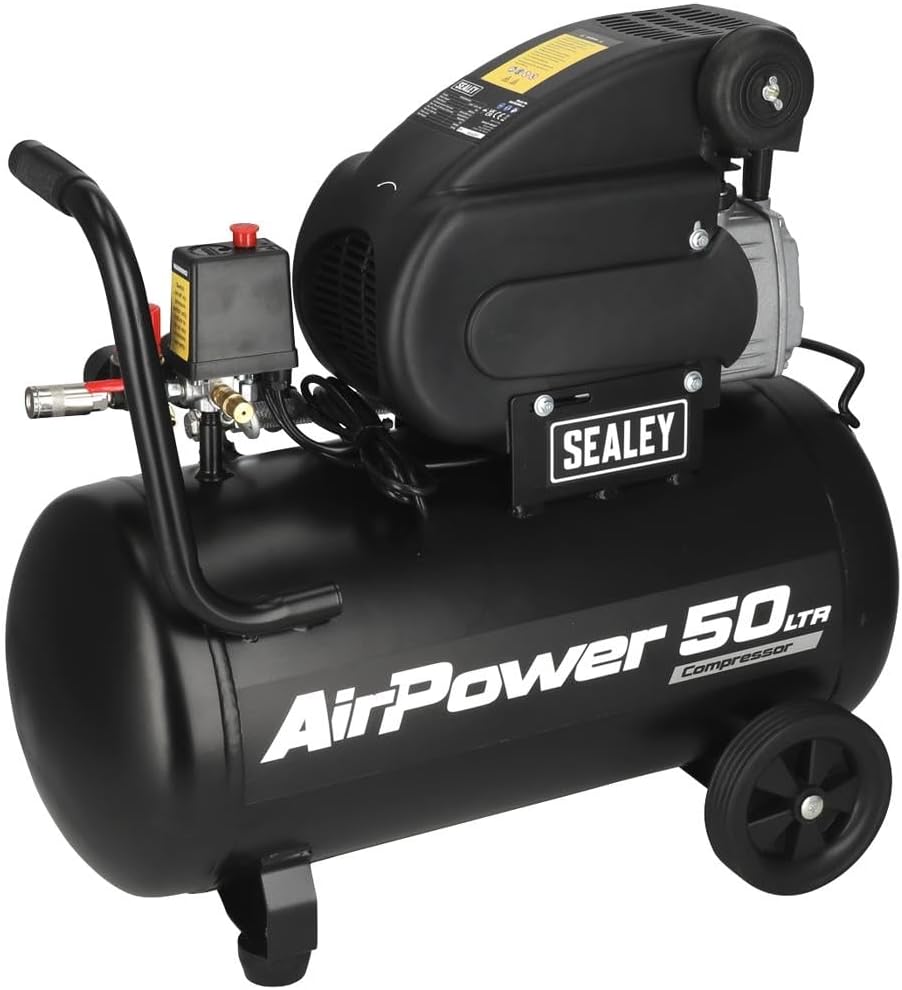
Figura 3: The pressure cut-out switch (black box with yellow warning label) and the red pressure regulator knob, along with the quick-connect air outlet.
- Interruptor de presión: The black box (Figure 3) automatically turns the compressor on and off to maintain tank pressure.
- Manómetro del tanque: Displays the current pressure inside the air tank (Figure 2).
- Working Pressure Gauge: Displays the pressure of the air being supplied to your tools, adjustable via the regulator (Figure 2).
- Regulador de presión: The red knob (Figure 3) allows you to adjust the working pressure. Turn clockwise to increase pressure, counter-clockwise to decrease.
- Quick-Connect Air Outlet: For attaching air hoses and tools (Figure 3).
Puesta en marcha del compresor
- Asegúrese de que la válvula de drenaje en la parte inferior del tanque esté cerrada.
- Conecte el compresor a una toma de corriente adecuada.
- Turn the main power switch to the "ON" position. The compressor will start to build pressure.
- Once the tank reaches its maximum pressure, the compressor will automatically shut off.
Connecting and Using Air Tools
- Connect your air hose to the quick-connect air outlet.
- Attach your air tool to the other end of the hose.
- Adjust the working pressure using the red regulator knob to suit the requirements of your air tool. Monitor the working pressure gauge.
- Begin using your air tool. The compressor will cycle on and off automatically to maintain pressure as needed.
Apagando
- Gire el interruptor de alimentación principal a la posición "APAGADO".
- Desconecte la manguera de aire y las herramientas.
- Abra lentamente la válvula de drenaje en el fondo del tanque para liberar la humedad condensada y la presión de aire residual. Cierre la válvula una vez que el tanque esté vacío.
Mantenimiento
El mantenimiento regular garantiza la longevidad y el funcionamiento seguro de su compresor de aire.
Diariamente / después de cada uso
- Drenaje de condensado: After each use, or daily if used frequently, open the drain valve at the bottom of the air tank to release accumulated moisture. This prevents rust and corrosion inside the tank.
Weekly/Monthly
- Inspeccionar el filtro de aire: Check the air filter for dirt and debris. Clean or replace if necessary to ensure proper airflow to the pump.
- Compruebe si hay fugas: Listen for any air leaks around fittings, hoses, and valves. Tighten connections as needed. A soapy water solution can help identify small leaks.
- Inspeccionar mangueras y accesorios: Examine air hoses for cracks, cuts, or wear. Replace damaged hoses immediately. Ensure all quick-connect fittings are functioning correctly.
- Inspeccione el cable de alimentación: Check the power cord for any damage, fraying, or exposed wires.
Anualmente
- Inspección del tanque: Visually inspect the air tank for any signs of external corrosion, dents, or damage. If any damage is found, do not use the compressor and seek professional inspection.
- Comprobación de la válvula de seguridad: Briefly pull the ring on the safety relief valve to ensure it operates freely and reseats properly.
For any maintenance beyond these basic steps, it is recommended to consult a qualified service technician.
Solución de problemas
Esta sección proporciona soluciones a problemas comunes que puede encontrar con su compresor de aire.
| Problema | Posible causa | Solución |
|---|---|---|
| El compresor no arranca. |
|
|
| El compresor funciona continuamente o realiza ciclos con demasiada frecuencia. |
|
|
| Baja presión de aire en la salida. |
|
|
| Ruido o vibración excesivos. |
|
|
Presupuesto
| Característica | Detalle |
|---|---|
| Marca | Sealey |
| Número de modelo | SAC5020A |
| Fuente de poder | AC |
| Máxima potencia | 2 caballos de fuerza |
| Potencia del motor | 2 caballos de fuerza |
| Volumen del tanque | 50 litros |
| Capacidad de flujo de aire | 6.8 pies cúbicos por minuto (CFM) |
| Peso del artículo | 32980 Grams (approx. 33 kg) |
| Característica especial | Operación silenciosa |
| Componentes incluidos | 50ltr Direct Drive Compressor 2hp |
| Usos recomendados | Bolting, Drilling, Spraying, Sanding, Grinding, Tire Inflation |
Información de garantía
This Sealey product is covered by a manufacturer's warranty against defects in materials and workmanship. The specific terms and duration of the warranty may vary by region and purchase date. Please retain your proof of purchase for warranty claims.
For detailed warranty information, please refer to the warranty card included with your product or visit the official Sealey websitio.
Soporte y contacto
Should you require technical assistance, spare parts, or have any questions regarding your Sealey SAC5020A air compressor, please contact Sealey customer support or your authorized dealer.
Oficial de Sealey Websitio: www.sealey.co.uk
Please have your model number (SAC5020A) and serial number (if applicable) ready when contacting support.