
Indledning
The Sony PDT-FP1 Portable Data Transmitter is designed for professionals requiring high-speed and stable communication. This device features an optimized antenna design, an efficient heat dissipation structure, and versatile input interfaces to ensure reliable performance in demanding environments. It supports a broad range of communication bands, including LTE, 5G Sub6, and mmWave, and offers enhanced reception sensitivity for faster, low-latency data transmission.
The PDT-FP1 is compatible with various communication environments, including local and private 5G networks, facilitating efficient data transmission globally. Its Dual SIM capability allows for automatic switching to the strongest available network, ensuring seamless data flow. The integrated cooling fan and duct structure prevent thermal shutdown, maintaining continuous operation even in temperatures up to 40°C (104°F).
Nøglefunktioner
- Uninterrupted Streaming: Supports a wide range of LTE and 5G bands for reliable connectivity and live video transmission.
- Ultrahurtig dataoverførsel: Equipped with a SuperSpeed USB 5Gbps (USB3.2) Type-C port and a Gigabit LAN terminal for rapid data handling and network connectivity.
- Overlegen billedkvalitet: HDMI Type-A connector supports high-resolution video transmission up to 4K at 60p/50p/30p/25p/24p.
- Forlænget batterilevetid: Provides approximately 4 hours for FTP transfer via USB in LTE, or about 2 hours for video uploads via HDMI.
- Forbedret portabilitet: Compact and lightweight design (approx. 10.9 oz / 309g, 6.7 x 3.2 x 1.1 inches) for easy transport and setup.
Enhed overview

Figur 1: Bagside view of the PDT-FP1, highlighting the LAN, CHARGE (USB-C), and HDMI ports. A small camera lens is visible at the top.

Figur 2: Multiple views of the PDT-FP1, illustrating its slim profile and the placement of ports (USB-C, HDMI, LAN) on the top and bottom sections.
Opsætningsinstruktioner
- Oplad enheden: Connect the PDT-FP1 to a power source using the provided USB-C cable and a compatible charger. The CHARGE indicator will illuminate during charging.
- Indsæt SIM-kort (valgfrit): If using cellular data, open the SIM card slot cover and insert up to two nano-SIM cards. Ensure they are correctly oriented.
- Connect to a Camera/Video Source:
- For video input, connect an HDMI cable from your camera or video source to the HDMI input port on the PDT-FP1.
- For data transfer from a camera, connect a USB cable from your camera to the USB-C port on the PDT-FP1.
- Opret forbindelse til netværk (valgfrit):
- For wired network connection, connect an Ethernet cable to the LAN port.
- For wireless network, ensure SIM cards are active or configure Wi-Fi settings via the device interface.
- Tænd: Press and hold the power button until the device powers on and the display illuminates.

Figure 3: The PDT-FP1 connected to a camera, demonstrating its use for transferring image files to a connected smartphone.

Figure 4: The PDT-FP1 mounted on a camera, showing its display interface with real-time 5G signal strength and data upload/download speeds.
Betjeningsvejledning
Datatransmission
- Vælg inputkilde: Use the device's interface to select whether the input is from HDMI (for live video) or USB (for file overførsel).
- Netværksvalg: The PDT-FP1 automatically selects the strongest available network (LTE, 5G, Wi-Fi, or LAN). You can manually override this in the settings if needed. With Dual SIM, the device will switch to the SIM with better signal.
- Start transmission: Depending on your application (e.g., live streaming software, FTP client), initiate the data transfer or stream. The device's display will show connection status and data rates.
- Overvåg ydeevne: Regularly check the device's screen for signal strength, data transfer speeds, and battery level to ensure continuous operation.
Varmestyring
The PDT-FP1 features an active cooling system. Ensure the ventilation ducts are not obstructed during operation to maintain optimal performance and prevent thermal shutdown. The device is designed to operate stably up to 40°C (104°F).

Figure 5: The PDT-FP1 displaying streaming information, including resolution (3840x2160), frame rate (60fps), and audio input status, while connected to a camera.
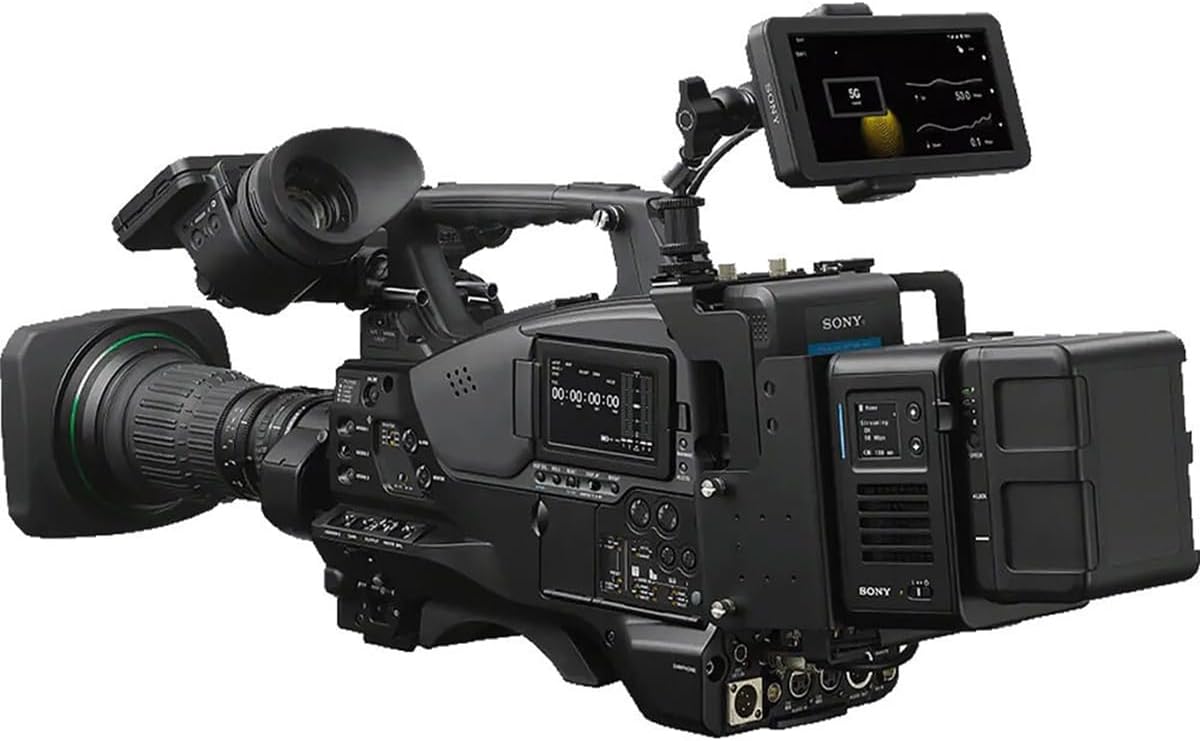
Figure 6: The PDT-FP1 integrated with a professional video camera, illustrating its application in high-end production environments for data transmission.
Opretholdelse
- Rensning: Use a soft, dry cloth to clean the exterior of the device. Do not use liquid cleaners or solvents. Ensure all ports are free of dust and debris.
- Opbevaring: Når enheden ikke er i brug i længere perioder, skal den opbevares køligt og tørt, væk fra direkte sollys og ekstreme temperaturer.
- Softwareopdateringer: Tjek Sony-supporten med jævne mellemrum webwebsted for firmwareopdateringer for at sikre optimal ydeevne og adgang til nye funktioner.
- Batteripleje: For at forlænge batteriets levetid bør du undgå at aflade batteriet helt ofte. Oplad enheden regelmæssigt, selvom den ikke er i aktiv brug.
Fejlfinding
| Problem | Mulig årsag | Løsning |
|---|---|---|
| Enheden tænder ikke. | Lavt batteri; tænd/sluk-knappen er ikke trykket korrekt ind. | Charge the device. Press and hold the power button for several seconds. |
| Ingen netværksforbindelse. | No active SIM card; out of network coverage; Wi-Fi not configured; LAN cable disconnected. | Ensure SIM cards are active and correctly inserted. Move to an area with better signal. Configure Wi-Fi settings. Check LAN cable connection. |
| Slow data transmission. | Weak network signal; network congestion; device overheating. | Check signal strength on the device display. Try a different network (if Dual SIM is active). Ensure ventilation is clear. |
| Video input not detected. | HDMI cable loose or faulty; incorrect input source selected. | Check HDMI cable connection. Ensure the camera is outputting video. Select HDMI as the input source on the PDT-FP1. |
| Device feels hot. | Normal operation under heavy load; obstructed ventilation. | Ensure ventilation ducts are clear. If operating in high ambient temperatures, consider moving to a cooler environment. The device is designed to manage heat up to 40°C (104°F). |
Specifikationer
| Feature | Detalje |
|---|---|
| Modelnummer | PDT-FP1 |
| Mærke | Sony |
| Varens vægt | Cirka 309 g |
| Produktdimensioner | 6.7 x 3.2 x 1.1 tommer (170 x 81 x 28 mm) |
| Forbindelse | LTE, 5G Sub6, mmWave, Dual SIM, Wi-Fi, Gigabit LAN, SuperSpeed USB 5Gbps (USB3.2) Type-C, HDMI Type-A |
| Video input | HDMI Type-A, up to 4K 60p/50p/30p/25p/24p |
| Batterilevetid (ca.) | 4 hours (FTP transfer via USB in LTE), 2 hours (video uploads via HDMI) |
| Driftstemperatur | Stable operation up to 40°C (104°F) |
| UPC | 027242930377 |
Garanti og support
This Sony PDT-FP1 Portable Data Transmitter is covered by a manufacturer's warranty. Please refer to the warranty card included with your product or visit the official Sony support webwebstedet for detaljerede garantivilkår og -betingelser, der er specifikke for din region.
For technical support, troubleshooting assistance, or service inquiries, please contact Sony customer support through their official webwebstedet eller kontaktoplysningerne i din produktdokumentation. Gem din købsbevis til garantikrav.
Sony support Webwebsted: https://www.sony.com/electronics/support