
Introduction
This manual provides detailed instructions for the safe and efficient operation of your Aiwa AWQ680 Portable Bluetooth Speaker. Please read this manual thoroughly before using the product and retain it for future reference.
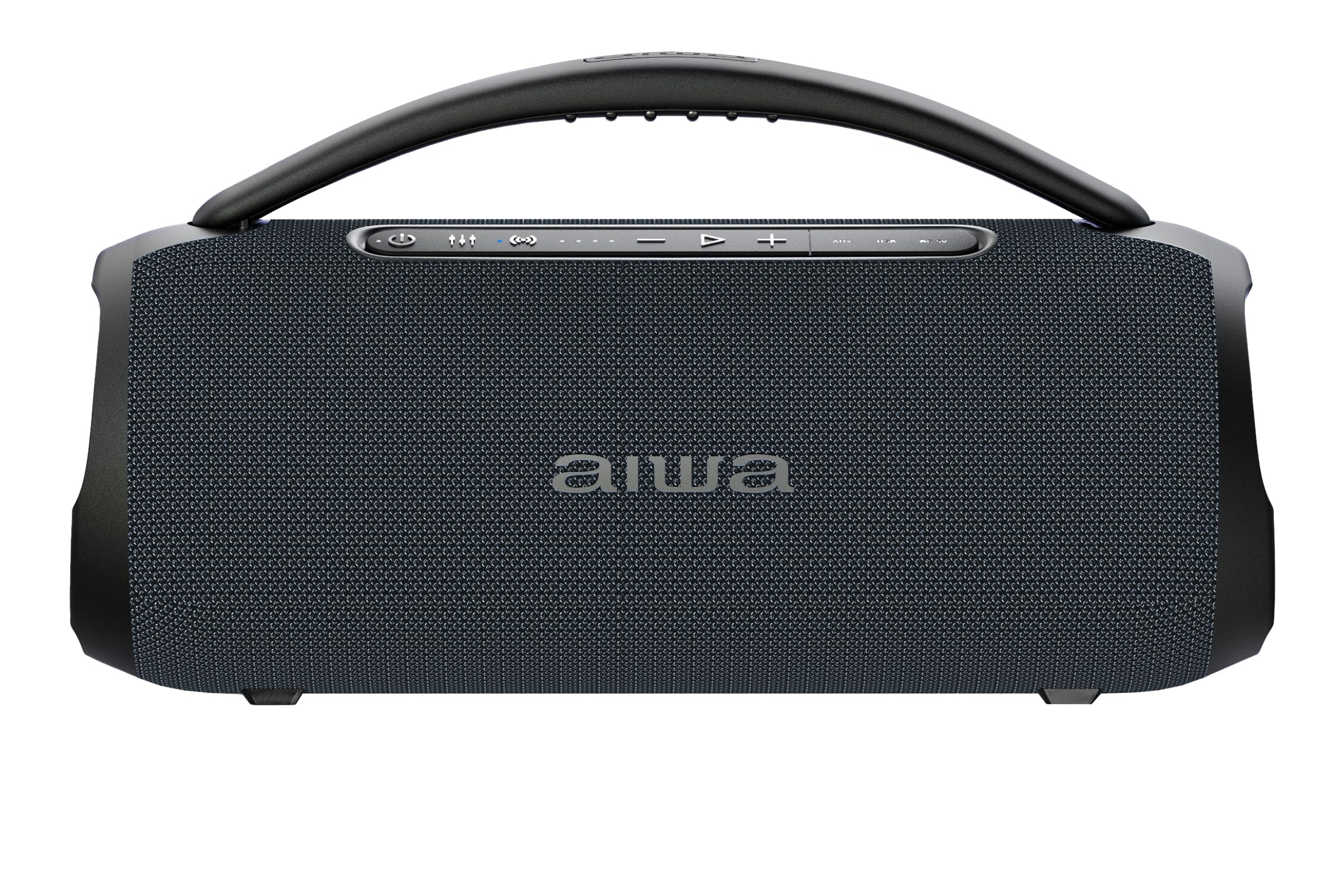
Image: The Aiwa AWQ680 speaker in an outdoor setting, demonstrating its portability.
Key Features
- 30W RMS Power & TWS Technology: Enjoy clear, immersive sound with 30W of real power. True Wireless Stereo (TWS) allows you to link two units simultaneously for a massive, enveloping stereo sound.
- IPX5 Water Resistance: Designed for adventure, this Bluetooth speaker is certified IPX5 against water and dust, making it suitable for use at the beach, poolside, or other outdoor environments without concern for splashes.
- Bluetooth 5.3 & 4-Hour Battery: Equipped with the latest Bluetooth 5.3 standard for ultra-stable and uninterrupted transmission. The rechargeable battery provides up to 4 hours of autonomy for extended music sessions.
- Maximum Connectivity: Offers total versatility to play your favorite content. This model includes an FM Radio tuner, AUX input, and a USB port (compatible with memory up to 32GB), providing freedom to choose your audio source.
- LED Lights & Portable Design: Features a dynamic LED lighting system that adds a spectacular visual touch to any event, synchronizing with your style. Its compact and modern black design makes it highly portable.
Package Contents
Ensure all items are present in the package:
- Aiwa AWQ680 Portable Bluetooth Speaker
- Microphone
- Charging Cable
- User Manual (this document)
Product Overview
Familiarize yourself with the speaker's components and controls.
Top Panel Controls
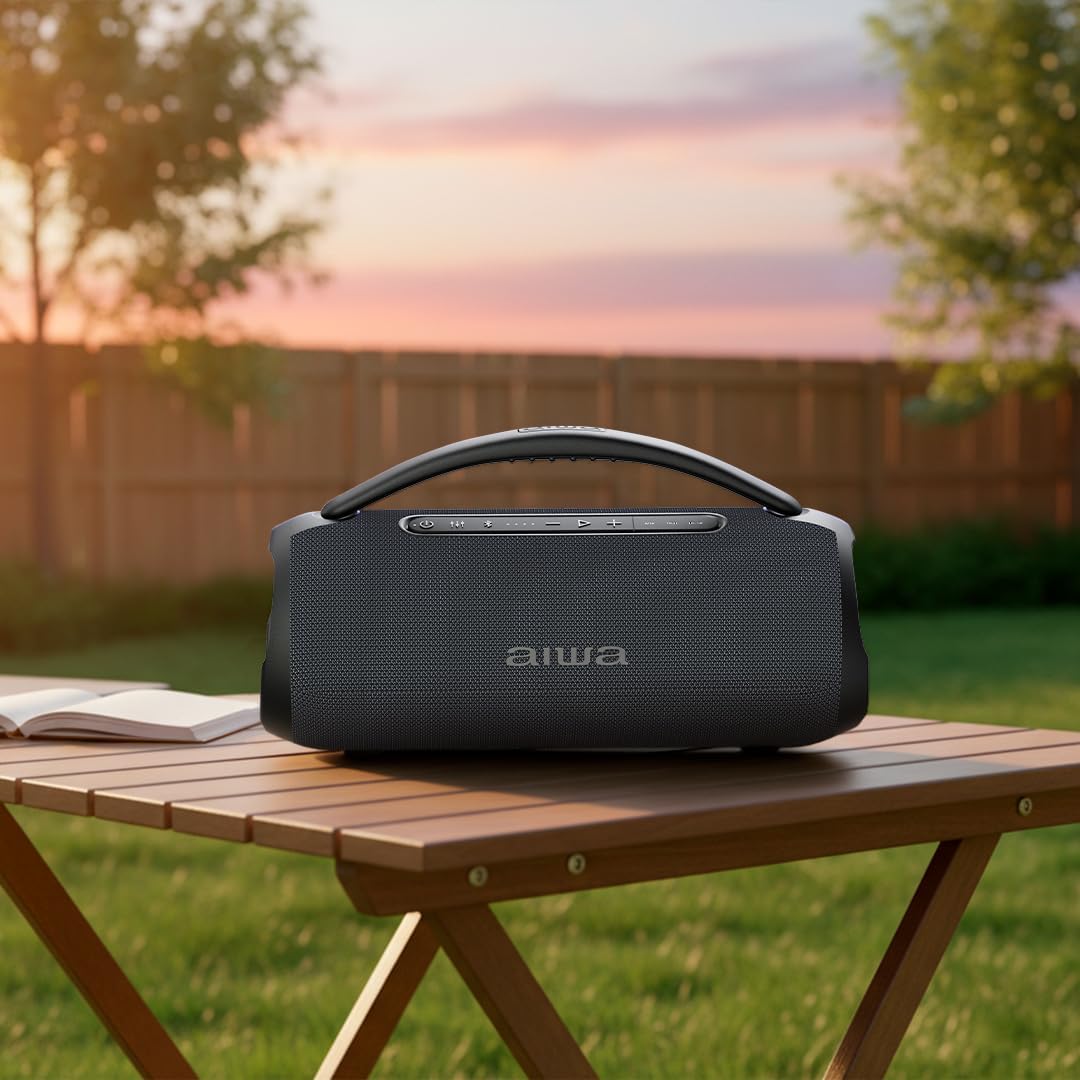
Image: Top view of the Aiwa AWQ680 speaker, highlighting the control panel with buttons for power, mode, volume, playback, and LED light control, along with the integrated carrying handle.
- Power Button (Ⓢ): Press and hold to turn the speaker on or off.
- Mode Button (M): Short press to switch between Bluetooth, FM Radio, USB, and AUX modes.
- Play/Pause Button (►): Short press to play or pause audio.
- Volume Up (+): Short press to increase volume. Long press for next track/station.
- Volume Down (-): Short press to decrease volume. Long press for previous track/station.
- TWS Button (∞): Short press to activate/deactivate True Wireless Stereo pairing.
- LED Light Button (☀): Short press to cycle through LED light modes or turn off the lights.
Rear Port Panel
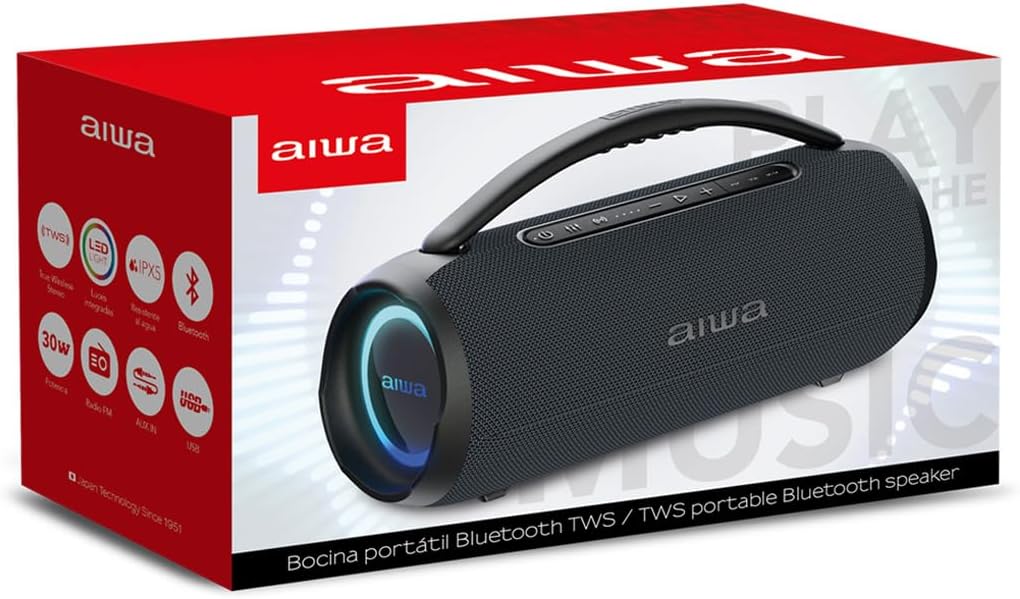
Image: Rear view of the Aiwa AWQ680 speaker with a protective flap covering the input ports.
- USB Port: For USB flash drive playback (supports up to 32GB).
- AUX Input: For connecting external audio devices via a 3.5mm audio cable.
- Charging Port: For connecting the charging cable to power the speaker.
- Microphone Input: For connecting the included microphone.
Setup
Charging the Speaker
Before initial use, fully charge the speaker. Connect the charging cable to the speaker's charging port and a suitable power adapter. The LED indicator will show the charging status. Disconnect the charger once fully charged.
Power On/Off
Press and hold the Power button (Ⓢ) on the top panel for approximately 3 seconds to turn the speaker on or off.
Bluetooth Pairing
- Turn on the speaker. It will automatically enter Bluetooth pairing mode, indicated by a flashing LED.
- On your device (smartphone, tablet, etc.), enable Bluetooth and search for available devices.
- Select "AWQ680" from the list. Once successfully paired, the LED indicator will stop flashing and remain solid.
True Wireless Stereo (TWS) Function
To pair two AWQ680 speakers for an enhanced stereo sound experience:
- Ensure both speakers are powered on and in Bluetooth mode, but not yet paired to any external device.
- On one speaker (this will be the primary speaker), short press the TWS button (∞). The speaker will emit a tone and its LED will flash.
- The primary speaker will automatically search for and pair with the secondary speaker. Once connected, both speakers will emit a confirmation tone, and their LEDs will synchronize.
- Now, pair your Bluetooth-enabled device to the primary speaker as described in the "Bluetooth Pairing" section.

Image: Two Aiwa AWQ680 speakers shown side-by-side, illustrating the True Wireless Stereo (TWS) feature for enhanced sound.
Operating Instructions
Playing Music via Bluetooth
After successful Bluetooth pairing, you can play music from your device. Use the Play/Pause button (►) on the speaker to control playback. Use the Volume Up (+) and Volume Down (-) buttons for volume adjustment. Long press Volume Up/Down for next/previous track.
FM Radio
In FM Radio mode (select with the Mode button), long press the Play/Pause button (►) to auto-scan and save available stations. Short press Play/Pause to switch between saved stations. Use Volume Up (+) and Volume Down (-) to fine-tune or change stations.
USB Playback
Insert a USB flash drive (formatted to FAT32, up to 32GB) into the USB port. The speaker will automatically switch to USB mode and begin playing compatible audio files. Use playback controls as in Bluetooth mode.
AUX Input
Connect an external audio device (e.g., MP3 player, laptop) using a 3.5mm AUX cable to the AUX input port. Switch the speaker to AUX mode using the Mode button (M). Audio will play from the connected device.
LED Light Control
Press the LED Light button (☀) to cycle through different light modes or to turn the lights off.
Maintenance
To ensure the longevity and optimal performance of your speaker:
- Keep the speaker clean by wiping it with a soft, dry cloth. Avoid abrasive cleaners.
- Avoid exposing the speaker to extreme temperatures, direct sunlight, or high humidity for extended periods.
- Ensure the rear port cover is securely closed when using the speaker near water to maintain its IPX5 water resistance.
- Store the speaker in a cool, dry place when not in use.
Troubleshooting
| Problem | Solution |
|---|---|
| Speaker does not turn on. | Ensure the battery is charged. Connect the speaker to a power source and try again. |
| Cannot pair via Bluetooth. | Make sure the speaker is in pairing mode (flashing LED). Disable and re-enable Bluetooth on your device. Ensure no other devices are currently connected to the speaker. |
| No sound. | Check volume levels on both the speaker and your connected device. Ensure the correct input mode (Bluetooth, AUX, USB) is selected using the Mode button. |
| TWS pairing fails. | Ensure both speakers are AWQ680 models and are not connected to any other Bluetooth device before initiating TWS pairing. Place them close to each other. |
Specifications
- Brand: Aiwa
- Model: AWQ680
- Speaker Output Power: 30W RMS (80 Watts Max)
- Frequency Response: 50 KHz
- Connectivity Technology: Bluetooth 5.3, AUX, USB
- Audio Output Mode: Stereo
- Speaker Type: Portable Speaker
- Special Features: LED Light, IPX5 Water Resistance, TWS Function, FM Radio
- Control Method: Touch
- Battery Life: Approximately 4.5 Hours (2500 Milliamp Hours)
- Input Voltage: 240 Volts
- Dimensions (DxWxH): Approximately 9.27 cm x 9.27 cm x 24.18 cm (based on product images)
- Compatible Devices: Smartphone
- Country of Origin: China
- Audio Channels: 2.0
- Connectivity Protocol: AUX, Bluetooth, USB
- Audio Driver Type: Dynamic Driver

Image: The Aiwa AWQ680 speaker with its approximate dimensions labeled.
Warranty and Support
This product comes with a 12-month warranty from the date of purchase. For warranty claims or technical support, please contact Aiwa customer service. Keep your proof of purchase for warranty validation.
Product Videos
Aiwa AWQ680: Home Office Usage
Video: A user demonstrating the Aiwa AWQ680 speaker in a home office setting, highlighting its elegant design and sound quality for daily use.
Aiwa AWQ680: Portability and Outdoor Use
Video: A user carrying the Aiwa AWQ680 speaker outdoors, showcasing its portability and robust design for various environments.
Aiwa AWQ680: Water Resistance Demonstration
Video: A user demonstrating the water resistance of the Aiwa AWQ680 speaker, showing its durability against splashes.
Aiwa AWQ680: Unboxing and LED Lights
Video: A user unboxing the Aiwa AWQ680 speaker and demonstrating its dynamic LED lighting features.


