
1. Introduction
This manual provides essential information for the safe and effective operation, maintenance, and troubleshooting of your Steupoek 4200PSI Gas Pressure Washer, Model SUN0099. Please read this manual thoroughly before operating the unit and retain it for future reference.
The Steupoek Gas Pressure Washer is designed for powerful outdoor cleaning tasks, delivering up to 4200 PSI water pressure at 4.0 GPM. It features a robust 7HP 4-stroke 212cc gasoline engine and comes equipped with a 25ft high-pressure hose and 5 quick-connect nozzles for versatile cleaning applications.

Image 1.1: Steupoek Gas Pressure Washer in operation, demonstrating its cleaning power on a vehicle.
2. Safety Information
WARNING: Failure to follow these safety instructions could result in serious injury or death.
- Always operate the pressure washer in a well-ventilated area to avoid carbon monoxide poisoning from engine exhaust.
- Never point the spray gun at people, pets, or electrical devices. The high-pressure spray can cause severe injury.
- Wear appropriate personal protective equipment, including eye protection, hearing protection, and sturdy footwear.
- Ensure all connections are secure before starting the unit to prevent leaks and hose whip. Insert the hose gasket first to prevent leakage.
- Do not operate the pressure washer if you are fatigued or under the influence of alcohol or drugs.
- Keep children and bystanders away from the operating area.
- Handle gasoline with extreme care. Store fuel in an approved container in a well-ventilated area away from ignition sources.
- Keep the maximum fuel level 1/2 inch below the bottom of the filler neck to avoid spillage.
- Check engine oil levels before each use. Ensure sufficient oil (0.2 gallons) for efficient operation.
- Be aware that all water pressure washers are 100% functionally tested at the factory and may contain minimum residual fuel/oil or fuel odor. This is normal.
3. Package Contents
Verify that all components are present and undamaged upon unpacking. If any parts are missing or damaged, contact customer support.
- Steupoek Gas Pressure Washer Unit
- High-Pressure Hose (25 ft)
- Spray Gun with Wand
- Foam Bottle (1L capacity)
- 5 Quick-Connect Nozzles (0°, 15°, 25°, 40°, Soap)
- Engine Oil (initial supply)
- Tools (for assembly)
- Quick Start Guide

Image 3.1: Overview of the Steupoek Gas Pressure Washer and its included accessories.

Image 3.2: Detailed view of the spray gun, safety lock, hose, nozzles, soap bottle, and the pressure washer unit with its large wheels.
4. Assembly and Setup
Follow these steps to assemble and prepare your pressure washer for first use.
- Attach Wheels and Handle: Secure the never-flat wheels and handle to the main unit using the provided tools and hardware.
- Add Engine Oil: Locate the oil fill cap. Using the provided engine oil, fill the crankcase to the recommended level. Do not overfill. Check the oil level before each use.
- Add Fuel: Fill the fuel tank with fresh, unleaded gasoline. Ensure the fuel level is 1/2 inch below the filler neck to prevent spillage.
- Connect High-Pressure Hose: Attach one end of the 25ft high-pressure hose to the pressure washer's outlet and the other end to the spray gun. Ensure the hose gasket is properly seated to prevent leaks.
- Connect Water Supply: Connect a garden hose (not included) to the water inlet of the pressure washer. Ensure the water supply is turned ON and free of kinks.
- Prime the Pump: With the water supply on, squeeze the trigger on the spray gun to allow air to escape from the hose. Continue until a steady stream of water flows from the nozzle, indicating the pump is primed.

Image 4.1: Visual guide for starting the gas pressure washer, detailing steps from checking fluids to engine ignition.
5. Operating Instructions
5.1 Starting the Engine
- Ensure the water supply is connected and turned on, and the pump is primed.
- Turn the engine switch to the "ON" position.
- Open the fuel valve to the "ON" position.
- Move the choke lever to the "CLOSED" position.
- Locate the recoil cord and pull slowly until resistance is felt, then pull firmly and quickly to start the engine. Repeat if necessary.
- Once the engine starts, gradually move the choke lever to the "OPEN" position.
5.2 Nozzle Selection and Usage
The pressure washer includes 5 quick-connect nozzles, each designed for specific cleaning tasks:
- 0° Nozzle (Red): Provides the strongest, most concentrated stream. Use for tough, localized dirt and grime on hard, non-damageable surfaces. Exercise extreme caution.
- 15° Nozzle (Yellow): High-pressure, narrow spray. Ideal for intense cleaning of small areas, removing paint, rust, or stubborn stains from concrete and metal.
- 25° Nozzle (Green): Medium-pressure, wider spray. Suitable for general cleaning of decks, patios, driveways, and siding without causing damage.
- 40° Nozzle (White): Low-pressure, wide spray. Best for delicate surfaces like windows, vehicles, or for rinsing large areas.
- Soap Nozzle (Black): Lowest pressure, widest spray. Designed for applying detergents and soaps. Activates the 1L soap tank for mixing with water.

Image 5.1: Guide to quick-connect nozzles and their applications.

Image 5.2: Nozzle spray patterns at different angles.
5.3 Using the Soap Tank
The integrated 1L soap tank allows for easy application of detergents. Fill the tank with your desired pressure washer-safe cleaning solution. Attach the black soap nozzle to activate the detergent injection system. The detergent will automatically mix with water. After applying soap, switch to a high-pressure nozzle (e.g., 25° or 40°) to rinse the surface thoroughly.

Image 5.3: The 1L large capacity foam bottle for detergent application.
5.4 General Operation Tips
- Always start cleaning with a wider spray angle (e.g., 40°) and move closer or switch to a narrower angle if more pressure is needed.
- Test the spray on an inconspicuous area first to avoid damaging the surface.
- Maintain a consistent distance from the surface for even cleaning.
- The 25ft high-pressure hose provides ample reach, reducing the need to frequently move the unit.

Image 5.4: Demonstrating the reach of the 25ft high-pressure hose.

Image 5.5: Key features including the 212cc engine, quick-change nozzles, and 25ft hose.
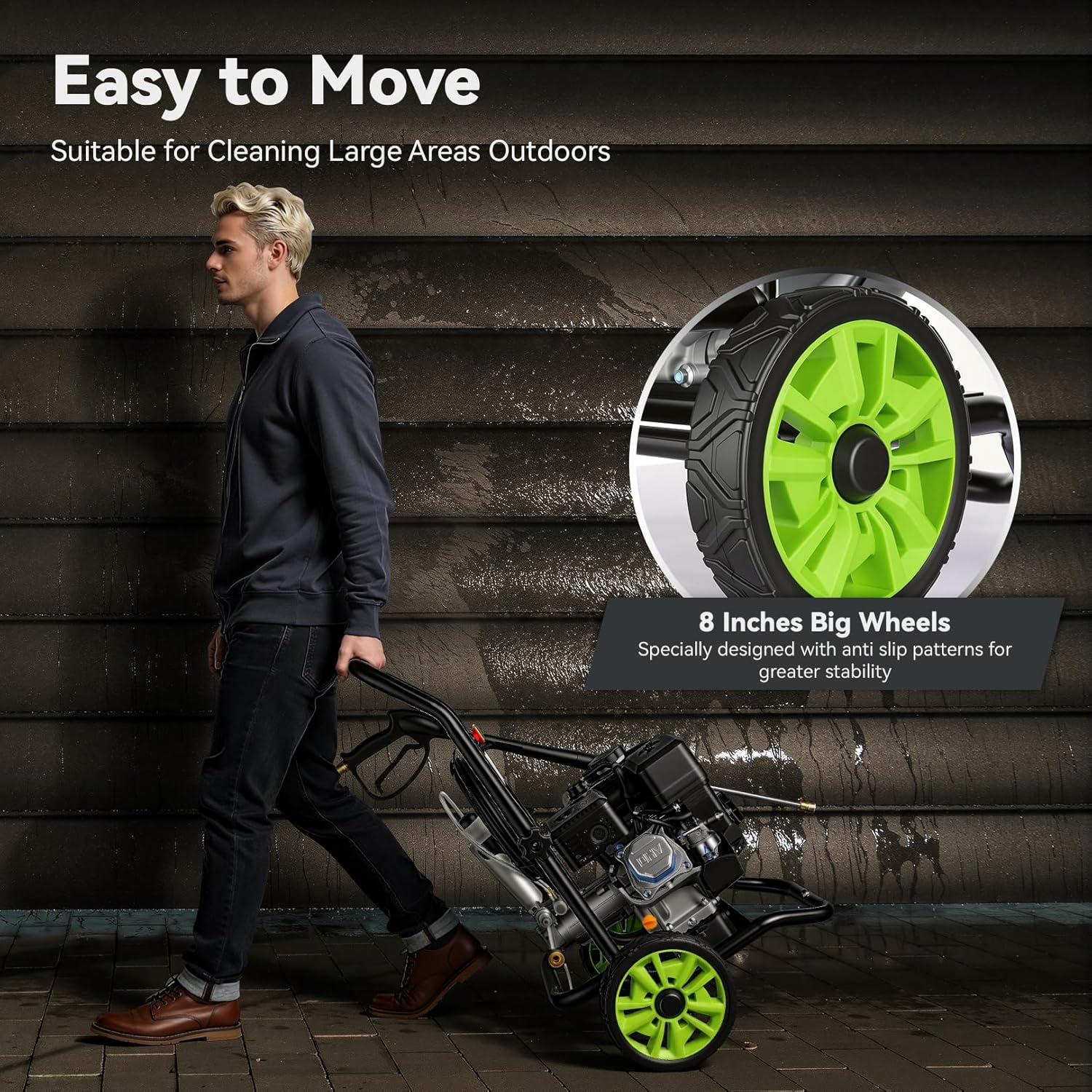
Image 5.6: The pressure washer's portability with its 8-inch wheels.

Image 5.7: The pressure washer is suitable for various cleaning occasions.
6. Maintenance
Regular maintenance ensures the longevity and optimal performance of your pressure washer.
- Engine Oil: Check the engine oil level before each use. Change the oil according to the engine manufacturer's recommendations (typically after the first 5 hours, then every 25-50 hours of operation).
- Air Filter: Inspect and clean the air filter regularly. Replace if heavily soiled or damaged.
- Spark Plug: Check the spark plug annually and replace if necessary.
- Fuel System: Use fresh gasoline. For storage longer than 30 days, add a fuel stabilizer or drain the fuel tank and carburetor to prevent gum deposits.
- Nozzles: Clean clogged nozzles with a nozzle cleaning tool (not included) to restore spray pattern and pressure.
- Storage: Before storing, ensure the unit is clean and dry. Store in a dry, protected area away from extreme temperatures. If storing for an extended period, perform proper winterization procedures.
7. Troubleshooting
This section addresses common issues you might encounter with your pressure washer.
- Engine Fails to Start:
- Check fuel level and ensure the fuel valve is open.
- Verify engine switch is in the "ON" position.
- Ensure the choke is set correctly for starting (CLOSED when cold, OPEN when warm).
- Check spark plug for fouling or damage.
- Ensure engine oil level is adequate.
- Low Pressure:
- Check water supply for adequate flow and pressure.
- Ensure garden hose is not kinked or restricted.
- Clean or replace clogged nozzles.
- Check all hose connections for leaks.
- Ensure the pump is properly primed.
- Pulsating Spray:
- Air in the pump (re-prime the pump).
- Clogged nozzle (clean or replace).
- Insufficient water supply.
- Water Leaks:
- Check all hose connections and ensure gaskets are properly seated.
- Inspect hoses and fittings for damage.
8. Specifications
| Feature | Specification |
|---|---|
| Brand | Steupoek |
| Model Number | SUN0099 |
| Power Source | Gas Powered |
| Engine Type | 7HP 4-stroke 212cc OHV Engine |
| Maximum Pressure | 4200 PSI |
| Maximum Flow Rate | 4.0 Gallons Per Minute (GPM) |
| Hose Length | 25 Feet |
| Soap Tank Volume | 1 Liter |
| Item Weight | 77 Pounds |
| Product Dimensions | 23"L x 17"W x 23"H |
| Wheels | 8-inch, Never-flat |
| Certifications | CARB, EPA, ETL Compliant |

Image 8.1: Key performance specifications of the Steupoek Gas Pressure Washer.
9. Warranty
This Steupoek Gas Pressure Washer comes with a Two-Year Warranty. Every unit undergoes rigorous performance checks to ensure quality and reliability. Minor fuel residue is normal due to factory testing and ensures peak operation.
Please retain your proof of purchase for warranty claims. For specific terms and conditions, refer to the warranty card included with your product or contact customer support.
10. Customer Support
For technical assistance, replacement parts, or warranty inquiries, please contact Steupoek customer support.
Website: Visit the Steupoek Store on Amazon
Please have your model number (SUN0099) and purchase date available when contacting support.