1. Introduction
This manual provides essential information for the installation, operation, and maintenance of the Generic Steering Angle Sensor, part number 89245-0D070. The steering angle sensor is a critical component of your vehicle's electronic stability control (ESC), vehicle stability control (VSC), and traction control systems. It measures the rotational position of the steering wheel and sends this data to the vehicle's engine control unit (ECU) to assist in maintaining vehicle stability and control.
2. Product Overview
Key Features:
- Premium Quality Construction: Crafted from composite material for extended service life, stable performance, safety, and long-standing durability.
- Precise Measurement: Provides accurate steering wheel position data to the vehicle's control systems.
- Direct Replacement: Designed to meet or exceed original equipment specifications for a seamless fit and function.
What's in the Box:
- 1 x Steering Angle Sensor
3. Compatibility
This steering angle sensor is compatible with the following vehicle models and part numbers. Please verify compatibility with your vehicle's existing part number before purchase.
Compatible Vehicles:
- Toyota Prius (except 2012) 2010-2014
- Toyota PRIUS ZVW30 2004-2009
- Toyota LAND CRUISER PRADO GRJ15, TRJ150 2008-2009
Part Numbers:
- 89245-74010
- 89245-0D070
- 89245-0D060
4. Installation
Installation of automotive components, especially those related to steering and safety systems, should ideally be performed by a qualified technician. Incorrect installation can lead to vehicle malfunction and safety hazards. The following steps are for informational purposes only.
General Installation Steps:
- Safety First: Disconnect the vehicle's battery to prevent accidental airbag deployment or electrical shorts.
- Access the Sensor: Depending on the vehicle model, access to the steering angle sensor typically involves removing the steering wheel, airbag, and clock spring assembly. Consult your vehicle's service manual for specific instructions.
- Remove Old Sensor: Carefully disconnect electrical connectors and mounting hardware from the old steering angle sensor.
- Install New Sensor: Mount the new Generic Steering Angle Sensor in the correct orientation and secure it with the appropriate hardware. Reconnect all electrical connectors, ensuring they are fully seated.
- Reassemble: Reinstall the clock spring, steering wheel, and airbag assembly according to your vehicle's specifications.
- Reconnect Battery: Reconnect the vehicle's battery.
- Calibration: After installation, the new steering angle sensor will require calibration using a diagnostic scan tool. This step is crucial for the proper functioning of the vehicle's stability control systems. Failure to calibrate may result in warning lights and impaired vehicle handling.
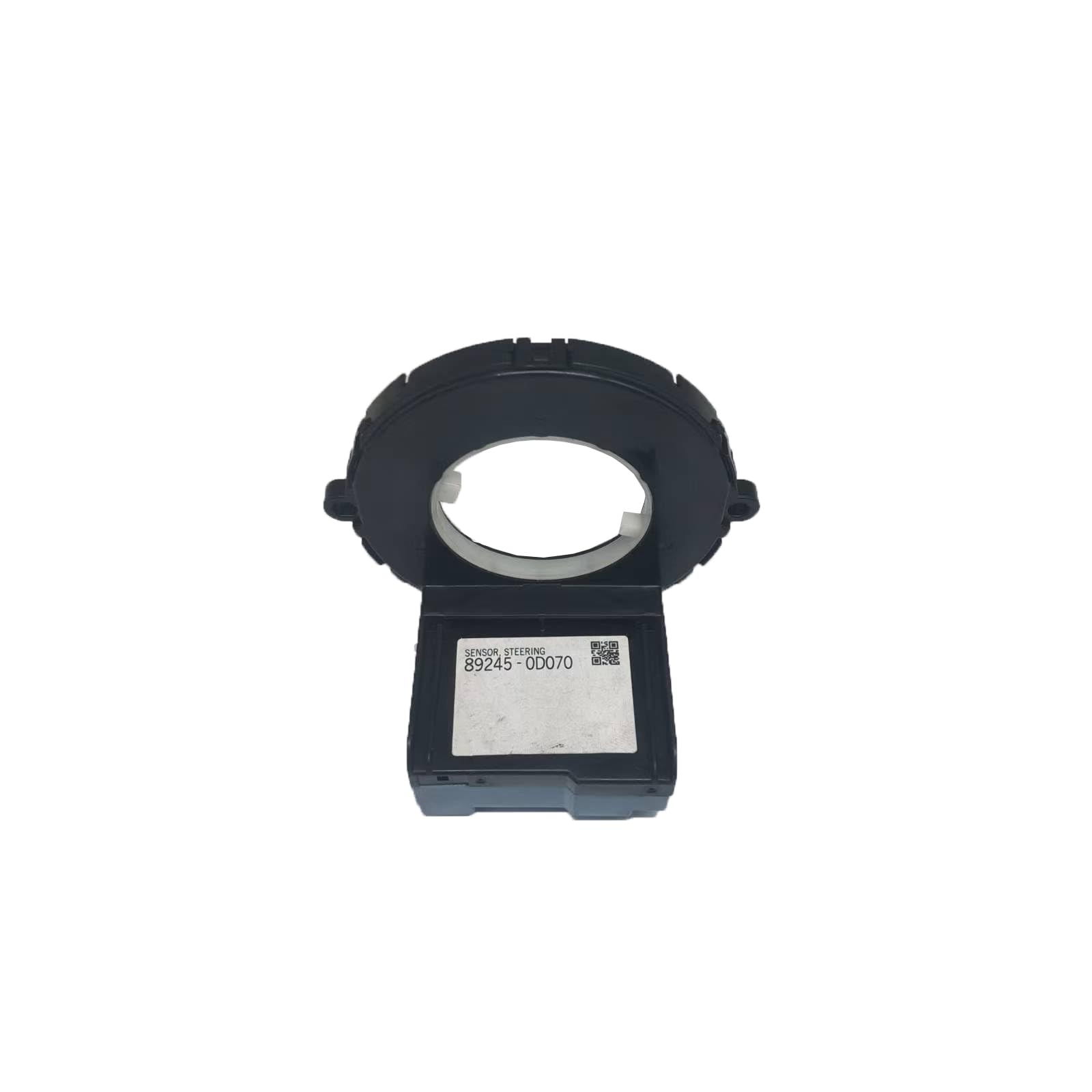
Image 1: The Generic Steering Angle Sensor 89245-0D070. This image displays the compact, circular design of the sensor, featuring a central opening for the steering column and an integrated electrical connector housing. The main body is black, with a grey-blue section for the connector.
5. Operation
Once properly installed and calibrated, the steering angle sensor continuously monitors the steering wheel's position. This data is transmitted to the vehicle's ECU, which uses it in conjunction with other sensor inputs (such as wheel speed, yaw rate, and lateral acceleration) to determine the driver's intended direction and compare it with the vehicle's actual movement. If a discrepancy is detected, the VSC or ESC system can intervene by applying individual brakes or reducing engine power to help the driver maintain control and prevent skidding or loss of stability.
6. Maintenance
The Generic Steering Angle Sensor is a sealed electronic component and typically requires no routine maintenance. It is designed for long-term reliability under normal operating conditions. Avoid exposing the sensor to excessive moisture, extreme temperatures, or physical impact, as these can compromise its integrity and function.
7. Troubleshooting
If you experience issues after installing the steering angle sensor or if your vehicle exhibits symptoms of a faulty sensor, consider the following:
Common Symptoms of a Faulty Steering Angle Sensor:
- Illumination of the Vehicle Stability Control (VSC), Electronic Stability Control (ESC), or Traction Control System (TCS) warning lights on the dashboard.
- Difficulty with steering, such as a stiff or loose steering feel.
- Incorrect activation or non-activation of stability control systems.
- Error codes related to the steering angle sensor (e.g., C1433, C1434, C1435) when scanned with a diagnostic tool.
Troubleshooting Steps:
- Check Connections: Ensure all electrical connectors to the sensor are securely attached and free from corrosion.
- Diagnostic Scan: Use an OBD-II scanner to check for diagnostic trouble codes (DTCs). This can help pinpoint the exact nature of the problem.
- Recalibration: If the sensor was recently replaced, ensure it has been properly calibrated using a compatible diagnostic tool.
- Professional Assistance: If symptoms persist or if you are unsure about the diagnosis, it is recommended to seek assistance from a certified automotive technician.
8. Specifications
| Item Model Number | MX23003-89245-0D070 |
| Package Dimensions | 1 x 1 x 1 inches |
| Item Weight | 1 pounds (16 ounces) |
| Manufacturer | MXQP |
| ASIN | B0FB36B7MZ |
| Date First Available | May 28, 2025 |
9. Warranty and Support
For warranty information or technical support regarding your Generic Steering Angle Sensor, please contact the seller or manufacturer directly. Keep your purchase receipt and product information handy when contacting support.
