
Introduction
This document provides essential information for the installation, maintenance, and troubleshooting of the Generic replacement part for the Kenmore 11081664100 Washer Clutch and Motor Coupler Kit. This kit is designed to replace worn or damaged components in compatible washing machine models, restoring proper spin and agitation functions. Please read all instructions carefully before proceeding with any repair work.
Safety Information
- Disconnect Power: Always unplug the washing machine from the electrical outlet before attempting any repairs or maintenance. Failure to do so can result in serious injury or electrical shock.
- Water Supply: Turn off the water supply to the washing machine to prevent leaks or flooding.
- Wear Protective Gear: Use appropriate personal protective equipment, such as work gloves and safety glasses, to prevent injury from sharp edges or moving parts.
- Professional Assistance: If you are unsure about any step or lack the necessary tools or experience, it is highly recommended to consult a qualified appliance repair technician.
- Original Manual: Refer to your specific washing machine's service manual for detailed disassembly and reassembly instructions, as procedures may vary by model.
Product Overview
The Kenmore 11081664100 Washer Clutch & Motor Coupler Kit includes the necessary components to repair common issues related to the washer's spin and agitation cycles. The kit typically contains a clutch assembly, motor coupler, and associated springs and clips.
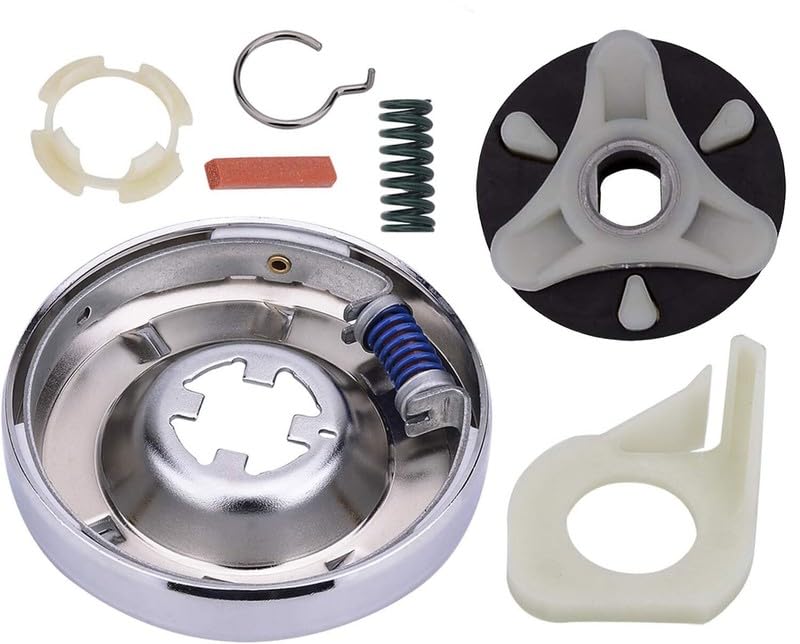
Image: Components of the Kenmore 11081664100 Washer Clutch & Motor Coupler Kit. This image displays various parts including a chrome-plated clutch housing with a blue spring, a white three-pronged motor coupler, a green spring, a C-clip, a small red brake pad, and other plastic components.
Installation
Replacing the washer clutch and motor coupler requires disassembling parts of the washing machine. The following is a general guide; always refer to your specific appliance's service manual for precise instructions.
- Prepare the Washer: Disconnect power and water supply. Move the washer to an open area for access.
- Access Components: Depending on your washer model, you may need to remove the cabinet, control panel, or other components to gain access to the motor, transmission, clutch, and motor coupler.
- Remove Old Parts: Carefully detach the old motor coupler from the motor shaft and transmission input shaft. Remove the old clutch assembly, noting the orientation of all springs and components.
- Install New Parts: Install the new motor coupler onto the motor and transmission shafts, ensuring a secure fit. Assemble the new clutch components according to the washer's service manual, paying close attention to spring placement and engagement.
- Reassemble: Reassemble the washing machine in reverse order of disassembly. Ensure all connections are secure and no tools or loose parts are left inside.
- Test: Reconnect power and water. Run a test cycle to ensure proper operation, checking for leaks, unusual noises, or improper spin/agitation.
Note: Incorrect installation can lead to further damage to the appliance or personal injury. If you are not confident in performing this repair, seek assistance from a certified technician.
Maintenance
While the clutch and motor coupler are designed for durability, regular maintenance of your washing machine can help prolong their lifespan:
- Avoid Overloading: Do not overload the washing machine, as this puts excessive strain on the motor, transmission, and clutch assembly.
- Balance Loads: Ensure laundry loads are balanced to prevent excessive vibration and wear on internal components.
- Regular Inspection: Periodically inspect the area around the motor and transmission for any signs of wear, leaks, or unusual debris.
Troubleshooting
If your washing machine exhibits issues after replacing the clutch and motor coupler, or if you suspect these parts are failing, consider the following:
- Washer Not Spinning: This is a primary symptom of a failing clutch. Check for proper engagement of the clutch assembly and ensure the motor coupler is intact.
- Washer Not Agitating: A broken motor coupler can prevent the agitator from moving. Inspect the coupler for cracks or damage.
- Loud Noises During Spin/Agitation: Grinding, squealing, or thumping noises can indicate worn clutch components or a damaged motor coupler.
- Burning Smell: A burning smell during operation may indicate excessive friction from a failing clutch or motor, requiring immediate attention.
If troubleshooting steps do not resolve the issue, contact a qualified technician.
Specifications
| Model Number | 11081664100 |
| Part Number | washerpart1252680 |
| Manufacturer | Generic |
| Item Package Quantity | 1 |
Warranty Information
Specific warranty details for this Generic replacement part are not provided in this manual. Please refer to the product listing or contact the seller directly for information regarding warranty coverage and terms.
Customer Support
For further assistance, technical support, or inquiries regarding this product, please contact the seller through the platform where the purchase was made. For complex repairs, consider consulting a certified appliance repair professional.