1. Introduction
This manual provides detailed instructions for the safe and efficient installation, operation, and maintenance of your Generic 10,000W Wind Turbine Generator, model LS. This wind turbine is designed to harness renewable energy for various applications, including homes, farms, RVs, and boats, supporting multiple voltage systems (12V, 24V, 48V, 72V, 110V, 220V).
The turbine features reinforced fiber nylon blades for durability, an advanced aerodynamic design for optimal wind energy capture, and a low startup wind speed for reliable performance in fluctuating wind conditions.

Image 1.1: The Generic Wind Turbine Generator, showcasing its five-blade design and high conversion efficiency in strong wind environments. This image highlights the turbine's ability to generate power from breeze, its high power generation rate, automatic wind direction adjustment, and strong wind resistance.

Image 1.2: Examples of the wind turbine's versatile applications, including home use, monitoring systems, marine environments, and integration with wind-solar hybrid streetlights. Note that the tower tube is not included with the product.
2. Safety Information
Read all safety warnings and instructions carefully before installing or operating the wind turbine. Failure to follow these instructions may result in electric shock, fire, serious injury, or property damage.
- Professional Installation: Installation of the wind turbine, especially electrical connections, should only be performed by qualified and licensed professionals to ensure safety and compliance with local codes.
- High Voltage: The wind turbine generates high voltage electricity. Always disconnect all power sources before performing any installation, maintenance, or troubleshooting.
- Moving Parts: The turbine blades rotate at high speeds. Keep hands, tools, and loose clothing away from moving parts during operation and installation.
- Fall Hazard: Installation typically involves working at heights. Use appropriate safety equipment, such as harnesses, ladders, and scaffolding, and ensure stable footing.
- Weather Conditions: Do not install or perform maintenance during strong winds, storms, or lightning.
- Proper Grounding: Ensure the wind turbine system is properly grounded according to local electrical codes to prevent electric shock.
- Blade Integrity: Regularly inspect blades for damage. Damaged blades can become unbalanced and cause structural failure.
- Electromagnetic Braking: Understand and test the electromagnetic braking system to ensure it functions correctly for emergency shutdowns.
3. Package Contents
Verify that all components listed below are present and undamaged before proceeding with installation. If any parts are missing or damaged, contact customer support immediately.
- 1 x Wind Turbine Generator Body
- 5 x Wind Turbine Blades
- 1 x Charge Controller
- 1 x Set of Screws and Nuts for assembly
- 1 x Installation Notes (refer to this manual for detailed instructions)

Image 3.1: All components included in the wind turbine kit. This image displays the five fiber nylon blades, the generator body, the charge controller, and the necessary screws and nuts for assembly.
4. Specifications
The following table outlines the key technical specifications for the Generic 10,000W Wind Turbine Generator, model LS.
| Feature | Specification |
|---|---|
| Power Output | 10,000W (Rated) |
| Number of Blades | 5 |
| Blade Material | Reinforced Fiber Nylon |
| Start-up Wind Speed | 2.0 m/s |
| Rated Wind Speed | 11 m/s |
| Safe Wind Speed | 45 m/s |
| Braking System | Electromagnetic |
| Generator Type | Three-phase AC permanent magnet synchronous generator |
| Wind Direction Adjustment | Automatic |
| Operating Temperature | -40 to 80 ℃ (-40 to 176 ℉) |
| Supported Voltages | 12V, 24V, 48V, 72V, 110V, 220V |
| Model Name | LS |
| Item Weight | 2.2 pounds (Generator body only) |
| Package Dimensions | 3.15 x 3.15 x 3.15 inches (Package for generator body) |

Image 4.1: Dimensional drawing of the wind turbine, indicating a total width of 35 inches (90 cm) and a height of 23.6 inches (60 cm) for the blade assembly. The generator body dimensions are also shown.
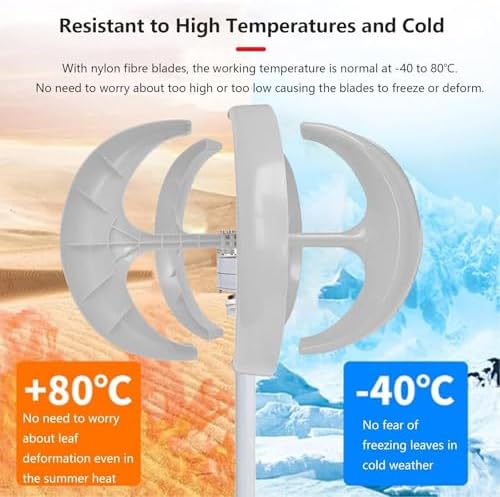
Image 4.2: Illustration demonstrating the wind turbine's resistance to extreme temperatures, with a working range from -40°C to 80°C. This ensures durability and prevents blade deformation or freezing in harsh weather conditions.
5. Setup & Installation
The installation process for the Generic Wind Turbine Generator is designed to be straightforward. However, due to the electrical nature and height requirements, professional assistance is highly recommended for safety and optimal performance.
5.1. Site Selection
- Choose a location with consistent and unobstructed wind flow, away from tall buildings, trees, or other structures that could create turbulence.
- Ensure the chosen site allows for safe access for installation and future maintenance.
- Consider proximity to the battery bank and inverter to minimize cable length and voltage drop.
5.2. Assembly of Wind Turbine
Refer to the exploded diagram below for the assembly sequence. The kit includes a pre-installed hoop for simplified blade attachment.
- Attach the five nylon blades to the blade platen using the provided fasteners. Ensure they are securely tightened.
- Mount the assembled blade platen onto the hub of the Permanent Magnet Generator (PMG).
- Secure the PMG to the flange base using the generator screws, flat washers, and nuts.
- Attach the entire turbine assembly to a suitable pole (tower tube not included) using the flange base. Ensure the pole is robust and properly anchored.
- Connect the wind turbine's output wires to the charge controller.

Image 5.1: Exploded view of the Lantern Wind Turbine Structure, detailing components such as anti-loose nuts, follower screws, nylon blades, blade platen, hub, PMG (Permanent Magnet Generator), flange base, and various fasteners. This diagram illustrates the step-by-step assembly process.
5.3. Electrical Connections
The wind turbine kit includes a charge controller. This controller manages the power output from the turbine to charge your battery bank safely and efficiently. The specific wiring configuration will depend on your chosen voltage system (12V, 24V, 48V, 72V, 110V, or 220V) and whether you are integrating with an inverter for AC loads or a grid-tie system.
- Connect the three-phase AC output from the wind turbine generator to the input terminals of the charge controller.
- Connect the output terminals of the charge controller to your battery bank. Ensure correct polarity.
- If using an inverter, connect the inverter to the battery bank.
- Ensure all connections are tight and insulated to prevent short circuits and corrosion.
- Proper grounding of the entire system is critical. Consult local electrical codes.

Image 5.2: A schematic diagram illustrating the typical electrical connections for the wind turbine system. It shows the Wind Turbine Generator connected to the Wind Power Controller, which then charges a Battery Group. An UPS Inverter converts DC power to AC for household loads like a TV and refrigerator, and also shows utility power grid connection.
6. Operating Instructions
Once properly installed and connected, the wind turbine operates largely automatically.
6.1. Initial Startup
- After all electrical connections are verified, ensure the charge controller is correctly configured for your battery voltage.
- In sufficient wind conditions (above 2.0 m/s), the turbine blades will begin to rotate.
- The charge controller will automatically begin regulating the power output to charge the connected battery bank.
6.2. Normal Operation
- The turbine's automatic wind direction adjustment mechanism will orient the blades into the wind for optimal power generation.
- The permanent magnet three-phase AC generator is designed for efficient power conversion with reduced resistance torque.
- The charge controller continuously monitors battery status and wind turbine output to prevent overcharging and ensure stable power delivery.
6.3. Braking System
The wind turbine is equipped with an electromagnetic braking system. This system is typically activated automatically by the controller in conditions of excessively high wind speeds (above 45 m/s) or during overcharging to protect the turbine and batteries. Manual braking may also be possible via the controller for maintenance or emergency shutdown, if supported by your specific controller model.
7. Maintenance
Regular maintenance ensures the longevity and optimal performance of your wind turbine. Always disconnect power before performing any maintenance.
7.1. Routine Checks (Monthly/Quarterly)
- Visual Inspection: Check blades for any cracks, chips, or damage. Ensure all fasteners (screws, nuts) are tight and free from corrosion.
- Cable Connections: Inspect all electrical cables for wear, fraying, or loose connections. Ensure insulation is intact.
- Tower Stability: Verify the stability of the mounting pole/tower. Check for any signs of rust or structural fatigue.
- Controller Status: Observe the charge controller's indicators to ensure it is operating normally and charging the batteries correctly.
- Cleanliness: Keep the turbine blades and generator body clean from excessive dirt, ice, or debris that could affect performance or balance.
7.2. Annual Inspection
- Perform a thorough inspection of all components, including the generator bearings (listen for unusual noises), braking system, and all electrical components.
- Check the battery bank's health and connections.
- Consider having a qualified technician perform a comprehensive system check.
8. Troubleshooting
This section provides solutions to common issues you might encounter. For problems not listed here or if issues persist, contact customer support.
| Problem | Possible Cause | Solution |
|---|---|---|
| Turbine not spinning or spinning slowly in adequate wind |
|
|
| No power output to batteries |
|
|
| Excessive noise or vibration |
|
|
9. Warranty and Support
For any questions regarding the wind turbine, its installation, operation, or troubleshooting, please contact the seller or manufacturer's customer service team. Specific warranty terms and conditions are typically provided at the point of purchase. Please retain your proof of purchase for warranty claims.
The manufacturer is Generic. For support, refer to the contact information provided by your retailer or on the product packaging.