
Startbuymore B15
Startbuymore ANENG B15 DC Voltage Tester Pen User Manual
Model: B15
Introduction
This manual provides detailed instructions for the safe and effective use of the Startbuymore ANENG B15 DC Voltage Tester Pen. This versatile tool is designed for electrical testing, offering features such as non-contact voltage detection and accurate fault localization. Please read this manual thoroughly before operation to ensure proper usage and safety.
Safety Information
Always observe basic safety precautions when using electrical testing equipment to reduce the risk of injury or damage. Failure to follow these safety rules may result in electric shock, fire, or personal injury.
- Do not use the tester if it appears damaged or is not operating correctly.
- Ensure hands are dry before operating the device.
- Do not exceed the specified voltage range (24-250V).
- Always assume circuits are live until proven otherwise.
- Use appropriate personal protective equipment (PPE) such as safety glasses and insulated gloves.
- This device is intended for professional and DIY use; however, basic electrical knowledge is recommended.
Product Overview
The ANENG B15 DC Voltage Tester Pen is a compact and efficient tool for various electrical measurements. It features a clear indicator for non-contact voltage detection and a robust design for durability.
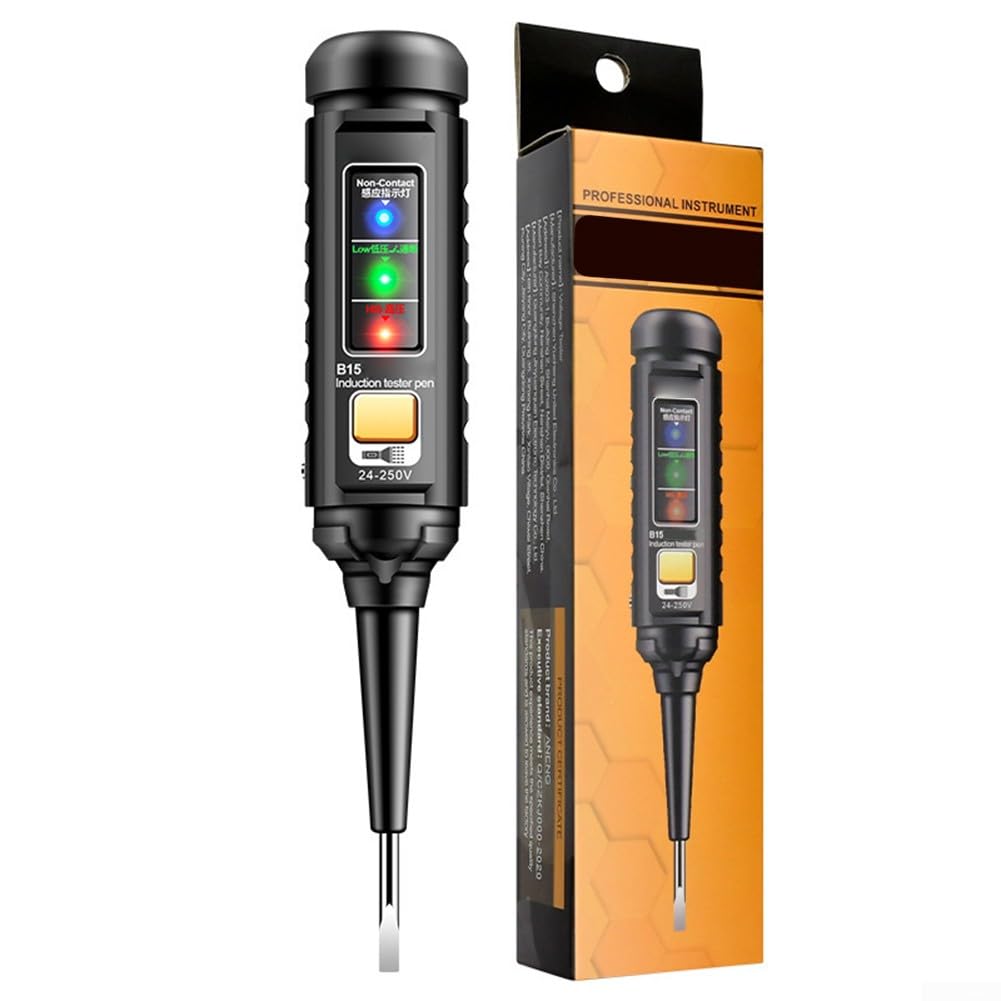
Figure 1: The ANENG B15 DC Voltage Tester Pen shown with its retail packaging. The pen features an indicator screen and a metal probe tip.
Components:
- Tester Body: Main housing containing electronics and display.
- Indicator Screen: Displays detection status (Non-Contact, Low Voltage, Live Voltage).
- NCV Sensor: Located at the tip for non-contact voltage detection.
- Metal Probe Tip: For direct contact measurements.
- Negative Pole Contact Point: A designated point on the pen (e.g., metal cap) for completing a circuit during certain tests.
- Function Button: To power on/off or activate specific modes.
Setup
The ANENG B15 DC Voltage Tester Pen is designed for immediate use. No complex assembly is required. Ensure the device is clean and free from any obstructions before first use.
- Battery Installation/Check: The device typically comes with batteries pre-installed or requires simple battery insertion. Refer to the battery compartment for specific instructions if replacement is needed. Ensure batteries are correctly oriented.
- Initial Power On: Press the function button to power on the device. The indicator screen should illuminate, indicating it is ready for use.
- Self-Test: Some devices perform a brief self-test upon power-on. Observe the indicators for any error messages.
Operating Instructions
The ANENG B15 offers multiple testing modes for various electrical applications.
1. Non-Contact Voltage (NCV) Detection
This mode allows for safe detection of AC voltage without direct contact with live conductors.
- Power on the tester.
- Bring the NCV sensor tip of the pen close to the wire, outlet, or electrical component you wish to test.
- If AC voltage is detected, the tester will emit escalating sound warnings and the indicator lights (typically red for live, green for low voltage) will illuminate. The intensity of the sound and light may increase with stronger voltage fields.

Figure 2: Demonstrates non-contact voltage detection (top left, green light) and direct contact voltage detection (top right, red light). The lower images show the pen testing various electrical components.
2. Direct Contact Voltage Testing (DC/AC)
For precise voltage measurements, use the metal probe tip.
- Ensure the tester is powered on.
- Carefully touch the metal probe tip to the conductor or terminal you want to test.
- For DC voltage, the tester will indicate the presence of voltage. For AC voltage, the NCV function may also activate, providing additional alerts.
- If the device has a negative pole contact point (often a metal cap at the top), ensure you are making contact with both points to complete the circuit for accurate readings.

Figure 3: Illustrates the ANENG B15 tester being used to check different electrical points, including an outlet and a wire, demonstrating its versatility.
3. Fault Localization
The NCV mode can assist in locating breaks in live wires.
- With the NCV mode active, slowly move the tester along the length of a live wire.
- The sound and light indicators will cease or significantly reduce at the point where the power interruption occurs.
- This method helps pinpoint the exact location of a break without needing to strip insulation.
Maintenance
- Cleaning: Wipe the tester with a dry, clean cloth. Do not use abrasive cleaners or solvents.
- Storage: Store the device in a cool, dry place, away from direct sunlight and extreme temperatures.
- Battery Replacement: If the indicator lights dim or the device fails to power on, replace the batteries. Ensure proper battery type and polarity.
- Inspection: Periodically inspect the tester for any signs of damage, such as cracks in the casing or bent probes. Do not use if damaged.
Troubleshooting
| Problem | Possible Cause | Solution |
|---|---|---|
| Tester does not power on. | Dead or incorrectly installed batteries. | Replace batteries, ensuring correct polarity. |
| NCV detection is inconsistent or weak. | Low battery, interference from other electrical fields, or distance from source. | Replace batteries. Move away from other electrical devices. Ensure close proximity to the test point. |
| Direct contact test yields no reading. | No voltage present, poor contact, or internal fault. | Verify the circuit is live with another known working device. Ensure firm contact with both test points. If problem persists, the device may be faulty. |
Specifications

Figure 4: Detailed dimensions of the ANENG B15 DC Voltage Tester Pen, showing length, width, and probe tip size.
| Feature | Detail |
|---|---|
| Part Name | DC Voltage Detection Pen |
| Model | B15 |
| Manufacturer Model Number | 213ENKJ670W6TKFGF4KJ0C720CWBN |
| Material | ABS/Chrome Vanadium Steel |
| Dimensions (L x W x H) | Approximately 160.00x28.00x27.00mm (6.3x1.1x1.06inch) |
| Weight | 51 Grams (1.8 ounces) |
| Voltage Range | 24-250V |
| Detection Type | Non-Contact Voltage (NCV) and Direct Contact |
Warranty and Support
Specific warranty information for the Startbuymore ANENG B15 DC Voltage Tester Pen may vary by region and retailer. Please refer to your purchase documentation or contact the retailer directly for details regarding warranty coverage and support services.
For technical assistance or inquiries, please reach out to the manufacturer or your point of purchase.