
1. Introduction
This manual provides essential instructions for the safe and effective installation, operation, and maintenance of the UDBU PRL230 Manual Reset Limit Thermostat. This device is designed to monitor and control temperatures in heating systems, specifically gas-fired furnaces, unit heaters, and rooftop units. Please read this manual thoroughly before installation or use to ensure proper function and safety.
2. Safety Information
WARNING: Electrical shock hazard. Disconnect power before installation or servicing. Installation should be performed by a qualified technician in accordance with all local and national electrical codes.
- Always turn off the main power supply to the heating unit before attempting any installation, maintenance, or troubleshooting.
- Ensure all wiring connections are secure and comply with applicable electrical standards.
- Do not operate the thermostat if it appears damaged.
- This thermostat is designed for specific applications. Do not use it for purposes other than those specified.
3. Product Overview
3.1. Description
The UDBU PRL230 is a manual reset, single-pole, single-throw (SPST) limit thermostat. It is designed to open its circuit when the temperature rises to 230°F (110°C), providing a safety cutoff for heating systems. Once the temperature drops, the thermostat requires a manual reset to close the circuit and allow the heating system to resume operation. This ensures that an overheating condition is acknowledged and addressed before the system can restart.
3.2. Features
- Manual reset functionality for enhanced safety.
- Cut-out temperature of 230°F (110°C).
- SPST (Single-Pole, Single-Throw) contact type.
- Vertical terminals with 1/4" width diameter for easy connection.
- Mounting holes spaced 1" apart (center to center).
- Suitable for gas-fired furnaces, unit heaters, and rooftop units.
- Rated for 16.0 amps at 250 volts.
3.3. Components
The PRL230 thermostat consists of a temperature-sensing element, a manual reset button (typically a small button on the body), and two electrical terminals for wiring. The device is housed in a compact, durable casing with mounting tabs.
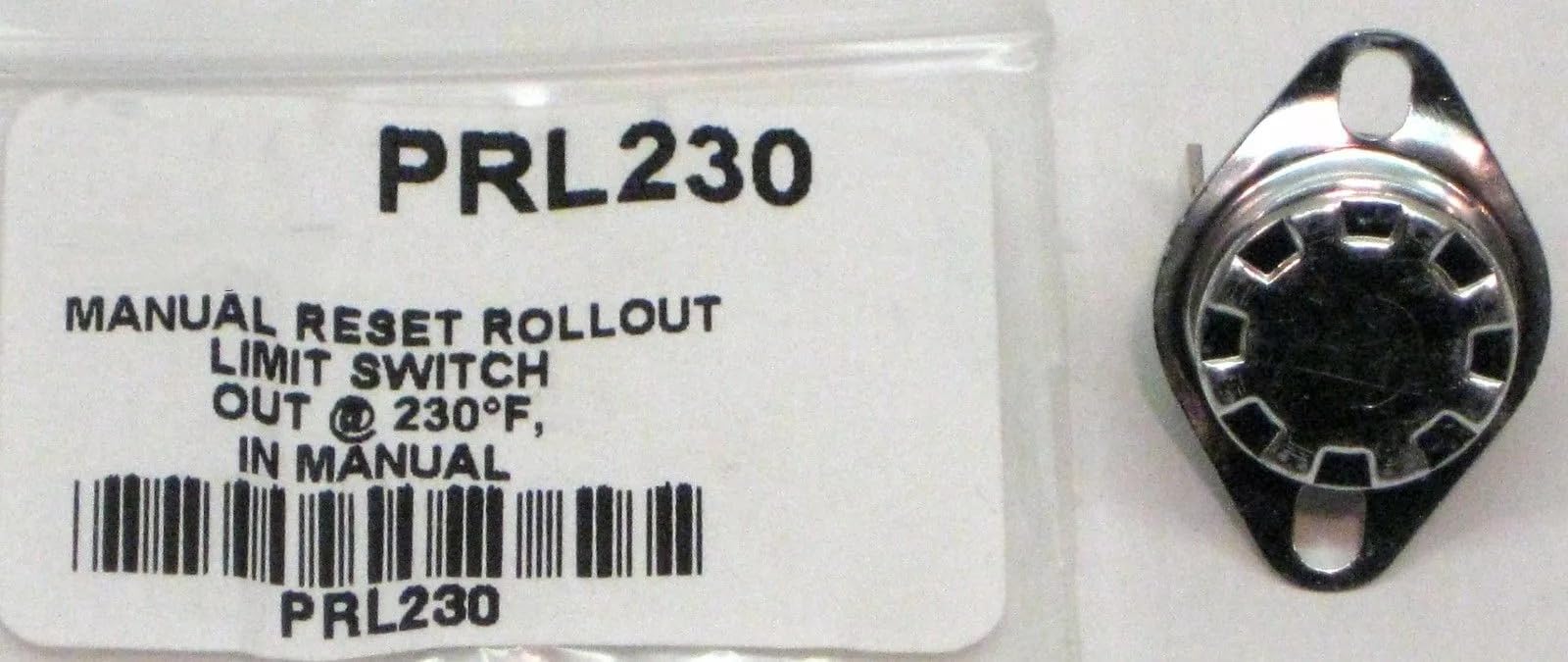
Figure 1: UDBU PRL230 Manual Reset Limit Thermostat. This image shows the compact design of the thermostat, featuring two vertical electrical terminals for wiring connections and two mounting holes on the metal flange, spaced 1 inch apart center-to-center, for secure installation.
4. Setup and Installation
Important: Installation must be performed by a qualified professional. Ensure all power to the heating unit is disconnected before proceeding.
- Power Disconnection: Locate the main power switch for your furnace, unit heater, or rooftop unit and turn it OFF. Verify that power is completely off using a voltage tester.
- Locate Existing Thermostat (if applicable): Identify the current limit thermostat on your heating system. Note its position and wiring configuration.
- Remove Old Thermostat: Carefully disconnect the wires from the old thermostat. Unscrew and remove the old unit from its mounting location.
- Mount New Thermostat: Position the UDBU PRL230 thermostat in the same location. The mounting holes are 1 inch apart (center to center). Secure the thermostat using appropriate screws.
- Wire Connections: Connect the electrical wires to the vertical 1/4" width diameter terminals of the new thermostat. Ensure connections are tight and secure. Refer to your heating system's wiring diagram for correct polarity and circuit integration.
- Verify Installation: Double-check all connections and mounting. Ensure no wires are pinched or exposed.
- Restore Power: Once installation is complete and verified, restore power to the heating unit.
5. Operation
The UDBU PRL230 is a safety device designed to prevent overheating. Under normal operating conditions, the thermostat's contacts remain closed, allowing the heating system to function.
- Temperature Rise: If the temperature within the heating system reaches or exceeds 230°F (110°C), the thermostat's internal mechanism will activate, causing its contacts to open. This interrupts the control circuit, shutting down the heating element or burner to prevent further temperature increase.
- Manual Reset: After the thermostat has tripped (opened), it will remain open even if the temperature drops below 230°F. To restore operation, the cause of the overheating must be identified and resolved. Once the system has cooled and the issue is addressed, the thermostat must be manually reset. This is typically done by pressing a small button on the thermostat's body. Pressing the button will close the contacts, allowing the heating system to restart if other controls permit.
- Do Not Bypass: Never attempt to bypass or permanently hold down the manual reset button. This defeats the safety purpose of the device and can lead to dangerous overheating conditions.
6. Maintenance
The UDBU PRL230 thermostat is designed for reliable operation and requires minimal maintenance. However, periodic checks can help ensure its continued functionality.
- Annual Inspection: It is recommended to have a qualified technician inspect your heating system, including the limit thermostat, annually.
- Cleanliness: Ensure the area around the thermostat is free from dust, debris, or obstructions that could affect its temperature sensing capabilities.
- Wiring Integrity: During inspections, check for any loose, corroded, or damaged wiring connections to the thermostat.
- Functionality Check: If the system frequently trips the limit thermostat, it indicates an underlying issue with the heating system that needs professional diagnosis and repair.
7. Troubleshooting
If your heating system is not operating correctly and you suspect the limit thermostat, consider the following:
| Problem | Possible Cause | Solution |
|---|---|---|
| Heating system not starting or running. | Thermostat has tripped due to overheating. |
|
| Thermostat does not reset. | System still too hot, or thermostat is faulty. |
|
| Frequent tripping of the thermostat. | Underlying issue with the heating system causing overheating. | This is a symptom of a larger problem. Do not ignore it. Contact a qualified HVAC technician immediately to diagnose and repair the root cause. |
8. Specifications
| Attribute | Detail |
|---|---|
| Model Number | PRL230 |
| Manufacturer | UDBU |
| Cut-out Temperature | 230°F (110°C) |
| Contact Type | SPST (Single-Pole, Single-Throw) |
| Reset Type | Manual Reset |
| Voltage Rating | 250 Volts |
| Current Rating | 16.0 Amps |
| Terminal Type | Vertical, 1/4" width diameter |
| Mounting Hole Spacing | 1" apart (center to center) |
| Material | ABS |
| Product Dimensions | 2.3 x 1.7 x 2.3 inches |
| Item Weight | 1.92 ounces |
9. Warranty and Support
Warranty: The UDBU PRL230 Limit Thermostat comes with a one-year warranty from the date of purchase. This warranty covers defects in materials and workmanship under normal use. It does not cover damage resulting from improper installation, misuse, abuse, or unauthorized modifications.
Customer Support: For technical assistance, warranty claims, or questions regarding the UDBU PRL230 thermostat, please contact your retailer or the manufacturer directly. When contacting support, please have your product model number (PRL230) and purchase information available.