
TILSWALL Shark 700
Tilswall Shark 700 Cordless Paint Sprayer User Manual
Model: Shark 700 | Brand: TILSWALL
Introduction
Thank you for choosing the Tilswall Shark 700 Cordless Paint Sprayer. This manual provides essential information for the safe and efficient operation, maintenance, and troubleshooting of your new paint sprayer. Please read it thoroughly before first use and keep it for future reference.
Important Safety Information
Always prioritize safety when operating power tools. Failure to follow these instructions may result in electric shock, fire, and/or serious injury.
- Nozzle Direction: Always point the nozzle away from your target surface when starting the motor.
- Initial Trigger Press: Lightly press the trigger for 2 seconds to initiate the motor before fully pressing to begin atomized spraying. This prevents paint spitting due to the brushless motor's protective start-up delay.
- Battery Compatibility: Use only with compatible DeW 20V batteries (e.g., DCB203, DCB204, DCB240, DCB206, DCB208, DCB609). Battery is not included.
- Personal Protection: Wear appropriate personal protective equipment, including safety glasses, gloves, and a respirator, especially when spraying in enclosed areas.
- Ventilation: Ensure adequate ventilation in your work area to prevent the buildup of hazardous fumes.
- Flammable Materials: Do not spray near open flames, pilot lights, or other ignition sources.
- Cleaning: Clean and maintain the sprayer regularly to prevent clogging and ensure safe operation. Dispose of paint and cleaning materials responsibly according to local regulations.
- Electrical Safety: Keep the sprayer away from water contact, especially the main body containing the motor.
Product Features
- Advanced Brushless Motor: Features a 90,000 RPM brushless motor for smoother finish, longer lifespan, and significantly reduced vibration and noise.
- Innovative Side-Feed System: Allows quick and clean paint refills from the side without disassembling the entire container, minimizing mess and maximizing efficiency.
- Cordless Freedom: Compatible with DeW 20V batteries (not included), offering unrestricted movement for various indoor and outdoor projects.
- Precision Control: Offers three adjustable spray patterns (horizontal, vertical, circular) and a variable flow control (0-900 ml/min) for customized results.
- Built-in Safety: Includes low voltage and overload protection for safe battery operation.
- Large Capacity Container: Equipped with a 1300ml container for fewer refills and faster work.
Package Contents
The Tilswall Shark 700 Cordless Paint Sprayer package typically includes:
- Tilswall Shark 700 Paint Sprayer Unit
- 1300ml Paint Container
- Suction Tube
- Brass Nozzle (pre-installed or included separately)
- Air Cap and Locking Nut
- Viscosity Cup
- Cleaning Brush
- Paint Filters (paper funnels)
- User Manual
Note: Battery and charger are not included and must be purchased separately.
Setup
1. Assembly
- Insert the suction tube into the 1300ml container.
- Screw the container onto the sprayer unit tightly.
- Align the holes on the adapter with those on the brass nozzle.
- Push the nozzle firmly into the adapter.
- Screw on the air cap and locking nut.
- Fit the liquid filling cap seal into the pressure relief cap and tighten it securely.
- Press the locking button to attach the motor unit to the front spray assembly.

Image: Tilswall Shark 700 Cordless Paint Sprayer fully assembled with a 1300ml container and a compatible Dewalt battery attached.
2. Battery Installation
Ensure your Dewalt 20V battery (not included) is fully charged. Slide the battery into the base of the sprayer handle until it clicks securely into place.
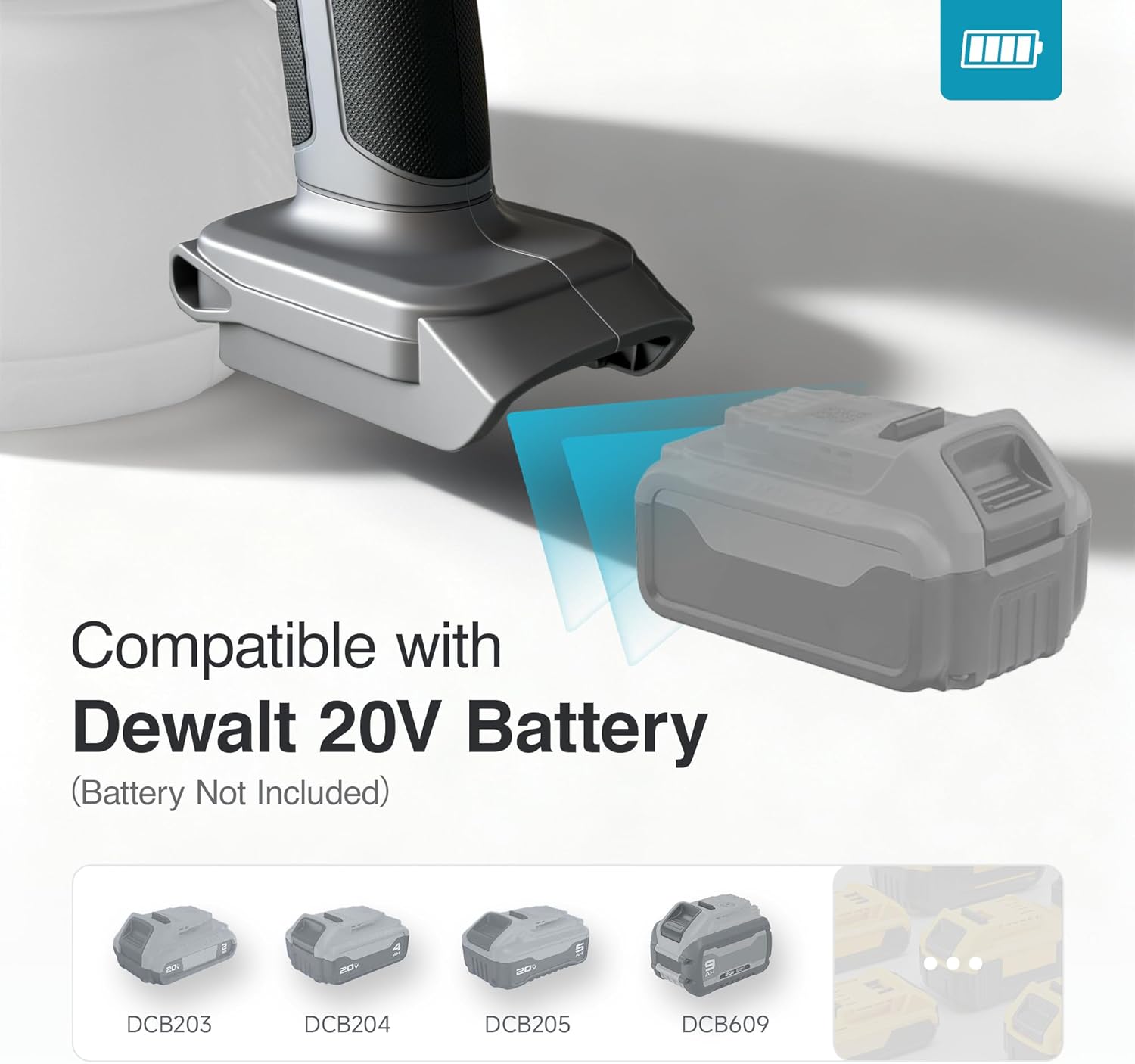
Image: The base of the Tilswall Shark 700 sprayer handle designed to accept various Dewalt 20V batteries (DCB203, DCB204, DCB205, DCB609 are shown as examples).
3. Paint Preparation (Thinning & Filtering)
Paint MUST be thinned before use for optimal spraying performance. Always strain the mixture to remove clumps.
- Water-based paints: Thin directly with clean water.
- Oil-based, Solvent-based, etc.: Use the correct thinner specified by your paint manufacturer. Using water will cause improper mixing, poor color, and spraying issues.
Consult your paint's manufacturer or seller for the exact thinner recommended for your specific product. Avoid over-thinning to prevent poor adhesion.
Viscosity Test:
Use the included viscosity cup to test your thinned paint. The ideal viscosity for the Shark 700 is approximately 120 din/s. Fill the viscosity funnel with thinned paint (covering the bottom hole with your finger), then release and start a timer. Aim for the funnel to empty in approximately 120 seconds.
- If paint flows too fast (<120 seconds), add a little more paint to thicken it up.
- If it flows too slow (>120 seconds), add a splash more water/thinner to thin it out.
Video: Demonstrates the assembly of the Tilswall Shark 700 paint sprayer, including attaching the container, nozzle, and motor unit, followed by a detailed guide on how to properly thin paint and perform a viscosity test using the included funnel and timer.
4. Filling the Container (Side-Fill System)
The innovative side-feed design allows for quick and clean refills. Simply open the side cap and pour your prepared paint directly into the container. This eliminates the need to unscrew the entire container, reducing mess and downtime.
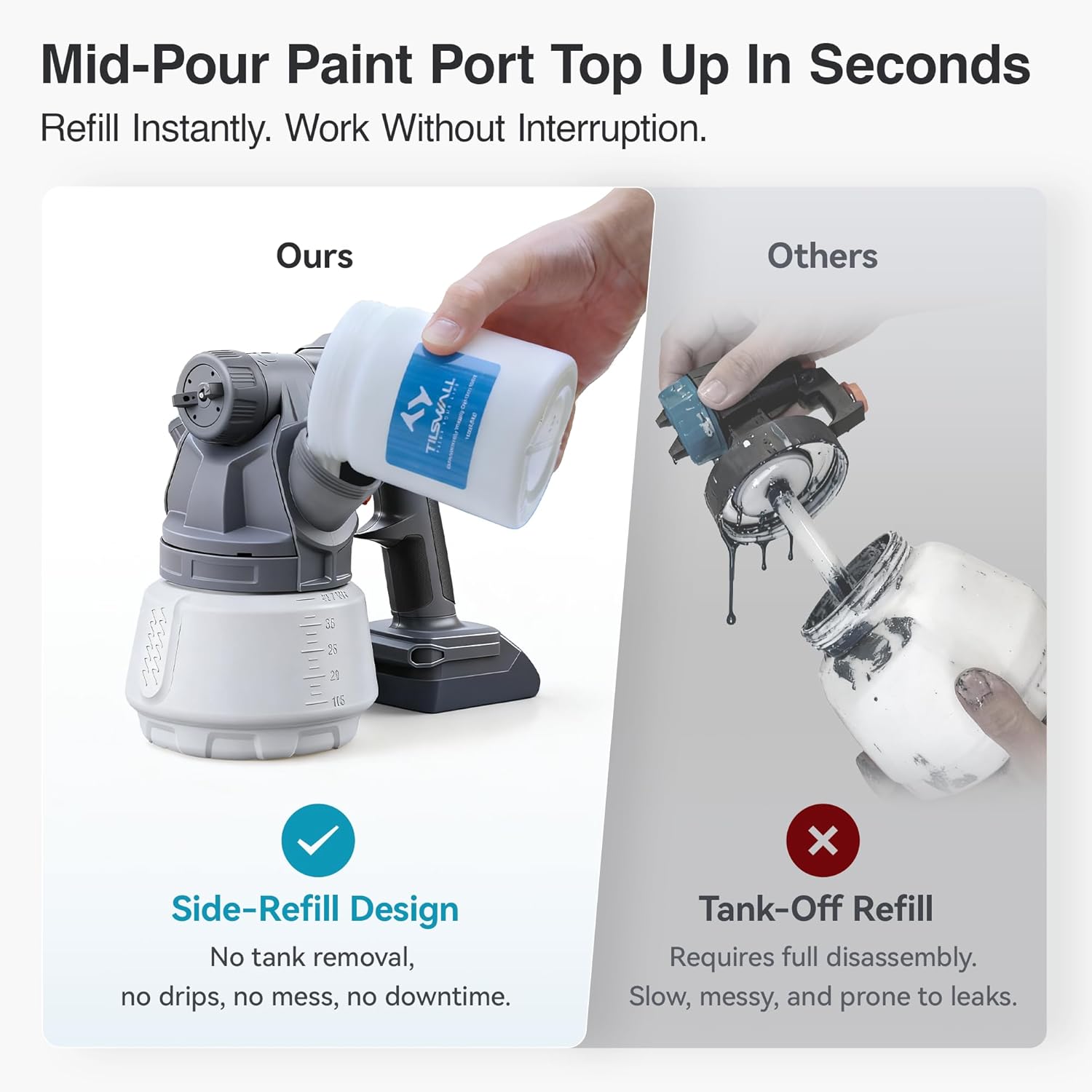
Image: Illustrates the convenience of the Tilswall Shark 700's side-fill design, showing paint being poured directly into a side port, contrasted with a messy traditional tank-off refill method.
Operating Instructions
1. Correct Startup Sequence to Prevent Spitting
- Distance: Always point the spray gun away from your target surface before pulling the trigger.
- Start Motor: Gently squeeze the trigger only until the motor begins to spin. Hold it for 2 seconds.
- Engage Paint: After the motor is running, continue to squeeze the trigger fully to activate the paint flow and achieve normal atomization.
- Spray: Once a consistent mist is established, move the gun to your target and begin spraying.
Note: The brushless motor features a soft-start mechanism to protect its lifespan. During the first 2 seconds, the air pressure is too low to atomize paint. Squeezing the trigger fully immediately will cause liquid paint to spit out.
2. Adjusting Spray Patterns
The sprayer offers three spray patterns: horizontal, vertical, and circular. To switch between patterns, twist the nozzle to align the desired pattern with the sprayer body.
- Horizontal 90°: Provides a wide, flat horizontal oval pattern, ideal for broad surfaces.
- Vertical 180°: Creates a tall, narrow vertical oval pattern, suitable for up-and-down strokes.
- Circular 45°: Delivers a circular pattern for detailed work or small areas.

Image: Visual representation of the three available spray patterns (circular, vertical, horizontal) and the flow control dial on the Tilswall Shark 700 sprayer.
3. Adjusting Flow Rate
The variable flow control allows you to adjust the paint output from 0 to 900 ml/min.
- Increase Flow: Twist the knob clockwise (inward, tighten it) to increase the paint flow for thicker, full-coverage sprays.
- Decrease Flow: Twist the knob counter-clockwise (outward, loosen it) to reduce the paint flow for fine, mist-like sprays, perfect for detailed touch-ups.
4. Correct Spraying Technique for an Even Finish
- Distance: Hold the spray gun 10-30 cm (4-12 inches) from the surface. Keep this spacing consistent across the entire project.
- Motion & Overlap: Move the gun in smooth, parallel strokes at a steady speed (approx. 30-60 cm/second). Overlap each pass by about 50% to ensure even coverage and prevent streaks.
- Orientation: Always keep the gun perpendicular to the surface. Avoid tilting or arcing to maintain a uniform finish.
5. Adjustable Suction Tube
The suction tube can be adjusted to optimize paint pickup based on the sprayer's angle:
- Spray High-Reach Areas: Tilt the sprayer down (45°). Position the straw facing downwards to ensure continuous paint flow.
- Spray Low-Reach Areas: Tilt the sprayer up (45°). Position the straw facing upwards to ensure continuous paint flow.

Image: Illustrates the adjustable suction tube feature, showing how to orient the tube for spraying at upward and downward angles to ensure consistent paint supply.
Video: A short demonstration of the Tilswall Shark 700 cordless paint sprayer in action, showing it being used for house painting and other DIY projects, highlighting its ease of use and cordless convenience.
Maintenance and Cleaning
Clean the spray gun immediately (within 15 minutes after use) to prevent paint from drying and causing clogs.
- Container & Tube: Thoroughly brush and rinse the inside and outside of both the paint container and the suction tube.
- Disassemble & Rinse: Unscrew the retaining nut and remove the air cap and nozzle. Rinse these detached parts with water and brush off any residue.
- Unclog & Clean: Use the nozzle cleaning needle to clear any internal blockages. Flush the gun body and brush away any remaining paint.
- Critical: Take care to avoid any water contact with the main body containing the motor.
Important Notes:
- Always perform a final flush with solvent or clean water until the discharge runs completely clear.
- After cleaning, allow all parts to air-dry completely in a cool place before reassembly.
- For oil-based paints, pre-clean with an appropriate thinner before completing a full water rinse.

Image: An exploded view of the Tilswall Shark 700 paint sprayer components, including the container, nozzle, and suction tube, being cleaned in water, demonstrating the ease of disassembly for maintenance.
Troubleshooting
| Problem | Possible Cause | Solution |
|---|---|---|
| Paint spitting or uneven spray | Incorrect startup sequence; paint too thick; clogged nozzle; improper spraying technique. | Follow correct 2-second trigger press startup; thin paint to correct viscosity; clean nozzle; maintain consistent distance and motion. |
| No paint flow | Clogged nozzle; empty container; suction tube blocked; battery low. | Clean nozzle; refill container; clear suction tube; charge/replace battery. |
| Motor not starting | Battery not installed correctly; battery low/dead; internal fault. | Ensure battery is securely attached; charge battery; contact customer support if issue persists. |
| Excessive vibration/noise | Loose components; internal motor issue. | Check all connections are tight; contact customer support. |
Specifications
- Brand: TILSWALL
- Model Name: Shark 700
- Power Source: DC (Compatible with Dewalt 20V Battery - Not Included)
- Motor Type: Brushless, 90,000 RPM
- Tank Volume: 1300 ml (43.96 Fluid Ounces)
- Flow Control: Variable, 0-900 ml/min
- Spray Patterns: 3 (Horizontal, Vertical, Circular)
- Material: Plastic
- Color: Blue
- Item Dimensions (W x H): 6.66"W x 10.12"H
- Style: Handheld
- Recommended Uses: Painting (House, Walls, Fences, Furniture, Cabinets, Doors, Garage)
Warranty and Support
Tilswall is committed to ensuring your satisfaction. This product is backed by our reliable customer support. For any inquiries, technical assistance, or warranty claims, please refer to the contact information provided on the product packaging or visit the official Tilswall website. Please retain your proof of purchase for warranty purposes.
Related documentsShark 700

Ask a question about this manual
Ask about setup, troubleshooting, compatibility, parts, safety, or missing instructions. Manuals+ will review the question and use this page’s manual context to help answer it.