
1. Introduction
Thank you for choosing the Pawaboo Heated Outdoor Cat House. This manual provides essential information for the proper assembly, operation, and maintenance of your cat house. Designed to offer a warm and secure shelter for outdoor cats, this product features excellent weather resistance, insulation, and a comfortable heating pad. Please read these instructions carefully before use and retain them for future reference.
The Pawaboo Heated Outdoor Cat House is constructed with multi-layer waterproof insulation materials and an elevated base to protect against rain, snow, and cold. The integrated heating pad maintains a stable temperature, ensuring a cozy environment for your feline companions.
2. Safety Information
WARNING: Failure to follow these safety instructions may result in fire, electric shock, injury, or damage to the product.
- Always ensure the heating pad is placed on a flat, stable surface inside the cat house.
- Do not use the heating pad if it is wet or damaged. Inspect the cord and pad regularly for any signs of wear or damage.
- Keep the power cord away from areas where it can be chewed by animals or tripped over. The cord is chew-resistant, but constant chewing can still cause damage.
- Ensure the cat house is placed in a sheltered area, even with its weatherproof design, to maximize its effectiveness and longevity.
- Do not cover the heating pad with additional blankets or materials that could cause overheating. The internal aluminum foil walls already enhance thermal insulation.
- This product is designed for outdoor use but should be protected from extreme weather conditions when possible.
- Supervise pets when first introducing them to the heated cat house to ensure they adapt safely.
- Unplug the heating pad when not in use or during cleaning.
- Keep children away from the product, especially when the heating pad is active.
3. Package Contents
Please verify that all components are present before beginning assembly.

Image: Detailed view of all components included in the Pawaboo Heated Outdoor Cat House package, showing various rods, connectors, the insulated cover, heating pad, and ground stakes.
Cat House Base Parts:
- 3 x 40cm(L) PVC Rod (A)
- 3 x 27.2cm(L) PVC Rod (B)
- 4 x 11cm(L) PVC Rod & Silicone Cover (C)
- 2 x T-shaped 3-way Connector (D)
- 4 x Right Angle 3-way Connector (E)
Cat House Fiberglass Rod Frame Parts:
- 7 x 42cm(L) Rod (F)
- 13 x 29cm(L) Rod (G)
- 2 x T-shaped 3-way Connector (H)
- 8 x Right Angle 3-way Connector (I)
- 2 x 135° 3-way Connector (J)
- 2 x 2-way Connector (K)
- 2 x Ground Stake (O)
Other Components:
- 1 x Insulated Box Cloth Cover (L)
- 1 x 40*40cm Plug-in Heating Pad (M)
- 1 x 59*43cm Hard Cushion Plate (N)
- 1 x User Manual (P)
4. Setup & Assembly
Follow these steps to assemble your Pawaboo Heated Outdoor Cat House.
Step 1: Assemble Fiberglass Rod Frame
Assemble the fiberglass rod frame as shown in the figures. Connect the 42cm (F) and 29cm (G) rods using the Right Angle 3-way Connectors (I) and 2-way Connectors (K) to form the base and vertical supports. Then, use the T-shaped 3-way Connectors (H) and 135° 3-way Connectors (J) to create the roof structure.
Video: An animated guide demonstrating the step-by-step assembly of the fiberglass rod frame for the cat house. This video shows how to connect the various rods and connectors to form the complete internal structure.
Step 2: Insert Frame into Cloth Cover
Push the assembled fiberglass rod frame into the insulated box cloth cover (L) from the side. Ensure the frame fits snugly within the fabric structure.

Image: A visual representation of the fiberglass frame being inserted into the green insulated cloth cover, showing the process of fitting the internal structure.
Step 3: Place Cushion Plate and Heating Pad
First, place the hard cushion plate (N) at the bottom of the insulated box. Next, place the heating pad (M) on top of the cushion plate. Then, thread the heating pad wire through the circular hole on the side of the box.

Image: Illustration showing the hard cushion plate being placed at the bottom of the cat house, followed by the heating pad, with the cord threaded through a designated opening.
Step 4: Secure Doors and Zip Up
Zip up the side zipper of the cloth cover. Use the provided ropes to pull up and secure the in and out door flaps.
Step 5: Assemble PVC Rods Base
Assemble the PVC rods base at the bottom of the insulated box using the 40cm (A), 27.2cm (B), and 11cm (C) PVC rods with the T-shaped (D) and Right Angle (E) 3-way connectors. This creates the elevated base for the cat house.

Image: A diagram illustrating the assembly of the PVC rod base, showing how the various PVC rods and connectors fit together to form the elevated support structure.
Step 6: Complete Installation
Once the base is assembled and attached, your Pawaboo Heated Outdoor Cat House is ready for use.

Image: The fully assembled Pawaboo Heated Outdoor Cat House, showing its complete structure with the elevated base and secured door flaps.
5. Operation
Heating Pad Activation
Plug the heating pad's power cord into a suitable outdoor-rated electrical outlet. The heating pad is designed to maintain a stable temperature between 35°C–45°C (95°F–113°F), providing consistent warmth. It features dual temperature sensors and overheating defense for safety.
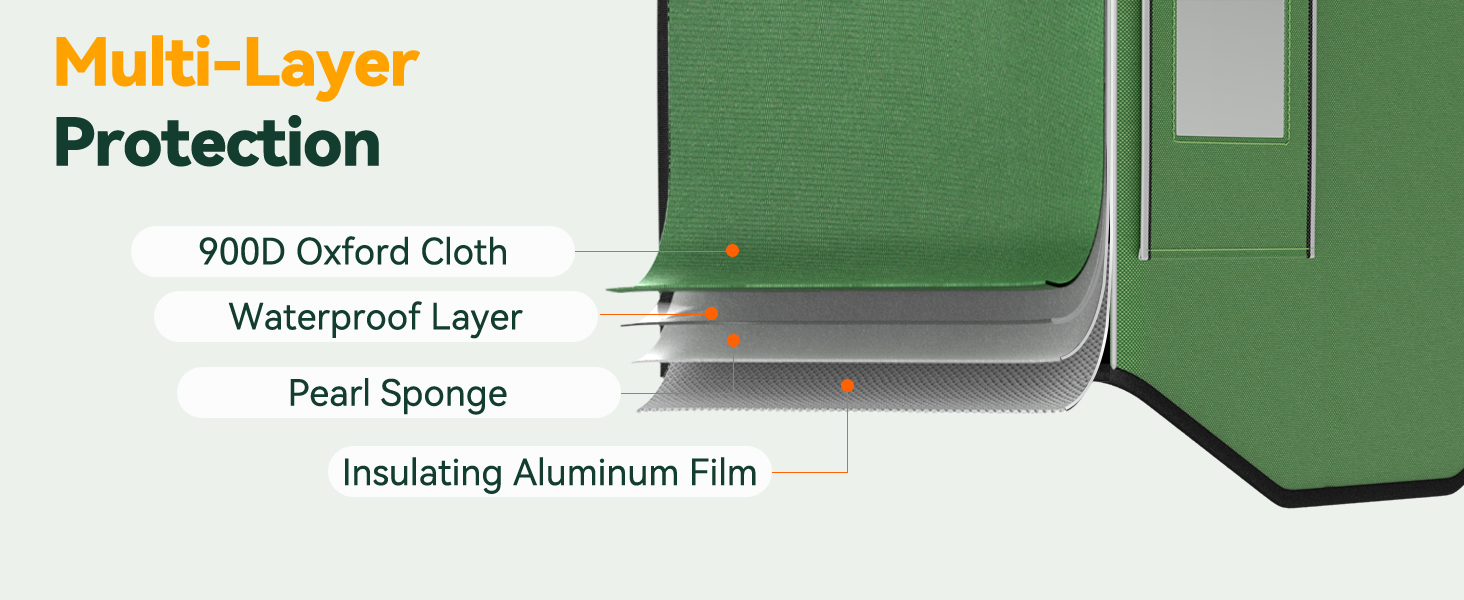
Image: A cat comfortably resting on the heated pad inside the insulated cat house, illustrating the warmth provided by the activated heating element.
Door Functionality
The cat house features escape doors designed with multiple escape routes to prevent cats from getting trapped. The magnetic closure allows for easy entry and exit while maintaining insulation.

Image: A cat entering the cat house through the magnetic door, highlighting the ease of access and the secure closure mechanism.
Placement and Stability
Place the cat house on a level surface. For enhanced stability, especially in windy conditions, use the two additional ground stakes (O) to secure the house at a diagonal angle on soft ground like garden grass. The elevated base protects the house from cold and damp surfaces.
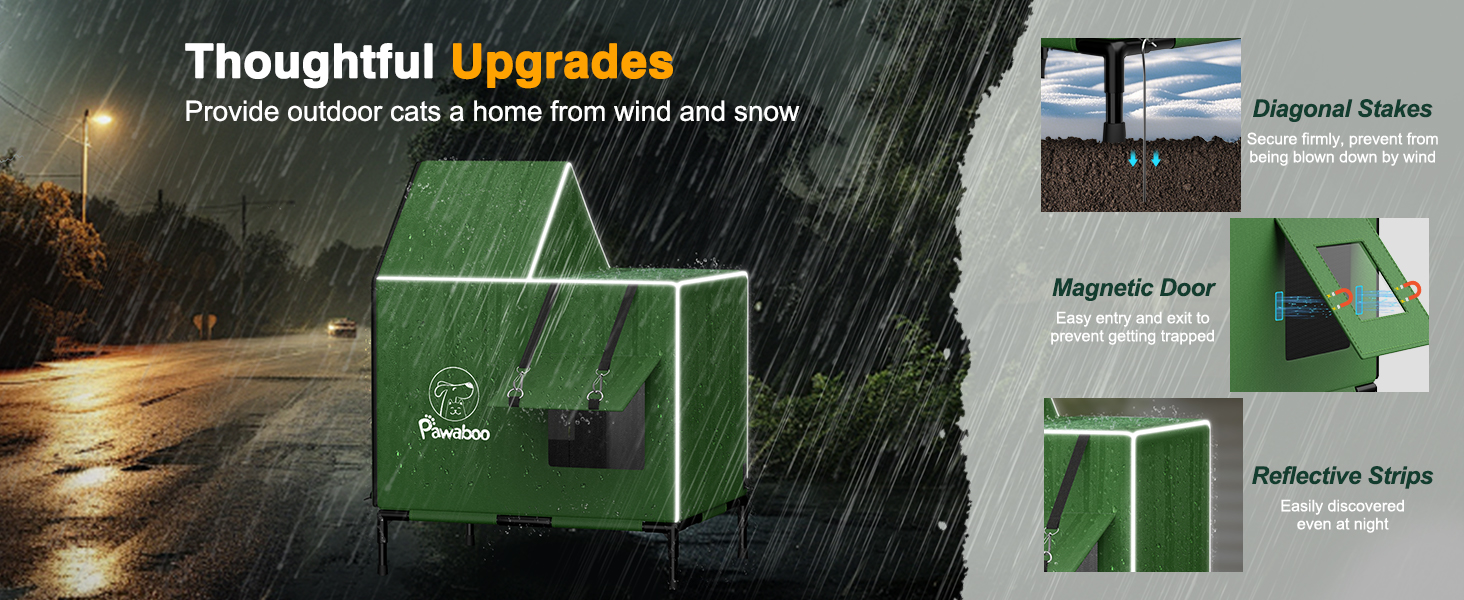
Image: The cat house positioned outdoors, with ground stakes securing it to the grass, demonstrating its stability against environmental factors.
Reflective strips along the edges of the house improve visibility at night, helping to prevent accidental overturning and making it easier to locate.
6. Maintenance
Cleaning the Heating Pad
The heating pad features a removable cover for easy cleaning. Unplug the heating pad before cleaning. Remove the cover and machine wash it according to the care label. The pad itself can be wiped clean with a damp cloth. Ensure the heating pad is completely dry before re-inserting it into the cover and plugging it back in.

Image: A visual demonstrating the removable and machine-washable cover of the heating pad, emphasizing ease of cleaning.
Cleaning the Cat House Exterior
The exterior of the cat house, made from 900D Oxford cloth, can be wiped clean with a damp cloth and mild detergent. Avoid using harsh chemicals or abrasive cleaners that could damage the material.
Seasonal Storage
If storing the cat house for extended periods, especially during warmer months, ensure all components are clean and dry. Disassemble the frame and fold the cloth cover for compact storage in a cool, dry place.
7. Troubleshooting
| Problem | Possible Cause | Solution |
|---|---|---|
| Heating pad not warming up. |
|
|
| Cat is not using the house. |
|
|
| House feels unstable in wind. |
|
|
8. Specifications
| Feature | Detail |
|---|---|
| Brand | Pawaboo |
| Model Number | Maison de Chat |
| Product Dimensions (L+31x24x17.7in) | 61.01 x 45.01 x 78.99 cm (24 x 17.7 x 31 inches) |
| Item Weight | 3.34 Kilograms |
| Material | Fibreglass rod + Aluminium foil Oxford cloth |
| Color | Green |
| Heating Pad Temperature Range | 35°C–45°C (95°F–113°F) |
| Power Cord Length | 1.7 meters / 5.6 feet (Chew Resistant) |
| Assembly Required | Yes |
| UPC | 732133598047 |
9. Warranty & Support
Pawaboo products are designed for quality and reliability. For specific warranty information, please refer to the product packaging or contact Pawaboo customer support directly.
If you encounter any issues or have questions regarding your Pawaboo Heated Outdoor Cat House, please contact our customer service team for assistance.
Pawaboo Customer Support: Please refer to the official Pawaboo website or product packaging for current contact information.