
WSTER WS-1934
WSTER WS-1934 Retro Classic Car Bluetooth Speaker User Manual
Model: WS-1934
1. Product Overview
The WSTER WS-1934 is a retro-styled Bluetooth replica speaker designed to resemble a classic car. It offers wireless HD sound, FM radio, TWS stereo pairing, LED party lights, and a built-in microphone for hands-free calls. Its unique design makes it suitable for both audio playback and decorative purposes.
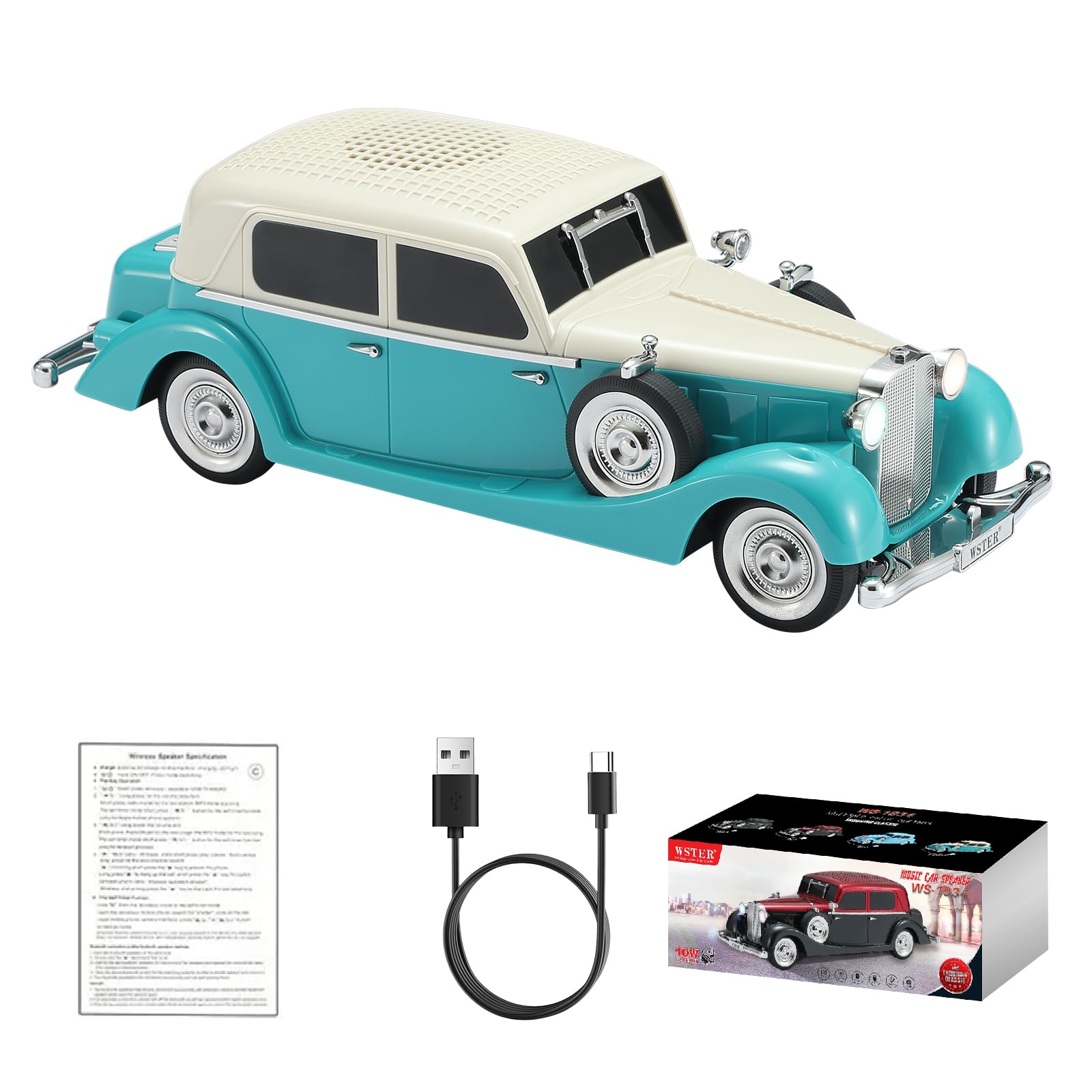
Image: The WSTER WS-1934 speaker, designed as a green and cream classic car.
2. What's in the Box
- WS-1934 Retro Classic Car Bluetooth Speaker
- Power Cable (Type-C)
- Quick Start Guide
3. Controls and Ports
Familiarize yourself with the control buttons and ports located on the rear of the speaker for optimal operation.
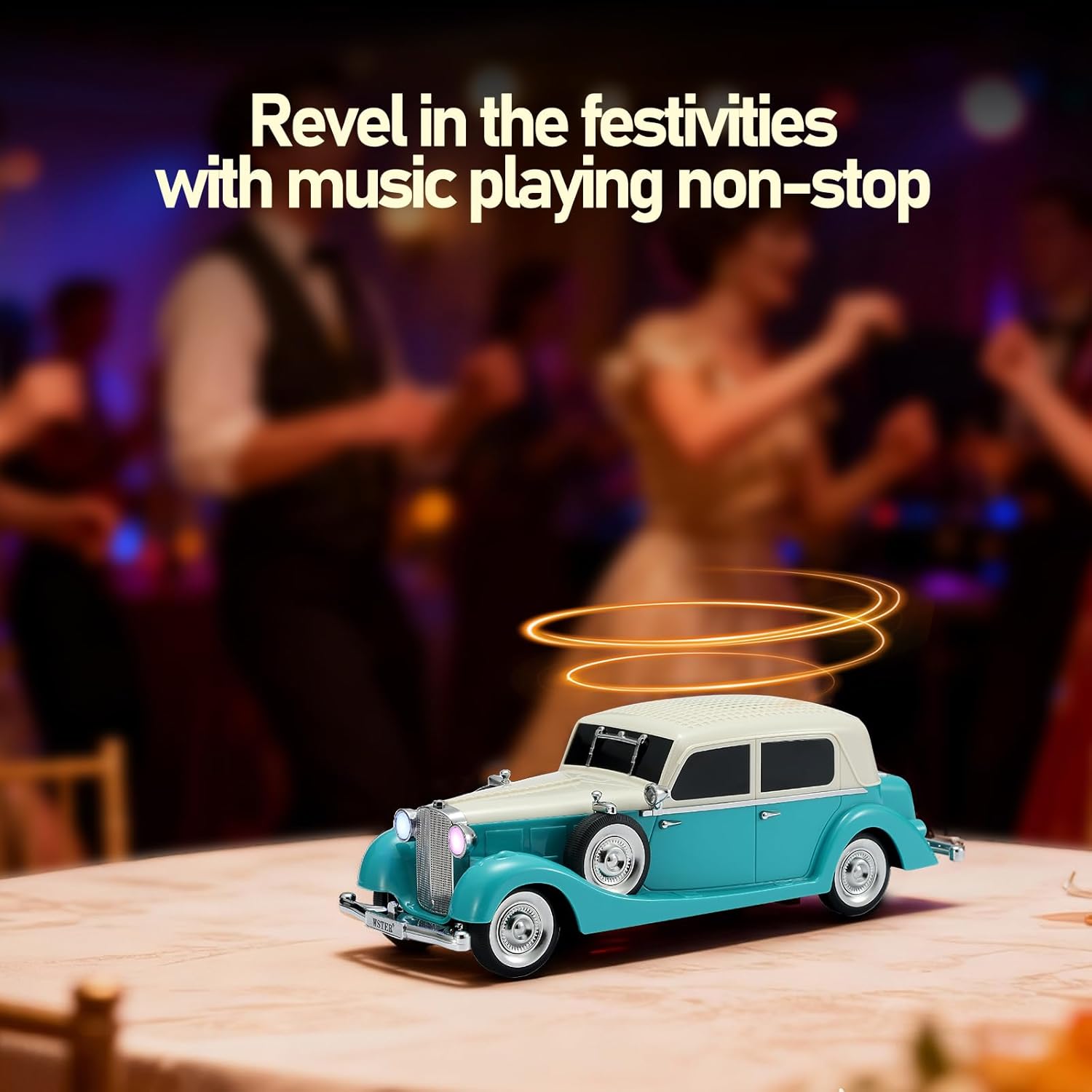
Image: Rear view of the WS-1934 speaker, highlighting the control panel with buttons for mode, play/pause, track navigation, and ports for DC 5V (Type-C), TF card, USB, Mic, and AUX.
Button Functions:
- M/Mode Button: Short press to switch between Bluetooth, FM Radio, USB, TF Card, and AUX modes.
- Play/Pause Button: Short press to play or pause music. Long press to initiate automatic FM channel search (in FM mode) or to answer/end calls (in Bluetooth call mode).
- Previous Track/Volume Down Button: Short press for previous track. Long press to decrease volume.
- Next Track/Volume Up Button: Short press for next track. Long press to increase volume.
Ports:
- DC 5V (Type-C): For charging the speaker.
- TF Card Slot: Insert a TF (MicroSD) card for music playback.
- USB Port: Insert a USB drive for music playback.
- MIC: Microphone input.
- AUX: 3.5mm auxiliary input for wired connection to audio devices.
4. Setup and Initial Use
4.1 Charging the Speaker
- Connect the provided Type-C power cable to the DC 5V port on the rear of the speaker.
- Connect the other end of the cable to a standard USB power adapter (not included) or a computer USB port.
- The LED indicator will show charging status. Charge fully before first use.
4.2 Power On/Off
To power on the speaker, locate the power switch (often integrated with the mode button or a separate switch). The speaker will emit a car engine starting sound and the headlights will illuminate.
To power off, repeat the action or long-press the power button.

Image: The WSTER WS-1934 speaker with its headlights glowing, showcasing its classic car design.
5. Operating Modes
5.1 Bluetooth Mode
- Power on the speaker. It will automatically enter Bluetooth pairing mode, indicated by a voice prompt and flashing LED headlights.
- On your mobile device, enable Bluetooth and search for available devices.
- Select "WS-1934" from the list to pair. A successful connection will be confirmed by a voice prompt.
- You can now play audio from your device through the speaker.
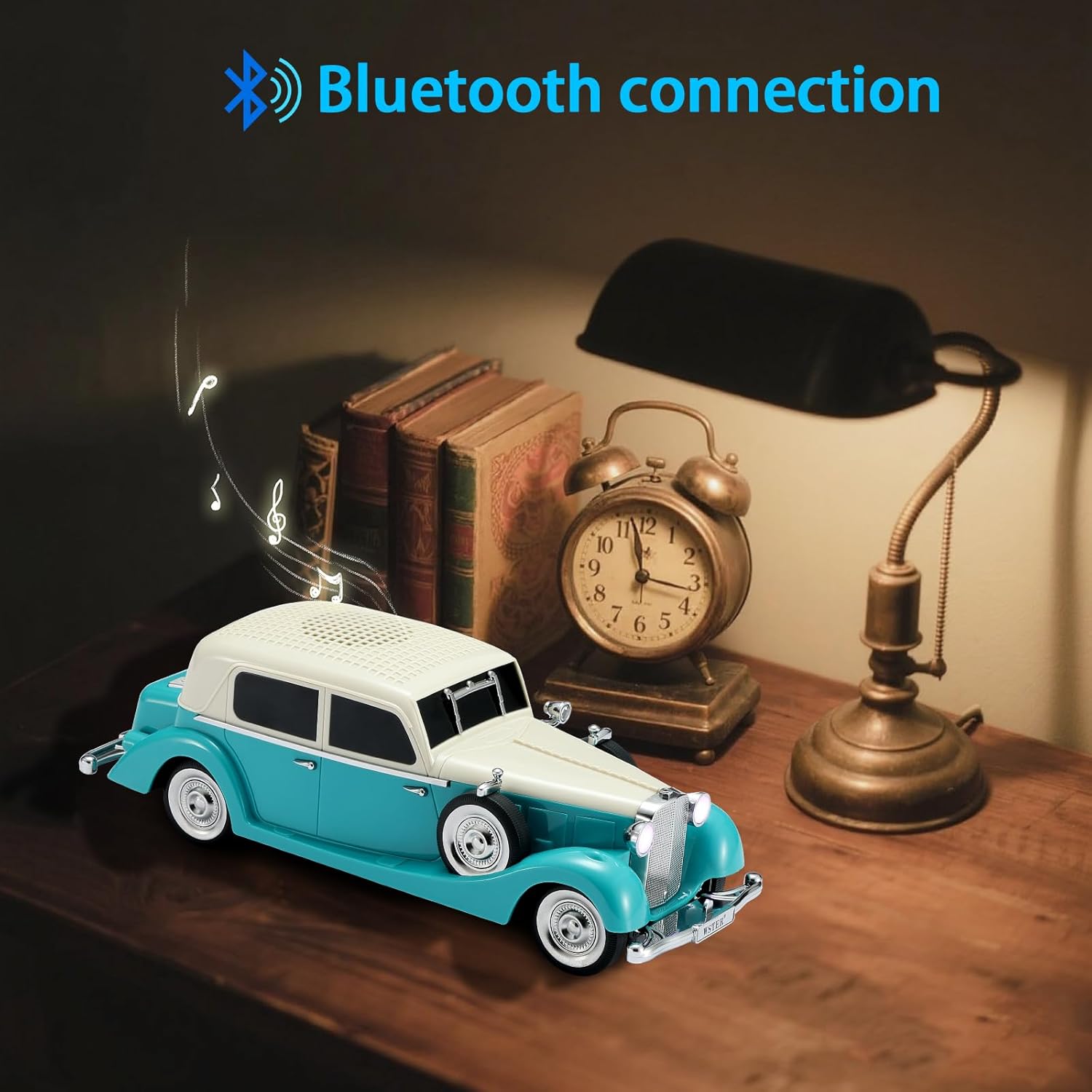
Image: The WS-1934 speaker wirelessly connected to a smartphone via Bluetooth, ready for audio playback.
5.2 FM Radio Mode
- Short press the M/Mode button until you hear the FM radio prompt.
- Long press the Play/Pause button to initiate an automatic search for FM stations. The speaker will scan and save available stations.
- Use the Previous Track/Volume Down and Next Track/Volume Up buttons to navigate between saved stations.
5.3 USB/TF Card Playback
- Insert a USB drive into the USB port or a TF (MicroSD) card into the TF card slot.
- The speaker will automatically switch to the corresponding mode and begin playing audio files. If not, short press the M/Mode button to select the correct mode.
- Use the Previous Track/Volume Down and Next Track/Volume Up buttons to control playback.
5.4 AUX Mode
- Connect an external audio device (e.g., MP3 player, computer) to the AUX port using a 3.5mm audio cable (not included).
- Short press the M/Mode button until you hear the AUX mode prompt.
- Control audio playback from your connected device.
5.5 TWS (True Wireless Stereo) Pairing
To achieve a stereo sound experience, you can pair two WS-1934 speakers together.
- Ensure both WS-1934 speakers are powered on and in Bluetooth mode, but not yet connected to any device.
- On one of the speakers (this will be the primary speaker), double-click the Play/Pause button. You will hear a
Related documentsWS-1934

Ask a question about this manual
Ask about setup, troubleshooting, compatibility, parts, safety, or missing instructions. Manuals+ will review the question and use this page’s manual context to help answer it.