1. Introduction
This manual provides detailed instructions for the setup, operation, and maintenance of your Dierya M1 Wireless Gaming Mouse. Please read this manual thoroughly before using the product to ensure proper functionality and to maximize your user experience.

Figure 1: Dierya M1 Wireless Gaming Mouse and 2.4G USB Receiver.
2. Product Features
- 24,000 DPI Optical Sensor: Adjustable DPI range from 200 to 24,000, with 6 preset levels (400-6400 DPI). Features a 125-1000 Hz polling rate, 300 IPS tracking speed, and 35G acceleration.
- Tri-Mode Connectivity: Supports ultra-fast 2.4 GHz wireless (1000 Hz polling rate), energy-efficient Bluetooth 5.2 (125 Hz polling rate), and stable USB-C wired connection (1000 Hz polling rate).
- Extended Battery Life: Equipped with a 1000 mAh battery, providing up to 180 hours of use in ECO mode or 48 hours with RGB lighting enabled. Fully recharges in approximately 1 hour via USB-C. Includes an automatic power-saving mode after 1-5 minutes of inactivity.
- Lightweight & Ergonomic Design: Weighs 90g with a breathable honeycomb shell. Symmetrical design (125x63x41 mm) suitable for various grip styles.
- Durable Components: Features Huano switches rated for 20 million clicks and 100% PTFE feet for smooth gliding.
- Programmable Buttons: Six customizable buttons for macros and reassignments.
- Dynamic RGB Lighting: 13 integrated dynamic RGB lighting effects with 16.8 million customizable colors.
- System Compatibility: Compatible with Windows, macOS, Linux, and Chrome OS.
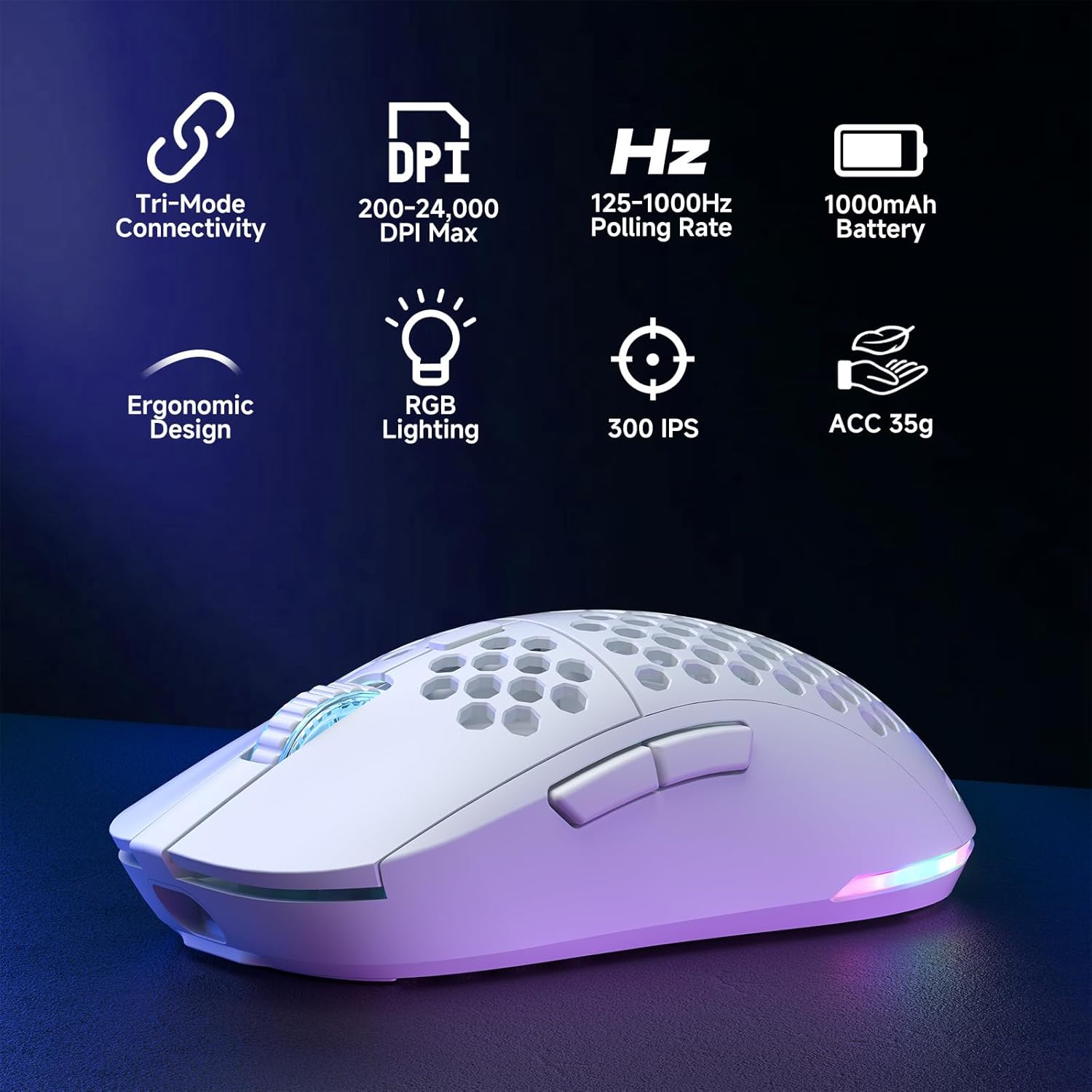
Figure 2: Key features of the Dierya M1 Wireless Gaming Mouse.
3. Product Diagram and Components
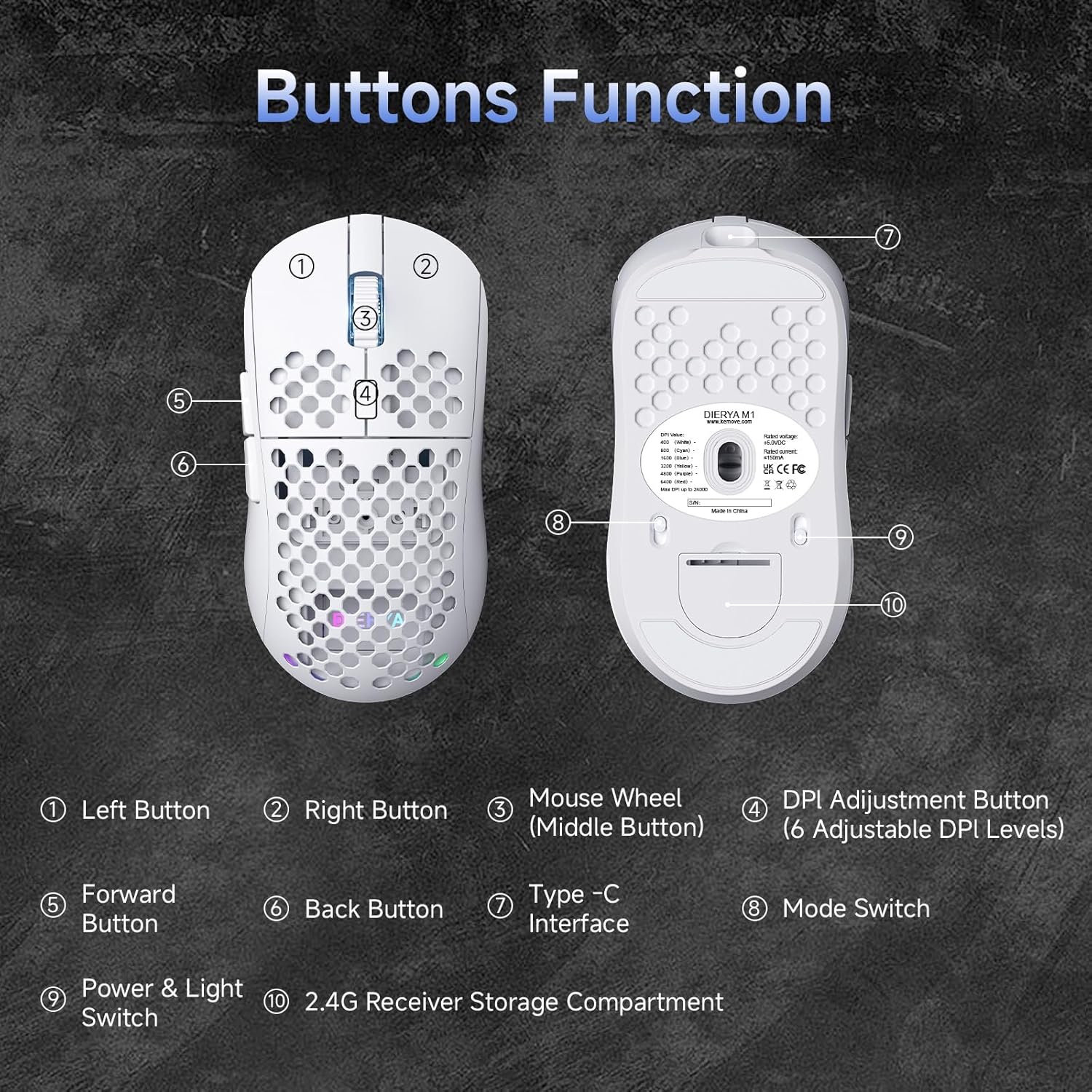
Figure 3: Top and bottom view of the Dierya M1 mouse with labeled components.
- Left Button
- Right Button
- Mouse Wheel (Middle Button)
- DPI Adjustment Button (6 Adjustable DPI Levels)
- Forward Button
- Back Button
- Type-C Interface
- Mode Switch (2.4G / Bluetooth / Wired)
- Power & Light Switch
- 2.4G Receiver Storage Compartment
4. Setup and Connection
The Dierya M1 mouse offers three connection modes: 2.4 GHz Wireless, Bluetooth 5.2, and USB-C Wired.

Figure 4: Overview of the three connection modes.
4.1. 2.4 GHz Wireless Connection
- Locate the 2.4G USB receiver in the storage compartment on the bottom of the mouse.
- Plug the USB receiver into an available USB port on your computer.
- Set the mode switch on the bottom of the mouse to the '2.4G' position.
- The mouse should connect automatically.
4.2. Bluetooth 5.2 Connection
- Set the mode switch on the bottom of the mouse to the 'Bluetooth' position.
- On your computer or device, open Bluetooth settings.
- Search for new devices and select 'Dierya M1' from the list.
- Follow any on-screen prompts to complete the pairing process.
4.3. USB-C Wired Connection
- Connect the provided USB-C cable to the Type-C interface on the front of the mouse.
- Connect the other end of the USB-C cable to an available USB port on your computer.
- Set the mode switch on the bottom of the mouse to the 'Wired' position.
- The mouse will function as a wired mouse and charge simultaneously.
5. Operating Instructions
5.1. DPI Adjustment
The DPI Adjustment Button (4) on the top of the mouse allows you to cycle through preset DPI levels. Each DPI level is indicated by a specific color on the scroll wheel LED for a few seconds after adjustment.
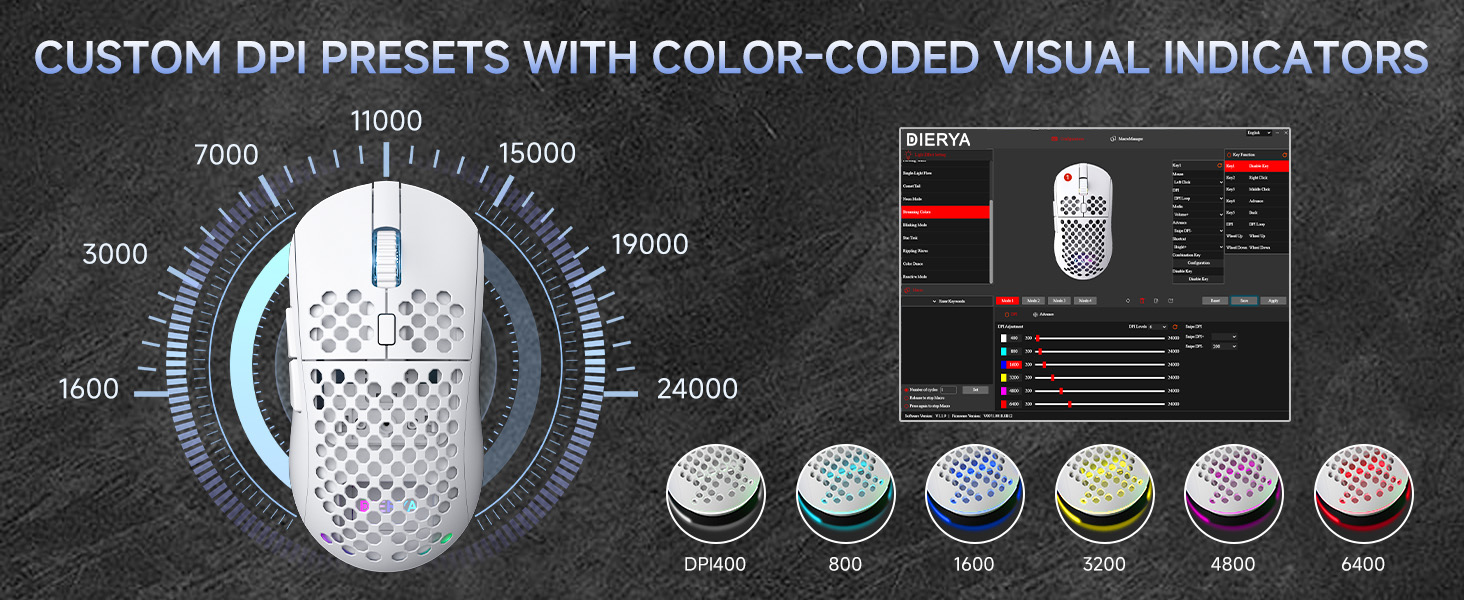
Figure 5: DPI levels and their corresponding scroll wheel LED colors.
- Press the DPI button to switch between 6 preset DPI levels.
- Default presets: 400 DPI (Red), 800 DPI (Green), 1600 DPI (Blue), 3200 DPI (Yellow), 4800 DPI (Purple), 6400 DPI (Cyan).
- For custom DPI settings and a wider range (200-24,000 DPI), use the M1 Driver Software (Windows only).
5.2. RGB Lighting Control
The mouse features 13 dynamic RGB lighting effects. You can control the lighting directly on the mouse or customize it further with the software.
- To cycle through RGB effects: Press and hold the DPI Adjustment Button (4) for 3 seconds.
- To turn RGB lighting On/Off: Use the Power & Light Switch (9) on the bottom of the mouse.
- For advanced customization of colors and effects, use the M1 Driver Software (Windows only).
5.3. Programmable Buttons
The Dierya M1 has 6 programmable buttons (Left, Right, Middle, DPI, Forward, Back). These buttons can be customized for various functions, macros, or key reassignments using the M1 Driver Software.
6. Charging and Battery Management
The Dierya M1 mouse is equipped with a 1000 mAh rechargeable battery.

Figure 6: Charging the Dierya M1 mouse and battery life indicators.
- Charging: Connect the mouse to your computer using the provided USB-C cable. The mouse will charge while in wired mode or when connected to a power source. A full charge takes approximately 1 hour.
- Battery Life: Expect up to 180 hours of use in ECO mode (RGB off) and up to 48 hours with RGB lighting enabled.
- Power Saving: The mouse automatically enters a power-saving sleep mode after 1-5 minutes of inactivity. This duration can be adjusted via the M1 Driver Software.
- Low Battery Indicator: The RGB lighting or a specific LED will indicate when the battery is low. Charge the mouse promptly to avoid interruption.
7. M1 Driver Software (Windows Only)
The M1 Driver Software allows for advanced customization of your mouse settings. This software is currently available for Windows operating systems only.

Figure 7: M1 Driver Software interface.
7.1. Software Features
- Key Assignment: Customize the function of all 6 buttons.
- Macro Editor: Create and assign complex macros.
- DPI Adjustment: Fine-tune DPI settings from 200 to 24,000 in increments.
- Polling Rate: Adjust the polling rate (125-1000 Hz).
- RGB Customization: Personalize lighting effects, colors, and brightness.
- Sleep Time: Configure the automatic power-saving sleep mode duration.
- Profile Management: Save and load different profiles for various applications or games.
7.2. Installation
Download the latest M1 Driver Software from the official Dierya website. Follow the on-screen instructions to install the software on your Windows computer.
8. Maintenance
- Cleaning: Use a soft, dry cloth to clean the mouse. For stubborn dirt, a slightly damp cloth can be used, ensuring no liquid enters the mouse.
- Storage: Store the mouse in a cool, dry place away from direct sunlight and extreme temperatures.
- Battery Care: Avoid fully discharging the battery frequently. For long-term storage, charge the mouse to about 50% and store it in a cool, dry place.
9. Troubleshooting
- Mouse not responding:
- Ensure the mouse is powered on.
- Check the connection mode switch (2.4G, Bluetooth, Wired) is set correctly.
- For 2.4G, ensure the USB receiver is securely plugged in.
- For Bluetooth, re-pair the device.
- Try connecting via USB-C cable to check if it works in wired mode.
- Charge the mouse; the battery might be depleted.
- Lag or intermittent connection:
- Ensure the mouse is within range of the receiver/device (for wireless connections).
- Reduce interference from other wireless devices.
- Ensure the battery is sufficiently charged.
- Update mouse drivers if available (Windows only).
- RGB lighting not working:
- Check the Power & Light Switch (9) on the bottom of the mouse.
- Ensure the mouse is not in ECO mode or a low-power state.
- If using the software, verify RGB settings.
- DPI adjustment not working:
- Ensure you are pressing the correct DPI Adjustment Button (4).
- If using custom settings, check the M1 Driver Software.
10. Specifications
| Feature | Specification |
|---|---|
| Brand | Dierya |
| Model Name | M1 |
| Color | White |
| Connectivity Technology | 2.4GHz Wireless, Bluetooth 5.2, USB-C Wired |
| Sensor Technology | Optical |
| DPI Range | 200 - 24,000 DPI |
| Polling Rate | 125-1000 Hz |
| Tracking Speed | 300 IPS |
| Acceleration | 35G |
| Number of Buttons | 6 (Programmable) |
| Switches | Huano (20 Million Clicks) |
| Feet Material | 100% PTFE |
| Battery Capacity | 1000 mAh (Lithium-ion) |
| Battery Life (ECO Mode) | Up to 180 hours |
| Battery Life (RGB Mode) | Up to 48 hours |
| Charging Time | Approx. 1 hour |
| Weight | 90 Grams |
| Dimensions | 125 x 63 x 41 mm |
| Operating System Compatibility | Windows, macOS, Linux, Chrome OS |
11. Warranty and Support
The Dierya M1 Wireless Gaming Mouse comes with a 1-year manufacturer warranty. This warranty covers defects in materials and workmanship under normal use.
For warranty claims, technical support, or further inquiries, please contact Dierya customer service through the official website or your point of purchase. Please have your product model number (M1) and proof of purchase ready when contacting support.


