1. Introduction
Thank you for choosing the Generic 20-180X70 High Power Binoculars. This manual provides detailed instructions for the proper setup, operation, and maintenance of your binoculars. Please read this manual thoroughly before using the product to ensure optimal performance and longevity.
These binoculars are designed for a wide range of outdoor activities, including stargazing, bird watching, hiking, travel, and viewing sporting events. They feature high magnification, a durable construction, and user-friendly adjustments for a clear viewing experience.
2. Product Features
- Adjustable Eye Distance and Focusing Wheel: Easy and quick adjustment for focal length and interpupillary distance, suitable for both adults and children.
- High Resolution Optics: Features 20-180x magnification (real extension 10-60x) and a 70mm objective lens diameter for bright, magnified, and clear optical performance.
- Non-slip and Anti-vibration Design: Constructed with natural rubber material for a secure grip and enhanced durability.
- Fully Coated Lenses: Lenses are fully coated for improved brightness and light transmission, adapting to various lighting conditions (not for total darkness).
- Waterproof Design: Built to withstand different climates and outdoor conditions.
- Portable and Compact: Foldable design allows for easy storage and transport in a bag or pocket.
- BAK4 Prism: High-quality BAK4 prism for bright and clear images, correcting inverted views.
3. Components and Parts Identification
Familiarize yourself with the main components of your binoculars:

Image 3.1: Binocular Components. This image displays the key parts of the binoculars, including the diopter adjustment, eyepieces, main body, tripod interface, natural rubber grip, and objective lenses.
- Eyepieces: Where you look through to view the image.
- Diopter Adjustment: Located on one eyepiece, used to compensate for differences in vision between your eyes.
- Focusing Wheel: Central wheel used to adjust the focus for both eyes simultaneously.
- Objective Lenses: The large lenses at the front of the binoculars that gather light.
- Tripod Interface: A threaded socket, usually under a cap, for mounting the binoculars on a tripod.
- Rubber Armor: The protective rubber coating providing grip and shock absorption.
4. Setup and Initial Use
- Unpacking: Carefully remove the binoculars and all accessories from the packaging. Check for any damage.
- Attach Neck Strap: Securely attach the provided neck strap to the binoculars' strap lugs.
- Adjust Interpupillary Distance: Hold the binoculars up to your eyes. Adjust the distance between the two barrels by moving them closer or further apart until you see a single, clear circular field of view.
- Diopter Adjustment:
- Close your right eye. Look through the left eyepiece and rotate the central focusing wheel until the image is sharp.
- Close your left eye. Look through the right eyepiece (with the diopter adjustment ring) and rotate the diopter ring until the image is sharp. Do not use the central focusing wheel for this step.
- Now, with both eyes open, the image should be clear. For subsequent use, you will only need to adjust the central focusing wheel.
5. Operating Instructions
Once the initial setup is complete, using your binoculars is straightforward:
- Focusing:
- Point the binoculars at the object you wish to observe.
- Rotate the central focusing wheel until the image appears sharp and clear.
- Zoom Function: These binoculars feature a variable magnification. To adjust the zoom, locate the zoom lever or ring (often near the right eyepiece) and rotate it to increase or decrease magnification. Re-focus after adjusting the zoom.

Image 5.1: High Zoom Function. This image illustrates the high zoom capability of the binoculars, showing how distant objects can be magnified for detailed viewing.
- Using with a Tripod: For extended viewing periods or at high magnifications, using a tripod is recommended for stability. Remove the cap from the tripod interface (usually at the front hinge) and screw the binoculars onto a compatible tripod adapter.
Common Applications:

Image 5.2: Outdoor/Travel Use. Binoculars are ideal for enhancing travel experiences by providing detailed views of distant landscapes, wildlife, and historical sites.

Image 5.3: Stargazing. These binoculars can be used for observing celestial objects, allowing users to view stars, galaxies, and star clusters in the night sky.
6. Care and Maintenance
Proper care will ensure the longevity and performance of your binoculars:
- Cleaning Lenses:
- Use the provided lens cleaning cloth or a soft, lint-free cloth.
- Gently brush off any dust or debris from the lens surfaces.
- For stubborn smudges, use a small amount of lens cleaning fluid applied to the cloth, not directly to the lens.
- Avoid touching the lens surfaces with your fingers.
- Cleaning Body: Wipe the body of the binoculars with a soft, damp cloth. Avoid harsh chemicals or abrasive materials.
- Storage: Store the binoculars in a cool, dry place, away from direct sunlight and extreme temperatures. Use the protective case when not in use to prevent dust and scratches.
- Water Resistance: While waterproof, avoid submerging the binoculars in water. If they get wet, wipe them dry immediately.
7. Troubleshooting
If you encounter issues with your binoculars, refer to the following common problems and solutions:
| Problem | Possible Cause | Solution |
|---|---|---|
| Blurred image | Incorrect focus or diopter setting. | Adjust the central focusing wheel. Re-adjust the diopter if necessary (refer to Section 4). |
| Double image or two circles | Interpupillary distance not set correctly. | Adjust the distance between the barrels until a single circular field of view is seen (refer to Section 4). |
| Dark or dim image | Low light conditions, dirty lenses, or lens caps still on. | Ensure lens caps are removed. Clean lenses if dirty (refer to Section 6). Note that binoculars are not designed for total darkness. |
| Difficulty adjusting zoom | Mechanism might be stiff or obstructed. | Apply gentle, even pressure. Do not force. If persistent, contact customer support. |
8. Product Specifications
| Feature | Detail |
|---|---|
| Model | 20-180x70 |
| Magnification (Extension) | 20-180X (Real extension: 10-60x) |
| Objective Lens Diameter | 70 mm |
| Materials | Metallic lens barrel body, non-slip rubber outer coating |
| Lens Coating | Green film, high contrast, three-dimensional mesh square broadband |
| Prism Type | BAK4 |
| Focus System | Central focus |
| Field of View (FOV) | 63° (78FT/1000YDS) |
| Exit Pupil Diameter | 4 mm |
| Eye Relief (Pupillary exit distance) | 18 mm |
| Closest Focusing Distance | 15 m |
| Color | Black |
| Product Size | 37.5cm (height), 23.5cm (width) |
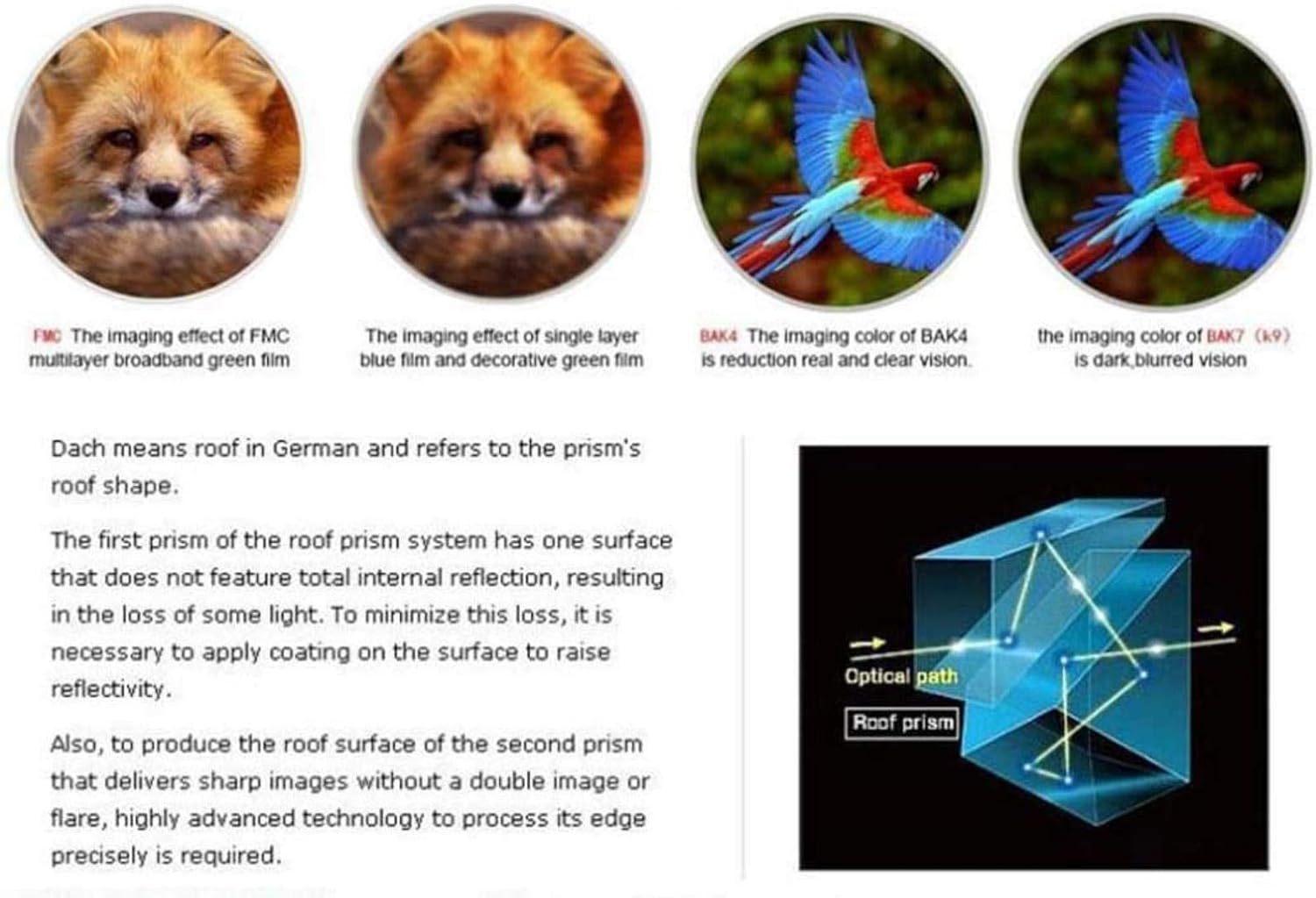
Image 8.1: Optical Path and Lens Coatings. This image shows the internal optical path of a roof prism and compares the visual quality achieved with different lens coatings, highlighting the superior clarity of BAK4 prisms and FMC multilayer broadband green film.

Image 8.2: BAK4 Prism. This image displays a BAK4 prism, which is known for its high-quality optical properties, contributing to bright and clear images in binoculars.
9. Warranty and Customer Support
For warranty information or if you require further assistance, please refer to the retailer's return policy or contact the seller directly through the platform where the purchase was made. Keep your purchase receipt as proof of purchase.
For general inquiries or technical support, please consult the product listing page or the seller's contact information.


