
Introduction
This manual provides detailed instructions for the safe and efficient operation, setup, and maintenance of your Saker Fuel Transfer Pump, Model GJ90916-E037-1. This battery-powered pump is designed for transferring gasoline, diesel, light oils, kerosene, and non-potable water. Please read this manual thoroughly before use and retain it for future reference.
Safety Information
WARNING: Failure to follow these safety instructions may result in fire, explosion, electric shock, or serious injury.
- Always operate the pump in a well-ventilated area.
- Do not use the pump near open flames, sparks, or other ignition sources.
- Ensure all connections are secure before operating to prevent leaks.
- Do not pump corrosive liquids, acids, or highly flammable solvents other than those specified.
- Keep children and unauthorized persons away from the operating area.
- Wear appropriate personal protective equipment, such as gloves and eye protection.
- Do not immerse the pump motor unit in liquid.
- Remove batteries when the pump is not in use or during maintenance.
- Dispose of used batteries responsibly.
Product Components
Your Saker Fuel Transfer Pump package includes the following items:
- Portable Fuel Pump unit with integrated hose and nozzle
- 3 Fuel Can Adapters (various sizes)
- User Manual

Image: The Saker Fuel Transfer Pump main unit, showing the red and white pump body, the flexible hose, and the dispensing nozzle.

Image: Three black threaded adapters of different sizes, designed to fit various fuel can openings.
Setup
- Install Batteries:
Open the battery compartment on the pump unit. Insert 4 AA batteries, ensuring correct polarity. For emergency situations, the pump can operate with 2 AA batteries at a slower speed. (Batteries not included).

Image: A person inserting AA batteries into the designated compartment of the Saker Fuel Transfer Pump.
- Attach Adapter (if needed):
Select the appropriate adapter for your fuel can's opening. Thread the adapter onto the fuel can. Then, securely attach the pump unit to the adapter on the fuel can.
- Position Hoses:
Ensure the intake hose is fully submerged in the liquid within the source container. Position the dispensing nozzle securely into the receiving container's opening.
Operating Instructions
- Initiate Transfer:
Press the "ON" button on the pump unit. The pump will begin transferring liquid at a rate of up to 12 liters (3.2 gallons) per minute.
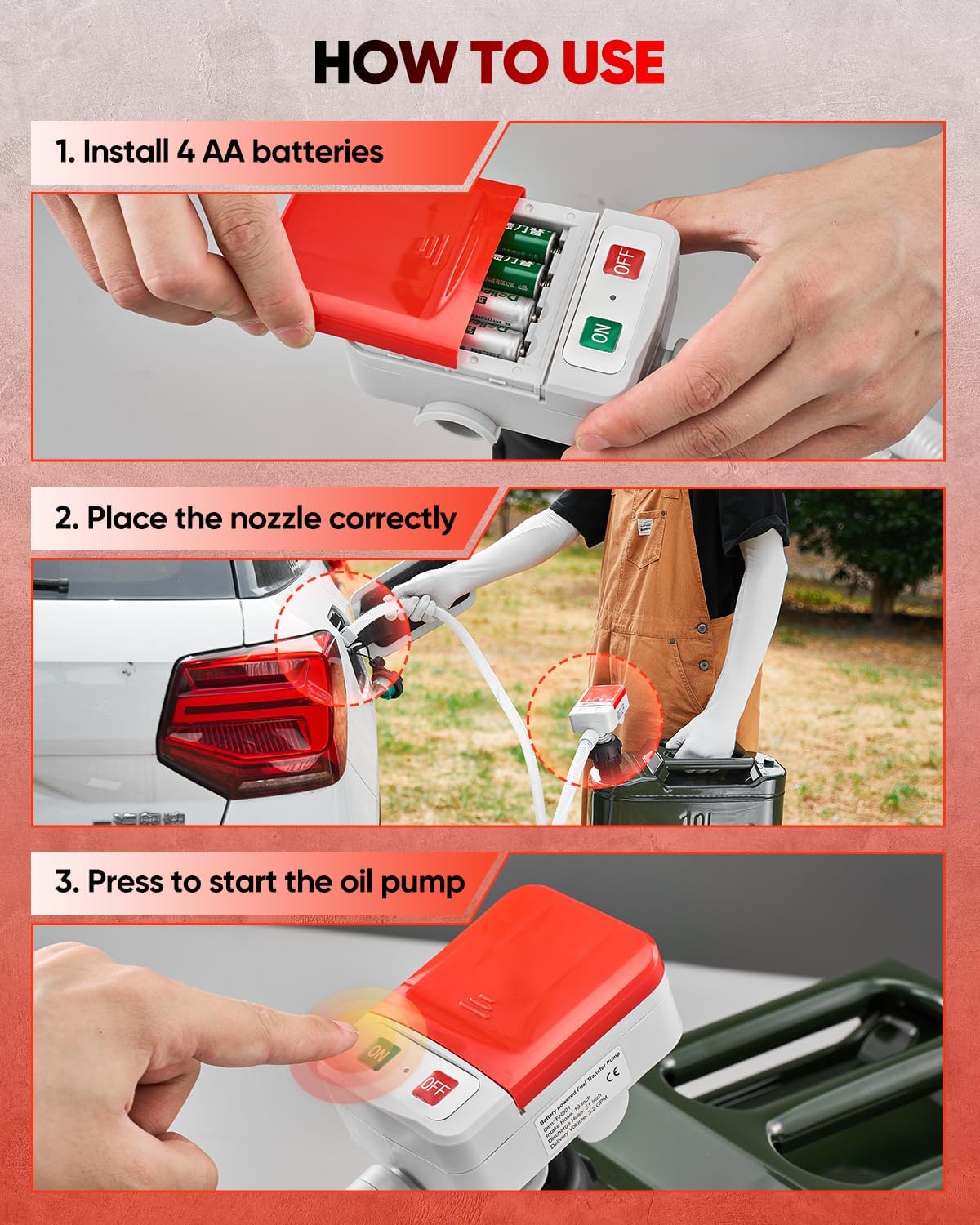
Image: A visual guide demonstrating how to install batteries, correctly place the nozzle, and activate the pump by pressing the 'ON' switch.
- Auto-Stop Feature:
The pump is equipped with an advanced sensor that automatically stops the flow when the receiving container is full, preventing spills and overflows. The nozzle also features a rubber protective cover.

Image: Detailed view of the pump's auto-stop sensor at the end of the hose and the rubber protective cover for the nozzle.
- Stop Transfer:
To manually stop the transfer at any time, press the "OFF" button.
- After Use:
Once the transfer is complete, remove the nozzle from the receiving container and allow any residual liquid to drain back into the source container or a safe collection point. Store the pump in a clean, dry place.
Demonstration Video
Video: A demonstration of the Saker Portable Fuel Pump in action, showing its ease of use and the fuel transfer process.
Maintenance
- Cleaning: After each use, especially when transferring different types of liquids, clean the hoses and nozzle by running a small amount of appropriate cleaning fluid (e.g., water for non-potable water, or a small amount of the next intended liquid for fuels) through the pump.
- Storage: Store the pump in a cool, dry place away from direct sunlight and extreme temperatures. Ensure all liquid is drained from the pump and hoses before storage.
- Battery Replacement: Replace batteries when the pump's performance decreases. Always use new, high-quality AA batteries.
- Inspection: Periodically inspect the hoses, connections, and pump unit for any signs of wear, damage, or leaks. Replace any damaged components immediately.
Troubleshooting
| Problem | Possible Cause | Solution |
|---|---|---|
| Pump does not turn on. | Dead or incorrectly installed batteries. | Check battery polarity; replace with new AA batteries. |
| Slow flow rate. | Low battery power; clogged intake filter; kinked hose. | Replace batteries; clean intake filter; straighten hose. |
| Pump stops unexpectedly. | Auto-stop sensor activated (receiving container full); low battery. | Check receiving container level; replace batteries. |
| Leaking from connections. | Loose connections; damaged O-rings or seals. | Tighten all connections; inspect and replace damaged seals. |
Specifications
- Brand: Saker
- Model: GJ90916-E037-1
- Operation Mode: Automatic
- Power Source: 4 AA Batteries (not included)
- Flow Rate: Up to 12 Liters per minute (3.2 Gallons per minute)
- Hose Length: 51 Inches
- Material: ABS, Corrosion-Resistant Materials
- Item Weight: 0.73 Kilograms (1.6 lbs)
- Compatible Liquids: Gasoline, Diesel, Light Oils, Kerosene, Non-potable Water
- Features: Auto-Stop Leak Protection, Universal Fuel Can Compatibility (with 3 adapters)
Warranty and Support
The Saker Fuel Transfer Pump (Model GJ90916-E037-1) comes with a 2-Year Manufacturer Warranty.
For warranty claims, technical support, or any questions regarding your product, please contact Saker customer service through the retailer where the product was purchased or visit the official Saker website for contact information.
Please have your model number (GJ90916-E037-1) and proof of purchase available when contacting support.