
1. Introduction
The Redodo 12V/24V 150A Adjustable Battery Dual Isolator (VSR) is designed to manage two battery systems, ensuring your starting battery remains charged while allowing auxiliary batteries to power accessories. This device automatically connects and disconnects batteries based on voltage thresholds, providing efficient power distribution and protection.
Key features include:
- Adjustable voltage settings for 12V or 24V systems, compatible with lithium (LiFePO4) and lead-acid batteries.
- Built-in LCD display for real-time voltage and current monitoring.
- Emergency reverse charge switch for starting the engine from the house battery.
- Multi-layered safeguards: over-voltage, over-temperature, and reverse-current protection.
- Compact design for easy installation in various vehicles and marine systems.
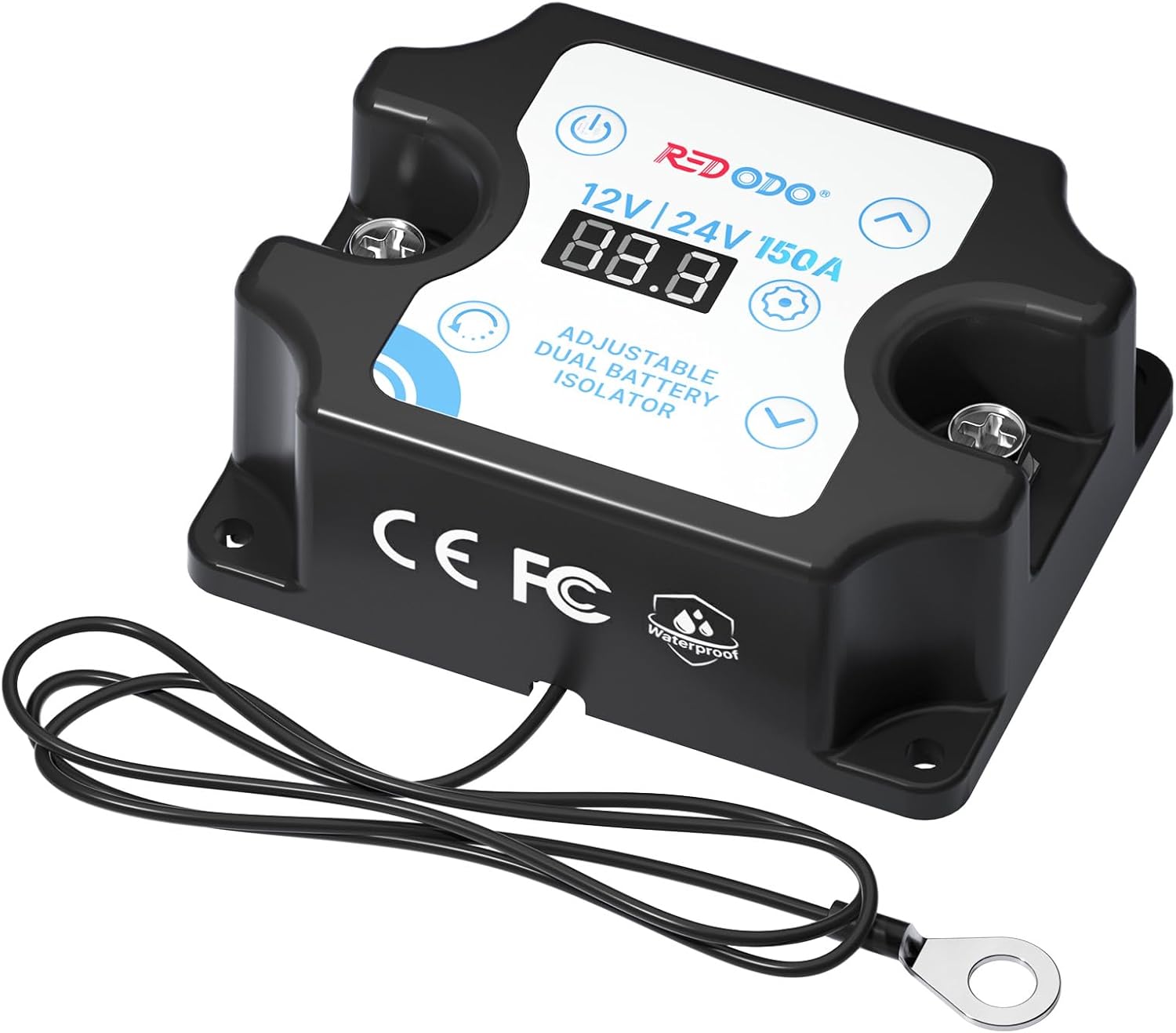
Image 1: The Redodo 12V/24V 150A Adjustable Battery Dual Isolator. This image shows the compact black unit with an LCD display and connection terminals.
2. What's in the Box
Upon unpacking, please verify that all components are present:
- 1x Redodo 12V/24V 150A Adjustable Battery Dual Isolator
- 1x User Manual
- 4x Mounting Screws
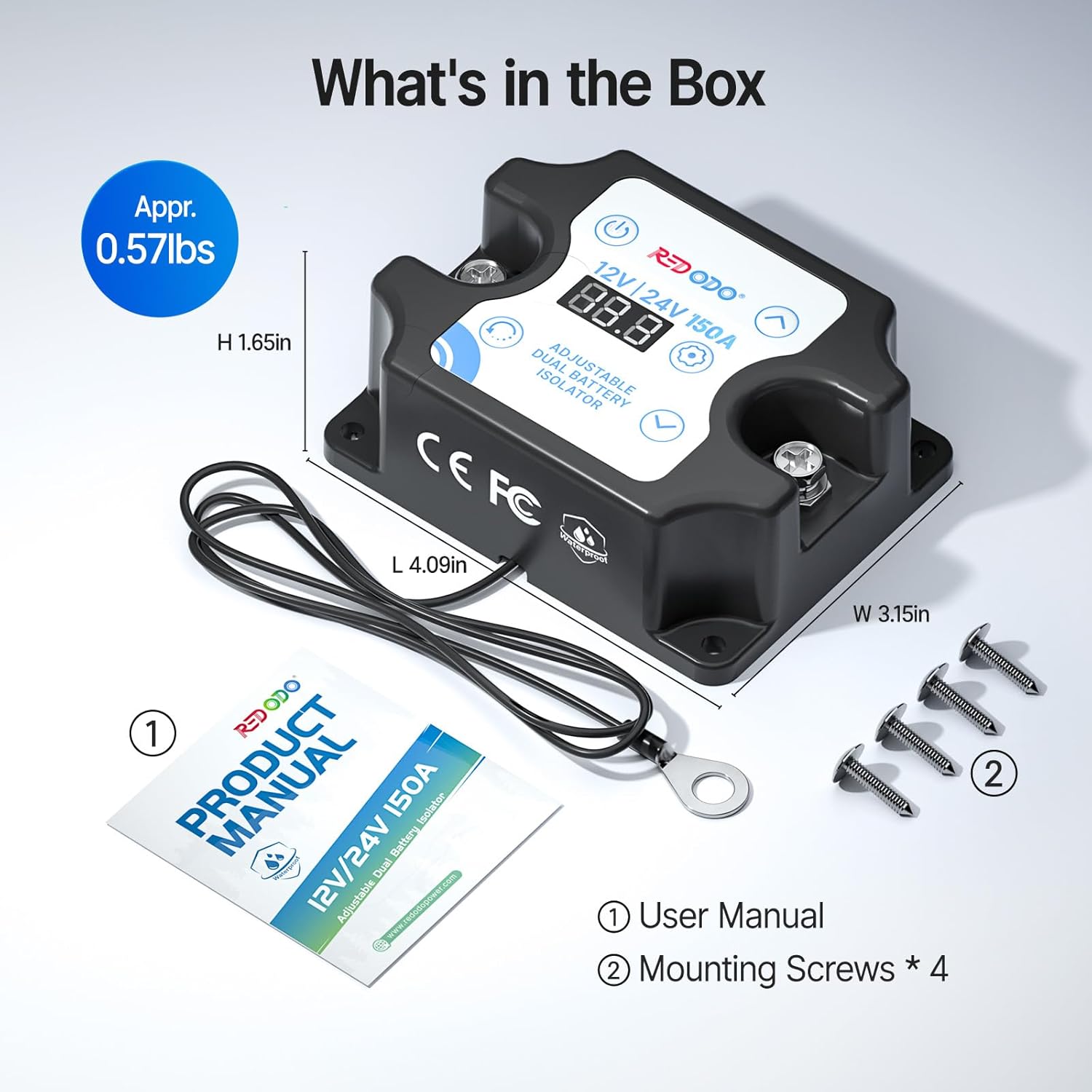
Image 2: Contents of the product box, including the battery isolator, user manual, and mounting screws.
3. Product Overview and Controls
Familiarize yourself with the device's components and controls:

Image 3: Labeled diagram of the Redodo Battery Isolator showing the LCD display, power button, adjustment buttons, set/enter button, and reverse charge button.
- Power Button: Turns the unit on or off.
- Up Arrow Button: Used to navigate previous choices or increase values during setting adjustments.
- Down Arrow Button: Used to navigate next choices or decrease values during setting adjustments.
- Set/Enter Button: Confirms selections or enters setting modes.
- Reverse Charge Button: Activates the emergency reverse charge function. When pressed, the house battery will charge the starting battery for 60 seconds if its voltage is higher, enabling emergency engine start.
- LCD Display: Shows real-time voltage and current. When connected, it alternates between voltage and current every second. When disconnected, short press the Set/Enter button to cycle through the voltages.
4. Installation
Proper installation is crucial for the safe and efficient operation of your dual battery isolator. This device is suitable for RVs, marine vessels, trucks, and off-road vehicles.
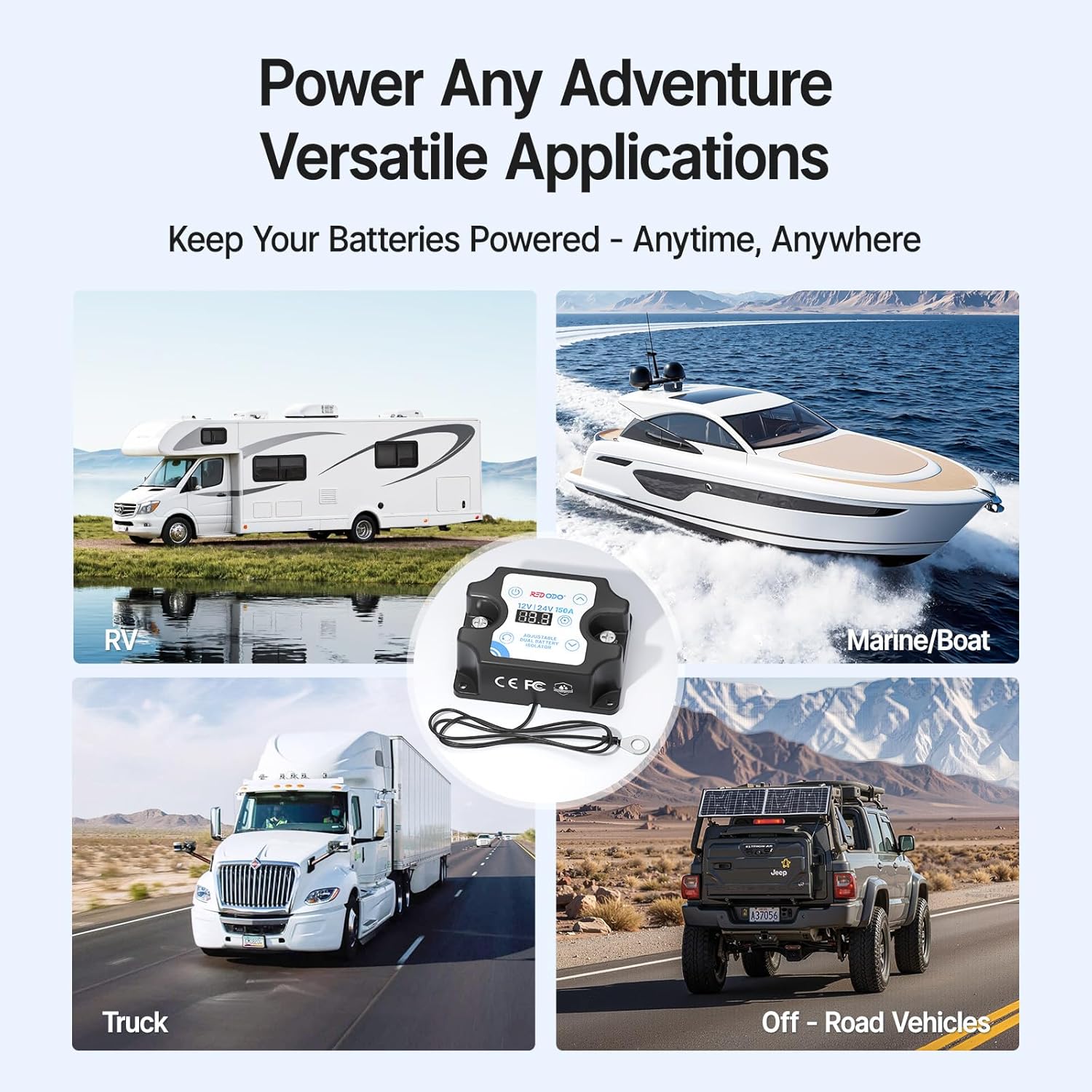
Image 4: Examples of versatile applications for the Redodo Battery Isolator, including RVs, marine boats, trucks, and off-road vehicles.
4.1. Wiring Diagram
The following diagram illustrates a typical wiring setup for the Redodo Dual Battery Isolator:

Image 5: A detailed wiring diagram showing the connection of the alternator, starting battery, adjustable dual battery isolator, house battery, fuse, DC load, and ground.
- Connect the alternator to the starting battery.
- Connect the starting battery to one terminal of the Adjustable Dual Battery Isolator.
- Connect the house battery to the other terminal of the Adjustable Dual Battery Isolator.
- Ensure a fuse is installed between the alternator/starting battery and the isolator, and between the house battery and any DC loads.
- Connect the ground wire from the isolator to a common ground point.
- The Adjustable Dual Battery Isolator automatically connects/disconnects based on the starter battery voltage.
- When connected, the starter and house batteries charge in parallel.
- When disconnected, the starter and house batteries discharge separately.
4.2. Mounting
Mount the isolator in a secure, dry location away from direct heat or excessive vibration. Use the provided mounting screws to fix the unit firmly.
5. Operating Instructions
5.1. Initial Power On
After installation, press the Power Button to turn on the unit. The LCD display will illuminate, showing the current voltage and cycling through voltage and current readings if connected.
5.2. Monitoring Battery Status

Image 6: Close-up of the LCD display showing real-time voltage and current tracking. The display alternates between voltage and current every second when connected.
The built-in LCD display provides real-time information:
- Connected State: The display will alternately show voltage and current every second.
- Disconnected State: Short press the Set/Enter button to cycle through the voltages of both batteries.
5.3. Adjusting Voltage Thresholds
The isolator features adjustable voltage settings to accommodate various battery types (e.g., LiFePO4, lead-acid) and system voltages (12V/24V). Refer to the detailed settings menu in the full manual for specific instructions on how to enter programming mode and adjust connect/disconnect voltages using the Up/Down and Set/Enter buttons.
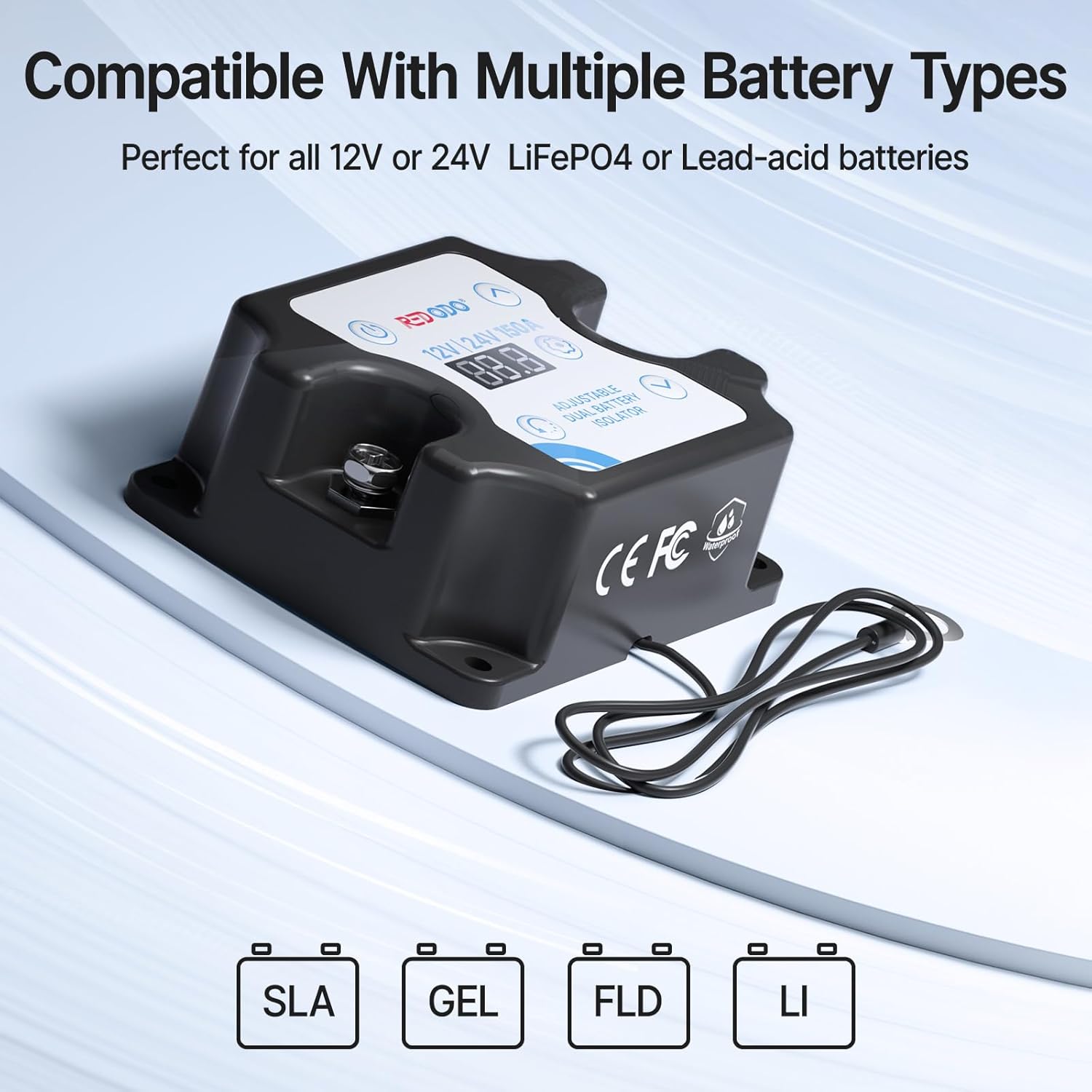
Image 7: The Redodo Battery Isolator is compatible with various battery types, including SLA, GEL, FLD, and LiFePO4 (LI) batteries.
5.4. Emergency Reverse Charge
In an emergency, if your starting battery is depleted, you can use the house battery to assist in starting the engine:
- Ensure the house battery has sufficient charge.
- Press the Reverse Charge button.
- The house battery will charge the starting battery for 60 seconds.
- Attempt to start the engine within this 60-second window.
6. Maintenance
The Redodo Battery Dual Isolator is designed for minimal maintenance. Regular checks include:
- Periodically inspect all wiring connections to ensure they are secure and free from corrosion.
- Keep the unit clean and free from dust or debris.
- Ensure adequate ventilation around the unit to prevent overheating.
No user-serviceable parts are inside the unit. Do not attempt to open or repair the isolator yourself.
7. Troubleshooting
If you encounter issues with your Redodo Battery Dual Isolator, consider the following common troubleshooting steps:
- No Display/No Power:
- Check all power connections and fuses.
- Ensure the power button is pressed.
- Verify battery voltage is within the operating range (12V/24V).
- Batteries Not Connecting/Disconnecting:
- Verify that the voltage thresholds are set correctly for your battery type and system voltage.
- Check the voltage of both batteries; the VSR will only connect when the starting battery reaches the set connect voltage.
- Inspect wiring for loose connections or damage.
- Overheating:
- Ensure the unit is mounted in a location with sufficient airflow.
- Check for excessive current draw or short circuits in the system.
For persistent issues, please contact Redodo customer support.
8. Specifications
| Feature | Specification |
|---|---|
| Model | VSR 12V/24V 150A |
| Voltage Compatibility | 12V / 24V (Adjustable) |
| Maximum Current | 150A |
| Connect Voltage (Default) | 13.4V (12V system) / 26.8V (24V system) |
| Disconnect Voltage (Default) | 12.8V (12V system) / 25.6V (24V system) |
| Battery Compatibility | LiFePO4, Lead-Acid (SLA, GEL, FLD) |
| Display | LCD (Voltage, Current) |
| Dimensions | 4.09 x 3.15 x 1.65 inches |
| Weight | 11.3 ounces |
| Protection Features | Over-voltage, Over-temperature, Reverse-current |
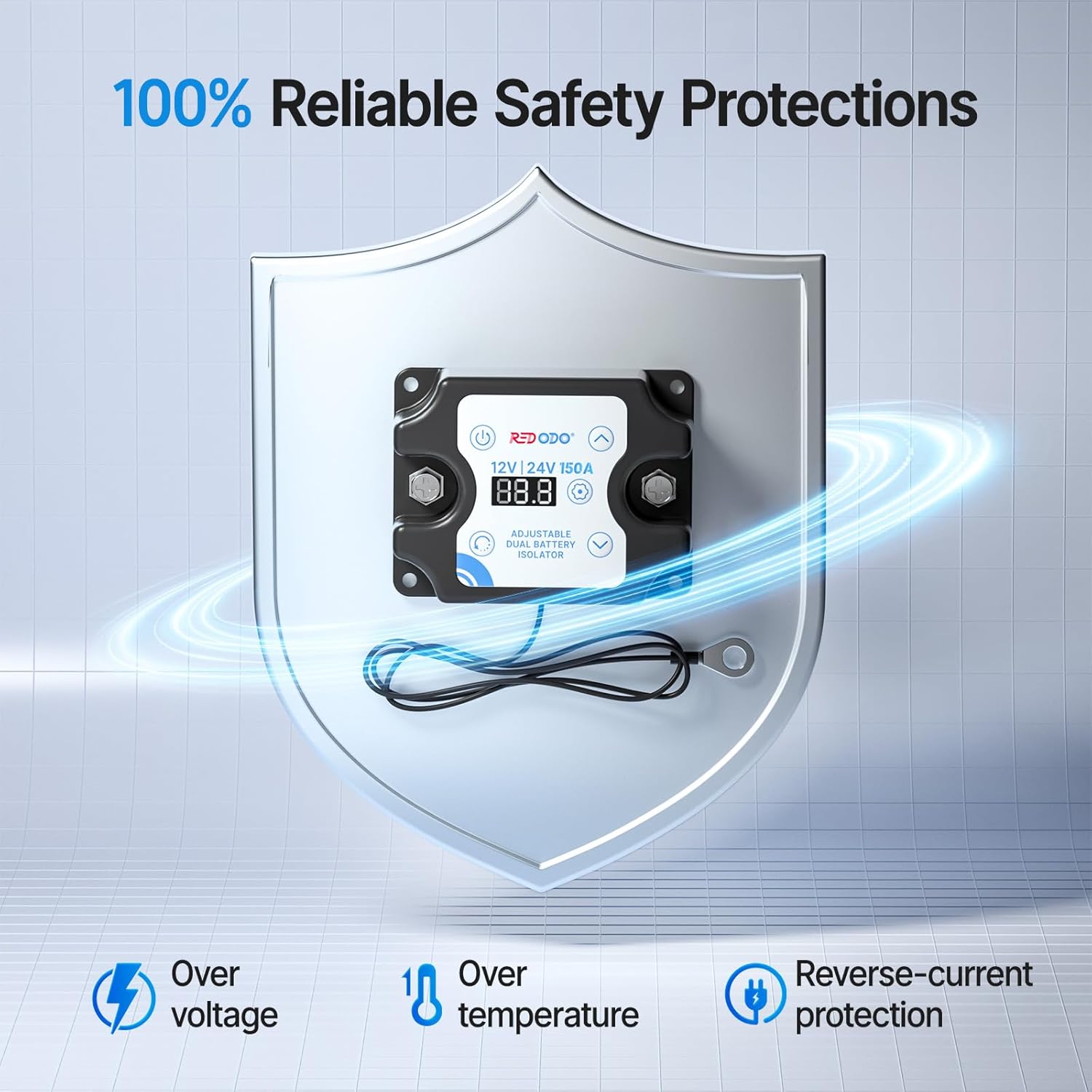
Image 8: Visual representation of the safety protections: over-voltage, over-temperature, and reverse-current protection.
9. Warranty and Support
9.1. Warranty Information
The Redodo 12V/24V 150A Adjustable Battery Dual Isolator comes with a 5-year guarantee from the date of purchase, covering defects in materials and workmanship under normal use. This warranty does not cover damage caused by improper installation, misuse, accidents, or unauthorized modifications.
9.2. Customer Support
For technical assistance, warranty claims, or any questions regarding your product, please contact Redodo customer support. We aim to provide a 24-hour response to all inquiries.
You can find contact information on the official Redodo website or through your purchase platform.
- Redodo Official Website: www.redodo.com