
Introduction
Welcome to the user guide for the National Geographic World of Chemistry Florida Edition textbook. This manual is designed to help students and educators navigate the book's features, understand its structure, and maximize its educational value. This textbook offers a unique approach to chemistry, integrating real-world applications and engaging content from National Geographic.
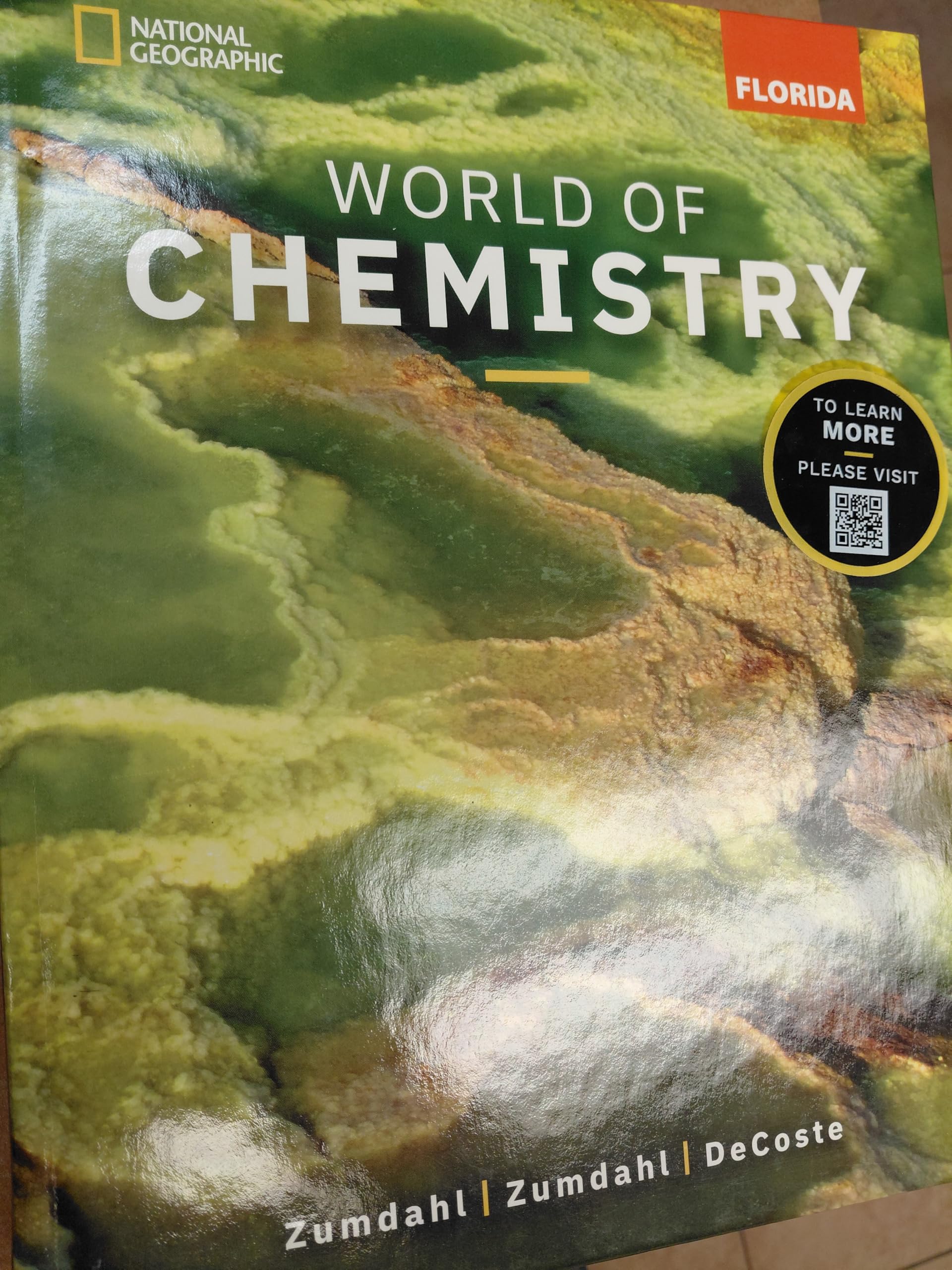
Image: Front cover of the National Geographic World of Chemistry Florida Edition textbook. The cover features scientific imagery and the National Geographic logo, indicating its focus on real-world science.
Getting Started: Book Structure
To effectively use this textbook, familiarize yourself with its organizational structure. Each chapter is designed to build upon previous concepts, providing a logical progression through the world of chemistry.
- Chapter Overviews: Each chapter begins with an introduction outlining key learning objectives and concepts to be covered.
- Main Content Sections: Core chemistry principles are presented with clear explanations, examples, and illustrations.
- National Geographic Features: Look for special sections that connect chemistry concepts to real-world phenomena, environmental issues, and scientific discoveries, often accompanied by stunning photography.
- Laboratory Activities: Practical experiments and demonstrations are integrated to provide hands-on learning experiences.
- Review and Assessment: Chapters conclude with summaries, key terms, and a variety of practice problems and questions to reinforce understanding.
Effective Use of the Textbook
Maximize your learning experience with these tips:
- Read Actively: Do not just skim. Engage with the text by highlighting key information, taking notes, and questioning concepts.
- Utilize Visuals: Pay close attention to diagrams, charts, and images. They often convey complex information more effectively than text alone.
- Practice Problems: Work through all practice problems and end-of-chapter questions. This is crucial for solidifying your understanding and preparing for assessments.
- Engage with National Geographic Content: These sections provide context and relevance, making abstract chemical concepts more tangible and interesting.
- Collaborate: Discuss difficult concepts with peers or instructors. Teaching others can deepen your own understanding.
Care and Handling
To ensure the longevity of your textbook, please follow these guidelines:
- Keep Dry: Protect the book from moisture and spills.
- Handle Gently: Avoid bending the spine excessively or tearing pages.
- Store Properly: Keep the book in a cool, dry place away from direct sunlight to prevent fading and warping.
- Clean Carefully: Use a soft, dry cloth to wipe the cover if necessary. Avoid harsh chemicals.
Troubleshooting and Support
If you encounter difficulties with the material:
- Re-read Sections: Sometimes a second reading clarifies complex ideas.
- Consult Instructor: Your teacher or professor is the primary resource for academic support.
- Online Resources: Many publishers offer supplementary online materials, practice quizzes, and video tutorials. Check the publisher's website for "National Geographic World of Chemistry Florida Edition" for additional resources.
- Study Groups: Working with classmates can provide new perspectives and help clarify misunderstandings.
For technical support related to any digital components or online access codes (if applicable), please refer to the contact information provided within the book or on the publisher's official website.
Specifications
| Title: | National Geographic World of Chemistry Florida Edition |
| Authors: | ZUMDAHL, Thompson, Turk |
| Publisher: | National Geographic/(ELT) |
| Publication Date: | January 1, 2024 |
| Language: | English |
| Print Length: | 914 pages |
| ISBN-13: | 979-8214071862 |
| ASIN: | B0FBTK1474 |
| Item Weight: | 1 pounds |
| Dimensions: | 11 x 9.5 x 1.5 inches |
Warranty Information
As a textbook, the National Geographic World of Chemistry Florida Edition typically does not come with a manufacturer's warranty. For information regarding returns or exchanges for new or used copies, please refer to the retailer's policy where the book was purchased.