Introduction
This manual provides step-by-step instructions for users of the Samsung Galaxy Tab S10 FE and S10 FE Plus. It covers essential setup procedures, navigation, feature utilization, and troubleshooting to help you maximize your tablet's potential. Whether you are a new user or upgrading from a previous model, this guide is designed to enhance your experience.
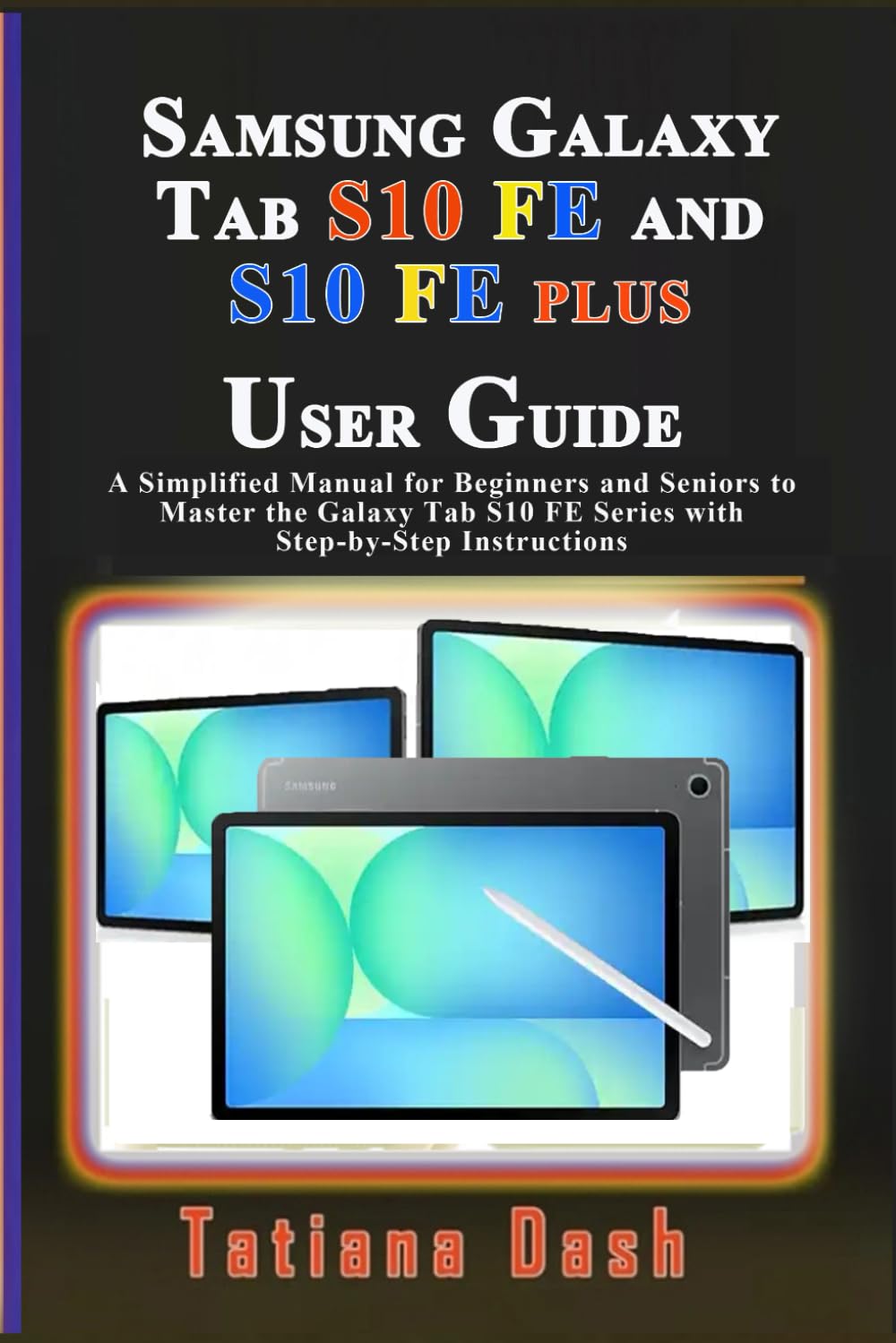
Image: Front cover of the user guide for Samsung Galaxy Tab S10 FE and S10 FE Plus.
1. Getting Started
1.1 Initial Setup
- SIM and eSIM Setup: Follow on-screen prompts to activate your physical SIM card or configure your eSIM for cellular connectivity.
- MicroSD Card Insertion: Locate the SIM/microSD card tray, insert your microSD card for expanded storage, and close the tray securely.
- Data Transfer with Smart Switch: Use the Smart Switch application to seamlessly transfer data from your old device to your new Galaxy Tab S10 FE or S10 FE Plus.
1.2 Basic Device Navigation
- Buttons and Soft Keys: Familiarize yourself with the physical buttons (power, volume) and on-screen soft keys for navigation.
- Charging Tips: Connect the provided charger to the USB-C port. Ensure proper charging practices for optimal battery life.
2. Navigating the Interface
Understand the key elements of the Samsung interface for efficient tablet use.
- Notification Panel: Swipe down from the top of the screen to access notifications and quick settings.
- Taskbar: Utilize the taskbar for quick access to frequently used apps and recent applications.
- Quick Settings: Customize and manage essential settings like Wi-Fi, Bluetooth, and screen brightness from the quick settings panel.
- Screen Recording: Access the screen recording feature from the quick settings to capture your tablet's screen activity.
- Customizing Home Screen: Personalize your home screen with widgets, wallpapers, and app layouts.
- Edge Panels: Configure and use Edge Panels for quick access to contacts, apps, and tools.
3. S Pen Features
Explore the versatile functionalities of the S Pen.
- Air Command: Access a menu of S Pen features by hovering the S Pen over the screen and pressing its button.
- Smart Select: Capture specific areas of the screen and extract text or images.
- Air View: Preview content by hovering the S Pen over items like emails or gallery images.
- Screen Off Memos: Jot down quick notes directly on the screen even when it's off.
- S Pen to Text: Convert your handwritten notes into digital text.
4. Productivity and Creativity
Utilize your tablet for enhanced productivity and creative tasks.
- Samsung Notes App: Create, organize, and sync notes, drawings, and voice recordings.
- Circle to Search: Use the S Pen or your finger to circle objects on your screen and instantly search for information.
- Second Screen Features: Extend your PC display to your tablet for a dual-monitor setup.
- Camera Usage: Learn to take photos, record videos, scan documents, and adjust advanced camera settings.
- Gallery Management: Organize your photos and videos, create albums, and sync media to cloud services.
- Bixby Vision: Use Bixby Vision for object recognition, text translation, and shopping.
5. Multitasking and Apps
Enhance your workflow with multitasking features and integrated applications.
- Multi-Window: Run multiple applications simultaneously in split-screen or pop-up view.
- Samsung DeX: Transform your tablet into a desktop-like experience for increased productivity.
- Samsung Flow: Seamlessly connect your tablet and smartphone to share content and notifications.
- Exploring Key Apps: Discover and utilize pre-installed applications such as Samsung Internet, Samsung Health, Gaming Hub, SmartThings, and Samsung Pass.
6. Security and Privacy
Protect your device and personal information.
- Face or Fingerprint Recognition: Set up biometric authentication for secure and convenient unlocking.
- Managing Secure Folder: Create a private, encrypted space for sensitive apps and data.
- Adjusting Privacy Settings: Review and customize app permissions and data usage settings.
7. Connectivity
Connect your tablet to other devices and networks.
- Wi-Fi Direct: Share files directly with other Wi-Fi Direct enabled devices without a router.
- Bluetooth: Pair your tablet with Bluetooth accessories like headphones or keyboards.
- Printing: Connect to compatible printers to print documents and images directly from your tablet.
- Hotspot: Share your tablet's cellular data connection with other devices.
- Tethering: Connect your tablet to a computer via USB to share its internet connection.
8. Customization and Wellbeing
Personalize your tablet experience and manage digital habits.
- Configuring Modes and Routines: Automate settings based on your activities or time of day.
- Sound Settings: Adjust volume levels, notification sounds, and audio enhancements.
- Battery Monitoring: Track battery usage and optimize settings for extended battery life.
- Digital Wellbeing & Parental Controls: Monitor screen time, set app timers, and manage parental controls for a balanced digital life.
9. Maintenance
Ensure the longevity and optimal performance of your device.
- Software Updates: Regularly check for and install system updates to ensure your tablet has the latest features and security patches.
- Cleaning: Use a soft, lint-free cloth to gently clean the screen and body of your tablet. Avoid harsh chemicals.
- Storage Management: Periodically review and clear unnecessary files and apps to maintain optimal performance.
10. Troubleshooting
This section provides solutions to common issues you might encounter.
- Device Not Responding: If your tablet is unresponsive, press and hold the Power button and Volume Down button simultaneously for about 7 seconds to force restart.
- Connectivity Issues: For Wi-Fi or Bluetooth problems, try toggling the respective setting off and on, or restart your tablet. Ensure you are within range of the network or device.
- App Malfunctions: If an app is not working correctly, try clearing its cache and data in the app settings, or uninstall and reinstall the app.
- Battery Drain: Check battery usage in settings to identify apps consuming excessive power. Adjust screen brightness and disable unnecessary features like GPS or always-on display when not in use.
- Slow Performance: Close unused apps, clear cache, and ensure sufficient storage space. A factory reset can resolve persistent performance issues, but back up your data first.