1. Introduction
This manual provides essential information for the safe and efficient use of your Generic EVE-LFP280 3.2V 280Ah LiFePO4 Battery Cells. These deep cycle lithium iron phosphate batteries are designed for various applications requiring reliable and long-lasting power. Please read this manual thoroughly before installation and operation.

Image 1: A single Generic EVE-LFP280 3.2V 280Ah LiFePO4 battery cell, showing its prismatic form factor and terminals.
2. Safety Information
WARNING: Improper handling of LiFePO4 batteries can lead to serious injury, fire, or explosion. Always follow these safety guidelines:
- Handle with Care: Avoid dropping, puncturing, or crushing the battery cells.
- Avoid Short Circuits: Do not allow metal objects to contact both positive and negative terminals simultaneously. Use insulated tools.
- Charging: Use only chargers specifically designed for LiFePO4 batteries with appropriate voltage and current settings. Do not overcharge or over-discharge.
- Temperature: Do not expose batteries to extreme temperatures (above 60°C or below -20°C) or direct sunlight.
- Ventilation: Ensure adequate ventilation during charging and discharging to prevent heat buildup.
- Water Exposure: Keep batteries dry and away from water or other liquids.
- Disposal: Dispose of batteries according to local regulations. Do not incinerate.
- Children and Pets: Keep batteries out of reach of children and pets.
3. What's in the Box
Your package should contain the following items:
- 4 x Generic EVE-LFP280 3.2V 280Ah LiFePO4 Battery Cells
- M6 Nuts for terminal connections
- Bus Bars for connecting cells (quantity may vary based on order)

Image 2: Multiple Generic EVE-LFP280 LiFePO4 battery cells securely packed in a box, ready for shipment.
4. Specifications
| Feature | Specification |
|---|---|
| Battery Type | LiFePO4 (Lithium Iron Phosphate) Prismatic Cell |
| Nominal Voltage | 3.2 Volts |
| Nominal Capacity | 280 Ah (Amps) |
| Cycle Life | >11,000 cycles (at 80% DoD) |
| Internal Resistance | ≤ 2.0 mΩ |
| Dimensions (L x W x H) | 207mm x 174mm x 72mm (approximate) |
| Weight | 5.6 Kg (approximate) |
| Reusability | Rechargeable |
| Manufacturer | Greenlithium (EVE Cells) |

Image 3: Detailed diagram illustrating the dimensions (207mm, 174mm, 72mm) and key features of the battery cell, including negative electrode, QR code, explosion-proof valve, and positive electrode.

Image 4: Visual representation emphasizing the Grade A+ quality of the cells, with specifications like ≤0.2mΩ internal resistance, 1C efficient output, and over 11,000 cycles.
5. Setup
- Unpacking and Inspection: Carefully remove the battery cells from their packaging. Inspect each cell for any visible damage, such as dents, leaks, or swollen cases. Do not use damaged cells.
- Initial Voltage Check: Before connecting, measure the voltage of each cell to ensure they are within a healthy range (typically around 3.2V - 3.3V).
- Cell Balancing: For optimal performance and longevity, it is highly recommended to balance all cells before initial use, especially when building a battery pack. This ensures that the internal resistance, voltage, and capacity of each cell are closely matched.
- Connection: Connect the cells in series or parallel as required for your application. Use the provided M6 nuts and bus bars to create secure, low-resistance connections. Ensure correct polarity (+ to - for series, + to + and - to - for parallel). Do not overtighten the nuts.
- BMS Installation (Recommended): For battery packs, install a Battery Management System (BMS) to monitor cell voltage, temperature, and current, providing protection against overcharge, over-discharge, overcurrent, and short circuits.
- Initial Charge: After assembly and BMS installation (if applicable), perform an initial charge using a compatible LiFePO4 charger.

Image 5: Four Generic EVE-LFP280 LiFePO4 battery cells arranged, demonstrating their compact size and readiness for connection in a battery pack.
6. Operating Instructions
These LiFePO4 battery cells are versatile and suitable for a wide range of applications:
- Electric Vehicles: Ideal for electric scooters, tricycles, and other light electric vehicles.
- Recreational Vehicles (RV) & Caravans: Provides reliable power for off-grid living and travel.
- Solar and Wind Energy Systems: Excellent for energy storage in renewable energy setups.
- UPS Electric Appliances Power Supply: Can be integrated into uninterruptible power supply systems.
- Golf Trolleys/Carts: Offers consistent power for extended use.
- Power Tools: Suitable for high-drain power tool applications.
- Marine Applications: Can be used in electric boats.
Important Operating Considerations:
- Discharge Rate: Adhere to the recommended continuous and peak discharge currents specified by your BMS or system design.
- Operating Temperature: Operate the batteries within their specified temperature range for optimal performance and lifespan.
- Monitoring: Regularly monitor battery voltage and temperature, especially in custom-built packs, to prevent over-discharge or overheating.
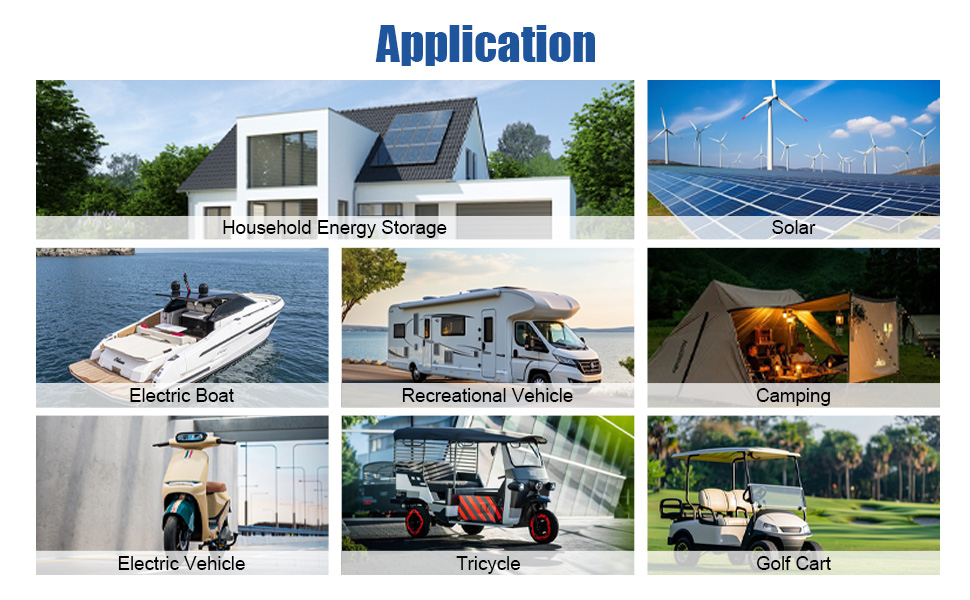
Image 6: A visual grid showcasing diverse applications for LiFePO4 batteries, including household energy storage, solar power, electric boats, recreational vehicles, camping, electric vehicles, tricycles, and golf carts.
Video 1: An official product video demonstrating the 3.2V 280Ah LiFePO4 battery cell, highlighting its prismatic design, voltage, capacity, cycle life, and internal resistance. This video provides a close-up view of the battery's features and specifications.
7. Maintenance
- Regular Inspection: Periodically check the battery cells and connections for any signs of corrosion, loose terminals, or physical damage.
- Terminal Cleaning: If corrosion is present, carefully clean the terminals with a wire brush and a baking soda solution, then rinse with distilled water and dry thoroughly.
- Voltage Monitoring: For battery packs, regularly monitor individual cell voltages to ensure they remain balanced. Re-balance if significant discrepancies are observed.
- Storage: If storing the batteries for an extended period, charge them to approximately 50% state of charge (around 3.25V per cell) and store in a cool, dry place away from direct sunlight and extreme temperatures.
- Avoid Deep Discharge: While LiFePO4 batteries tolerate deep discharge, consistently avoiding it can extend their lifespan.
8. Troubleshooting
If you encounter issues with your LiFePO4 battery cells, consider the following common problems and solutions:
| Problem | Possible Cause | Solution |
|---|---|---|
| Battery not charging | Faulty charger, loose connections, BMS protection triggered, deeply discharged cell | Check charger functionality and connections. Inspect BMS status. Attempt a slow, low-current charge if deeply discharged. |
| Low voltage output | Over-discharge, unbalanced cells, internal cell damage | Check individual cell voltages. Balance cells. If a cell is damaged, it may need replacement. |
| Battery pack overheating | Overcurrent, poor ventilation, internal short circuit | Reduce load. Ensure adequate airflow. Disconnect immediately if severe and seek professional help. |
| Reduced capacity/runtime | Aging cells, unbalanced cells, consistent deep discharge | Balance cells. Review usage patterns. Consider cell replacement if significant degradation. |
If you are unable to resolve an issue, please contact customer support.
9. Warranty and Support
These Generic EVE-LFP280 3.2V 280Ah LiFePO4 Battery Cells come with a 2-Year Manufacturer Warranty. This warranty covers defects in materials and workmanship under normal use.
For warranty claims, technical support, or any questions regarding your battery cells, please contact the seller or manufacturer directly. Keep your purchase receipt as proof of purchase.
Seller Information: Umsn Eve Sidz-US
For further assistance, you may visit the product page on Amazon: Product Link


