
1. Product Overview
This manual provides instructions for the FTYHFEFH Carburetor, designed as a direct replacement part for specific Briggs & Stratton engine models. The carburetor is a crucial component in an internal combustion engine, responsible for mixing air and fuel in the correct ratio for combustion. Proper installation and maintenance are essential for optimal engine performance.

Image 1: Angled view of the FTYHFEFH Carburetor. This image shows the general shape and primary components of the carburetor assembly.
2. Compatibility
This FTYHFEFH Carburetor is specifically designed for use with the following Briggs & Stratton engine part numbers:
- 20M114
- 20M212
- 20M214
Please verify your engine's part number before installation to ensure proper fit and function. Using an incompatible carburetor may lead to engine damage or improper operation.
3. Key Features
- Direct Replacement: Engineered to match original factory specifications for seamless integration.
- OEM Standard: Manufactured to original equipment manufacturer standards for optimal performance and reliability.
- Durable Construction: Features a corrosion-resistant metal design to ensure extended product lifespan.
- Simple Installation: Designed for a straightforward replacement process, often requiring no specialized tools.
4. Package Contents
The package includes the FTYHFEFH Carburetor exactly as depicted in the product images. No additional accessories or tools are typically included unless specified by the seller.

Image 2: Top-down angled view of the carburetor, showing various ports and linkages.
5. Setup and Installation
Warning: Before beginning any installation, ensure the engine is turned off, cooled down, and the spark plug wire is disconnected to prevent accidental starting. Wear appropriate safety gear, including gloves and eye protection.
- Preparation: Gather necessary tools. While this carburetor is designed for simple installation, basic hand tools (wrenches, screwdrivers) may be required.
- Remove Old Carburetor:
- Locate the existing carburetor on your Briggs & Stratton engine.
- Carefully disconnect the fuel line, throttle linkage, and choke linkage. Be mindful of any springs or small components.
- Unbolt the old carburetor from the engine manifold. Note the position of any gaskets.
- Install New Carburetor:
- Ensure the mounting surfaces are clean. Install new gaskets if necessary (gaskets are typically not included with the carburetor and should be purchased separately if needed).
- Mount the new FTYHFEFH Carburetor onto the engine manifold, ensuring a snug fit.
- Reconnect the fuel line, throttle linkage, and choke linkage. Double-check that all connections are secure and move freely.
- Final Checks:
- Inspect all connections for leaks, especially the fuel line.
- Ensure all linkages operate smoothly without binding.
- Reconnect the spark plug wire.
If you are unsure about any step, it is recommended to consult a qualified small engine mechanic or refer to your engine's specific service manual.
6. Operating Instructions
After successful installation, the engine should start and run smoothly. Carburetors are typically pre-set from the factory for general operation. Minor adjustments may be required depending on environmental factors (altitude, temperature) or specific engine requirements.
- Starting the Engine: Follow your engine manufacturer's recommended starting procedure (e.g., choke position, primer bulb presses).
- Idle Adjustment: If the engine idles too high or too low, locate the idle speed screw (if present) and adjust it gradually until a stable idle is achieved.
- Mixture Adjustment: This carburetor is designed to operate efficiently with its factory settings. Avoid unnecessary adjustments to the fuel mixture screws unless you have experience or are following specific engine service manual instructions. Incorrect mixture settings can lead to poor performance or engine damage.
7. Maintenance
Regular maintenance of your carburetor and fuel system is vital for prolonging engine life and ensuring reliable operation.
- Fuel Quality: Always use fresh, clean fuel. Stale fuel or fuel containing ethanol can cause deposits and corrosion within the carburetor. Consider using a fuel stabilizer, especially during storage.
- Fuel Filter: Regularly check and replace the fuel filter (if equipped) to prevent contaminants from reaching the carburetor.
- Air Filter: A clean air filter is crucial. A clogged air filter can cause the engine to run rich, affecting carburetor performance. Clean or replace the air filter as recommended by your engine manufacturer.
- Storage: Before long-term storage, either run the engine until it runs out of fuel or drain the fuel system to prevent gumming and varnish buildup in the carburetor.
8. Troubleshooting
If you encounter issues after installing the new carburetor, consider the following common troubleshooting steps:
- Engine Not Starting:
- No Fuel: Check fuel tank level, fuel line for kinks, and ensure the fuel valve is open.
- No Spark: Check spark plug and ignition system.
- Incorrect Choke: Ensure the choke is set correctly for starting.
- Engine Runs Poorly (Rough Idle, Stalling):
- Air Filter: Check if the air filter is clean.
- Fuel Quality: Ensure fresh fuel is being used.
- Linkages: Verify throttle and choke linkages are connected and moving freely.
- Gaskets: Check for air leaks around carburetor gaskets.
- Fuel Leaks:
- Loose Connections: Tighten fuel line clamps and carburetor mounting bolts.
- Damaged Gaskets: Replace any damaged or improperly seated gaskets.
- Float Issues: A stuck or improperly set float inside the carburetor bowl can cause overflow. This typically requires disassembly and inspection.
For persistent issues, consult your engine's service manual or a professional mechanic.
9. Specifications
The FTYHFEFH Carburetor is manufactured to precise dimensions for compatibility with specified Briggs & Stratton engines.
| Attribute | Value |
|---|---|
| Brand | FTYHFEFH |
| Compatible Engine Models | Briggs & Stratton 20M114, 20M212, 20M214 |
| Material | Durable Metal Construction |
| Item Weight | Approximately 1 pound |
| Product Dimensions | Approximately 1 x 1 x 1 inches (packaging/shipping dimensions) |
| UPC | 779603348320 |
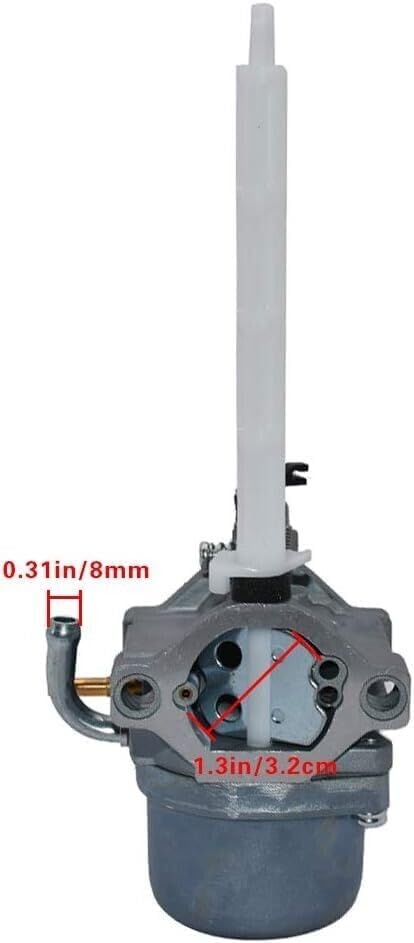
Image 3: Carburetor showing inlet diameter (approx. 1.3in/3.2cm) and fuel line connection diameter (approx. 0.31in/8mm).

Image 4: Carburetor showing air intake diameter (approx. 0.98in/2cm) and another connection diameter (approx. 0.2in/0.5cm).
10. Warranty and Support
For specific warranty information, please refer to the terms provided by the original seller or manufacturer at the time of purchase. This product is designed as a replacement part, and its warranty may be subject to the conditions of the original purchase.
If you require technical assistance or have questions regarding installation or operation, please contact the seller through your purchase platform. Always provide your product details and purchase information when seeking support.