
1. Introduction
This manual provides essential information for the safe and effective installation, operation, and maintenance of the HVGZDQQD Masterpact NT12H1-1250 Air Circuit Breaker. This device is designed for robust electrical protection in various industrial and commercial applications, specifically for 3-pole or 4-pole systems with a rated current of 1250A.
Please read this manual thoroughly before attempting any procedures involving the circuit breaker. Retain this manual for future reference.
2. Safety Information
WARNING: Electrical shock hazard. Improper installation or operation can result in serious injury or death. Only qualified and authorized personnel should perform installation, maintenance, and troubleshooting procedures.
- Always disconnect power before working on the circuit breaker or associated electrical systems.
- Use appropriate personal protective equipment (PPE), including insulated gloves, eye protection, and arc-flash protection.
- Ensure proper grounding of the circuit breaker and associated equipment.
- Do not operate the circuit breaker if it appears damaged or is not functioning correctly.
- Adhere to all local and national electrical codes and regulations.
3. Product Overview
The HVGZDQQD Masterpact NT12H1-1250 is a high-performance air circuit breaker designed for reliable protection of electrical circuits. It features a robust construction and integrated control mechanisms.
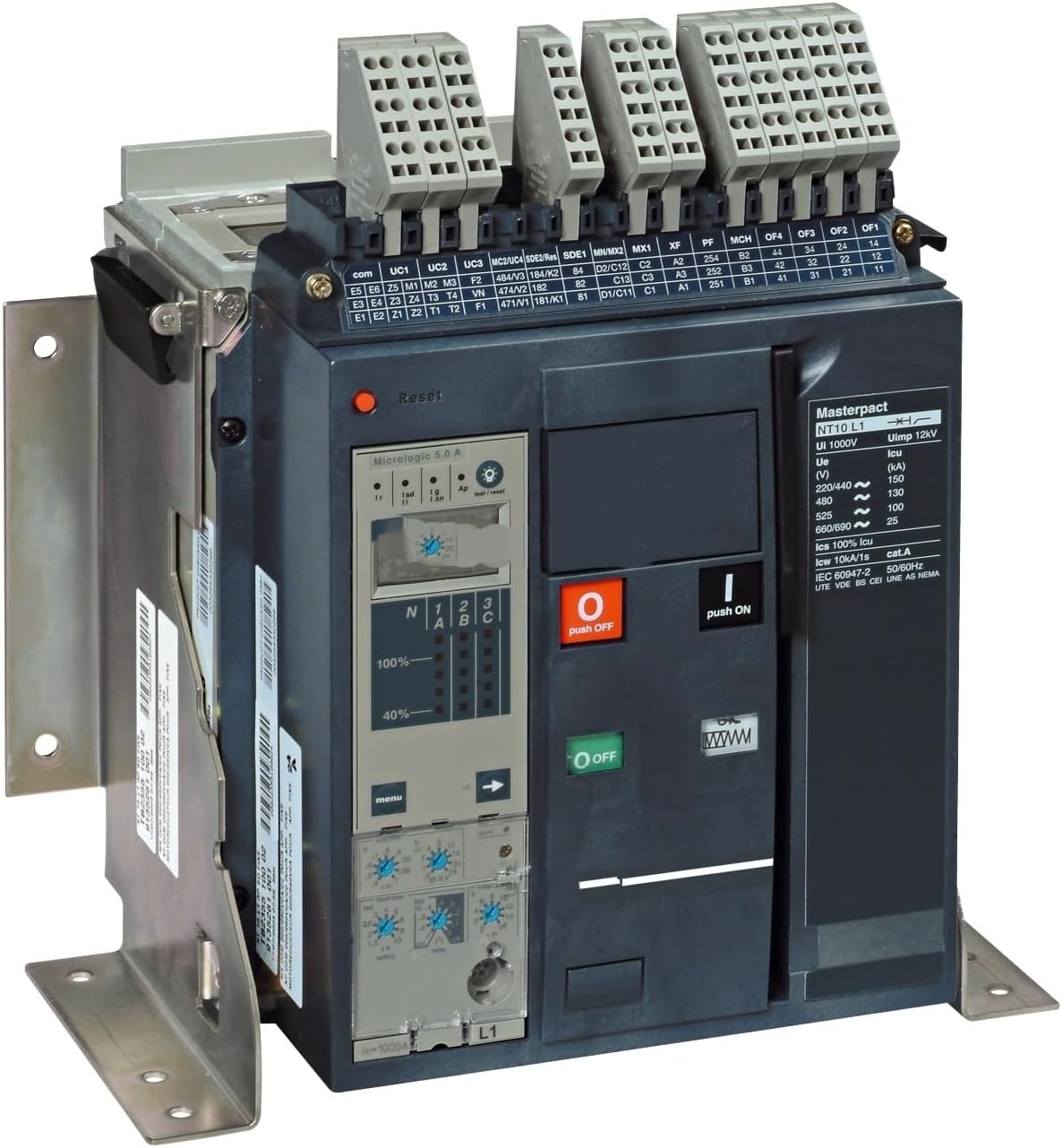
Figure 3.1: Front view of the HVGZDQQD Masterpact NT12H1-1250 Air Circuit Breaker. This image shows the main body of the circuit breaker, including the operating buttons (red 'push OFF', green 'push ON'), the 'Reset' button, the Micrologic S.G.A. control unit display, and the main terminals at the top.
Key Components:
- Operating Buttons: Red "push OFF" and green "push ON" for manual control.
- Reset Button: Used to reset the breaker after a trip event.
- Micrologic S.G.A. Control Unit: Integrated display and controls for monitoring and configuration.
- Main Terminals: Connections for incoming and outgoing power lines.
- Mounting Brackets: For secure installation.
4. Setup and Installation
Installation of the Masterpact NT12H1-1250 Air Circuit Breaker must be performed by a certified electrician in accordance with all applicable electrical codes and safety standards.
4.1 Mounting
The circuit breaker supports drawout, backplate, and rail mounting configurations. Ensure the mounting surface is stable and capable of supporting the breaker's weight (approximately 39 kg).
- Securely fasten the circuit breaker using appropriate hardware for the chosen mounting type.
- Ensure adequate clearance for ventilation and access to operating controls and terminals.
4.2 Electrical Connections
The circuit breaker is designed for front or rear connections with a connection pitch of 70 mm. Verify all connections are tight and secure to prevent loose contacts and overheating.
- Connect the incoming power lines to the designated input terminals.
- Connect the outgoing load lines to the designated output terminals.
- Ensure correct polarity and phase sequence for multi-phase systems.
- Properly ground the circuit breaker according to local regulations.
5. Operating Instructions
The Masterpact NT12H1-1250 Air Circuit Breaker is designed for straightforward operation.
5.1 Turning ON the Breaker
- Ensure all downstream loads are ready to receive power.
- Press the green "push ON" button firmly until the breaker latches into the ON position.
- Verify the status indicator on the Micrologic S.G.A. control unit confirms the ON state.
5.2 Turning OFF the Breaker
- To de-energize the circuit, press the red "push OFF" button firmly.
- The breaker will trip to the OFF position.
- Verify the status indicator on the Micrologic S.G.A. control unit confirms the OFF state.
5.3 Resetting the Breaker After a Trip
If the circuit breaker trips due to an overload or short circuit, it will move to an intermediate tripped position. To reset:
- Identify and rectify the cause of the trip (e.g., remove overload, clear short circuit).
- Press the "Reset" button to reset the internal mechanism.
- Once reset, the breaker can be turned ON again by pressing the green "push ON" button.
6. Maintenance
Regular maintenance ensures the longevity and reliable operation of your circuit breaker. All maintenance should be performed by qualified personnel with the power disconnected.
6.1 Routine Inspection
- Visually inspect the breaker for any signs of physical damage, discoloration, or loose connections.
- Check for dust and debris accumulation, especially around ventilation openings.
- Verify the integrity of all wiring and terminal connections.
6.2 Cleaning
- Use a dry, lint-free cloth to clean the exterior of the breaker.
- For stubborn dirt, a mild, non-abrasive cleaner can be used sparingly on the exterior, ensuring no liquid enters the internal components.
- Do not use solvents or harsh chemicals.
6.3 Operational Lifespan
- Mechanical Durability: The breaker is designed for 12,500 cycles without maintenance.
- Electrical Durability:
- 6000 cycles 440 V AC 50/60 Hz without maintenance (conforming to EN/IEC 60947-2)
- 3000 cycles 690 V AC 50/60 Hz without maintenance (conforming to EN/IEC 60947-2)
- AC-23A: 6000 cycles 440 V AC 50/60 Hz without maintenance (conforming to EN/IEC 60947-3)
- AC-23A: 3000 cycles 690 V AC 50/60 Hz without maintenance (conforming to EN/IEC 60947-3)
- AC-3: 6000 cycles 440 V AC 50/60 Hz without maintenance (conforming to EN/IEC 60947-3)
7. Troubleshooting
This section provides guidance for common issues. For complex problems, contact qualified service personnel.
7.1 Breaker Trips Frequently
- Cause: Overload, short circuit, ground fault, or internal fault.
- Action:
- Disconnect power and inspect the circuit for overloads or short circuits.
- Check connected equipment for malfunctions.
- If the problem persists after addressing potential causes, the breaker may require inspection or replacement by a professional.
7.2 Breaker Does Not Turn ON
- Cause: Breaker is in a tripped state, internal mechanism issue, or control circuit problem.
- Action:
- Ensure the breaker is fully reset by pressing the "Reset" button.
- Verify that there are no active fault conditions preventing closure.
- If the breaker still does not engage, contact a qualified technician.
8. Specifications
Detailed technical specifications for the HVGZDQQD Masterpact NT12H1-1250 Air Circuit Breaker are provided below. Refer to the product datasheet for comprehensive information.
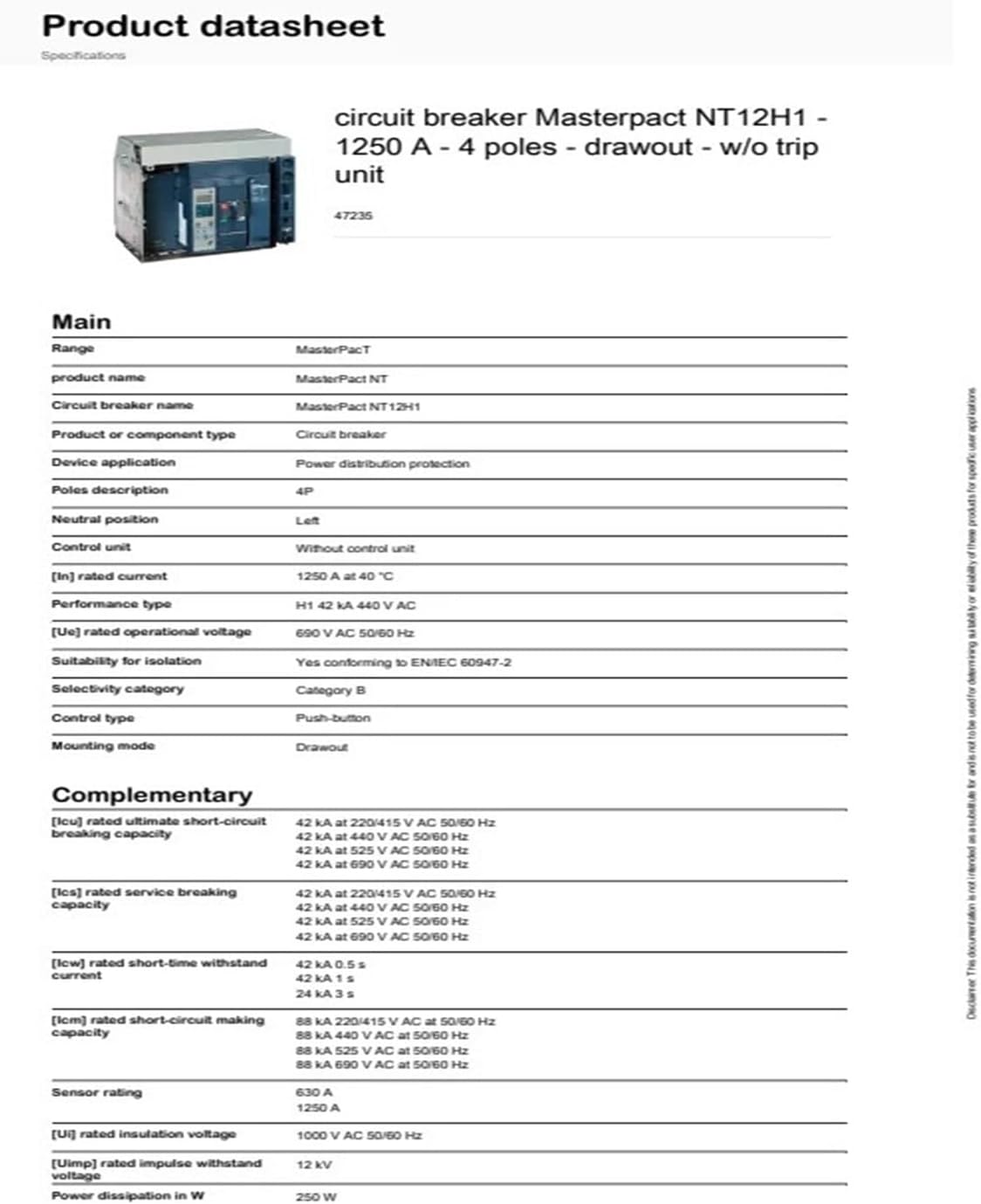
Figure 8.1: Excerpt from the product datasheet, page 1, detailing main characteristics and complementary information.
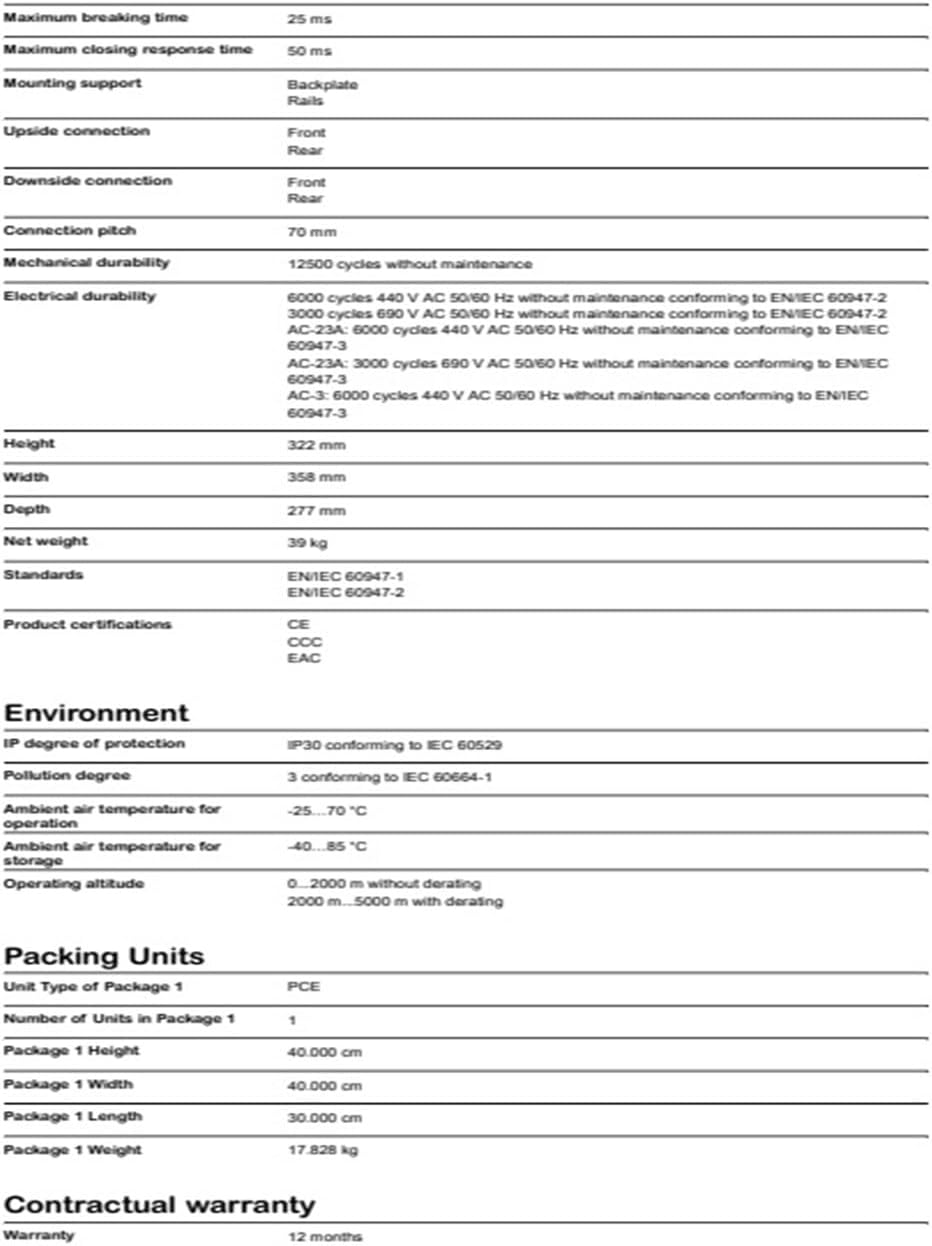
Figure 8.2: Excerpt from the product datasheet, page 2, detailing further specifications including dimensions, environmental conditions, and packing units.
General Characteristics:
| Parameter | Value |
|---|---|
| Product Name | MasterPact NT |
| Circuit Breaker Name | MasterPact NT12H1 |
| Device Application | Power distribution protection |
| Poles Description | 4P |
| Neutral Position | Left |
| Control Unit | Micrologic S.G.A. |
| [In] Rated Current | 1250 A at 40 °C |
| Performance Type | H1 42 kA 440 V AC |
| [Ue] Rated Operational Voltage | 690 V AC 50/60 Hz |
| Suitability for Isolation | Yes conforming to EN/IEC 60947-2 |
| Selectivity Category | Category B |
| Control Type | Push-button |
| Mounting Mode | Drawout |
Complementary Characteristics:
| Parameter | Value |
|---|---|
| [Icu] Rated Ultimate Short-Circuit Breaking Capacity | 42 kA at 220/415 V AC 50/60 Hz 42 kA at 440 V AC 50/60 Hz 42 kA at 525 V AC 50/60 Hz 42 kA at 690 V AC 50/60 Hz |
| [Ics] Rated Service Breaking Capacity | 42 kA at 220/415 V AC 50/60 Hz 42 kA at 440 V AC 50/60 Hz 42 kA at 525 V AC 50/60 Hz 42 kA at 690 V AC 50/60 Hz |
| [Icw] Rated Short-Time Withstand Current | 42 kA 0.5 s 42 kA 1 s 42 kA 3 s |
| [Icm] Rated Short-Circuit Making Capacity | 88 kA 220/415 V AC at 50/60 Hz 88 kA 440 V AC at 50/60 Hz 88 kA 525 V AC at 50/60 Hz 88 kA 690 V AC at 50/60 Hz |
| Sensor Rating | 630 A |
| [Ui] Rated Insulation Voltage | 1000 V AC 50/60 Hz |
| [Uimp] Rated Impulse Withstand Voltage | 12 kV |
| Power Dissipation in W | 250 W |
| Maximum Breaking Time | 25 ms |
| Maximum Closing Response Time | 50 ms |
| Mounting Support | Backplate, Rails |
| Upside Connection | Front, Rear |
| Downside Connection | Front, Rear |
| Connection Pitch | 70 mm |
Physical and Environmental:
| Parameter | Value |
|---|---|
| Height | 322 mm |
| Width | 358 mm |
| Depth | 277 mm |
| Net Weight | 39 kg |
| Standards | EN/IEC 60947-1, EN/IEC 60947-2, EN/IEC 60664-1 |
| Product Certifications | CCC, EAC |
| IP Degree of Protection | IP30 conforming to IEC 60529 |
| Pollution Degree | 3 conforming to IEC 60664-1 |
| Ambient Air Temperature for Operation | -25...70 °C |
| Ambient Air Temperature for Storage | -40...85 °C |
| Operating Altitude | 0...2000 m without derating 2000 m...5000 m with derating |
9. Warranty and Support
9.1 Warranty Information
The HVGZDQQD Masterpact NT12H1-1250 Air Circuit Breaker comes with a contractual warranty of 12 months from the date of purchase. This warranty covers defects in materials and workmanship under normal use and service conditions.
The warranty does not cover damage resulting from improper installation, misuse, unauthorized modifications, accidents, or natural disasters.
9.2 Technical Support
For technical assistance, troubleshooting beyond this manual, or warranty claims, please contact your authorized HVGZDQQD distributor or service center. When contacting support, please have your product model number (Masterpact NT12H1-1250) and purchase information readily available.