
Introduction
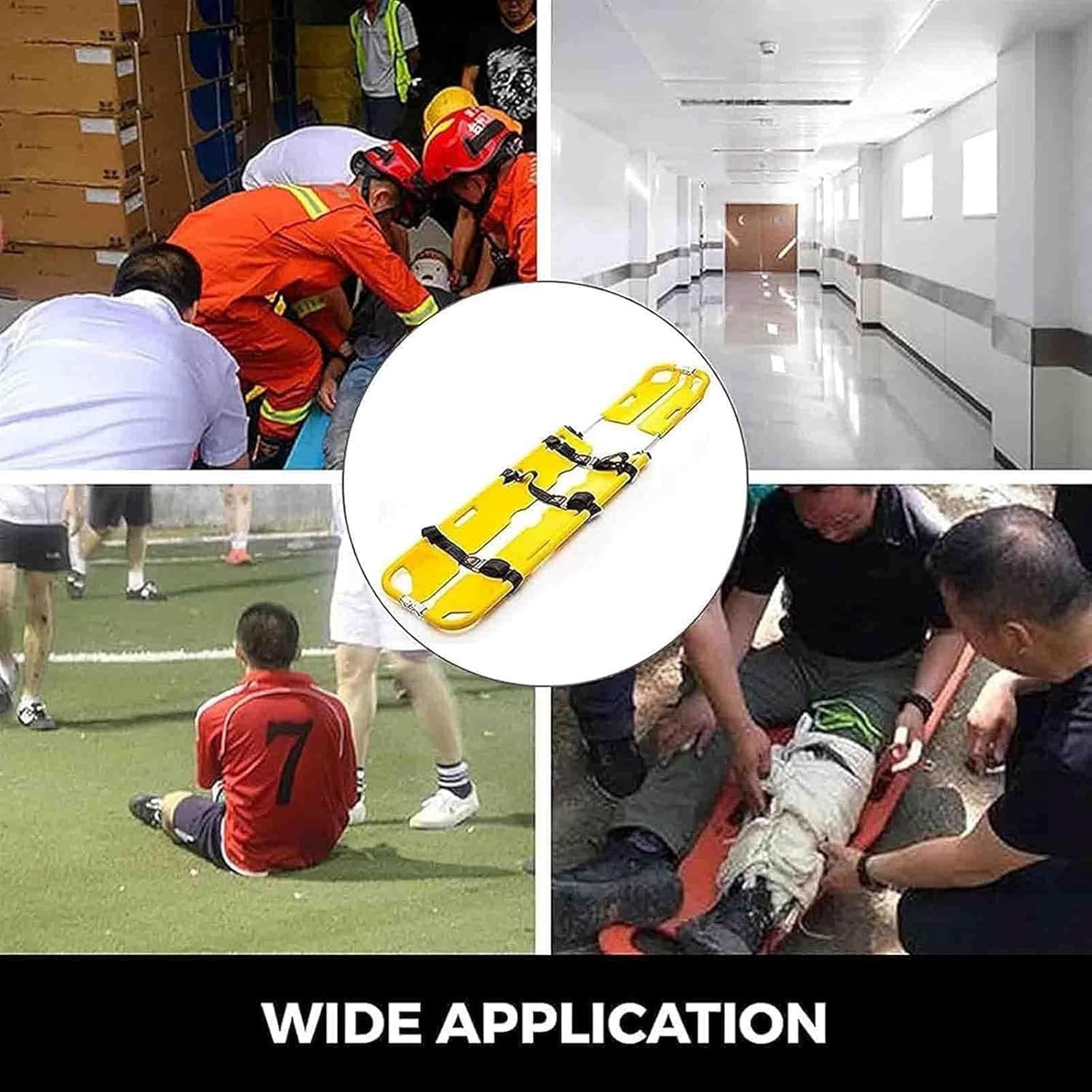
The ERICAT Rescue Basket Stretcher, also known as a helicopter or sea stretcher, is designed for safe and efficient patient transport in challenging environments. Its foldable design ensures portability and quick deployment, making it suitable for mountain rescue, airborne missions, sea rescue, and other emergency situations. This manual provides essential information for the proper setup, operation, maintenance, and troubleshooting of your rescue stretcher.
Safety Information
- Always ensure the stretcher is fully assembled and locked before use.
- Do not exceed the maximum load capacity of 159 kg (350 lbs).
- Ensure all safety straps are securely fastened around the patient to prevent movement during transport.
- Regularly inspect the stretcher for any signs of wear, damage, or loose components. Do not use if damaged.
- Proper training in patient handling and stretcher operation is recommended for all users.
- Use caution when operating in uneven terrain or confined spaces.
Setup
The ERICAT Rescue Basket Stretcher is designed for quick deployment. Follow these steps to prepare the stretcher for use:
- Unpack: Remove the stretcher from its storage bag or packaging.
- Unfold: Lay the folded stretcher on a flat, stable surface. Grasp the handles and extend the stretcher until it is fully open. Ensure the central locking mechanisms engage securely.
- Inspect: Before each use, visually inspect all components, including the frame, handles, straps, and buckles, for any damage or wear. Ensure all connections are firm.

Operating Instructions
Using the ERICAT Rescue Basket Stretcher effectively requires adherence to proper procedures:
- Patient Placement: Carefully transfer the patient onto the stretcher. Ensure the patient is centered and positioned comfortably.
- Secure Patient: Utilize the three adjustable safety straps to secure the patient firmly to the stretcher. Ensure the straps are snug but do not impede circulation or breathing.

- Head Section Adjustment: The head section can be adjusted in length to provide appropriate support for individuals of various heights. Adjust as needed for patient comfort and safety.
- Transport: With the patient secured, use the integrated handles for lifting and carrying. Ensure multiple rescuers are used for heavy patients or difficult terrain to distribute weight and maintain stability.
- Folding for Storage: Once the patient is safely transferred, release the central locking mechanisms and fold the stretcher. The head section can be detached for more compact storage. Place the folded stretcher into its storage bag.
Maintenance
Proper maintenance ensures the longevity and reliability of your rescue stretcher:
- Cleaning: After each use, clean the stretcher with a mild disinfectant solution and a soft cloth. Rinse thoroughly with water and allow it to air dry completely before storage. Do not use abrasive cleaners or solvents.
- Inspection: Regularly check all moving parts, joints, and buckles for smooth operation and secure fastening. Inspect straps for fraying or cuts.
- Storage: Store the folded stretcher in a cool, dry place, away from direct sunlight and extreme temperatures. Use the provided storage bag to protect it from dust and damage.
Troubleshooting
If you encounter issues with your stretcher, refer to the following common problems and solutions:
- Stretcher not unfolding/folding smoothly: Check for any obstructions in the joints or locking mechanisms. Ensure the head section is properly aligned if it's detachable. Apply a small amount of silicone lubricant to moving parts if necessary.
- Safety straps not securing properly: Inspect buckles for damage or debris. Ensure straps are threaded correctly through the buckles. Replace any damaged straps immediately.
- Stretcher feels unstable: Verify that all locking mechanisms are fully engaged when the stretcher is unfolded. Ensure the stretcher is placed on a stable, level surface during patient transfer.
Specifications
| Feature | Detail |
|---|---|
| Expanded Size | 162 cm (Length) x 44.5 cm (Width) x 7 cm (Height) |
| Folding Size | 120 cm (Length) x 44.5 cm (Width) x 7 cm (Height) |
| Load Capacity | ≤ 159 kg (350 lbs) |
| Safety Straps | 3 adjustable safety straps |
| Material | Durable plastic and metal alloy frame |

Warranty and Support
For warranty information, technical support, or any questions regarding your ERICAT Rescue Basket Stretcher, please contact the manufacturer or your point of purchase. Keep your purchase receipt for warranty claims.