
1. Introduction
This manual provides essential information for the safe and effective use of the IBXDTUVJ 17HS4401 Nema17 Stepper Motor. This motor is designed for precision motion control applications, commonly found in 3D printers, CNC machines, and other XYZ positioning systems. Please read these instructions thoroughly before installation and operation.
2. Product Overview
The IBXDTUVJ 17HS4401 is a 4-lead Nema17 stepper motor, offering a detent torque of 40 N.cm and a rated current of 1.5A. Its compact design and standard mounting make it suitable for various applications requiring precise angular movement and holding torque.

Figure 2.1: Front view of the IBXDTUVJ 17HS4401 Nema17 Stepper Motor, showing the shaft, mounting holes, and wiring harness.
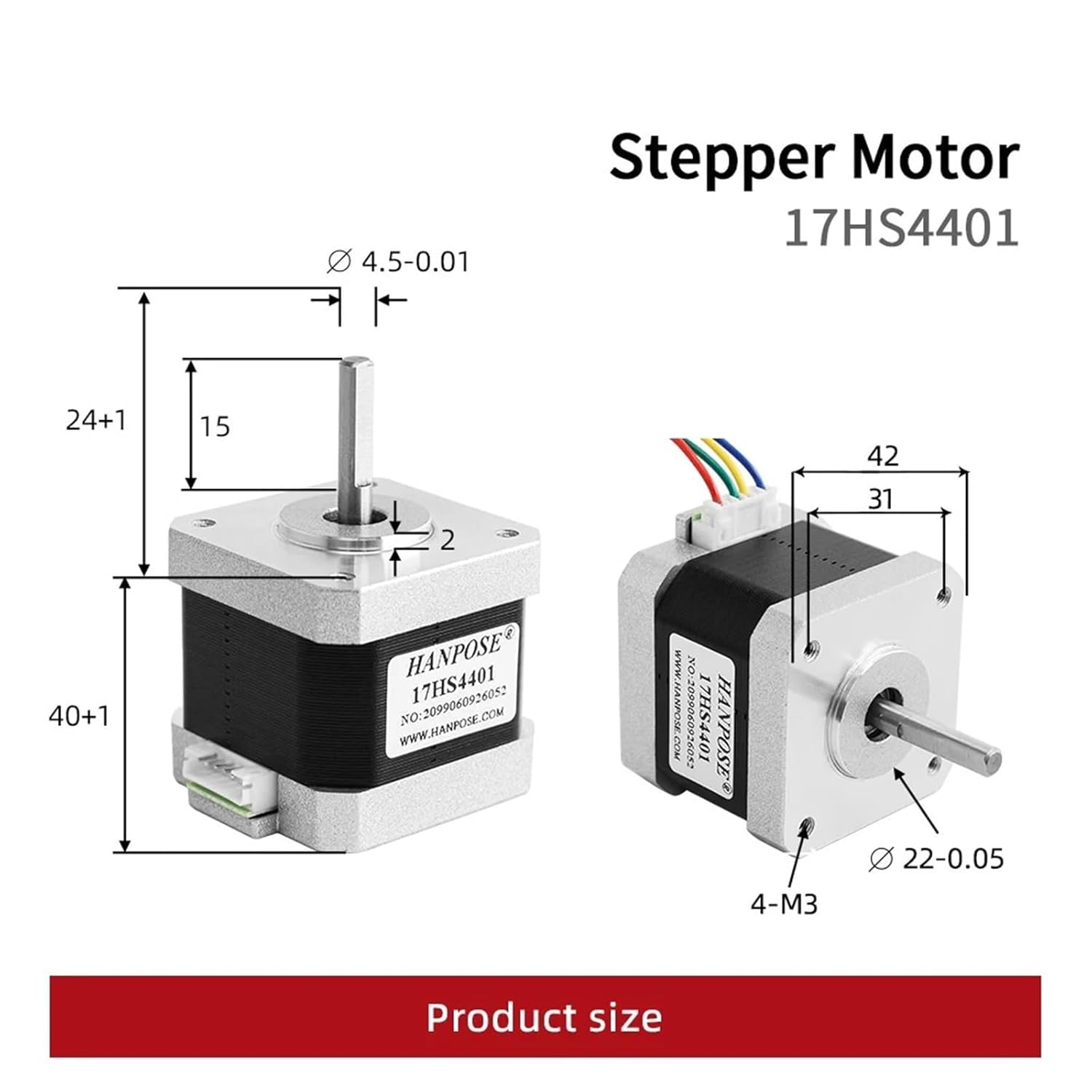
Figure 2.2: Side view of the IBXDTUVJ 17HS4401 Nema17 Stepper Motor, illustrating its compact form factor.
3. Specifications
Detailed technical specifications for the 17HS4401 stepper motor are provided below to assist with integration and performance assessment.

Figure 3.1: Visual summary of key electrical and mechanical parameters.

Figure 3.2: Comprehensive list of motor parameters including resistance, inductance, and rotor inertia.
| Parameter | Value |
|---|---|
| Model | 17HS4401 |
| Step Angle | 1.8° |
| Motor Length | 40 mm |
| Rated Current | 1.5 A |
| Phase Resistance | 1.50 Ohm |
| Phase Inductance | 2.8 mH |
| Detent Torque | 40 N.cm |
| Rotor Inertia | 2.2 N.cm² |
| Lead Wire | 54g.cm² |
| Motor Weight | 280 g |
Note: The 'Lead Wire' specification of '54g.cm²' appears to be a unit inconsistency in the source image, possibly intended for wire gauge or insulation properties.

Figure 3.3: Dimensional drawing showing motor length, shaft diameter, and mounting hole positions. All dimensions are in millimeters.
4. Setup and Installation
Proper installation is crucial for optimal performance and longevity of the stepper motor. Follow these guidelines:
- Mounting: Securely mount the motor using appropriate screws through the designated mounting holes. Ensure the motor is firmly attached to a stable surface to prevent vibrations. Refer to Figure 3.3 for mounting dimensions.
- Wiring: The 17HS4401 is a 4-lead motor. Connect the motor wires to your stepper motor driver according to the driver's specifications. Typically, two pairs of wires correspond to the two coils of the motor. Incorrect wiring can damage the motor or driver.
- Power Supply: Connect a suitable power supply to your stepper motor driver. Ensure the voltage and current ratings of the power supply meet the requirements of both the motor and the driver. The motor's rated current is 1.5A per phase.
- Shaft Coupling: If connecting the motor shaft to another component (e.g., lead screw, pulley), use a flexible coupling to compensate for minor misalignments and reduce stress on the motor bearings.
Note: Always disconnect power before making any wiring changes. Consult your stepper motor driver's manual for specific wiring diagrams and configuration settings.
5. Operating Instructions
Once installed and wired correctly, the stepper motor can be operated via a compatible stepper motor driver and controller (e.g., a 3D printer control board or CNC controller).
- Driver Configuration: Set the current limit on your stepper motor driver to match or be slightly below the motor's rated current (1.5A). Overcurrent can lead to overheating and damage.
- Microstepping: Configure microstepping settings on your driver for smoother operation and higher positional accuracy. Common settings include 1/8, 1/16, or 1/32 microsteps.
- Control Signals: Provide step, direction, and enable signals from your controller to the stepper driver. The motor will rotate one step (or microstep) for each pulse received on the step input.
- Speed and Acceleration: Adjust the motor's speed and acceleration parameters in your control software to prevent skipped steps or excessive vibration. Start with lower speeds and gradually increase.
Caution: Stepper motors can generate significant heat during operation, especially at higher currents or speeds. Ensure adequate ventilation or heat sinking if operating continuously under heavy load.
6. Maintenance
The IBXDTUVJ 17HS4401 stepper motor is designed for durability and generally requires minimal maintenance. However, periodic checks can extend its lifespan and ensure reliable operation:
- Cleaning: Keep the motor free from dust, debris, and moisture. Use a soft, dry cloth to wipe the exterior. Avoid using solvents or abrasive cleaners.
- Connections: Periodically inspect all electrical connections for tightness and signs of corrosion. Loose connections can lead to intermittent operation or damage.
- Mounting: Verify that the motor remains securely mounted. Tighten any loose screws if necessary.
- Shaft: Ensure the motor shaft rotates freely without excessive friction or binding. Check for any obstructions or damage to the shaft or coupling.
- Temperature: Monitor the motor's operating temperature. If it consistently runs excessively hot, review your driver current settings and ensure proper ventilation.
7. Troubleshooting
If you encounter issues with your 17HS4401 stepper motor, consider the following common problems and solutions:
- Motor Not Moving or Jittering:
- Check wiring connections between the motor and driver. Ensure correct phase pairing.
- Verify power supply voltage and current are adequate.
- Confirm step, direction, and enable signals are being sent from the controller.
- Reduce acceleration and speed settings in your control software.
- Check for mechanical binding or obstructions.
- Motor Overheating:
- Reduce the current limit on the stepper motor driver.
- Ensure adequate ventilation around the motor.
- Check for excessive mechanical load on the motor.
- Skipped Steps / Loss of Position:
- Increase the current limit on the stepper motor driver (within the motor's rated current).
- Decrease acceleration and maximum speed settings.
- Check for mechanical resistance or binding in the system.
- Ensure the power supply is stable and not dropping voltage under load.
- Excessive Noise or Vibration:
- Ensure the motor is securely mounted.
- Check for loose couplings or mechanical components.
- Adjust microstepping settings on the driver for smoother operation.
- Verify that the motor is not overloaded.
8. Warranty and Support
This IBXDTUVJ 17HS4401 Nema17 Stepper Motor is covered by a standard manufacturer's warranty against defects in materials and workmanship. For specific warranty terms and conditions, please refer to the documentation provided at the time of purchase or contact your retailer.
For technical support, troubleshooting assistance beyond this manual, or warranty claims, please contact the vendor or manufacturer directly through their official support channels. When contacting support, please have your product model (17HS4401) and purchase information readily available.