
Gedsffati PTH-24D
Gedsffati 3-in-1 Carbon Monoxide Detector User Manual
Model: PTH-24D
1. Introduction
Thank you for choosing the Gedsffati 3-in-1 Carbon Monoxide Detector. This device integrates carbon monoxide, temperature, and humidity sensors to provide real-time environmental gas safety monitoring. Designed for plug-and-play convenience, it features a 2.2-inch HD screen and an 85dB alarm indicator, ensuring extra safety for your home, room, kitchen, or hotel environment.
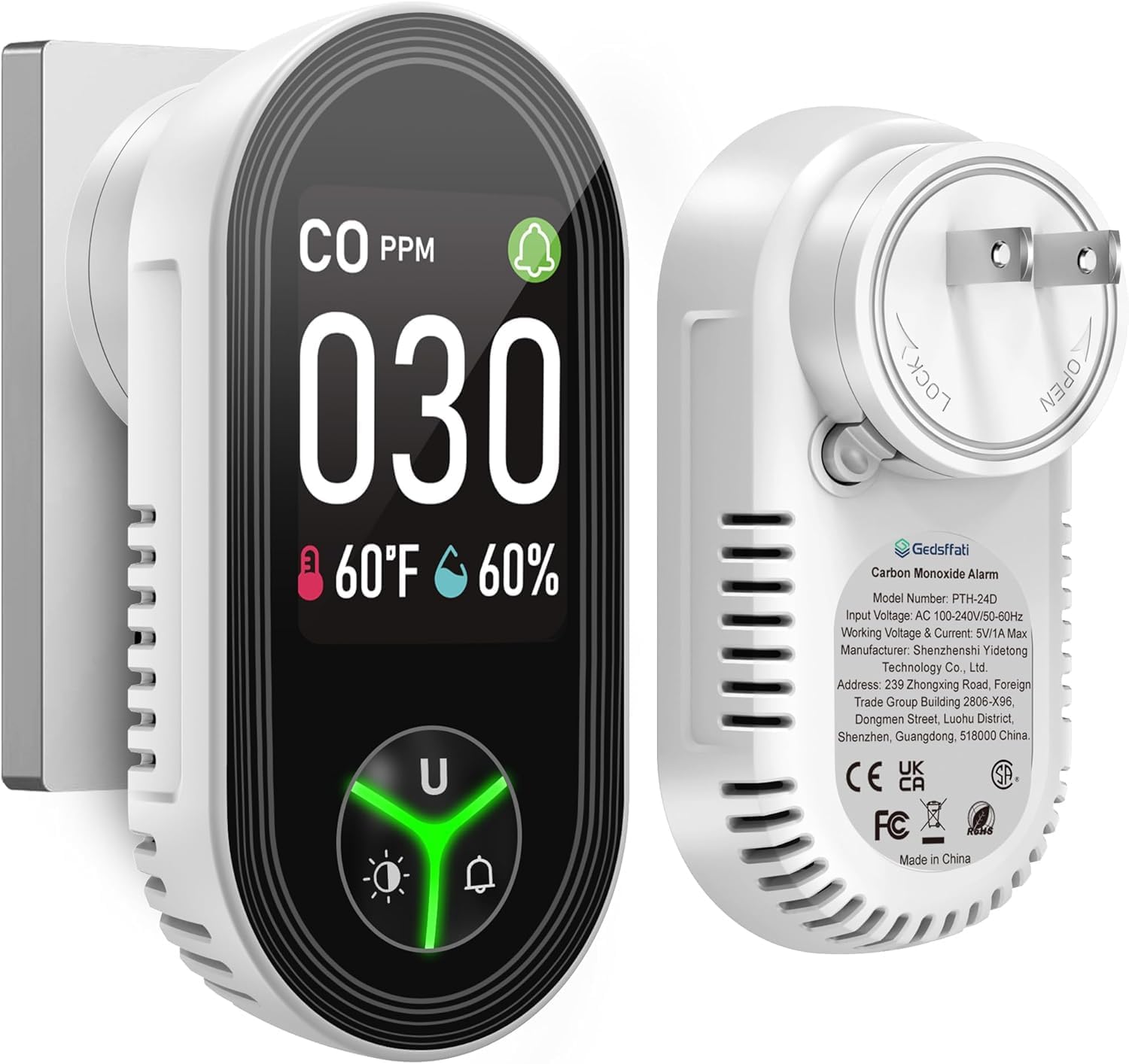
Figure 1: Front and back view of the Gedsffati 3-in-1 Carbon Monoxide Detector.
2. Important Safety Information
WARNING: This device is designed to detect carbon monoxide, temperature, and humidity. It is not designed to detect smoke or fire. For complete home safety, install smoke detectors and fire alarms.
2.1 Carbon Monoxide Hazard
Carbon monoxide (CO) is a colorless, odorless, and toxic gas. Even mildly poisoned, people may experience symptoms such as headaches, dizziness, palpitations, nausea, vomiting, limb weakness, and even brief fainting. In addition to worsening mild poisoning symptoms, moderate poisoning may also result in coma or collapse. Inhaling high concentrations of carbon monoxide can cause varying degrees of poisoning symptoms, endangering the brain, heart, liver, kidneys, lungs, and other tissues of the human body, and even leading to electrocution-like death.
2.2 Combustible Gas Hazard
Natural gas is a colorless, odorless, non-toxic, and non-corrosive gas. Methane poses no harm to the human body, but it is a suffocating effect. When natural gas leaks, it emits toxic gas carbon monoxide, which can make people feel dizzy. Disgusting, in severe cases it can lead to poisoning and death. When the concentration of natural gas leakage reaches 100%, there is a risk of suffocation for humans. If the concentration of natural gas in the air reaches 10%, people will experience poisoning reactions in this environment.
2.3 Smoke Hazard
Thick smoke contains a large amount of harmful particles, such as carbon monoxide, sulfur dioxide, nitrogen oxides, etc. If smoke is inhaled during a fire, it can irritate the respiratory mucosa and cause symptoms such as coughing, chest tightness, and shortness of breath. Inhaling too much thick smoke may also cause damage to the nervous and cardiovascular systems.

Figure 2: Understanding the hazards of carbon monoxide, combustible gas, and smoke.
3. Product Overview
The Gedsffati PTH-24D is a versatile 3-in-1 detector designed for comprehensive environmental monitoring. It features a clear HD screen that dynamically displays CO concentration, temperature, and humidity levels. The device is equipped with an 85dB audible alarm for immediate alerts.
3.1 Key Features
- 3-in-1 Detection: Integrated carbon monoxide (CO), temperature, and humidity sensors.
- HD Screen Display: Real-time display of CO ppm, temperature (℉/℃), and humidity (%).
- 85dB Alarm: Loud audible alarm for critical CO levels.
- Plug & Play: Easy installation by simply plugging into a standard outlet.
- 180° Flipped Design: Screen orientation can be adjusted for convenience.
- Adjustable Brightness: 3 levels of screen brightness for user preference.

Figure 3: Visual representation of the detector's 3-in-1 capabilities.
3.2 Components and Display
The device features a central HD screen and three control buttons at the bottom. The screen displays the CO concentration in PPM, temperature in degrees Fahrenheit or Celsius, and humidity percentage. An alarm icon indicates the alarm status, and a breathing LED light changes color based on CO concentration.

Figure 4: Detailed view of the detector's display and button functions.
4. Setup
The Gedsffati 3-in-1 Carbon Monoxide Detector is designed for simple plug-and-play installation. No complex wiring or tools are required.
4.1 Initial Installation
- Unpack the detector from its packaging.
- Select a suitable wall outlet for installation (refer to Section 6 for placement guidelines).
- Plug the detector directly into the wall outlet. The device will power on automatically, and the HD screen will illuminate, displaying current readings.
The screen display can be flipped 180° if needed, allowing for flexible installation in various outlet orientations.

Figure 5: The detector's 180° flipped display design for flexible plug-in options.
5. Operating Instructions
The detector provides real-time monitoring and alerts for carbon monoxide, along with environmental temperature and humidity readings.
5.1 Display Readings
- CO PPM: Displays the current carbon monoxide concentration in parts per million (ppm).
- Temperature: Shows the ambient temperature in ℉ (Fahrenheit) or ℃ (Celsius).
- Humidity: Indicates the relative humidity percentage.
- Alarm Icon: A bell icon on the screen indicates the alarm status.
- Breathing LED Light: Changes color to indicate CO concentration levels (e.g., green for normal, orange for warning, red for alarm).
5.2 Button Functions
The three buttons at the bottom of the device allow for various adjustments:
- Left Button (Light Icon): Short press to change screen brightness level (3 levels).
- Middle Button (U Icon): Short press to start self-test. Long press to switch temperature unit between ℃ and ℉.
- Right Button (Bell Icon): Short press to turn on/off the buzzer. Long press to flip the screen 180°.
5.3 CO Detecting Range and Alarm Thresholds
The CO detection range is 0-999ppm. The alarm will sound when CO levels exceed 50ppm. Specific alarm behaviors are as follows:
- 51-100 ppm: The indicator light turns orange and flashes; the device sounds an audible alarm every 2 minutes.
- 101-150 ppm: The indicator light turns orange and flashes; the device sounds an audible alarm every 2 minutes.
- >150 ppm: The indicator light turns red and flashes; the device sounds audible alarms continuously.
6. Testing the Detector
It is recommended to test the CO detector regularly to ensure proper functionality.
6.1 Self-Test Function
Short click the 'U' button on the device to start a self-test. The device will perform a quick check of its sensors and alarm system.
6.2 Environmental Test (Caution Advised)
Before use, you can test the CO detector by exposing it to a small amount of carbon monoxide. For example, use a smoky cigarette to approach the detector. The CO value on the screen should change, and the alarm will sound when reaching the alarm value. Please do not test it by car exhaust and burning gas in open areas, as too low CO values will not trigger sensor operation.

Figure 6: Testing the CO detector with a smoky cigarette.
7. Placement Guide
Proper placement of the detector is crucial for effective monitoring of harmful gases. Carbon monoxide, smoke leaks, and gas poisoning are serious hazards. Pay attention to gas safety monitoring in bedrooms, dining rooms, kitchens, living rooms, basements, and garages.
7.1 Recommended Installation Areas
- Bedrooms: Essential for detecting CO while sleeping.
- Living Rooms/Dining Rooms: Common areas where people spend significant time.
- Kitchens: Near gas appliances, but not directly above them to avoid false alarms from cooking fumes.
- Basements: Especially if there are fuel-burning appliances (furnace, water heater).
- Garages: If attached to the house, to detect vehicle exhaust.
- Hotels/RV Travel: Portable and convenient for temporary living spaces.
Avoid placing the detector in direct sunlight, near vents, fans, or in areas with high humidity or extreme temperatures, as this can affect sensor accuracy.

Figure 7: Examples of suitable placement areas for the detector.

Figure 8: Home harmful gas detecting placement guide.
8. Maintenance
Regular maintenance ensures the longevity and accuracy of your Gedsffati 3-in-1 Carbon Monoxide Detector.
- Monthly Testing: Perform a self-test (refer to Section 6.1) at least once a month to ensure the alarm and sensors are functioning correctly.
- Cleaning: Gently wipe the exterior of the detector with a soft, damp cloth. Do not use cleaning sprays, polishes, or solvents. Avoid getting water inside the unit.
- Avoid Obstructions: Ensure that the air intake vents on the detector are not blocked by furniture, curtains, or other objects.
- Do Not Paint: Never paint the detector. Paint can clog the openings and prevent the sensors from detecting CO.
- Replace When Necessary: Carbon monoxide detectors have a limited lifespan. Refer to the product specifications for the recommended replacement period.
9. Troubleshooting
If you encounter issues with your Gedsffati 3-in-1 Carbon Monoxide Detector, refer to the following common problems and solutions:
| Problem | Possible Cause | Solution |
|---|---|---|
| No display/Device not powering on | No power from outlet; Device malfunction | Check if the outlet is working by plugging in another device. Try a different outlet. If still no power, contact support. |
| Alarm sounds frequently without apparent CO source | False alarm; High humidity/temperature; Sensor contamination | Ventilate the area. Relocate the detector away from high humidity/temperature sources (e.g., bathrooms, direct sunlight). Clean the detector. If false alarms persist, contact support. |
| CO reading is stuck at 000 or unusual value | No CO present; Sensor malfunction | Perform a self-test (Section 6.1). If the self-test fails or readings remain abnormal, contact support. |
| Temperature/Humidity readings are inaccurate | Environmental factors; Sensor calibration issue | Ensure the detector is not in direct sunlight or near heat/cold sources. Allow time for readings to stabilize after relocation. If persistent, contact support. |
| Cannot switch temperature unit (℃/℉) | Incorrect button press duration | Ensure you are long-pressing the 'U' button for approximately 3 seconds. |
10. Specifications
| Feature | Specification |
|---|---|
| Brand | Gedsffati |
| Model Number | PTH-24D |
| CO Detection Range | 0-999 ppm (± 10%) |
| CO Sound Alarm Range | Initial Default 51 PPM |
| Temperature Range | -10℃ ~ 50℃ (±1.5℃) / 14℉ ~ 122℉ (±2.7℉) |
| Humidity Range | 0% ~ 95% RH (±5%) |
| Input Voltage | 100-220V 50/60Hz |
| Screen Size | 2.0" 320*240 IPS |
| Power Source | AC Plug-in |
| Material | ABS |
| Dimensions | 3.5 x 1.3 x 1.8 inches |
| Item Weight | 3.84 Ounces |
| UPC | 758321294324 |
11. Warranty and Support
Gedsffati stands behind the quality of its products. This detector comes with a standard manufacturer's warranty. Please refer to the product packaging or contact Gedsffati customer support for specific warranty details and terms.
11.1 Customer Support
For any questions, technical assistance, or warranty claims, please contact Gedsffati customer support through the retailer's platform or visit the official Gedsffati store page on Amazon: Gedsffati Store.
Ask a question about this manual
Ask about setup, troubleshooting, compatibility, parts, safety, or missing instructions. Manuals+ will review the question and use this page’s manual context to help answer it.