1. Introduction
Thank you for choosing the Generic Fully Automatic Egg Incubator. This device is designed to provide an optimal environment for hatching various types of poultry eggs, including chicken, duck, goose, and pigeon eggs. It features automatic temperature and humidity regulation, an LED temperature display, and an automatic egg-turning mechanism to ensure a high success rate for your incubation projects.
Please read this manual thoroughly before operating the incubator to ensure proper setup, safe use, and effective operation. Keep this manual for future reference.
2. Safety Instructions
- Electrical Safety: Ensure the incubator is connected to a grounded power outlet with the correct voltage (95-125V). Do not operate with wet hands or near water. Disconnect power before cleaning or maintenance.
- Placement: Place the incubator on a stable, level surface away from direct sunlight, drafts, or extreme temperature fluctuations. Maintain an ambient temperature between 15°C and 30°C (59°F - 86°F).
- Ventilation: Ensure adequate air circulation around the incubator. Do not block the incubator vents.
- Children and Pets: Keep the incubator out of reach of children and pets to prevent accidental damage or injury.
- Water Handling: Use distilled or demineralized water for the humidity tray to prevent mineral buildup. Avoid overfilling to prevent spills onto electrical components.
- Damage: Do not use the incubator if the power cord or plug is damaged, or if the unit shows any signs of malfunction. Contact customer support for assistance.
3. Package Contents
Upon unpacking, please verify that all components are present:
- 1 x Egg Incubator Unit
- 1 x Power Cable
- 1 x User Manual (this document)
4. Product Features
- Automatic Egg Turning: Equipped with an automatic egg turning device that rotates eggs every two hours. Manual turning can also be initiated.
- Humidity Control: Features a water tank for adjusting humidity levels, crucial for successful hatching.
- Optimized Airflow: Angled air guides ensure consistent air circulation and minimize temperature differences within the incubator. A large fan enhances temperature balance.
- Thermal Insulation: Designed with a "warm coat" to improve energy efficiency and maintain stable internal temperatures, even in cooler ambient conditions.
- LED Temperature Display: Provides easy monitoring of the internal temperature.
- LED Candling Lamp: Integrated lamp to quickly check egg fertility and detect unfertilized eggs.
- Versatile Capacity: Suitable for incubating up to 16 standard chicken eggs, or a comparable number of duck, goose, or quail eggs.
5. Setup
- Unpack and Inspect: Carefully remove all components from the packaging. Inspect the incubator for any signs of damage during transit.
- Assemble Components:
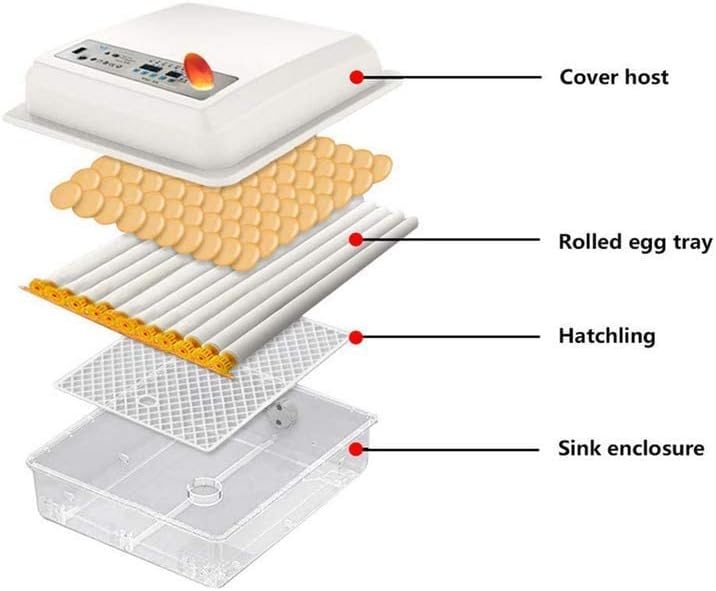
Figure 5.1: Exploded view showing the main components of the incubator. From top to bottom: the cover host (top unit with controls), the rolled egg tray, the hatchling grid, and the sink enclosure (base).
- Place the sink enclosure (bottom tray) on a stable surface.
- Insert the hatchling grid into the sink enclosure.
- Place the rolled egg tray on top of the hatchling grid.
- Carefully place the cover host (top unit) onto the assembled base, ensuring it sits securely.
- Add Water for Humidity: Fill the water channels in the sink enclosure with distilled or demineralized water. Do not overfill. The water level will need to be maintained throughout the incubation period.
- Connect Power: Plug the power cable into the incubator's power interface and then into a suitable electrical outlet.

Figure 5.2: The control panel features an LED temperature display for monitoring, a power interface for connection, and an LED candling lamp for inspecting eggs.
- Pre-heat and Stabilize: Allow the incubator to run for at least 2-4 hours (preferably 24 hours) before placing eggs inside. This allows the internal temperature and humidity to stabilize and ensures the unit is functioning correctly.
6. Operating Instructions
6.1. Setting Temperature and Humidity
The incubator is designed for automatic temperature and humidity regulation. Refer to the specific requirements for the type of eggs you are incubating. The LED display shows the current internal temperature. Adjustments can typically be made using the control buttons on the panel (refer to Figure 5.2).
- Temperature: Standard chicken egg incubation temperature is typically around 37.5°C (99.5°F). Consult specific guidelines for other egg types.
- Humidity: Initial humidity for most eggs is around 50-60%. This often increases to 65-75% during the last few days before hatching. Add water to the channels as needed to maintain desired humidity.
6.2. Placing Eggs
Once the incubator has stabilized, carefully place the fertilized eggs into the rolled egg tray. Ensure eggs are clean and free from cracks. The incubator is designed to accommodate various egg sizes.

Figure 6.1: The adjustable egg tray can hold various egg sizes, including bird, chicken, duck, and goose eggs.
6.3. Automatic Egg Turning
The incubator automatically turns the eggs every two hours. This is crucial for preventing the embryo from sticking to the shell and for proper development. You can also manually activate the turning mechanism if needed, typically via a button on the control panel.
6.4. Candling Eggs
Use the integrated LED candling lamp (refer to Figure 5.2) to periodically check the development of the embryos. This allows you to identify infertile eggs or those with early embryonic death, which should be removed to prevent contamination.
6.5. Hatching Period
Approximately 3 days before the expected hatch date, stop the automatic egg turning. Remove the rolled egg tray and place the eggs directly onto the hatchling grid. Increase humidity during this period to aid in hatching. Avoid opening the incubator frequently during hatching to maintain stable conditions.
7. Maintenance
7.1. Cleaning
After each hatch, or if the incubator becomes soiled, disconnect it from power and thoroughly clean all components. Use a mild disinfectant solution suitable for poultry equipment. Ensure all parts are completely dry before reassembly or storage.
- Wipe down the cover host and control panel with a damp cloth.
- Wash the egg tray, hatchling grid, and sink enclosure with warm soapy water and disinfectant.
- Ensure the fan area is free from dust or debris.

Figure 7.1: The high-power insulation fan, located inside the incubator, ensures even temperature distribution. Keep this area clean for optimal performance.
7.2. Storage
Store the clean and dry incubator in a cool, dry place away from direct sunlight and extreme temperatures when not in use.
8. Troubleshooting
| Problem | Possible Cause | Solution |
|---|---|---|
| No power/Display off | Power cable loose; Outlet malfunction; Unit fault. | Check power cable connection. Test outlet with another device. If still no power, contact support. |
| Temperature too high/low | Incorrect setting; Ambient temperature too extreme; Sensor fault; Fan obstruction. | Verify temperature setting. Move incubator to a stable environment (15-30°C). Check for fan obstruction (Figure 7.1). If problem persists, contact support. |
| Humidity too low | Insufficient water in tray; Incubator opened too frequently. | Add more water to the humidity channels. Minimize opening the incubator. |
| Eggs not turning | Egg turning mechanism fault; Obstruction. | Check for any obstructions preventing the egg tray from moving. If automatic turning fails, manually turn eggs or contact support. |
| Poor hatch rate | Incorrect temperature/humidity; Infertile eggs; Poor egg quality; Frequent opening. | Review and adjust temperature/humidity settings. Ensure eggs are fertile and of good quality. Minimize incubator disturbance. |
9. Specifications
- Model: 16-Egg Capacity (B0F52PXTXV)
- Overall Dimensions (L x W x H): 32 x 20.5 x 12.5 cm (12.6 x 8.1 x 4.9 inches)
- Material: ABS
- Input Power: Control board DC12V ± 10%, power supply AC220V ± 10% 50Hz
- Voltage: 95-125V
- Output: DC 12V 3A
- Temperature Measuring Range: 0.1°C - 99.9°C
- Optimum Ambient Humidity: < 85% RH
- Optimum Ambient Temperature: 15°C - 30°C (59°F - 86°F)
- Manufacturer: YINWUMAOSI
10. Warranty and Support
For warranty information, technical support, or service inquiries, please refer to the retailer's return policy or contact the manufacturer directly. Keep your purchase receipt as proof of purchase.
Manufacturer: YINWUMAOSI
Please visit the retailer's website or contact their customer service for specific support details.