
Introduction
The EJWOX Composter is designed for year-round composting of kitchen and garden waste. Its thermally insulated structure and efficient ventilation system facilitate rapid compost production. This composter is sized for the biowaste generated by a single family. Proper use ensures efficient composting, making the process of using and unloading the composter more convenient.
Safety Information
- Avoid direct contact with compost materials.
- Ensure proper ventilation to prevent odors and pests.
- Do not compost hazardous materials such as chemicals, oils, or animal products.
Product Features
Efficient Thermal Insulation
The Quick Composter features excellent thermal insulation, cover sealings, and an integrated body, which collectively prevent cold air from penetrating the unit. This design maintains a high internal temperature, allowing for quick composting even in cold winter conditions (down to 20°C).

Image: Cross-section view illustrating the EPP thermal insulation and internal composting process.
Efficient Ventilation System
An efficient ventilation system reduces the need for frequent mixing, making composting more convenient. A dedicated channel supplies air to the center of the compost mass, ensuring a quicker composting process.

Image: Details of the built-in air vents for circulation, including air inlet and adjustable air outlet.
Dense Structure with Charcoal Filter
The airtight lid, combined with a replaceable activated-charcoal filter, effectively traps and controls odors naturally. This allows the compost bin to be placed conveniently without concerns about unpleasant smells.

Image: Compost bin interior with organic waste and a detailed view of the odor-proof charcoal filter.
Leachate Collection Reservoir
A reservoir at the bottom of the composter collects leachate, which can be diluted and used as a nutrient-rich "compost-tea" liquid fertilizer. The system includes an updated hose and tap for easy collection.

Image: Features including the compost thermometer, bottom drainage holes, and pipe plugs for leachate collection.
Integrated Body and Cover Sealings
The composter features an integrated body design and robust cover sealings to prevent cold air from penetrating the unit, ensuring consistent thermal performance for continuous and aerobic composting.

Image: The EJWOX composter demonstrating its integrated body and cover sealings in a cold setting.
Included Accessories
- Compost Mixer: For easily tossing the compost without straining your back.
- Gardening Shovel: A useful tool for general garden work.
Setup
- Unpack and Inspect: Carefully remove all components from the packaging. Inspect for any damage during transit. Ensure all parts listed in the packaging contents are present.
- Choose Location: Select a level, well-drained area for your composter. While the bin is insulated, placing it in a partially shaded area can help regulate temperature during hot periods. Ensure easy access for adding materials and collecting compost/leachate.
- Assemble Leachate System: Attach the provided hose and tap to the reservoir outlet at the bottom of the composter. Ensure a tight seal to prevent leaks. Position a collection container (not included) beneath the tap.
- Initial Layering: Begin by adding a layer of coarse, carbon-rich material (e.g., small twigs, straw) at the bottom to promote airflow and drainage.
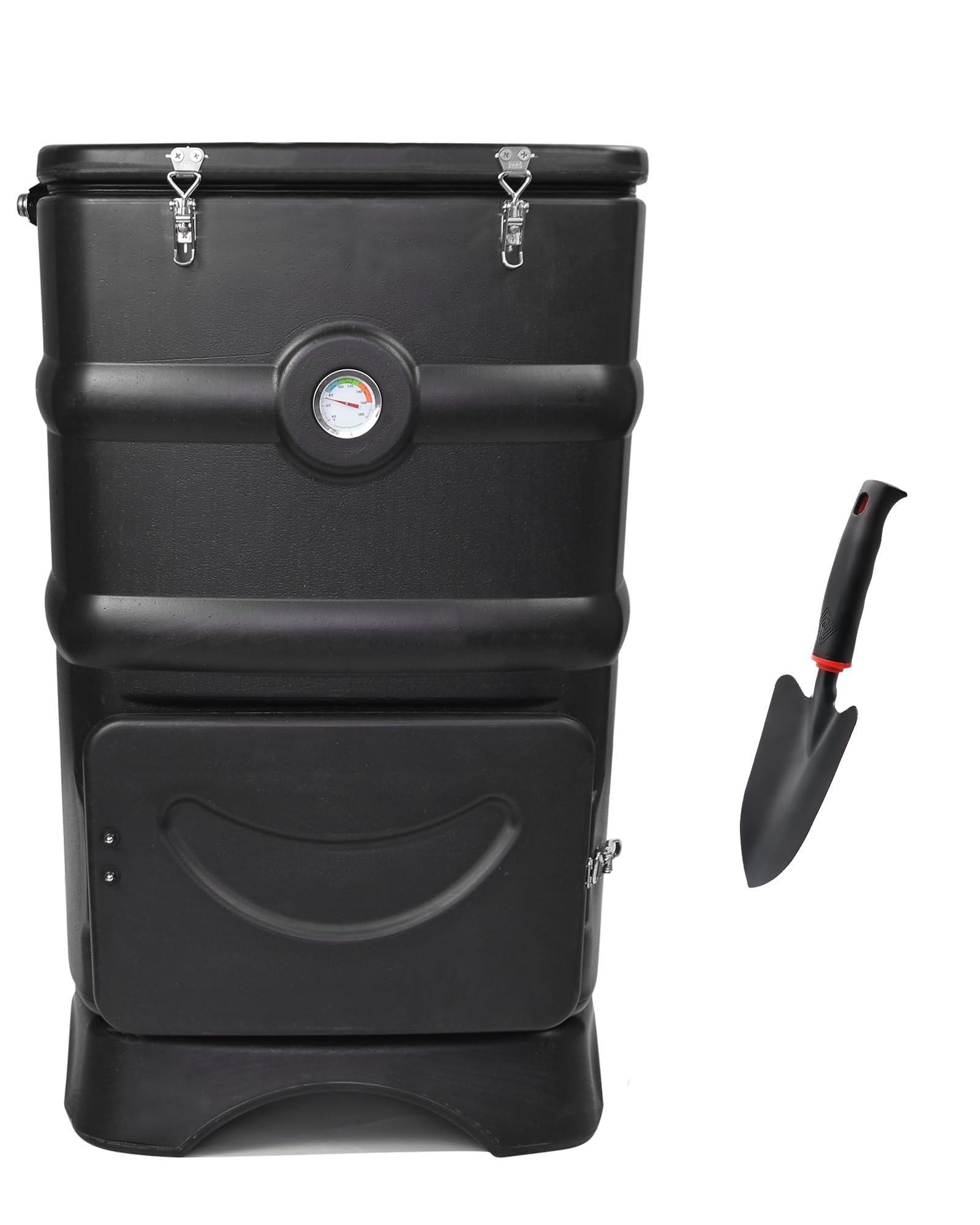
Image: The EJWOX compost bin in a garden, illustrating a typical setup location.
Operating Instructions
What to Compost:
- Green Materials (Nitrogen-rich): Fruit and vegetable scraps, coffee grounds, tea bags, grass clippings, fresh plant trimmings.
- Brown Materials (Carbon-rich): Dry leaves, straw, wood chips, shredded newspaper, cardboard (non-glossy), sawdust.
What NOT to Compost:
- Meat, bones, dairy products, oily foods (attract pests, create odors).
- Diseased plants (can spread pathogens).
- Weeds with seeds (can germinate in compost).
- Pet waste (may contain harmful bacteria).
- Chemicals, plastics, metals.
Composting Process:
- Add Materials: Aim for a balance of green and brown materials, roughly 1 part green to 2-3 parts brown by volume. Chop larger items into smaller pieces to speed up decomposition.
- Monitor Moisture: The compost pile should feel like a damp sponge. If too dry, add water. If too wet, add more brown materials.
- Monitor Temperature: Use the integrated compost thermometer to monitor the internal temperature. Optimal composting occurs between 130°F and 160°F (55°C to 70°C). High temperatures indicate active decomposition.
- Mix/Turn: While the ventilation system reduces the need for frequent turning, occasional mixing with the provided compost mixer will aerate the pile and accelerate decomposition. Aim to mix every 1-2 weeks, especially if temperatures drop or odors develop.
- Collect Leachate: Regularly check the leachate collection reservoir. When full, open the tap to drain the liquid into a suitable container. Dilute the "compost tea" with water (e.g., 1:10 ratio) before using it as a liquid fertilizer for plants.
- Harvest Compost: Finished compost will be dark brown, crumbly, and have an earthy smell. It typically takes several weeks to a few months, depending on materials and conditions. Access finished compost from the lower access door.
Maintenance
- Charcoal Filter Replacement: The activated-charcoal filter in the lid should be replaced periodically (e.g., every 3-6 months, or when odors become noticeable) to maintain odor control. Refer to the manufacturer's guidelines for specific replacement parts.
- Cleaning: Periodically clean the exterior of the composter with mild soap and water. Ensure the leachate collection system remains clear of blockages.
- Seal Inspection: Check the lid and access door sealings regularly for wear and tear. Intact seals are crucial for maintaining thermal insulation and preventing pest entry.
Troubleshooting
- Problem: Compost is too slow or not heating up.
- Solution:
- Ensure a good balance of green (nitrogen) and brown (carbon) materials.
- Chop materials into smaller pieces.
- Add moisture if the pile is dry.
- Turn the pile to introduce more oxygen.
- Problem: Unpleasant odors.
- Solution:
- Add more brown materials (e.g., dry leaves, shredded paper) to absorb excess moisture and balance nitrogen.
- Turn the pile to aerate it.
- Ensure the charcoal filter is clean and properly installed, replace if necessary.
- Avoid composting prohibited items like meat or dairy.
- Problem: Pests (e.g., flies, rodents).
- Solution:
- Ensure the lid is securely closed and seals are intact.
- Bury fresh food scraps deep within the pile.
- Avoid composting meat, dairy, or oily foods.
- Maintain proper moisture levels; a too-wet pile can attract pests.
- Problem: Plastic degradation or fitting breakage.
- Solution:
- While the product is made from durable BPA-free PP, prolonged exposure to extreme UV or harsh chemicals can affect plastic integrity over time.
- Regularly inspect all plastic components, especially fittings and connections, for signs of wear or brittleness.
- If a fitting breaks, contact EJWOX customer support for replacement parts.
Specifications
| Brand | EJWOX |
| Model Number | 3411 |
| Material | BPA free PP |
| Color | Black |
| Capacity | 30 Gallons |
| Product Dimensions (L x W x H) | 20"L x 18"W x 33"H |
| Item Weight | 16.33 Kilograms |
| Shape | Rectangular |
| UPC | 634715996909 |
Warranty and Support
For warranty information, technical support, or to order replacement parts, please contact EJWOX customer service. Refer to your purchase documentation or the official EJWOX website for contact details.
Please retain your proof of purchase for any warranty claims.